30 September 2019
Word of the Day: City of God
CITY OF GOD. A celebrated work by St. Augustine (354-430) and the most
complete defense of Christianity against paganism in the early Church. Repeated
disasters in the Roman Empire were blamed on Christianity. Augustine showed
that the opposite was true. It was not Christianity but the immorality of paganism
that was responsible for the disintegration. The theme of the book, published
in 427, is that the natural unity of the human race was broken by the fall of
Adam. Since then mankind is divided everywhere between the inhabitants of two
cities: the City of the Devil (Civitas Diaboli) peopled by those who
love self even to the contempt of God, and the City of God (Civitas Dei),
inhabited by those who love God even to the contempt of self.

How to Know What Is the Catholic Faith When Church Leaders Fail as Teachers
Excellent advice, and an explanation of why I'm sharing The Catechism of St Pius X and the Catechism of the Summa Theologica on a daily basis.
From LifeSiteNews
By Dr Peter Kwasniewski
September 27, 2019 (LifeSiteNews) – Around the time of the letter accusing Pope Francis of heresy, I published an article at OnePeterFive titled “When Creeping Normalcy Bias Protects a Chaotic Pope.” A reader wrote a letter to me that, I am sure, will resonate with many Catholics who are looking at the darkening situation and wondering: “How can it be happening that the pope is deviating from the Faith? Where am I to turn for guidance, if not the successor of St. Peter? Are Christ’s promises crumbling? Is it hopeless?” Here is the reader’s letter:
Dear N.,
Yes, this is the burning question of our time: What is the Catholic Faith? Is it simply infinitely malleable in the hands of popes, councils, theologians? Or is there some way we can know with rock-solid certainty that we are holding to “the faith delivered once for all to the saints,” as the Letter of Jude puts it?
The main thing I’ve noticed in my life is that a vast number of people have little or no knowledge of the Faith deeper than Vatican II; they pay attention to only what has happened or been said in the past fifty years. Ratzinger frequently criticized this move as making Vatican II into a “Super-Council” that trumped everything before, as if the Church were born in the mid-1960s. In reality, the Faith is immeasurably vast and deep, and has 2,000 years of tradition behind it and within it—more like 4,000 years, if you include Israel. This is the basic reason I’m a traditionalist: not because I want to “go back” to a particular time in history, but simply because I desire to embrace the sum-total of all of that history, which is our birthright. I want to live from the totality, the fullness, the whole, not from fragments, shells, and scraps. The tradition has time-tested strength, solidity, resilience, coherence, subtlety, breadth; the new version, “catholicism lite,” has an abysmal record of fragility, porousness, flimsiness, incoherence, brazenness, and narrowness.
More concretely: dozens of popes, an impressive sequence from the 13th century to nearly the present, have recommended the study of St. Thomas Aquinas. He is an absolutely safe guide in philosophy and theology, needing to be corrected for error in only a tiny handful of cases. Extrapolating, this means that Thomists like Frank Sheed, Josef Pieper, and Peter Kreeft will also be safe guides. (See here and here for more recommendations.)
Again, catechisms—which by definition are designed to transmit the orthodox Faith in the simplest, clearest, most reliable manner—were not born with the Catechism of the Catholic Church. There were hundreds of catechisms before it, all published with the approval of bishops; these may be seen as a collective witness to the universal ordinary magisterium of the Church, which is infallible. The most authoritative of these was the Catechism of the Council of Trent, promulgated by Pope St. Pius V. Pope St. Pius X also published his own catechism. These two make for excellent resources on a catechetical level, as in: what do Catholics actually believe? All catechisms before now concurred with one another, whereas our current CCC, as modified by Francis on the death penalty, stands outside of this consensus. It is for reasons like this that I oppose Francis’s errors: one does not simply cancel out the agreement of hundreds of catechisms spanning a 500-year period. It is for similar reasons that I object to the liturgical reform: it likewise canceled out centuries of organic liturgical development.
Like Christ, their Master, the premodern popes “teach with authority”: you can see it in the clarity of their arguments, the unanimity of their conclusions, and the force of their proofs from Scripture and Tradition. I became Catholic, in a sense, by reading the encyclicals of Leo XIII, Pius X, Pius XI, and Pius XII. Once you cut your teeth on stuff like this, many later documents look mushy, verbose, confused, and afraid to say the truth. Not that they are positively false, but they become, in a way, uncertain of themselves. And this, in a nutshell, is the problem: the loss of the conviction of the truth and the evangelical missionary zeal that follows from it. We are in full meltdown because we have let go of the non-negotiable primacy of truth, the love for immortal souls and their salvation, and zeal for Christ the King and His Kingdom.
I think we can be quite confident that Our Lord does not want His Church to go into a period of self-doubt, self-denial, and self-psychoanalysis. This is an unhealthy introspection, a turning-inward that leaves us constantly second-guessing ourselves. We ask for bread and we seem to be getting stones, or maybe particolored pebbles. But the bread is there in the pantry of Catholic Tradition; it’s there for the taking. Our Lord stocked it well, and gave it the miraculous property of never running out.
Cordially yours in Christ,
Peter Kwasniewski
From LifeSiteNews
By Dr Peter Kwasniewski
September 27, 2019 (LifeSiteNews) – Around the time of the letter accusing Pope Francis of heresy, I published an article at OnePeterFive titled “When Creeping Normalcy Bias Protects a Chaotic Pope.” A reader wrote a letter to me that, I am sure, will resonate with many Catholics who are looking at the darkening situation and wondering: “How can it be happening that the pope is deviating from the Faith? Where am I to turn for guidance, if not the successor of St. Peter? Are Christ’s promises crumbling? Is it hopeless?” Here is the reader’s letter:
At the end of your most [recent] article published on May 8th, you quote a friend commenting on the Church’s current crisis of truth and the final trial resulting in “washing away the petrified filth of vice and error and restoring [the Church] to her lost beauty.” You then encourage your readers to “hold fast to the Catholic faith and pray more fervently than ever.” My question is this: What do you mean by “the Catholic faith”? What does it translate into? People in the hierarchy as well as teachers, etc., mean very different things by this phrase. I’m even more concerned because you earlier state in the article “But to think the current crisis of Pope Francis can be contained by means of a few pat ‘Catholic Answers’ is like trying to extinguish the flames of Notre Dame with a squirt gun.” While I don’t disagree, this statement places me on a more uncertain foundation.
What does it mean to hold fast to the Faith especially if “pat” Catholic answers are entirely insufficient? I work in a parish and try to pass on the Faith. Thanks for your efforts to let the truth shine forth.I share my reply for the benefit of others who may find themselves in the same mental anguish and impasse.
Dear N.,
Yes, this is the burning question of our time: What is the Catholic Faith? Is it simply infinitely malleable in the hands of popes, councils, theologians? Or is there some way we can know with rock-solid certainty that we are holding to “the faith delivered once for all to the saints,” as the Letter of Jude puts it?
The main thing I’ve noticed in my life is that a vast number of people have little or no knowledge of the Faith deeper than Vatican II; they pay attention to only what has happened or been said in the past fifty years. Ratzinger frequently criticized this move as making Vatican II into a “Super-Council” that trumped everything before, as if the Church were born in the mid-1960s. In reality, the Faith is immeasurably vast and deep, and has 2,000 years of tradition behind it and within it—more like 4,000 years, if you include Israel. This is the basic reason I’m a traditionalist: not because I want to “go back” to a particular time in history, but simply because I desire to embrace the sum-total of all of that history, which is our birthright. I want to live from the totality, the fullness, the whole, not from fragments, shells, and scraps. The tradition has time-tested strength, solidity, resilience, coherence, subtlety, breadth; the new version, “catholicism lite,” has an abysmal record of fragility, porousness, flimsiness, incoherence, brazenness, and narrowness.
More concretely: dozens of popes, an impressive sequence from the 13th century to nearly the present, have recommended the study of St. Thomas Aquinas. He is an absolutely safe guide in philosophy and theology, needing to be corrected for error in only a tiny handful of cases. Extrapolating, this means that Thomists like Frank Sheed, Josef Pieper, and Peter Kreeft will also be safe guides. (See here and here for more recommendations.)
Again, catechisms—which by definition are designed to transmit the orthodox Faith in the simplest, clearest, most reliable manner—were not born with the Catechism of the Catholic Church. There were hundreds of catechisms before it, all published with the approval of bishops; these may be seen as a collective witness to the universal ordinary magisterium of the Church, which is infallible. The most authoritative of these was the Catechism of the Council of Trent, promulgated by Pope St. Pius V. Pope St. Pius X also published his own catechism. These two make for excellent resources on a catechetical level, as in: what do Catholics actually believe? All catechisms before now concurred with one another, whereas our current CCC, as modified by Francis on the death penalty, stands outside of this consensus. It is for reasons like this that I oppose Francis’s errors: one does not simply cancel out the agreement of hundreds of catechisms spanning a 500-year period. It is for similar reasons that I object to the liturgical reform: it likewise canceled out centuries of organic liturgical development.
Like Christ, their Master, the premodern popes “teach with authority”: you can see it in the clarity of their arguments, the unanimity of their conclusions, and the force of their proofs from Scripture and Tradition. I became Catholic, in a sense, by reading the encyclicals of Leo XIII, Pius X, Pius XI, and Pius XII. Once you cut your teeth on stuff like this, many later documents look mushy, verbose, confused, and afraid to say the truth. Not that they are positively false, but they become, in a way, uncertain of themselves. And this, in a nutshell, is the problem: the loss of the conviction of the truth and the evangelical missionary zeal that follows from it. We are in full meltdown because we have let go of the non-negotiable primacy of truth, the love for immortal souls and their salvation, and zeal for Christ the King and His Kingdom.
I think we can be quite confident that Our Lord does not want His Church to go into a period of self-doubt, self-denial, and self-psychoanalysis. This is an unhealthy introspection, a turning-inward that leaves us constantly second-guessing ourselves. We ask for bread and we seem to be getting stones, or maybe particolored pebbles. But the bread is there in the pantry of Catholic Tradition; it’s there for the taking. Our Lord stocked it well, and gave it the miraculous property of never running out.
Cordially yours in Christ,
Peter Kwasniewski
30 September, Antonio Cardinal Bacci: Meditations For Each Day
Christian Modesty
1. We are told that one day in the presence of St. Francis de Sales the beauty of a certain noble lady, his cousin, was being described. (Spirito P. VII, c. 10) The Saint described with simplicity: “I’ve heard this said by others also.” Somebody remarked that he himself often saw this young relative of his and therefore there was no need for others to tell him about her. The Saint replied with the same holy simplicity: “It is true that I see her often, but I never stare at her.” This simple but wise reply underlines the difference between seeing and looking.
We are often obliged, in the ordinary course of living or by reason of our position, to see many things which could be dangerous to our spiritual welfare. There are many ugly things around us, although sometimes externally beautiful, which we cannot help seeing. At home, on the street, in society, almost everywhere, we meet persons and things which constitute a threat to our virtue. What are we to do? We must see, because very often we cannot help it, but we must never stare.
In other words, we should never fix our eyes on anything which would seriously disturb us. If we experience the beginnings of any such disturbance we should look elsewhere at once, raising our minds to God in silent prayer. Delay could cost us our purity. To guard it we need the holy virtue of modesty, which St. Thomas calls the moderating virtue. (Summa Theologiae, II-II, q. 160, a. 1) Not only, the Angelic Doctor observes, does it moderate, but it also directs our internal actions as well as our external ones, in such a way that he who possesses this beautiful virtue has perfect control over his outward behaviour and over his inward dispositions (Ibid., q. 160, a. 2).
2. It follows from the doctrine of St. Thomas that modesty has two aspects, internal and external.
The former, which is the foundation of the latter, consists in a firm resolution, relying on divine grace, of preserving constant self-control, so that it will be impossible to think or do anything contrary to the law of God. Since everything in us will be directed towards God, it will impossible for us to be led astray through the lower impulses of the flesh or through the external appearances of persons and objects surrounding us. Once the virtue of modesty has been perfectly developed, the control which we exercise over our interior faculties will be reflected in our external behaviour. This outward expression is the necessary complement of interior modesty. Let us examine ourselves and see if we are really modest, both internally and externally, for this lovely virtue is the most solid foundation and the best safeguard of sanctity.
3. The virtue of modesty is necessary in that it regulates all our actions, internal and external, and saves us from everything which threatens the purity of our souls. It is also an inspiring example to the people around us. The Saints often converted sinners and incited others to lead better lives simply because their conduct proclaimed their purity and sanctity. We should endeavour to do the same, without affectation however, but in a simple and natural manner. The continual mastery which we exercise over our interior and exterior faculties should be reflected in our appearance, in our conversation, and in all our actions.
1. We are told that one day in the presence of St. Francis de Sales the beauty of a certain noble lady, his cousin, was being described. (Spirito P. VII, c. 10) The Saint described with simplicity: “I’ve heard this said by others also.” Somebody remarked that he himself often saw this young relative of his and therefore there was no need for others to tell him about her. The Saint replied with the same holy simplicity: “It is true that I see her often, but I never stare at her.” This simple but wise reply underlines the difference between seeing and looking.
We are often obliged, in the ordinary course of living or by reason of our position, to see many things which could be dangerous to our spiritual welfare. There are many ugly things around us, although sometimes externally beautiful, which we cannot help seeing. At home, on the street, in society, almost everywhere, we meet persons and things which constitute a threat to our virtue. What are we to do? We must see, because very often we cannot help it, but we must never stare.
In other words, we should never fix our eyes on anything which would seriously disturb us. If we experience the beginnings of any such disturbance we should look elsewhere at once, raising our minds to God in silent prayer. Delay could cost us our purity. To guard it we need the holy virtue of modesty, which St. Thomas calls the moderating virtue. (Summa Theologiae, II-II, q. 160, a. 1) Not only, the Angelic Doctor observes, does it moderate, but it also directs our internal actions as well as our external ones, in such a way that he who possesses this beautiful virtue has perfect control over his outward behaviour and over his inward dispositions (Ibid., q. 160, a. 2).
2. It follows from the doctrine of St. Thomas that modesty has two aspects, internal and external.
The former, which is the foundation of the latter, consists in a firm resolution, relying on divine grace, of preserving constant self-control, so that it will be impossible to think or do anything contrary to the law of God. Since everything in us will be directed towards God, it will impossible for us to be led astray through the lower impulses of the flesh or through the external appearances of persons and objects surrounding us. Once the virtue of modesty has been perfectly developed, the control which we exercise over our interior faculties will be reflected in our external behaviour. This outward expression is the necessary complement of interior modesty. Let us examine ourselves and see if we are really modest, both internally and externally, for this lovely virtue is the most solid foundation and the best safeguard of sanctity.
3. The virtue of modesty is necessary in that it regulates all our actions, internal and external, and saves us from everything which threatens the purity of our souls. It is also an inspiring example to the people around us. The Saints often converted sinners and incited others to lead better lives simply because their conduct proclaimed their purity and sanctity. We should endeavour to do the same, without affectation however, but in a simple and natural manner. The continual mastery which we exercise over our interior and exterior faculties should be reflected in our appearance, in our conversation, and in all our actions.
IN LUMINE FIDEI: 30 SEPTEMBER – SAINT JEROME (Confessor and Doctor ...
IN LUMINE FIDEI: 30 SEPTEMBER – SAINT JEROME (Confessor and Doctor ...: Jerome, son of Eusebius, was born at Stridonium in Dalmatia, during the reign of the emperor Constantius. He was baptised at Rome while s...
30 September, A Chesterton Calendar
SEPTEMBER 30th
'What's Wrong with the World.'
1 October, The Roman Martyrology
Kaléndas Octóbris Luna tertia Anno Domini 2019
October 1st 2019, the 3rd day of the Moon, were born into the better life:
The holy Confessor Remy, (15th) Archbishop of Reims, in Gaul, who converted the French nation to Christ, baptized their king Chlodwig, and administered to him the Sacraments of the faith. Remy passed many years in his labors as Bishop, and was famous for his holiness and for the power of working miracles. He died upon the 13th day of January, (in the year 533,) but his feast is kept upon the 1st day of October, which is that of the translation of his sacred body.
At Rome, the blessed martyrs Aretas, (in the year 852,) and five hundred and four others.
At Tomi, in Pontus, the holy martyrs Priscus, Crescens, and Evagrius.
At Lisbon, in Portugal, the holy martyrs Verissimus and his sisters Maxima and Julia, who suffered in the persecution under the Emperor Diocletian.
At Tournai, in Hainaut, the holy martyr Piaton, a Priest, who came from Rome to Gaul to preach along with the blessed Quinctinus and his Companions, and afterwards finished his testimony by martyrdom, in the persecution under the Emperor Maximian, and so passed away to be ever with the Lord.
At Thessalonica, under the same Emperor Maximian, the holy martyr Domninus.
At Gent, the holy Confessor Bavo, (in the seventh century.)
At Orvieto, the holy Priest and Confessor Severus.
V. And elsewhere many other holy martyrs, confessors, and holy virgins.
R. Thanks be to God.
October 1st 2019, the 3rd day of the Moon, were born into the better life:
The holy Confessor Remy, (15th) Archbishop of Reims, in Gaul, who converted the French nation to Christ, baptized their king Chlodwig, and administered to him the Sacraments of the faith. Remy passed many years in his labors as Bishop, and was famous for his holiness and for the power of working miracles. He died upon the 13th day of January, (in the year 533,) but his feast is kept upon the 1st day of October, which is that of the translation of his sacred body.
At Rome, the blessed martyrs Aretas, (in the year 852,) and five hundred and four others.
At Tomi, in Pontus, the holy martyrs Priscus, Crescens, and Evagrius.
At Lisbon, in Portugal, the holy martyrs Verissimus and his sisters Maxima and Julia, who suffered in the persecution under the Emperor Diocletian.
At Tournai, in Hainaut, the holy martyr Piaton, a Priest, who came from Rome to Gaul to preach along with the blessed Quinctinus and his Companions, and afterwards finished his testimony by martyrdom, in the persecution under the Emperor Maximian, and so passed away to be ever with the Lord.
At Thessalonica, under the same Emperor Maximian, the holy martyr Domninus.
At Gent, the holy Confessor Bavo, (in the seventh century.)
At Orvieto, the holy Priest and Confessor Severus.
V. And elsewhere many other holy martyrs, confessors, and holy virgins.
R. Thanks be to God.


29 September 2019
Angels & Dragons
On this Feast of St Michael and All Angels I'm beginning a new series of posts on the Angels, written by a Deacon in the Diocese of Austin. I will try to post them daily.
From ATX Catholic
By the Reverend Deacon Guadalupe Rodriquez
“Proclaim a War! Let the weak man say, ‘I am a warrior!’” (Joel 4:9-10)
In these dark times we must contemplate and understand the spiritual
battle we are facing. We must take a step back and ask ourselves, “What
is happening to the world and to us?” The answer is that mankind is at
the threshold of the greatest combat we have ever faced. The Church and
the world are at crossroads. We are under siege! In the words of Pope
Benedict XVI on February 17, 2013, “The time of testing is here!”
We must understand the struggle, the weapons, and the tactics of the enemy, but most importantly we must understand without a doubt that, “Our side outnumbers theirs” (2 Kings 6:16) lest humanity loses hope and everyone follows after the beast …yes even the elect if it were possible. (Mark 13:20)
Remember God’s holy angels outnumber the fallen angels. Only, “A
third of the stars,” (Rev. 12:4) were cast down to the earth. Two thirds
of God’s holy angels remained faithful and are now standing by for us
to engage them in the fight. Yes, in Book of Revelation, “Stars are angels.” (Rev. 1:20)
St. Thomas Aquinas says, “All have to wage spiritual combat with our invisible enemies.” We must enter the fray; none can stand by dispassionate or idle for, “The ‘spiritual battle’ of the Christians new life is inseparable from the battle of prayer.” (CCC 2725) All have to pick up spiritual weapons (Mass, the Word of God, Confession, Adoration, Divine Mercy Chaplet, Rosary, Divine Office etc) or accept to be taken captive by the red dragon (Rev.13:10), as there will be a time when the whole world will marvel at him (as when a whole country marveled at Hitler).
“The huge dragon, the ancient serpent, who is called the devil
and Satan…has come down to you in great fury, for he knows he has but a
short time.” (Rev. 12:9,12) “Like a roaring lion, the devil is prowling around looking for someone to devour.” (1
Peter 5:8) If you are really one of God’s holy and mighty warriors you
can feel the strain, the weight, the toll, the strife, the grapple, and
most especially the free-for-all that the adversary is engaging us in,
in our everyday tasks. Yes, the spiritual warfare has increased! For
those who have eyes, the darkness is setting in as in the Lord of the
Rings or as St. John Paul II stated on the anniversary of his shooting, “The evil that is spreading throughout the world and menacing the individual human being, the nations, and mankind as a whole… the whole range of menaces gathering like a dark cloud over mankind…” Oh if we could only blow the trumpet to warn the troops saying, “He has been released for a short time!” (Rev. 20:3) The vision of Pope Leo XIII is upon us!
If you are neutral or lukewarm and have not taken up arms, you will
not feel the battle as the opponent knows you already belong to him.
However when you least expect it, the rival will surround you, envelop
you, and bind you as a prey to its victim. When the foe finally attacks
those “on the fence,” you will be so surprised that you won’t know where
to turn to in the confusion of his mighty attack. By then it will be
too late to pick up weapons as you will not have the trust or the eyes
to see that “our side outnumbers theirs.” (2
Kings 6:16) In a frightful panic you will think that your only way out
is despair and thus believing all the accusations of the dragon for he
is, “The accuser of our brothers and sisters.” (Rev. 12:10) You will lose all hope in God’s eternal Mercy because most of the time people “Live as they pray” (CCC 2725) and die as they lived.
If only our civilization would have the eyes of faith to see the fiery chariots (2 Kings 6: 17) around us – then we would not feel so alone in the battle. But this is what will make this generation so great and special. There are some who have eyes of faith to see the invisible reality. These soldiers must, “Proclaim a War!” (Joel 4:9) They must proclaim to the whole world, “Let the weak man say, ‘I am a warrior!’” (Joel 4:10)
Remember what one Desert Father said, all generations have faced the
red dragon tethered and tied down but those at the end of time will face
him fully loosed over the face of the earth even if it is just for a
short while. This is what will make us the greatest saints who have
walked the face of the earth. Like the kings and queens that come out at
the end of the chess game so we too are the special kings and queens
that come out at the end to do battle with the dragon. Yes, we are
small, feeble, and frail, but power is made perfect in weakness for when
we are weak, God is strong or as St. Paul says, “For when I am weak, then I am strong.” (2 Cor. 12:10)

If you still are incredulous about your calling in these perilous times, know that you also have a mother advocating, interceding, and fighting at your side, “But the power of Mary over all the devils will especially shine forth in the latter times, when Satan will lay his snares against her heel: that is to say, her humble slaves and her poor children, whom she will raise up to make war against him. They shall be little and poor in the world’s esteem, and abased before all like the heel is by the other members of the body. But in return for this they shall be rich in the grace of God, which Mary shall distribute to them abundantly.” (St. Louis Marie De Montfort)
Know and trust that we are the generation of dragon slayers whether
we realize it or not. Whether you believe it or not. You are God’s
mightiest warriors! This is our true calling. As Joan of Arc said, “I
was born for this!” You too were handpicked and chosen for this moment.
You were born for this! The hands you see are hands of warriors! Accept
to make the journey and be changed into mighty hobbits as in the Lord of
the Rings. This is the Job generation that was found worthy of being
tested. This generation is praiseworthy of facing off with the dragon
toe to toe. David versus Goliath, “Blessed are your eyes, because they see.” (Mt. 13:16) Oh what all the saints would give to find themselves in this battle of battles!
What will it take? One day seeing the state of his country, St.
Martin of Tours, a former Roman soldier whose father was in the famous
Imperial Horse Guard, asked the Lord in tears, “What will it take to save my country?” “What will it take?” The Lord responded, “One saint!”
And a saint he did become. What will it take to save our present world?
One Saint! May that Saint be YOU! May the devil say of you what he said
of St. John Vianney, “If there were two of him my kingdom would end!”

Like Elijah we too must eat, “The bread of angels,” (Psalm
78:25) so that we will have the strength to continue to clash our swords
and shields against these beasts. Yes, they will injure you with their
fiery breath, jaws, fangs, claws, and talons, injecting a most poisonous
venom called mortal sin that deadens and rots the soul for, “The sting of death is sin!”
(1Cor.15:56) But remember the remedy – the Blood of the Lamb cleanses,
heals, and ennobles the soul in Confession, and the Blood of the Lamb
from the chalice strengthens and sanctifies us at Mass! Yes, “They conquered him (the dragon) by the Blood of the Lamb!” (Rev. 12:11) Only in this way will we not give up the fight and join the enemy. Remember the words of Jesus to St. Faustina, “All of heaven and earth is watching you. Fight like a knight!” [1760]
This is the test of tests. This is the generation for whom the words of Jesus should echo in our hearts, “But when the Son of Man comes, will he find faith on earth?”
(Luke 18:8) There may come a time when the dragon surrounds you and
pins you down even though you have been a faithful warrior. At this
point you may be tempted to lose faith and or even join him. When you
find yourself arrested by the dragon with nowhere to run, you must not
panic. Reach for “The Weapon” (Mary’s word’s to St Dominic when she gave him the rosary) and pray the Rosary…“The angel holding in his hand the key to the abyss and a heavy chain seized the dragon.”
(Rev. 20:1) The key is the crucifix and the chain is the rosary beads.
Each time you pray it, the angel shackles the dragon. This is how the
Woman crushes the head of the serpent for she is the Queen of Angels and
they are here to serve her.
How bad will the battle rage? Our catechism says, “Before Christ’s second coming the Church must pass through a final trial that will shake the faith of many believers.” (CCC 675) Ok I know I am weak, but if I stay the course will I make it? Jesus promises those who are faithful these words, “I know your works, behold I have left an open door before you which no one can close. You have limited strength, and yet you have kept my word and have not denied my name…I will keep you safe in the time of trial that is going to come to the whole world to test the inhabitants of the earth.” (Rev. 3:8-10)
I cannot repeat it enough times, “Our struggle is not with flesh
and blood but with the principalities, with the powers, with the world
rulers of this present darkness.” (Eph. 6:12) Keep these words in the back of your minds! “Amid so much darkness, let a shaft of light break through the heavy clouds!”
(Pope Francis’ first homily) Open your eyes to the true reality! We
represent all of humanity and every generation. Don’t hesitate to enter
the fray! “Rouse the warriors to arms,” (Joel 4:4) choose sides, and know that, “Michael shall arise in the time of great distress.” (Dan. 12:1)
Yes, you end times warrior, “Proclaim a war!” (Joel 4:9) “Arise,
shine, for your light has come, and the glory of the Lord rises upon
you. See, darkness covers the earth and thick darkness is over the
peoples, but the Lord rises upon you and his glory appears over you.”
(Isiaih 60:1-2) Your time has come! Let the people know we have entered the time of God, men, dragons, and angels and that “Our side outnumbers theirs!” (2 Kings 6:16)
From ATX Catholic
By the Reverend Deacon Guadalupe Rodriquez
“Proclaim a War! Let the weak man say, ‘I am a warrior!’” (Joel 4:9-10)
 |
| St Michael by Luca Giordano |
We must understand the struggle, the weapons, and the tactics of the enemy, but most importantly we must understand without a doubt that, “Our side outnumbers theirs” (2 Kings 6:16) lest humanity loses hope and everyone follows after the beast …yes even the elect if it were possible. (Mark 13:20)
 |
| St Michael |
St. Thomas Aquinas says, “All have to wage spiritual combat with our invisible enemies.” We must enter the fray; none can stand by dispassionate or idle for, “The ‘spiritual battle’ of the Christians new life is inseparable from the battle of prayer.” (CCC 2725) All have to pick up spiritual weapons (Mass, the Word of God, Confession, Adoration, Divine Mercy Chaplet, Rosary, Divine Office etc) or accept to be taken captive by the red dragon (Rev.13:10), as there will be a time when the whole world will marvel at him (as when a whole country marveled at Hitler).
 |
| Dragon VS Angel by David De León Luis |
 |
| Angels of the Apocalypse |
If only our civilization would have the eyes of faith to see the fiery chariots (2 Kings 6: 17) around us – then we would not feel so alone in the battle. But this is what will make this generation so great and special. There are some who have eyes of faith to see the invisible reality. These soldiers must, “Proclaim a War!” (Joel 4:9) They must proclaim to the whole world, “Let the weak man say, ‘I am a warrior!’” (Joel 4:10)
If you still are incredulous about your calling in these perilous times, know that you also have a mother advocating, interceding, and fighting at your side, “But the power of Mary over all the devils will especially shine forth in the latter times, when Satan will lay his snares against her heel: that is to say, her humble slaves and her poor children, whom she will raise up to make war against him. They shall be little and poor in the world’s esteem, and abased before all like the heel is by the other members of the body. But in return for this they shall be rich in the grace of God, which Mary shall distribute to them abundantly.” (St. Louis Marie De Montfort)
Trust
and believe wholeheartedly that many souls are on the balance and are
dependent on your sanctification. There are souls at stake so you must
enter the battle trusting Jesus and Mary, “At the end of the world
and indeed presently, because the Most High with His holy Mother has to
form for Himself great saints who shall surpass most of the other saints
in sanctity as much as the cedars of Lebanon outgrow the little
shrubs.” (St. Louis Marie De Montfort) I know all this seems too
much and overwhelming but it is who you are destined to be from the
beginning of time and all creation: A saint of the end of times! God’s
greatest warriors! He has saved the best!
How bad will the battle rage? Our catechism says, “Before Christ’s second coming the Church must pass through a final trial that will shake the faith of many believers.” (CCC 675) Ok I know I am weak, but if I stay the course will I make it? Jesus promises those who are faithful these words, “I know your works, behold I have left an open door before you which no one can close. You have limited strength, and yet you have kept my word and have not denied my name…I will keep you safe in the time of trial that is going to come to the whole world to test the inhabitants of the earth.” (Rev. 3:8-10)
 |
| Michael Casts Out Lucifer |
16th-Century Saints: Holy Heroes to Emulate
A look at some of the heroes of the 15th century, Martyrs, Confessors, and Virgins.
From the National Catholic Register
By Jennifer Sokol
“God never fails to help anyone who is determined to give up everything for him.”
As I began reading Joseph Pearce's Heroes of the Catholic Reformation: Saints Who Renewed the Church, published in 2017 a personal experience returned to mind.
The summer I was 19, I traveled to Europe and visited the Tower of London. After a long wait in line with hundreds of people, followed by a hasty viewing of the Crown Jewels, I walked across the courtyard to visit the prison cell where St. Thomas More, one of the featured saints in Pearce’s book, spent his final year before his beheading by order of King Henry VIII.
I entered through the doorway, now in the company of only one other person, and was struck by the contrast between the noise and opulence I had just left with the royal gems to the silence and austerity of the martyr’s cell. I followed with my gaze to the top of the jagged stone wall to the barred window casting a meager stream of daylight into the bleak, unfurnished space. In awe, I prayed for St. Thomas More’s intercession, filled with an awareness of the ultimate price he paid out of love for the Church. As if meeting a new friend, he also became a new hero.
In Pearce’s book, I learned more details about him as well as other heroes who countered the 16th-century English Reformation and Protestant Reformation. With each saint, I was reminded of the words of St. Paul and pondered how to apply the same exhortation in my own life: “Stir into flame the gift of God that you have from the imposition of hands. For God did not give us a spirit of cowardice but rather of power and love and self-control” (2 Timothy: 6-7).
I asked myself: Am I courageous enough to witness with “power and love and self-control” as John Fisher did in defense of the indissolubility of marriage? Do I have the courage to witness with “power and love and self-control” as Thomas More did in defense of the supremacy of God’s law over unjust secular laws? More’s response at his trial after receiving a guilty verdict for failure to take the Oath of Supremacy to the monarchy must rank among the most inspired of all time:
“Forasmuch, my lords as this indictment is grounded upon an Act of Parliament directly repugnant to the laws of God and his Holy Church, the supreme government whereof, as any part thereof, may no temporal prince presume by any law to take upon him, as rightfully belonging to the See of Rome, a spiritual pre-eminency by the mouth of our Savior himself, personally present upon the earth, only to St. Peter and his successors, bishops of the same see, by special prerogative granted, it is therefore in law among Christian men insufficient to charge any man.”
Sadly, in defense of “our Savior himself,” More was hated. But he never returned in kind to his enemies. Rather, witnessing with “power and love and self-control,” five days later, he ascended the scaffold to his death. He was indeed God’s good servant first.
Could I be as selfless? Or as fearless as St. Teresa of Ávila, who, later in the century, persevered through illness, hardships and opposition from both secular and religious detractors as she answered her call to reform the Carmelite order? Following upon a conversion 20 years into her religious life, she was distressed by the mitigated observance of the order’s rule and by the harm being done by the Protestant Reformation. With characteristic passion, she appealed to her Carmelite daughters and wrote in her Way of Perfection, “I wept with the Lord and begged him that I might remedy so much evil. ... All of my longing was and still is that since he has so many enemies and so few friends that these few friends be good ones. As a result, I resolved to do the little that was in my power; that is, to follow the evangelical counsels as perfectly as I could and strive that these few persons who live here do the same. I did this trusting in the great goodness of God, who never fails to help anyone who is determined to give up everything for him.”
Endowed with the same resolve, St. John of the Cross soon became her co-reformer for the friars. But like Jesus in his passion, John was arrested, bound and gagged, scourged and then led to stand trial before a jury. His accusers were not secular powers, but rather members of the Carmelite General Chapter threatened by the reform. John defended his actions, sanctioned by the papal nuncio, but was, nevertheless, branded a rebel and punished to imprisonment within a tiny closet in the monastery. There, for eight months, in near darkness, without proper food or a change of clothes, he prayed, witnessing to the “power and love and self-control” of the Holy Spirit as poetry flowed into his soul. The Dark Night and Spiritual Canticle are now considered masterpieces.
St. John of the Cross attributed his miraculous escape from prison on the Solemnity of the Assumption of Mary to the intervention of Mary herself. In the same way, I am sure that Mary, as she did for Jesus at the foot of the cross, interceded on behalf of the other saints featured in Pearce’s book. From the English martyrs — Edmund Campion, Robert Southwell, Margaret Clitherow and Anne Line — to Ignatius of Loyola, the founder of the Society of Jesus, and Francis Xavier, the great Jesuit missionary who carried the Gospel and sacramental life of the Catholic Church to the Far East. Pius V ordered the public recitation of the Rosary that gained the miraculous victory for Christians in the Battle of Lepanto, and Charles Borromeo reformed lax practices among the clergy, implemented the reforms and decrees of the Council of Trent and oversaw the completion of the first Catechism of the Catholic Church.
I know that I will never be called upon to perform the same works as the saints of the 16th century, or to witness in the same ways as they did. But I do know that if I am open to receive God’s grace through Mary, like my holy heroes, I, too, will be able to “stir into the flame the gift of God” and witness with “power and love and self-control” to the Catholic faith in my life.
From the National Catholic Register
By Jennifer Sokol
“God never fails to help anyone who is determined to give up everything for him.”
As I began reading Joseph Pearce's Heroes of the Catholic Reformation: Saints Who Renewed the Church, published in 2017 a personal experience returned to mind.
The summer I was 19, I traveled to Europe and visited the Tower of London. After a long wait in line with hundreds of people, followed by a hasty viewing of the Crown Jewels, I walked across the courtyard to visit the prison cell where St. Thomas More, one of the featured saints in Pearce’s book, spent his final year before his beheading by order of King Henry VIII.
I entered through the doorway, now in the company of only one other person, and was struck by the contrast between the noise and opulence I had just left with the royal gems to the silence and austerity of the martyr’s cell. I followed with my gaze to the top of the jagged stone wall to the barred window casting a meager stream of daylight into the bleak, unfurnished space. In awe, I prayed for St. Thomas More’s intercession, filled with an awareness of the ultimate price he paid out of love for the Church. As if meeting a new friend, he also became a new hero.
In Pearce’s book, I learned more details about him as well as other heroes who countered the 16th-century English Reformation and Protestant Reformation. With each saint, I was reminded of the words of St. Paul and pondered how to apply the same exhortation in my own life: “Stir into flame the gift of God that you have from the imposition of hands. For God did not give us a spirit of cowardice but rather of power and love and self-control” (2 Timothy: 6-7).
I asked myself: Am I courageous enough to witness with “power and love and self-control” as John Fisher did in defense of the indissolubility of marriage? Do I have the courage to witness with “power and love and self-control” as Thomas More did in defense of the supremacy of God’s law over unjust secular laws? More’s response at his trial after receiving a guilty verdict for failure to take the Oath of Supremacy to the monarchy must rank among the most inspired of all time:
“Forasmuch, my lords as this indictment is grounded upon an Act of Parliament directly repugnant to the laws of God and his Holy Church, the supreme government whereof, as any part thereof, may no temporal prince presume by any law to take upon him, as rightfully belonging to the See of Rome, a spiritual pre-eminency by the mouth of our Savior himself, personally present upon the earth, only to St. Peter and his successors, bishops of the same see, by special prerogative granted, it is therefore in law among Christian men insufficient to charge any man.”
Sadly, in defense of “our Savior himself,” More was hated. But he never returned in kind to his enemies. Rather, witnessing with “power and love and self-control,” five days later, he ascended the scaffold to his death. He was indeed God’s good servant first.
Could I be as selfless? Or as fearless as St. Teresa of Ávila, who, later in the century, persevered through illness, hardships and opposition from both secular and religious detractors as she answered her call to reform the Carmelite order? Following upon a conversion 20 years into her religious life, she was distressed by the mitigated observance of the order’s rule and by the harm being done by the Protestant Reformation. With characteristic passion, she appealed to her Carmelite daughters and wrote in her Way of Perfection, “I wept with the Lord and begged him that I might remedy so much evil. ... All of my longing was and still is that since he has so many enemies and so few friends that these few friends be good ones. As a result, I resolved to do the little that was in my power; that is, to follow the evangelical counsels as perfectly as I could and strive that these few persons who live here do the same. I did this trusting in the great goodness of God, who never fails to help anyone who is determined to give up everything for him.”
Endowed with the same resolve, St. John of the Cross soon became her co-reformer for the friars. But like Jesus in his passion, John was arrested, bound and gagged, scourged and then led to stand trial before a jury. His accusers were not secular powers, but rather members of the Carmelite General Chapter threatened by the reform. John defended his actions, sanctioned by the papal nuncio, but was, nevertheless, branded a rebel and punished to imprisonment within a tiny closet in the monastery. There, for eight months, in near darkness, without proper food or a change of clothes, he prayed, witnessing to the “power and love and self-control” of the Holy Spirit as poetry flowed into his soul. The Dark Night and Spiritual Canticle are now considered masterpieces.
St. John of the Cross attributed his miraculous escape from prison on the Solemnity of the Assumption of Mary to the intervention of Mary herself. In the same way, I am sure that Mary, as she did for Jesus at the foot of the cross, interceded on behalf of the other saints featured in Pearce’s book. From the English martyrs — Edmund Campion, Robert Southwell, Margaret Clitherow and Anne Line — to Ignatius of Loyola, the founder of the Society of Jesus, and Francis Xavier, the great Jesuit missionary who carried the Gospel and sacramental life of the Catholic Church to the Far East. Pius V ordered the public recitation of the Rosary that gained the miraculous victory for Christians in the Battle of Lepanto, and Charles Borromeo reformed lax practices among the clergy, implemented the reforms and decrees of the Council of Trent and oversaw the completion of the first Catechism of the Catholic Church.
I know that I will never be called upon to perform the same works as the saints of the 16th century, or to witness in the same ways as they did. But I do know that if I am open to receive God’s grace through Mary, like my holy heroes, I, too, will be able to “stir into the flame the gift of God” and witness with “power and love and self-control” to the Catholic faith in my life.
Will Radical Environmentalism Infect the Amazon Synod?
'There must be no compromising of our Catholic values to join in what has
become an increasingly godless, anti-life and anti-human movement.' Spot on, Monsignor!
From the National Catholic Register
By Msgr Charles Pope
There must be no compromising of our Catholic values to join in what has become an increasingly godless, anti-life and anti-human movement.
From the National Catholic Register
By Msgr Charles Pope
There must be no compromising of our Catholic values to join in what has become an increasingly godless, anti-life and anti-human movement.
I have written two previous articles here
at the National Catholic Register expressing my serious concerns about
the working document (instrumentum laboris) of the Amazon Synod. The first article focused on the document’s near-deification of the environment. The second article dealt with the demonization of the Western and modern world.
At this point I am laying aside my original plan for more articles. In the first place, other authors have done admirable work exposing the grave errors, and the sometimes-silly aspects of the instrumentum laboris. I have also picked up grand jury duty for 32 days, which limits my time to write.
But finally, it seems clearer to me that I should share a new concern that the near panic over “global climate change” is sure to interact with the Synod, already noted for its heavy environmental focus. It seems quite certain to me that the Synod will add to and be affected by what many regard as an excessive fervor — even an invented crisis.
Concern for the environment is part of the wise stewardship expected of Christians. Waste and pollution reduction, resource conservation, proper forest management, wise agricultural policies and so on are all good and to be encouraged. But the kind of extremism that has been growing over the years has reached a fever pitch that should alarm reasonable people.
Fearsome reports abound that there are only 12 years left before global warming becomes irreversible. Frightened predictions of climate catastrophe proliferate, as do highly unrealistic calls for the banning of fossil fuels, coal and even natural gas. Many activists speak of not having children since the world they would have to live in would be too awful. The fearmongering has gotten bad enough that psychologists now say they are having to treat rising numbers of children for anxiety and depression over “eco-anxiety.”
The hurricane of eco-panic has reached Category 3 and is sure to grow during the Amazon Synod. I predict a Category 4 by the end of October. Add a coming U.S. election year to the mix and we’ll be at Category 5 for the foreseeable future. Any legitimate climate concerns that may have existed have been hijacked to become a global political movement. Politics poisons everything and both sides are going to harden positions.
My own experience and disposition make me dubious of all the warnings and fearmongering. The fact is, I have been hearing catastrophic predictions all my life. Back in my teens, scientists were warning of a coming ice age by the year 2000. Then there were predictions of coming droughts, agricultural collapse, overpopulation, ozone holes, dying oceans, failing water supplies, and so forth. And now horrifying predictions abound about global warming and climate change. (Here is a list of over 50 failed predictions of eco-catastrophe from the past 50 years: Wrong Again: 50 Years of Failed Eco-pocalyptic Predictions.)
I puzzle at the hyper-focus on climate change since the climate has undergone many changes, globally and locally. Long before man, there were ice ages and other warmer periods. Even in our historical memory there has been the Medieval Warm Period and the Little Ice Age — not to mention expanding and contracting deserts, ice sheets, beaches, etc. The sun also goes through cycles. And then there are my questions that no one seems to be able or willing to answer:
But getting with the program might just be the problem. And this brings us back to the Amazon Synod. If one analyzes “the program” one will find many things problematic and even inimical to Catholic teaching. The proposed program of the environmental movements includes some or all of the following elements:
Where will the Synod’s loyalties lie? Will the Synod participants align with the perennial teachings of Christ and his Church? Or will they align with a movement that has become a religion of its own?
We Catholics, while having proper concern for the environment that is truly Catholic, must become more sober about the ideological and political extremism that has set up inside the climate change movement and that is increasingly inimical to some of our most precious teachings concerning the dignity of the human person. Unqualified acceptance of this movement is no longer an option. I pray the synod participants will recognize this. But frankly, I am not optimistic.
Keep the prayers and fasts going, my friends!
At this point I am laying aside my original plan for more articles. In the first place, other authors have done admirable work exposing the grave errors, and the sometimes-silly aspects of the instrumentum laboris. I have also picked up grand jury duty for 32 days, which limits my time to write.
But finally, it seems clearer to me that I should share a new concern that the near panic over “global climate change” is sure to interact with the Synod, already noted for its heavy environmental focus. It seems quite certain to me that the Synod will add to and be affected by what many regard as an excessive fervor — even an invented crisis.
Concern for the environment is part of the wise stewardship expected of Christians. Waste and pollution reduction, resource conservation, proper forest management, wise agricultural policies and so on are all good and to be encouraged. But the kind of extremism that has been growing over the years has reached a fever pitch that should alarm reasonable people.
Fearsome reports abound that there are only 12 years left before global warming becomes irreversible. Frightened predictions of climate catastrophe proliferate, as do highly unrealistic calls for the banning of fossil fuels, coal and even natural gas. Many activists speak of not having children since the world they would have to live in would be too awful. The fearmongering has gotten bad enough that psychologists now say they are having to treat rising numbers of children for anxiety and depression over “eco-anxiety.”
The hurricane of eco-panic has reached Category 3 and is sure to grow during the Amazon Synod. I predict a Category 4 by the end of October. Add a coming U.S. election year to the mix and we’ll be at Category 5 for the foreseeable future. Any legitimate climate concerns that may have existed have been hijacked to become a global political movement. Politics poisons everything and both sides are going to harden positions.
My own experience and disposition make me dubious of all the warnings and fearmongering. The fact is, I have been hearing catastrophic predictions all my life. Back in my teens, scientists were warning of a coming ice age by the year 2000. Then there were predictions of coming droughts, agricultural collapse, overpopulation, ozone holes, dying oceans, failing water supplies, and so forth. And now horrifying predictions abound about global warming and climate change. (Here is a list of over 50 failed predictions of eco-catastrophe from the past 50 years: Wrong Again: 50 Years of Failed Eco-pocalyptic Predictions.)
I puzzle at the hyper-focus on climate change since the climate has undergone many changes, globally and locally. Long before man, there were ice ages and other warmer periods. Even in our historical memory there has been the Medieval Warm Period and the Little Ice Age — not to mention expanding and contracting deserts, ice sheets, beaches, etc. The sun also goes through cycles. And then there are my questions that no one seems to be able or willing to answer:
- What is the ideal or normal temperature of the planet?
- What is too much ice at the poles and what is not enough?
- How do you explain the rather dramatic shifts in climate long before man could have any real influence?
- Why is a warmer planet necessarily a worse planet? Even if sea levels rise a bit, would arable land in Siberia and northern Canada be a good offset?
- How do you really know that all the terrible things you predict will happen and that they will happen suddenly and all at once within 12 years?
But getting with the program might just be the problem. And this brings us back to the Amazon Synod. If one analyzes “the program” one will find many things problematic and even inimical to Catholic teaching. The proposed program of the environmental movements includes some or all of the following elements:
- Population control to include mandated contraception, sterilization, abortion and euthanasia
- Ideological imposition of policies that heavily favor nature over man and collectivist, globalist notions over the family.
- The program will also surely feature higher taxes, growing intrusion of secular government into every aspect of life, and draconian limits on world economies that will stunt their growth and disproportionately affect the poor.
Where will the Synod’s loyalties lie? Will the Synod participants align with the perennial teachings of Christ and his Church? Or will they align with a movement that has become a religion of its own?
We Catholics, while having proper concern for the environment that is truly Catholic, must become more sober about the ideological and political extremism that has set up inside the climate change movement and that is increasingly inimical to some of our most precious teachings concerning the dignity of the human person. Unqualified acceptance of this movement is no longer an option. I pray the synod participants will recognize this. But frankly, I am not optimistic.
Keep the prayers and fasts going, my friends!
Elite Occult Practices Becoming More Open: From The Georgia Guidestones To The Illuminati Ball
They are becoming more open with their plans to dominate the world.
From William M. Briggs
The mystery behind the Georgia Guidestones appears as if it will never be solved. The one man who might be able to provide some clues isn’t talking, and at eighty-nine he’s unlikely to have many more opportunities.
Wyatt Martin was president of the Granite City Bank when a man calling himself RC Christian, a self-acknowledged arch pseudonym, arranged financing for the weird granite monoliths. “Christian” swore Martin to secrecy, requiring him to destroy all correspondence after the stones were built. An act which, according to Wired, Martin had yet failed to do a decade ago. (Scant as they are, the engineering details in the article are fascinating.)
This Christian “claimed to represent ‘a small group of loyal Americans’ who had been planning the installation of an unusually large and complex stone monument.” Every aspect of the guidestones’ planning, execution, and purpose are hidden. Which is to say, occult.
The curiosity of the Guidestones is not so much in who, but in the what. The pillars have carved into them, in several languages, a message of salvation. The first of the pieties are these:
The first command has garnered the most commentary. Which is not surprising, given our burgeoning new ecological religion coupled with a rise of global oligarchy, an oligarchy that have not been quiet about how they feel about us Eloi.
There are some seven and a half billion souls roaming about at present. Lopping off seven to get to the ideal half would require some major surgery. A world war, even a nuclear one, probably wouldn’t do it. Disease might. Giant rocks from space certainly could. Other effective chastising man-caused disasters can be imagined. Perhaps the method they hoped for will soon be revealed.
The Guidestones are also of interest because their messages are called “commandments” by those who run the Illuminati Ball, a long-running decadent affair which takes place in and around New York City. The Illuminatists promise that the Guidestones will lead us to “An Age Of Reason.” Just as the original Illuminati did.
Before you have nervous thoughts about “conspiracy theories”, read what the organizers of the Ball say:
Just what is this Illuminati Ball?
At the least, it is an expensive (up to $650) dinner theater, where costumed performers gyrate around masked “guests.” All mainstream press sources praise it. Attendees are given masks, which purposely resemble those worn at secret ceremonies, like those given by the Rothschilds.
Again, this is not a conspiracy theory. Not all conspiracies are theories. Here, they boast of the Rothschild connection. Not anybody can attend. Hopefuls must fill out a long questionnaire about their sexual and dietary preferences, and they might not be accepted. The Ball itself has this billing:
We have already seen many of our own elite leaders encouraging cannibalism. We’ve seen Katy Perry chomp down on human flesh. Richard Dawkins is licking his thin lips. The Museum of Contemporary Art in Los Angeles had a fundraiser at which only the best people attended, and at which guests wore lab coats so that they could dissect and eat human simulacra. Will Ferrell is in on it.
And who could forget Hillary being invited to a spirit cooking dinner? Does anybody remember the recipe? Don’t click the links on a full stomach.
Part of the ellipsis above on the Illuminati FAQ was the admission “Musicians who use Illuminati symbols do so to sell more records.” Do they ever. We’ll save that for another time. But keep one eye out for the one-eye sign. Like Greta displays.
From William M. Briggs
The mystery behind the Georgia Guidestones appears as if it will never be solved. The one man who might be able to provide some clues isn’t talking, and at eighty-nine he’s unlikely to have many more opportunities.
Wyatt Martin was president of the Granite City Bank when a man calling himself RC Christian, a self-acknowledged arch pseudonym, arranged financing for the weird granite monoliths. “Christian” swore Martin to secrecy, requiring him to destroy all correspondence after the stones were built. An act which, according to Wired, Martin had yet failed to do a decade ago. (Scant as they are, the engineering details in the article are fascinating.)
This Christian “claimed to represent ‘a small group of loyal Americans’ who had been planning the installation of an unusually large and complex stone monument.” Every aspect of the guidestones’ planning, execution, and purpose are hidden. Which is to say, occult.
The curiosity of the Guidestones is not so much in who, but in the what. The pillars have carved into them, in several languages, a message of salvation. The first of the pieties are these:
The rest are standard vague spiritual banalities that would fit almost any humanistic religion. “Prize truth — beauty — love — seeking harmony with the infinite.”
- Maintain humanity under 500,000,000 in perpetual balance with nature.
- Guide reproduction wisely — improving fitness and diversity.
- Unite humanity with a living new language.
The first command has garnered the most commentary. Which is not surprising, given our burgeoning new ecological religion coupled with a rise of global oligarchy, an oligarchy that have not been quiet about how they feel about us Eloi.
There are some seven and a half billion souls roaming about at present. Lopping off seven to get to the ideal half would require some major surgery. A world war, even a nuclear one, probably wouldn’t do it. Disease might. Giant rocks from space certainly could. Other effective chastising man-caused disasters can be imagined. Perhaps the method they hoped for will soon be revealed.
The Guidestones are also of interest because their messages are called “commandments” by those who run the Illuminati Ball, a long-running decadent affair which takes place in and around New York City. The Illuminatists promise that the Guidestones will lead us to “An Age Of Reason.” Just as the original Illuminati did.
Before you have nervous thoughts about “conspiracy theories”, read what the organizers of the Ball say:
Q: Is the Illuminati real?
A: Yes and no. Illuminati comes from the word illumination. The Illuminati was started by a Bavarian, Adam Weishaupt, in 1776. It was created to illuminati what is hidden and secret. It’s goals were to remove religious influence over public life and end abuses of state power…For example, global warming is real. Flat earth and pizza-gate are nonsense. Conspiracy theories prey on the most disenfranchised and powerless. We reject all of that and have brought the Illuminati back to its original 1776 goals as well as adding a few of our own. We want people to find the path to their dreams within themselves and treat all living creatures with kindness.They claim pranksters gave the Illuminati a bad name back in the 70s, but they’re resuscitating it by having people pay to worship the Pig King. Organizers of the “wildly erotic” fest say “We are not worshiping the devil. We are not sacrificing anyone — or anything.” But they also say, besides worshiping the Pig King, “the Illuminati ball requires a sacrifice.”
Just what is this Illuminati Ball?
At the least, it is an expensive (up to $650) dinner theater, where costumed performers gyrate around masked “guests.” All mainstream press sources praise it. Attendees are given masks, which purposely resemble those worn at secret ceremonies, like those given by the Rothschilds.
Again, this is not a conspiracy theory. Not all conspiracies are theories. Here, they boast of the Rothschild connection. Not anybody can attend. Hopefuls must fill out a long questionnaire about their sexual and dietary preferences, and they might not be accepted. The Ball itself has this billing:
The most thrilling, surreal, unique and immersive masquerade ball in the world.
Indulge in a surreal and unforgettable experience where you’ll be led through an exploration of the myth and mystery of the Illuminati by sirens and sailors, mermaids and sacred cows, barons and baronesses.
Explore your deepest desires with fearless fire performers, provocative dancers and interactive experiences unfolding continuously throughout three sprawling floors in our stunning Illuminati temple.
THE MASKING
Upon entry each guest will be assigned a kinship leader who will give them a unique mask. Guests are welcome to keep the mask as a remembrance of this truly unforgettable evening. ?
THE INITIATION CEREMONY
Once masked, guests will be take part in the opening initiation ceremony and entertainment.
WANDERING ROOMS
After the opening ritual guests are welcome to wander to the kinship leader’s lairs hidden throughout the sprawling venue where the secrets of love, power, wealth, respect and fame are revealed.All in bad fun. Likely there are no real initiations, but the minds of the gatherees are open to the idea. The idea shouldn’t be dismissed completely. The Vigilant Citizen, a reporter perhaps too keen to ascribe hidden forces to banalities, has pictures from past events, the most disturbing of which is one of mock cannibalism. The picture is of a young woman’s head “attached” to a body made of cake, which people are carving and eating. Yum.
We have already seen many of our own elite leaders encouraging cannibalism. We’ve seen Katy Perry chomp down on human flesh. Richard Dawkins is licking his thin lips. The Museum of Contemporary Art in Los Angeles had a fundraiser at which only the best people attended, and at which guests wore lab coats so that they could dissect and eat human simulacra. Will Ferrell is in on it.
And who could forget Hillary being invited to a spirit cooking dinner? Does anybody remember the recipe? Don’t click the links on a full stomach.
Part of the ellipsis above on the Illuminati FAQ was the admission “Musicians who use Illuminati symbols do so to sell more records.” Do they ever. We’ll save that for another time. But keep one eye out for the one-eye sign. Like Greta displays.
Michaelmas
Another Michaelmas post, this one from Historic UK
Michaelmas, or the Feast of Michael and All Angels, is celebrated on the 29th of September
every year. As it falls near the equinox, the day is associated with
the beginning of autumn and the shortening of days; in England, it is
one of the “quarter days”.
There are traditionally four “quarter days” in a year (Lady Day (25th March), Midsummer (24th June), Michaelmas (29th September) and Christmas (25th December)). They are spaced three months apart, on religious festivals, usually close to the solstices or equinoxes. They were the four dates on which servants were hired, rents due or leases begun. It used to be said that harvest had to be completed by Michaelmas, almost like the marking of the end of the productive season and the beginning of the new cycle of farming. It was the time at which new servants were hired or land was exchanged and debts were paid. This is how it came to be for Michaelmas to be the time for electing magistrates and also the beginning of legal and university terms.
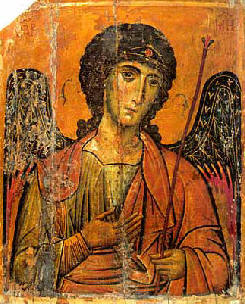
St Michael is one of the principal angelic warriors, protector against the dark of the night and the Archangel who fought against Satan and his evil angels. As Michaelmas is the time that the darker nights and colder days begin – the edge into winter – the celebration of Michaelmas is associated with encouraging protection during these dark months. It was believed that negative forces were stronger in darkness and so families would require stronger defences during the later months of the year.
Traditionally, in the British Isles, a well fattened goose, fed on the stubble from the fields after the harvest, is eaten to protect against financial need in the family for the next year; and as the saying goes:
Sometimes the day was also known as “Goose Day” and goose fairs were held.
Even now, the famous Nottingham Goose Fair is still held on or around the 3rd of October. Part of the reason goose is eaten is that it was said that when Queen Elizabeth I heard of the defeat of the Armada, she was dining on goose and resolved to eat it on Michaelmas Day. Others followed suit. It could also have developed through the role of Michaelmas Day as the debts were due; tenants requiring a delay in payment may have tried to persuade their landlords with gifts of geese!
In Scotland, St Michael’s Bannock, or Struan Micheil (a large scone-like cake) is also created. This used to be made from cereals grown on the family’s land during the year, representing the fruits of the fields, and is cooked on a lamb skin, representing the fruit of the flocks. The cereals are also moistened with sheeps milk, as sheep are deemed the most sacred of animals. As the Struan is created by the eldest daughter of the family, the following is said:
“Progeny and prosperity of family, Mystery of Michael, Protection of the Trinity”
Through the celebration of the day in this way, the prosperity and wealth of the family is supported for the coming year. The custom of celebrating Michaelmas Day as the last day of harvest was broken when Henry VIII split from the Catholic Church; instead, it is Harvest Festival that is celebrated now.
In British folklore, Old Michaelmas Day, 10th October, is the last day that blackberries should be picked. It is said that on this day, when Lucifer was expelled from Heaven, he fell from the skies, straight onto a blackberry bush. He then cursed the fruit, scorched them with his fiery breath, spat and stamped on them and made them unfit for consumption! And so the Irish proverb goes:
“On Michaelmas Day the devil puts his foot on blackberries”.
 The
Michaelmas Daisy, which flowers late in the growing season between late
August and early October, provides colour and warmth to gardens at a
time when the majority of flowers are coming to an end. As suggested by
the saying below, the daisy is probably associated with this celebration
because, as mentioned previously, St Michael is celebrated as a
protector from darkness and evil, just as the daisy fights against the
advancing gloom of Autumn and Winter.
The
Michaelmas Daisy, which flowers late in the growing season between late
August and early October, provides colour and warmth to gardens at a
time when the majority of flowers are coming to an end. As suggested by
the saying below, the daisy is probably associated with this celebration
because, as mentioned previously, St Michael is celebrated as a
protector from darkness and evil, just as the daisy fights against the
advancing gloom of Autumn and Winter.
The act of giving a Michaelmas Daisy symbolises saying farewell, perhaps in the same way as Michaelmas Day is seen to say farewell to the productive year and welcome in the new cycle.
There are traditionally four “quarter days” in a year (Lady Day (25th March), Midsummer (24th June), Michaelmas (29th September) and Christmas (25th December)). They are spaced three months apart, on religious festivals, usually close to the solstices or equinoxes. They were the four dates on which servants were hired, rents due or leases begun. It used to be said that harvest had to be completed by Michaelmas, almost like the marking of the end of the productive season and the beginning of the new cycle of farming. It was the time at which new servants were hired or land was exchanged and debts were paid. This is how it came to be for Michaelmas to be the time for electing magistrates and also the beginning of legal and university terms.
St Michael is one of the principal angelic warriors, protector against the dark of the night and the Archangel who fought against Satan and his evil angels. As Michaelmas is the time that the darker nights and colder days begin – the edge into winter – the celebration of Michaelmas is associated with encouraging protection during these dark months. It was believed that negative forces were stronger in darkness and so families would require stronger defences during the later months of the year.
Traditionally, in the British Isles, a well fattened goose, fed on the stubble from the fields after the harvest, is eaten to protect against financial need in the family for the next year; and as the saying goes:
“Eat a goose on Michaelmas Day,
Want not for money all the year”.
Sometimes the day was also known as “Goose Day” and goose fairs were held.
Even now, the famous Nottingham Goose Fair is still held on or around the 3rd of October. Part of the reason goose is eaten is that it was said that when Queen Elizabeth I heard of the defeat of the Armada, she was dining on goose and resolved to eat it on Michaelmas Day. Others followed suit. It could also have developed through the role of Michaelmas Day as the debts were due; tenants requiring a delay in payment may have tried to persuade their landlords with gifts of geese!
In Scotland, St Michael’s Bannock, or Struan Micheil (a large scone-like cake) is also created. This used to be made from cereals grown on the family’s land during the year, representing the fruits of the fields, and is cooked on a lamb skin, representing the fruit of the flocks. The cereals are also moistened with sheeps milk, as sheep are deemed the most sacred of animals. As the Struan is created by the eldest daughter of the family, the following is said:
“Progeny and prosperity of family, Mystery of Michael, Protection of the Trinity”
Through the celebration of the day in this way, the prosperity and wealth of the family is supported for the coming year. The custom of celebrating Michaelmas Day as the last day of harvest was broken when Henry VIII split from the Catholic Church; instead, it is Harvest Festival that is celebrated now.
In British folklore, Old Michaelmas Day, 10th October, is the last day that blackberries should be picked. It is said that on this day, when Lucifer was expelled from Heaven, he fell from the skies, straight onto a blackberry bush. He then cursed the fruit, scorched them with his fiery breath, spat and stamped on them and made them unfit for consumption! And so the Irish proverb goes:
“On Michaelmas Day the devil puts his foot on blackberries”.
The Michaelmas Daisy
The
Michaelmas Daisy, which flowers late in the growing season between late
August and early October, provides colour and warmth to gardens at a
time when the majority of flowers are coming to an end. As suggested by
the saying below, the daisy is probably associated with this celebration
because, as mentioned previously, St Michael is celebrated as a
protector from darkness and evil, just as the daisy fights against the
advancing gloom of Autumn and Winter.
“The Michaelmas Daisies, among dede weeds,
Bloom for St Michael’s valorous deeds.
And seems the last of flowers that stood,
Till the feast of St. Simon and St. Jude.”
Bloom for St Michael’s valorous deeds.
And seems the last of flowers that stood,
Till the feast of St. Simon and St. Jude.”
(The Feast of St. Simon and Jude is 28 October)
The act of giving a Michaelmas Daisy symbolises saying farewell, perhaps in the same way as Michaelmas Day is seen to say farewell to the productive year and welcome in the new cycle.
Papal Allergies
OMM's ironically amusing answer to Francis hypocritically tweeting that he's 'allergic' to adjectives.
From One Mad Mom
I try, try, try so hard to ignore papal interviews and tweets, but some days I just can’t. It’s hard with “REALLLLLLYYYY?!?!?” blaring in my brain. I’m just going to paste the whole thing and comment after. Emphasis mine.
The guy definitely needs a heavy dose of Benadryl if adjectives and adverbs are allergens. He must be suffering greatly! I also think he should have a talk with the guy who said these things! Might help with the allergies and make those in-flight interviews a bit shorter. I’m going to limit it just to the adjectives/adverbs attached to “Catholic” and “Christian”. If I didn’t, the list of adjectives, adverbs and qualifiers could go on forever. I’m sure I missed some. If you want a lengthier list, go here.
But seriously, folks…I don’t have a problem with half of these, but isn’t it a tad bit hypocritical to claim to detest what you do regularly? Sometimes it’s just too much for us regular folks (or just plain “folks”?) to take without comment.
From One Mad Mom
I try, try, try so hard to ignore papal interviews and tweets, but some days I just can’t. It’s hard with “REALLLLLLYYYY?!?!?” blaring in my brain. I’m just going to paste the whole thing and comment after. Emphasis mine.
Pope Francis loves nouns but is ‘allergic’ to adjectives
By Jessie Yeung, CNN
(CNN)The Pope wants us to stop using so many adjectives.
In a speech on Monday to the Dicastery for Communications, the Vatican’s communications authority, Pope Francis urged people not to describe Christianity with qualifiers and adjectives. “We have fallen into the culture of adjectives and adverbs, and we have forgotten the strength of nouns,” he said.
Instead of calling churches “small but authentic,” or trying to distinguish things as “authentically Christian,” he said people should call them simply “Christian.” The term “Christian” is strong and authentic enough as it is, without the need for adjectives, he said.
“I am allergic to those words,” he added.
He pointed to the role of the employees as communications managers, saying their aim should be to “communicate with reality, without sweetening with adjectives or adverbs.” Communication is a kind of beauty, he said — and “beauty manifests itself from the noun itself, without strawberries on the cake.”
Let us learn to call people by their name, as the Lord does with us, and to give up using adjectives.
— Pope Francis (@Pontifex) September 24, 2019 (Note fromOMM: This is the tweet I got from Pope Francis that led to this rant)
This was the first time the Pope met the Dicastery since first establishing it in 2015, when he had cited the need for a “rethinking” of the Holy See’s information system in a new age of digital media. He touched on this theme again in his Monday speech, encouraging the Dicastery to “encourage the formation of digital environments in which people communicate.”
Over the years, he has personally embraced these digital platforms — he launched an Instagram account in 2016, and gained a million followers in less than 12 hours. He’s also active on Twitter, and even tweeted out a reminder on Wednesday to “call people by their name, as the Lord does with us, and to give up using adjectives.Like I tweeted back to him, I could totally get on board with this if we ditch all those evil adjectives, adverbs, and qualifiers attached to nouns. How about “LGBT” and “rigid” first?
The guy definitely needs a heavy dose of Benadryl if adjectives and adverbs are allergens. He must be suffering greatly! I also think he should have a talk with the guy who said these things! Might help with the allergies and make those in-flight interviews a bit shorter. I’m going to limit it just to the adjectives/adverbs attached to “Catholic” and “Christian”. If I didn’t, the list of adjectives, adverbs and qualifiers could go on forever. I’m sure I missed some. If you want a lengthier list, go here.
Ideological Christians! Rigid Christians! Liquid Christian! Superficial Christians! Long-faced, mournful funeral Christian! Sad Christian! Pickled pepper-faced Christian! Christians allergic to preaching! Closed, sad, trapped Christian who is not a free Christian! Pagan Christian! Defeated Christian! Creed-reciting, parrot Christian! Watered-down faith, weak-hoped Christian! Pastry-Shop Christians! Delectable, but not real Christians! Anesthetised Christian! Christian hypocrites only interested in their formalities! Sloth-diseased, acedic Christians! Catholics, but without enthusiasm, even embittered! People without light – real downers! Selfish Christians, out for themselves! Christians who do not leave space for the grace of God! Christians with all the paperwork, all the certificates, in order! Christian bats who prefer the shadows to the light! Starched Christians! Christians who are too polite! Christians who speak of theology calmly over tea! Catholics who work for personal profit! Catholics who presented themselves as benefactors of the Church and made money on the side! Weak-hearted Christians! Christians in appearance! Made-up Christians, because when the rain comes, the make-up runs off! So many ‘apparent Christians,’ collapse at the first temptation! Christians of appearance! Dead Christians! Christians who prefer a spectacle to the silence of the Kingdom of God! Vain, pageant Christians! Christians without strength, without fertility! A Christian out for himself, to serve himself! Christian with a sad life! Christians enemies of the Cross of Christ! Pagans with two strokes of Christian paint, so as to appear like Christians, but pagans nonetheless! Dark Christians who lead a life of sin! Christians who are neither light nor dark! Christians of grey areas on one side first and then the other! Christians who live for appearances! For vanity! Peacocks Christians! They strut about like peacocks! Soap bubble Christian! Obstinate Christians! Idolater Christians! Christian rebels! Christians with half-and-half a life! A life that is patched, mended, meaningless! Motionless Christians! Mummified Christians! Embalmed, mummy Christians! Vagabond Christians! Wanderer Christians! Labyrinth Christians without a compass! Stubborn Christians! Christians who stop half way along their journey! Half-way Christians! Non-Christian Christians! Slightly ‘paganized’ Christians! Parlour Christians! Virtual Christians who are not virtuous! Christians with a grimace! Lazy Christians! Christians who do not have the will to go forward! Stationary Christians! Etc., Etc., Etc.Wait! What?! Pope Francis said all those things?! Oh, the Holy Father must be doing all of this just to show us the true meaning of Matthew 7:5. That must be it! Or maybe he’s just trying to build up a tolerance to those allergies!
-Pope Francis
But seriously, folks…I don’t have a problem with half of these, but isn’t it a tad bit hypocritical to claim to detest what you do regularly? Sometimes it’s just too much for us regular folks (or just plain “folks”?) to take without comment.
Subscribe to:
Posts (Atom)