01 May 2022

The Church Is in Full Crisis, but Can Rise Again Even in the Darkest Hours. The Lesson of History

A look at the history of ups and downs in the history of the Church. Remember, Christ's promise doesn't mean that the Church will always grow stronger.

From Settimo Cielo

By Sandro Magister

In reflecting on the future conclave - a growing topic of reflection among the cardinals, as Settimo Cielo is documenting - one notes an ever stronger urgency to bring back to the center the fundamental questions about God and about man, those on which the Church stands or falls, not only in order to slow the decay of the present Church, which is there for all to see, but on the contrary trusting in a rebirth of Christian vitality, even in a largely indifferent or hostile world.

At other times in the past the Church has gone through periods of decline. The current de-Christianization is one of these. But nothing says it has to be irreversible or irresistible, as none of the past declines has been.

Because in the history of the Church there have also been seasons of religious renewal. Not always promoted and led by the ecclesiastical hierarchies. Indeed, not rarely brought to life autonomously by men of culture, by Christian intellectuals capable of interpreting and inspiring even substantial mass movements.

Reviewing the alternation of these seasons is therefore more instructive than ever for those who ponder the Church today. And that is what Roberto Pertici, professor of contemporary history at the University of Bergamo, does in this essay he has written for Settimo Cielo.

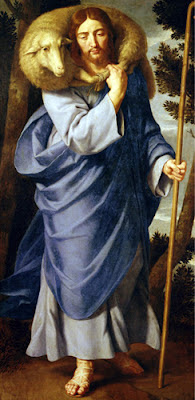
There are at least three religious renewals that Pertici spots in the last half millennium. The first was encouraged by the Council of Trent but had its first roots in the Quattrocento and took shape above all in seventeenth-century France, the century of Pascal (in the portrait) and of “Port-Royal,” going on to decline with the advent of the Enlightenment.

The second blossomed after the French Revolution and Napoleon, in the climate of Romanticism and the new freedoms. It was cultural and political at the same time, ranging from Chateaubriand to Rosmini, from the “Genius of Christianity” to the “Five wounds of the holy Church.” It was extinguished with the anti-liberal congealment of the ecclesiastical hierarchy and with the affirmation of scientific positivism.

The third came between the nineteenth and twentieth centuries and is referred to as the “Renouveau catholique” of the great converts, from Bernanos to Eliot, to Chesterton, to Papini with his “Story of Christ.” It gave out in the middle of the last century with the fading of the conservative paradigm already analyzed by Pertici on Settimo Cielo of August 31 2020.

And the fourth? Vatican Council II tried to make a go of it, this time through the drive of the ecclesiastical hierarchies themselves. But without succeeding, for the reasons that Pertici examined in another of his contributions to Settimo Cielo of September 14 2020.

The Church finds itself on this threshold, between an incomplete religious rebirth and the inexorable advance of de-Christianization, facing a future in which anything could happen.

Here is the first part of Pertici’s essay. The second part and the conclusion will follow in a few days.

*

IS A “RELIGIOUS REBIRTH” POSSIBLE?

I - From the Council of Trent to the early nineteenth century

by Roberto Pertici

1. Among many observers of the situation the Catholic Church is going through today, whether they be believers or not, there is a widespread perception that this is a matter of an institution, I will not say in a terminal phase, but certainly in a very serious crisis: in short, that something is coming to an end, at least in the West. “Vatican, the end of a world” is the title of the latest book by the well-known French vaticanista Henri Tincq, who passed away in March of 2020, a voice critical of the ecclesial tendencies of recent decades. But that “The Church is burning” is also the view - and the title of one of his books - of such an important personality of the Catholic establishment as Andrea Riccardi.

This is a crisis of “governance” at all levels, worsened by a growing and startling wave of sexual and financial scandals; by the rapid decomposition of the figure of the presbyter, decisive in that institution; by the growing difficulty in relations with the world, for which there are no more words of persuasion and guidance, as has also been seen in the recent pandemic phase; by a lack of culture and of guidelines, which now makes it impossible to provide any answer to those who ask: “Is there such thing as a Catholic culture? And what sort of thing is it?”

This overarching crisis is accompanied by the process of secularization and de-Christianization that has overrun the Western world and has accelerated in the last century, making Catholicism negligible even in contexts in which it had always been an element of identity of decisive importance.

In the face of this situation the question spontaneously arises: is this an inexorable trend, and indeed one destined to accelerate further, or will it be possible to reverse this tendency? And how? Will we see - sooner or later - a “religious rebirth,” capable not of restoring old equilibriums (which is not even desirable) but of reopening a discussion on the “sacred” and on the ultimate ends of existence in a society made up more and more of individuals all intent - it has been written - on living a finitude without suffering, that is, aimless and without past or future? And will the Catholic Church be able to have a role in this rebirth or, rather, will it be willing to play one?

The Catholic friends to whom I pose these questions usually answer me with wishes or statements of principle: a generation of saints is needed… holy priests must arise, disciplined and cultured, as Charles Borromeo wanted them… we have promises (“non praevalebunt!”) that require that we have trust… etc.

The undersigned does not have a philosophy of history, much less a theology of history: he believes in the absolute freedom of the course of history (“History is a great improviser,” the Count of Cavour used to say) and at the same time in the possibility of identifying in what has happened and is happening a logic, which however does not lead to a predisposition toward “necessary” outcomes. He is therefore convinced that the de-Christianization process is not the fruit of some conspiracy, but has deep roots in the culture and history of the last centuries; nevertheless, he hesitates to proclaim that it cannot be reversed, or at least, in some way, resisted.

But the historian cannot make prophecies, and if he does so he is only expressing “wishful thinking,” which ultimately is hardly useful. To try to answer the questions just asked, however, there is one thing he can do: he can climb “centuries on the mountain” and look down on the history of the last half millennium, since the development and deployment of what is called “modernity.” Have there been - within this history - moments of “religious rebirth,” and with what characteristics and outcomes? And what role has the “official” Church played in them?

2. Of course there have been, as we will see right away. There have been phases (which I define precisely as “religious rebirths”) in which important sectors of European culture have returned to discuss religion and reflect on religious problems; in fact, they have had no hesitation in defending the reasons for “orthodoxy” and in admitting and even extolling the function of the Church-institution. In all these rebirths, as we will also see, the main role has been played more by laity than by ecclesiastics.

It will be said: this is still a matter of goings-on pertaining to the world of culture and intellectuals, without a true relationship with the religious life of the “masses.” True, but the cultural sphere is a kind of “self-awareness of society,” and therefore a hegemonic role is played within it, sooner or later, by religious repercussions as well as by the much vaster political and social: the Counter-Reformation came even to the small towns that are reflected in Lake Como, if it is true that in “The Betrothed” Renzo Tramaglino and Lucia Mondella interact with a curate trained in the new seminaries provided for by the Council of Trent, with a friar belonging to one of the orders (the Capuchins) held dear by the Catholic Reform, and even with a cardinal who is laboriously carrying out his pastoral visit, also according to the dictates of the prior council.

The Catholic Reform: this is the first movement of “religious rebirth” that took place in the Catholic sphere after the storm of the Protestant Reformation. The notion was popularized by Hubert Jedin in the brief 1946 book “Full as an egg,” according to Delio Cantimori. The German historian made a conceptual distinction with respect to the political and religious Counter-Reformation initiated by the Council of Trent. The Catholic Reform was not intended to be - like the Counter-Reformation - a repressive and disciplinary movement (aspects on which there has however been a great deal of insistence in the last decades), but was a somewhat spontaneous tendency already present in personalities and circles operating in the second half of the Quattrocento, which then flourished and was encouraged as a response to the Reformation on its own turf, one might say. This was supported by the Council of Trent: the fight against the abuses of the hierarchy and its often scandalous conduct, a widespread need for morality and spirituality, seminary and clerical training reform, new religious orders that operate in the different environments of society, renewed forms of piety and popular devotion, etc.

The Catholic Reform was therefore a “religious rebirth” in which the action of the Church-institution was still playing a decisive role. Yet if we want to see the culturally more mature and lasting fruits, we must move to mid-seventeenth-century France, in that reaction to the spread of “libertinage” and of the new natural philosophy which goes from Pascal to Bossuet to Malebranche: in that incomparable season described by Sainte-Beuve in his “Port-Royal.” A movement that the Church-institution sometimes looked at with great concern and even hostility both on the doctrinal (Jansenism) and political (Gallicanism) level, but that for over a century and a half remained an inevitable point of reference for a Catholic who wanted to give a cultural basis to his faith, outside the culture of the seminaries: it is no coincidence that after 1810 a writer and philosopher like Alessandro Manzoni, in an effort to think in a Catholic way, at first had to hark back to these sources.

When does this first “rebirth” give out? We can venture a date, following the hypothesis of another great book of the twentieth century, “The crisis of the European conscience” by Paul Hazard: the date is 1685, when with the Edict of Fontainebleau Louis XIV abolished for eminently political reasons the religious tolerance in the land of France sanctioned in 1598 with the Edict of Nantes of Henry IV. The consequent emigration, especially to Holland, of the leading Huguenot intellectuals, and here the development of a series of anti-Catholic and even anti-religious polemics, was the symptom of a paradigm shift that was to lead to deism, to natural religion, to the first biblical criticism, to the questioning of miracles: all phenomena that were then to develop impetuously in the Enlightenment, more or less radical, of the eighteenth century.

3. It was the traumas of the French Revolution and the revolutionary wars that constituted the premise of a new “religious rebirth.” Here too we can indicate a somewhat symbolic date: the publication on April 14 1802, in the Napoleonic France that had stipulated a concordat with the Holy See the previous July, of the “Genius of Christianity” by François-Auguste de Chateaubriand. The author, who was 34 years old at the time, was the typical representative of a nobility worn out by revolutionary events: after losing relatives and friends on the guillotine and wandering around the world, he had overcome the libertine agnosticism typical of the Enlightenment, returning to the religion of his fathers. A widespread phenomenon in the European aristocracy of the following decades: one could think of the Cavour family, dedicated to the domestic devotion of St. Francis de Sales after decades of religious indifference.

The abandonment of eighteenth-century sensualism, the reborn sense of traditions and their value, suspicion toward a reason that had proudly claimed it would remake the world according to its own designs, the re-evaluation of common sense, meaning of what - it was said - men had always thought and felt, appreciation for sentiment and imagination, in short, that new cultural paradigm which we can define in a broad sense as “Romantic,” induced a new wave of religiosity and also a return of a substantial part of European culture to religious faith. Among the intellectuals, that is, among those most characterized in the second half of the eighteenth century by complete religious indifference, if not by virulent attacks against religion, there was a series of sensational conversions: in Italy the most famous remains, in fact, that of Manzoni.

After 1815, an eagerness for restoration was widespread in European society: the Church came forward as the interpreter of this and promoted it in an ambiguous relationship with political power. Ambiguous because no sovereign was truly open to a full restoration of the “societas christiana,” so much so that soon a series of Catholic thinkers who had dreamed of it began to say: if this is the way things are, then instead of compromising itself with these states the Church should set sail and start thinking about its freedom. But introducing the theme of the Church’s freedom implied, more or less explicitly, more or less instrumentally, the broader one of “modern” freedoms. Then, after the Parisian revolution of July 1830, the great season of liberal Catholicism began.

It is not rash to say that between 1830 and 1848 Catholic culture (also of the Catholic laity) tried perhaps for the last time to play a hegemonic role in Western Europe. After 1830 the religious and Catholic element was the mainstay of great national revolutions (Belgian, Polish, Irish) that inflamed European public opinion and in which the word “freedom” resounds widely: galvanizing the new Catholics and creating embarrassment for the Holy See, which instead insisted on the theme of the political loyalty of its subjects. The only victorious revolution for the moment, the Belgian one, led to a constitutional monarchy that for the first time incorporated a Catholic party, which would make a fundamental contribution to the elaboration of the new constitution (which in fact affirms the separation of state and Church, meaning the Church’s liberation from all the controls and conditioning of the old jurisdictionalism): this made concrete the possibility of coexistence between the Catholic world and constitutional regimes.

In spite of the pontifical condemnation of the encyclical “Mirari vos” (August 15 1832) and the rupture with the Church of the “apostate” Lamennais, the great season of liberal Catholicism in France opened, which with Charles de Montalembert challenged the liberal world on a few issues such as freedom of instruction. In Spain, Juan Donoso Cortés lived his liberal youth as an anti-Carlist. The emancipation of 1829 brought English Catholics out of the catacombs and Catholicism was at the center of the religious discussion of the 1940s, with the development of the Oxford movement. In the very complicated religious situation in Germany, the circle that gathered in Munich around Johann Joseph von Görres found important expression in the defense of ecclesiastical prerogatives from state power (“Athanasius,” 1838). This explains why in the face of the revolutions of 1848, at least initially, the Church was not seen as an integral part of the counter-revolutionary front: not even in France, as shown by the death on the barricades on June 27 1848 of Paris archbishop Denis-Auguste Affre during an attempt to make peace between the insurgent workers and the troops of Cavaignac.

The awakening of religious culture (and the need for religious reform) of those years was prodigious, even in Italy: from November 11 1830 to July 19 1834 Raffaello Lambruschini wrote the first six “Thoughts of a solitary”; between 1832 and 1833 Antonio Rosmini composed “Of the five wounds of the holy Church,” later published in 1848; in 1834 Silvio Pellico published the “Duties of men,” and Gino Capponi began to write the “Civil history of the Church.” In 1835 Niccolò Tommaseo, an exile in France, published “Of Italy” in Paris, which is like a great Lamennaisian manifesto. Priests, historians, men of letters, revolutionaries as they may have been, all of these were convinced that the future Italian rebirth must be intimately religious: only Pellico maintained that Catholicism as it was (or almost) could be its soul; the others thought of a religion restored in all its purity, thus relieved of its secular privileges (Rosmini) and also of the Papal States (Tommaseo), sometimes bordering on heterodoxy (Lambruschini).

4. This “religious rebirth” ends with the failure of the revolutions of 1848-49...

St. Joseph Against the Communists

Fr Zuhlsdorf, better known as 'Fr Zed', discusses today's Feast of St Joseph the Worker, instituted to counteract the Reds' Labour Day celebrations on May Day.

From One Peter Five

By Fr John Zuhlsdorf

This year the 1 May observance of the 2nd Sunday after Easter gives way in honor of St. Joseph, whom we venerate among his other many roles and titles as a patron of laborers and as the “Worker.”

In contrast to what we see now in the Church, to create counterplay against the rise of Communism Popes of the early and mid-20th century invoked St. Joseph, described in this Sunday’s Gospel as a tekton, in Greek “builder” of wood and of stone, often translated at “carpenter.” Pius XI, of happy memory, in 1937 wrote: “We place the vast campaign of the Church against world communism under the standard of St. Joseph, her mighty protector.” Try to imagine that today. To counter the Communist celebration of “May Day,” in 1955 Pope Pius XII declared that same 1 May to be the Feast of St. Joseph the Worker. Try to imagine that today.

Today, there is an aggressive resurgence of forms of atheistic materialism, filtered like the aboriginal serpent’s lie-venom through the fangs of wealth redistribution and confused biology accompanied by the distracting rattles and hisses of race baiting. How has the Church lately engaged with Communist aggression? In 2018, Archbishop Marcelo Sánchez Sorondo, appointed by Francis as Chancellor of the Pontifical Academy of Sciences, said, “Right now, those who are best implementing the social doctrine of the Church are the Chinese.” I don’t imagine that the late, great Ignatius Card. Kung or the very much alive, great Joseph Card. Zen would agree. Following an agreement made between the Holy See and China, details undisclosed, there are now images of the President of the People’s Republic, also Chairman of the Chinese Communist Party, installed in increasingly sinicized Catholic churches. In recent memory, St. John Paul II worked to undermine Communism. It was not all that long ago that Pius XI wrote in Quadragesimo anno 20:

If Socialism, like all errors, contains some truth (which, moreover, the Supreme Pontiffs have never denied), it is based nevertheless on a theory of human society peculiar to itself and irreconcilable with true Christianity. Religious socialism, Christian socialism, are contradictory terms; no one can be at the same time a good Catholic and a true socialist.

Entrusting the universal Church to her great patron and defender, St. Joseph, under the title today of “the worker,” may we all take stock of our blessings and perform works of mercy for the temporally and spiritually downtrodden while offering acts of reparation especially for the sins of omission of our shepherds.

Let us turn to happier thoughts. The Gospel reading for the Feast of St. Joseph the Worker is the account from Matthew of Christ’s return to Nazareth and the people’s rejection of Him. Matthew 13 has parallels in Luke 4 and Mark 6. The Mark and Matthew accounts have one of those references which unbelievers, critics of Christianity and modernists jump on: the Lord’s “brothers,” Greek “adephoí,” which to them proves that Christ’s Blessed Mother was not after all ever-virgin. The “brethren” of Jesus are also mentioned in Matthew 12:46 and his “sisters” here in Matthew 13:55f and in Mark 6:3.

Various explanations have been offered of this seeming contradiction in Scripture to the perennial, dogmatic teaching of the Church about Mary. Firstly, while the barebones meaning of “brothers” is obviously “children of the same parent/s,” it also means other things by extension. Even in Scripture, “brothers” is used for non-biological siblings. In Gen 13:8, for example, it indicated people who belonged to the same extended group. Paul, writing to the Corinthians, spoke of the Lord’s appearance to 500 “adelphoi… brethren” (1 Cor 15:6). Another point is that the “brothers” (and “sisters”) of Jesus are never said to be the children of Mary, Mother of Jesus, but Christ is explicitly called the son of Mary, as at Cana (John 2:1) and in the Upper Room (Acts 1:14).

Furthermore, there are several Marys named in the Gospels, as in Matthew 27:56: Mary the mother of James and Joseph. Coincidently, in today’s Gospel passage in Nazareth, James and Joseph are two of the so-called brethren named. James and Joseph were very common names, as was Mary, Miriam, which causes some confusion in our reading of the Scriptures, not to mention variants of the same name. For example, English “James” is Greek “Iakobos,” Hebrew “Yaakov,” which is, therefore, also, “Jacob”: “James” and “Jacob” are really the same name.

A careful reading of Scripture reveals nothing certain about the “brethren” of the Lord. The early Church writers and Fathers, however, are of one mind on the matter. For example, St. Jerome suggested that the “brethren” were sons of Joseph from a previous marriage. So does the apocryphal, non-scriptural 2nd c. Protoevangelium of James, which provides an image of Joseph as an elderly widower, which also was to safeguard Mary’s perpetual virginity. This image of Joseph as an elderly man was for long dominant in artwork. Also, we find in the Catechism of the Catholic Church (502):

Jesus is Mary’s only Son, but her spiritual motherhood extends to all men whom indeed He came to save: ‘The Son whom she brought forth is he whom God placed as the first-born among many brethren, that is, the faithful in whose generation and formation she co-operates with a mother’s love.’

Hence, the “brothers” and “sisters” of Jesus are not biological “brothers” as in “uterine brothers,” that is, children of the same mother. They might be half-brothers by the same father, or perhaps cousins, or even members of a strongly knit, almost familial group. Christ was the only child of Mary, though through Christ we all are her children. By the way, Christ has only Mary’s DNA.

Since the name “James” has come up, and since one of the Catholic Epistles in the New Testament bears the name of “James”, and since there seem to be many men with this distinguished name in Holy Writ, let’s untangle this knot of Jameses.

Firstly, let’s consider the one called James, the “brother of Jesus.” He is also, according to St. Clement of Alexandria, called James “the Just” or “the Righteous.” He is, in addition, famously called “James the Lesser.” Why “Lesser”? “Minor”? Maybe because he was short. He appears four times in the New Testament in lists of the Apostles. This is not the James who, with John the Evangelist, was the son of Zebedee, who is “James the Greater.” James, the Just, the Lesser, the “brother of the Lord,” was the son of Alphaeus. Matthew is also called son of Alphaeus, though there is no explicit statement that they are brothers. Again, it could be two different men named Alphaeus. “Alphaeus” might be an attempt to render into Greek the name “Clopas… Cleopas,” the beginning rough “c” lining up with the rough Aramaic initial “a” or “h.” The Holy women at the Cross were Mary Magdalene, Salome (wife of Zebedee, mother of John the Evangelist and James the Greater), and Mary of Clopas (wife of Clopas, who could be Alphaeus), “the mother of James” (Mark 16:1 and Luke 24:10). Last Sunday, as it happened, the Easter Octave, the Sunday with half a dozen nicknames, was also the Feast of Sts. Mary of Clopas and Salome.

What happened to this James, the Lesser, brother of the Lord? Early Church historian Eusebius says that Peter, John and James the Greater (the inner circle within the Twelve) appointed him to lead the Church of Jerusalem and be its first bishop. In Acts 15:13-21, when the Church determined that Gentile converts did not have to be circumcised, in was James the Lesser who stated the decision that Peter ratified. Paul told the Galatians in his letter written between AD 49-58 that the only Apostle whom he met in Jerusalem was James, “the Lord’s brother” (1:19). The rest of the Apostles had spread out by then and James remained in Jerusalem. There are divided traditions about James the Lesser’s martyrdom. According the Jewish historian Josephus, James “the brother of Jesus” was stoned by the order of the Sadducee High Priest Ananus in AD 62 or 69. Early 3rd c. Hippolytus has James, “son of Alphaeus” stoned in Jerusalem and buried by the Temple.

Coincidently, I write this column about Sunday, 1 May, which way back in the day had a Roman Station church assigned, the Basilica of the Twelve Apostles. Moreover, before 1 May became the Feast of St. Joseph the Worker, it was the Feast of Sts. Philip and James the Lesser, whose remains are venerated in the old Roman Station for today, the aforementioned Basilica. The Apostles’ Feast was moved to 11 May. Their relics, translated here in 886 by a barefoot Pope Stephen IV who carried them on his shoulders from the catacombs, were hidden in the structure out of fear of desecration during invasion and only rediscovered in 1837. They are now beneath the main altar.

James the Greater, Maior, was the son of Zebedee and Salome, and brother of John the Apostles and Evangelist. Christ called them “Boanerges … Sons of Thunder” because they wanted Christ to punish a city for rejecting Him (Mark 3:17). He was, with Peter and John, in the inner circle of the Twelve. He was one of the eyewitnesses of the Transfiguration. His Feast is 25 July. James the Greater was beheaded in AD 44 at the order of King Herod Agrippa in Jerusalem (Acts 12:1-2).

Who was the author of the New Testament Letter of James? From the onset, the Letter itself says, “James, a servant of God and of the Lord Jesus Christ, to the twelve tribes in dispersion. Greeting” (v.1:1). The Letter has been attributed to James the Lesser, “brother of Jesus.”

Our early forbears in the Faith were strong in the face of evil governance and bloody persecution. Together they shepherded the early Church and nurtured its growth with great diligence and sacrifice. St. Joseph did the same in the context of the Holy Family. He was the protector of Mary and Jesus both on their way to and from Bethlehem, but also to and from Egypt when they fled from Herod the Great’s cruel assassinations. Hence, Joseph is named in the Litany approved by Pius X in 1909 as “Chaste guardian of the Virgin… Diligent protector of Christ… Protector of Holy Church.”

This Sunday we would do well to recite the Litany of St. Joseph, alone if need be, but better in a group and even better in church, as a congregation, perhaps at the conclusion of Holy Mass. Bring your hopes and petitions to St. Joseph, especially for the Church. Pray also for those who are in need of work or whose positions are becoming untenable due to the encroachment of evil ideologies and sick agendas.

St. Joseph, Terror of Demons, pray for us.

Bolshevism, Truth, and Ancient Greek Philosophy

A look at the communists' 'big lie' technique, the destruction of the idea of objective truth by the Left, and ancient Greek philosophy.

From The University Bookman

By Pedro Blas González

George Orwell’s Nineteen Eighty-Four Redux

Beginning in the early twentieth century, Bolshevism’s incessant propaganda and disinformation campaigns have made it next to impossible, even for thoughtful persons, to separate appearance from reality and truth from deception. In order for Bolshevism’s ploy that “a lie repeated over and over becomes truth” and Lenin’s “the Capitalists will sell us the rope with which we will hang them” to gain traction, Marxist artifice had to be repackaged and sold to Western intellectuals.

How did Bolshevism’s sinister form of deception eventually come to rule postmodern man? There are several reasons. For one, the rate of technological development in the twentieth century enabled Bolshevism to turn time-proven despotism into a state-controlled machinery of censorship and murder. Bolshevism harnessed developing technologies and used these to advance its brave new world of psychological terror and state-driven violence.

Technological development is a natural offspring of man’s sense of awe and wonder, imagination and ingenuity. From the Pre-Socratics to Plato and Aristotle, philosophers have reflected on the question of innovation and what constitutes material progress. The problem is that technological development confronts man with a fundamental paradox: while awe and wonder can result in new technological discoveries, these subsequently often serve to stymie imagination and spiritual development through complacency. The kind of idleness that complacency ushers is labeled a capitalist bourgeois value by Bolshevism.

Human history demonstrates that progress comes in temporal spirals of advancement, setbacks, and retraction, not linear progress. This is why Parmenides refers to truth (alētheia, ἀλήθεια) as revealing/unrevealing. For ancient Greek philosophers, alētheia uncovers the structure of human reality, making it the opposite of illusion. In other words, knowledge does not come from idleness, but from proactive engagement with human reality. This is a difficult task that requires discipline and patience, for truth, Parmenides informs us, does not prostitute itself to the highest bidder. Yet the manipulation of truth is profitable for social-political movements that aim to reduce human reality to appearance. This is a stratagem that eradicates man’s ability to embrace reality as resistance to the will, and the attainment of truth the reward of taking the road less traveled.

Socrates realized that reason presents thinkers with understanding of human reality as revelation. As the end result of reflection, the terms of revelation are not dictated by the thinker. Instead, reason delivers the thinker to understanding, regardless of how unsavory the findings. Dialectical progression—in the form of thesis-antithesis-synthesis—is one of the mechanisms of truth that demand cognitive appropriation of the structure of reality. Plato, along with other ancient Greek philosophers, discovered that essence manifests itself as form. To uncover essence requires cohesion between thought and human reality. This entails that thinkers should respect the essential and objective (formal) architectonic of human reality.

Instead of sincere appropriation of human reality, Marxist dialectics, which is in effect a vile sophistry, violates and deforms reality through manipulating the adherence of reason to reality. The correlation that reason can come to have with reality demonstrates that man’s encounter with moral and spiritual essences creates well-adjusted individuals.

Marxist dialectical materialism ignores man’s metaphysical and existential grasp of qualitative phenomenon. Rather, Marxists sell dialectical materialism as wordy, smart-sounding talk about class warfare as their theoretical vehicle for social-political power. In actuality, dialectical materialism is a modern and postmodern form of sophism that defames and vulgarizes human reality for social-political gain. Marxism’s power over anguished people who cannot accept human reality on its own terms is rooted in Marxism’s declaration of war on reality. Sophism always disguises itself in the appearance of smartness, which in itself is another manner of cultivating appearances.

Bolshevism turned the idea of human progress on its head. Instead of the quest to alleviate the ravages of disease, backbreaking labor, and man’s quest for leisure, through moral/spiritual and cultural enlightenment, Bolshevism’s rancorous use of dialectical calisthenics consumes man’s capacity for contentment by converting the human person into a perverter of human reality for ideological reasons. Marxism paves the road to social-political and economic damnation through the fabrication of the one-party state.

Positivism in the Twentieth Century

The twentieth century proved to be a time in human history when positivism harvested the human psyche to turn it on itself. Positivism, in its many variants, is the hallmark of philosophical materialism, which promotes the objectification of man through the extinction of metaphysical and religious sensibility. Positivism’s anti-metaphysical stance aims to annihilate man’s ability to uncover qualitative essence: the foundation of man’s lived-experience and wellbeing. An anti-metaphysical age is what Auguste Comte, the father of positivism, refers to as the final stage of “the law of three stages.” Comte argues that the final stage of human history is the positive stage.

The detrimental effect that positivism has had on the human person beginning, say, in 1900, is unprecedented. Positivism attempts to forge a world that is ruled by the many offshoots of philosophical materialism: biologism, physicalism, and scientism, to name a few. Whatever form positivism takes, whether in morals, cultural, or social-political, the result is always reductionism. In order to achieve its quest for reductionism of human existence to a base material process, positivism must first impair man’s metaphysical sensibility, including the cultivation of beauty, moral values, and religious beliefs. Indolence and the lure of material comfort, Comte understood, would do the bidding for positivism. Comte was confident that a positive age would eventually annihilate man’s reminiscence of the past, individually and collectively.

Only by erasing man’s sense of self, his sense of history, which is the essence of the human person, can hollow man come to embrace the atomistic demands of a sterile positive age. One way to achieve this unprecedented deleterious milestone in human history is through the coerced forgetfulness that is the badge of collectivism.

George Orwell’s Nineteen Eighty-Four: The Bible of Bolshevism for a Postmodern Age

Arguably, no other book has better explained Bolshevism’s newfangled techniques of psychological terror, social-political oppression, and subterfuge than Orwell’s novel Nineteen Eighty-Four.

Orwell was a keen observer of the human psyche and how it can be easily manipulated for political power by savvy radical opportunists. By the time Nineteen Eighty-Four was published in 1949, Orwell had witnessed at least half a century of Marxist insurrections, social-political machination, and disinformation campaigns that targeted man’s ability to make sense of baleful human reality. Orwell understood the totalitarian impulse—to use Jean-François Revel’s phrase—dating back to Marx and Engels, Lenin, Stalin, and Bakunin’s prediction that the goal of communism was to become a one-party totalitarian state over the proletariat, and not of the proletariat. Orwell makes it clear in Nineteen Eighty-Four that the latter is Big Brother’s sole purpose.

Re-reading Nineteen Eighty-Four after many years of having read it, I am more astonished today than ever before of the anthropological sophistication and complexity of this masterful work. I marvel at the idea that several generations ago high school students were assigned the book as required reading and were expected to understand the intricate pathology of totalitarian social-political terror. Lamentably, not only are books like Nineteen Eighty-Four censored today in universities, students lack the historical and social-political astuteness and the historical acumen to comprehend the real-world horror of Bolshevik, and more recently Maoist, totalitarianism.

Besides being beautifully written, Nineteen Eighty-Four takes discerning readers on a claustrophobic tour of the loss of liberty in a sadistic society that is governed by tyrannical psychopaths.

Nineteen Eighty-Four has given the world memorable words and phrases—the overused and little understood Big Brother, along with Newspeak (the opposite of Oldspeak and Oldthink), Crimethink (thoughtcrime), which is related to Thinkpol (Thought Police), and Doublethink.

The purpose of the politically expedient and sinister reworking of everyday language is political control through the destruction of thought. Annihilation of independent thought is the aim of Bolshevism. In Nineteen Eighty-Four people are conditioned through re-education campaigns that create the thoughtless automatons of Big Brother’s well-oiled collectivism. The narrator reminds us, “But the special function of certain Newspeak words, of which Oldthink was one, was not so much to express meanings as to destroy them.”

Restructuring common language to reflect the violence that totalitarianism does to man’s perception of reality, through the austerity and banality of Newspeak, is consistent with Comte’s positive age.

Nineteen Eighty-Four has an Appendix entitled “The Principles of Newspeak.” It is not a common practice for novels to have an appendix. The appendix augments some of the terms that Orwell emphasizes. Including an appendix adds a touch of literary acuteness, yet it is not a gratuitous literary convention. The in-depth, essayistic nature of the appendix suggests that the author had more to say about the collectivist nightmare that is Nineteen Eighty-Four. Orwell did not want to bog down the novel with what may seem to some readers as superfluous explanation.

The appendix explains the three different vocabularies that the residents of the demonic world in Nineteen Eighty-Four must learn to navigate, as a matter of life and death.

The A vocabulary includes words about everyday life, like eating, drinking, and working. The B vocabulary has been constructed for the sole purpose of control through social-political power, which is the heart and soul of Nineteen Eighty Four’s Bolshevism. The B vocabulary necessitates that readers first understand the aims of Big Brother and the masterminds behind the dystopian world that is Nineteen Eighty-Four. Examples of these words include goodthink, a word that means political orthodoxy, and bellyfeel, which denotes blind acceptance of Big Brother’s mandates. Winston is told by his torturers that he is a non-person:

We shall crush you down to the point from which there is no coming back. Things will happen to you from which there is no coming back. Things will happen to you from which you could not recover, if you lived a thousand years. Never again will you be capable of ordinary human feeling. Everything will be dead inside you. Never again will you be capable of love, or friendship, or joy of living, or laughter, or curiosity, or courage, or integrity. You will be hollow. We shall squeeze you empty, and then we shall fill you with ourselves.

The C vocabulary is reserved for scientific and technological terms. It is significant that the C vocabulary is stripped of “undesirable meanings.” Presumably, Big Brother views science as an activity performed by automatons, robotic entities that do not feel the need to place science in perspective by subjecting it to moral or metaphysical analysis. The latter results, not in science, but blind and weaponized scientism.

The three vocabularies are structured to fine tune the human psyche to accept state censorship. Another word for this is conditioning through re-education. However, people still need to maneuver through daily life, even in a brutal and draconian totalitarian state. Given this reality, the three vocabularies remind citizens in Nineteen Eighty-Four that, while remaining busy with the aspects of daily life that the three vocabularies mandate, their psyche must not deviate from the restricted confines of government directives. The three vocabularies corral human life into abiding by Big Brother’s severe control, creating the illusion that reality is fully contained within the scope of the three vocabularies.

Mass coercion through the regulation of language, Orwell observes, equates to mind control over self-identity, memories, history, and an individual’s past. This is one of the tenants of psychological terror and oppression. Orwell offers readers poignant examples of social-political oppression and the human psyche.

Despotism’s New Clothes

Bolshevism transformed despotism into a bold, intellectualized form of totalitarianism that man had never witnessed. Bolshevism took advantage of technological advancements in firearms, aviation, and other forms of transportation and coupled this with the explosion of new media in the West that could be used to launch disinformation campaigns. This altered despotism into systematic physical and psychological terror that solidifies its quest for social-political power through intellectual and rationalized deformation of reality.

Dating back to Adam Weishaupt, the Comte de Mirabeau, Marx, and Lenin, revolutionary messianism has packaged the limitless perfection of man as the long-awaited utopia that is just around the corner. But not quite yet.… First comes the eradication of the individual, independent thinkers, and the classical liberal embrace of liberty that stands in the way.

Bolshevism understands that appearance and reality can be made interchangeable and malleable, depending on the purpose of its newfangled despotism’s quest for social-political control: A readily becomes B, and B becomes A on demand. This is dialectical materialism in action.

From Marx’s pact with the devil, that human reality must be made to serve the interest of its deformers, Bolshevism saw untold possibilities for social-political power. Before Bolshevism can be sold as a messianic Shangri-la, human reality must be turned into the enemy of the people. This is one reason why after the rise and execution of Bolshevik despotism, in its many guises dating back to 1900, this form of totalitarianism has become the darling of leftist elitism, of the liberal bourgeoisie, circa 2022.

The Heuristic Lessons of Nineteen Eighty-Four

Orwell’s Nineteen Eighty-Four not only became a reality in the twentieth century, but has become the dominant form of oppression in liberal Western democracies. In our time, self-possessed elitist despots have taken advantage of developments in electronic media to propagate Bolshevism’s quest for social-political power. While despotism is a regrettable aspect of human beings, Bolshevism has become ingrained in the psyche of adherents of the here-and-now through coercion and disinformation campaigns.

Questions abound as to why Western liberal democracies have not only ignored Bolshevism’s crimes against humanity, but have embraced this form of rationalized murder and psychological terror: Thomas Pynchon, in his foreword to Nineteen Eighty-Four, tells us that “Orwell was amused at those of his colleagues on the Left who lived in terror of being termed bourgeois.” One answer to this is that the novel is downplayed by leftist Western intellectuals because it goes against the grain of their proposed sophomoric utopia that trades liberty for alleged security from human reality.

Lamentably, one way to lessen the impact of a work like Nineteen Eighty-Four is to over-intellectualize the novel. The latter technique effectively turns real-world events into the abstract and theoretical fetish of university seminars and conferences.

Solzhenitsyn’s Gulag ArchipelagoWarning to the West, and many other works, including One Day in the Life of Ivan Denisovich, spell out the horrors of Bolshevism and its threat to liberal democracies. In addition to Solzhenitsyn, Camus’s The Rebel, Milosz’s The Captive Mind, and Jorge Edwards’s Persona Non Grata (1973), winner of the Cervantes Prize, showcase the real-world terror of Bolshevism.

Orwell presented readers with a vivid picture of Bolshevism up to the time of the novel’s publication. He effectively extrapolated Bolshevism’s ability to deform human reality in the miasma of social-political confusion and ignorance that postmodernity ushered.

Nineteen Eighty-Four is as much about Winston Smith’s zest for freedom and Big Brother’s sadistic social-political control as it is about erasing the past, gaslighting personal memories, and the censure of language in order to rule over a sheepish, brutally oppressed populace: “Winston could not even remember at what date the party itself had come into existence. He did not believe he had ever heard the word Ingsoc before 1960, but it was possible that in its Oldspeak form—‘English socialism,’ that is to say—it had been current earlier. Everything melted into mist.” 

Royal News Roundup

A short roundup of royal news from early May 2013.

From The Mad Monarchist (10 May 2013)

A faster and earlier roundup this week. Starting with the Scandinavian royals, King Harald V of Norway was in Brazil last week, visiting and even staying with a group of Yanomami natives in a remote region of the Amazon River basin. A beautiful area but not without danger. They don’t call it the “Green Inferno” for nothing. Meanwhile, the Norwegian Crown Princely couple were in Houston, Texas Sunday for the Offshore Technology Conference. Norway has been involved with the Conference for 40 years and the Crown Prince told local reporters that as the oil business is such a powerhouse in Texas, there is much he can learn here. The royal couple then moved on to San Francisco, California. On the British Isles, the Prince of Wales and Duchess of Cornwall accompanied HM the Queen to the state opening of Parliament at Westminster Palace this week. There were no major trips announced in the Speech from the Throne and according to the Palace HRH the Prince of Wales will stand in for the Queen at the Commonwealth summit this year. On a related front the Prince of Wales and Duchess of Cornwall hosted a reception for the British-Caribbean communities this week. On Thursday Prince Harry arrived in the United States for a week-long visit of New York, Connecticut, New Jersey, Colorado and Washington DC.

In southern Europe, HSH Princess Charlene of Monaco said in an interview that she is ready to be a mom, at least once the new Princess Charlene Foundation is up and running smoothly, which she figures will take a couple of months. I think it is safe to say that the public is ready as well. A little heir to the throne to carry on the Grimaldi-Polignac line would be good news indeed. I think Andrea Casiraghi would make a fine ‘Prince Albert III’ but the Casiraghi trio would probably be happiest to just carry on with their current lifestyle rather than having royal responsibilities to worry about and they and Princess Caroline are probably hoping for Albert to have a son more than anyone. Over in Spain there was some welcome news for a Royal Family that sorely needs some as the Spanish court announced it was suspending the charges against the Infanta Cristina, which were ridiculous to begin with. Also in Spain, HM Queen Sofia attended ’Red Cross World Day’ in Malaga. This event commemorates the founding of the Red Cross and Red Crescent in a different Spanish city every year. Last Saturday the Queen was on the Greek island of Spetses to celebrate Easter with her family, including the former King Constantine II.

And, up in the Low Countries, the Grand Duke and Duchess of Luxembourg presided over the opening of the Spring Fair at Luxexpo on Saturday and in The Netherlands the first official engagement for the new King and Queen went off without a hitch, though it was a solemn occasion. King Willem-Alexander and Queen Maxima attended a special ceremony to honor the Dutch forces who were lost in World War II. When the war came to the country the Dutch resisted for four days before capitulating to the Germans. Many Dutch served in the underground resistance, some fought in the Allied armies in special units and Dutch colonial forces fought against the Japanese in what is now Indonesia. In other news the local officials are now expressing regret over the arrest of two Dutch republican protestors during the recent inauguration ceremonies, saying it was a mistake caused by a shift-change. Personally, I don’t think they should be apologizing at all, arrest them all I say! The Duke and Duchess of Brabant also reportedly commented on the Dutch inauguration, being very impressed by the outpouring of public support for the new monarch and Princess Mathilde (again, reportedly) said she hopes Prince Philippe will be given a similar reception when he becomes King of the Belgians, but added that of course the Belgians are not the same as the Dutch.

Bishop Challoner's Meditations - Second Sunday after Easter

ON A LIVELY FAITH

Consider first, that the faith to which the word of God gives such high encomiums, and to which it attributes all the great things that have been done by the ancient Saints, is not a dead faith, like that of the devils, or of those wretched souls that are spiritually possessed by the devils, and who have little or no sense of divine truths; but a lively and active faith, that penetrates into the invisible things of God, and makes them familiar to the soul; that sets them continually before her eyes in their proper light, and gives them a constant influence over every step that is to be taken in her mortal pilgrimage. Such a faith as this is the source of all good to the soul; it keeps her in the remembrance and presence of God; it teaches her to watch diligently and to pray fervently; it encourages her to hope and to love; it gives her a horror for sin; it completely arms her against all her spiritual enemies, with a shield that is proof against all their fiery darts, with the helmet of salvation, and with the sword of the spirit, (which is the word and truth of God,) which puts to flight all the legions of hell, when employed against them by a lively belief. But where this lively faith is wanting, all goes to wreck and to ruin. Lord, do thou increase our faith and make it lively. O grant us this true heavenly wisdom, and all good things will come to us along with her, and she will effectually bring us to thee.

Consider 2ndly, how true it is, that the want of a lively faith is the source of all the evils that overrun Christendom. Look into all conditions of Christians, and see how sin and Satan everywhere reign, and how few there are, in comparison, that dedicate themselves in good earnest to what should be their only business. And whence comes all this? Do not these men all believe there is a God and an eternity? Do they not all believe that they were made by this God, in order to a happy eternity? Do they not believe there is a heaven and a hell, and that living in mortal sin is the broad road to hell? Do they not believe in a judgment to come, and an all-seeing eye ever upon them, that is one day to decide their cause according to their works, for life or death everlasting? Surely they believe all this, or they are not Christians. But the misfortune is, that their faith of all these, and such like Christian truths, is lulled asleep, or rather is quite dead; it has no influence on their lives, it puts little or no restraint upon their passions and lusts; so that in reality it is the want of a lively faith that fills the Christian world with all sorts of crimes, and that continually crowds hell with souls.

Consider 3rdly, that the Christian must come at this lively faith by desiring, seeking, and heartily praying for it. But the most effectual means of arriving at it is by serious considerations and daily meditations. The great Christian truths relating to God and eternity are very moving when they are duly weighed and considered; but they make little or no impression upon worldlings, who live in a perpetual forgetfulness of them. To bring forth a lively faith in the soul they must take deep root there. But how shall they take deep root if they are not suffered to sink deep into the soul by consideration? Hence the great difference between the good and the bad Christian, the saint and the sinner, is, that the one thinks, and the other does not think; the one keeps his faith alive by frequently meditating on divine truths; the other’s faith is dead, and his whole soul is laid waste with utter desolation, because he seldom or never thinks in his heart.

Conclude to labour for the acquiring and maintaining this lively faith, by praying well and living well, but more especially, by thinking well; for without this, thou wilt have little or no sense of God in thy prayer, and little or no sign of God in thy life.


1 May, Antonio, Cardinal Bacci: Meditations For Each Day

The Month of Mary

1. It is often said that May is the most beautiful month of the year. The flowers are in full bloom, the weather is mild, and the first fruits of the soil are beginning to reward man's labour. It is fitting that we should dedicate to Mary the most beautiful month of the year, for she is the most beautiful of God's creatures.

We should offer this month to Mary by increasing our love for her. We should love her with a filial love, for she loves us with the heart of a mother. If we contemplate her beauty and goodness, we shall be inflamed with love for her. It will be a tender love such as we have for our earthly mother, and at the same time a respectful and worshipful love such as we ought to have for the Mother of God. Our offering of the month of May to Mary should result in a twofold resolution:—the resolution to make good our failings and to advance in holiness. This is the only way in which we can prove the sincerity of our affection, by deeds rather than by words. It is certain that we have many faults of character. Let us examine ourselves in front of Our Lady's altar by comparing our weakness with her magnificence of soul. When we have discovered our failings, let us be courageous in eradicating them. We can offer this sacrifice to Mary with love and generosity, no matter how hard it may be.

We can spend every day of this month digging out those weeds in the garden of our soul, which our passions and the influence of the devil have helped to flourish. Let us plant and bring to perfection in their place the flowers of Christian virtue. In this way we shall make the month of May very pleasing to Mary.

2. This work of eradicating our faults and replacing them by their opposite virtues is a difficult task which we cannot carry out on our own. Prayer is necessary if we are to obtain the grace which we need. During Mary's month we should beseech our heavenly Mother with greater earnestness to obtain for us from her divine Son the grace which we need to correct the evil in our nature and to perfect it in goodness. Mary wants us to pray to her because she wishes to obtain for us the graces which we require. She loves us very much and is ready to help us to become, like her, living imitations of Jesus in so far as the weakness of our nature will permit. Among our other prayers let us remember to give pride of place to the Rosary, whether we recite it in church or with the family. Let us include at least a quarter of an hour of meditation; a daily visit, however short, to the Blessed Sacrament and to Our Lady's altar; an examination of conscience in the evening; and many ejaculatory prayers during the day which will express our love for Mary and for her divine Son.

3. Holy Mary, my most tender Mother, I love you and desire to love you more and more. I realise that I am spiritually poor and imperfect. You who are close to the all-powerful God, please help me by your favour and intercession. I know that Jesus will grant everything you ask of Him. Obtain for me, therefore, during this month, the grace to eradicate all my vices and to cause to flourish in my soul all the virtues of which I stand in need. Set my heart on fire with the love of God and help me to grow more and more like you and like your divine Son. Amen.

Eastern Rite - Feasts of 1 May AM 7530

Today is the Sunday of the Holy Myrrhbearing Women with the Noble Joseph, and the Feasts of the Holy Prophet Jeremias, of the Coronation of the Pochaev Icon of the Mother of God,  and of the Passing into Eterna' Life of Blessed Hieromartyr Klymentii Sheptytsky, Archimandrite of the Studites.
✠✠✠✠✠

The Myrrh-bearing women are those women who followed the Lord, along with His Mother. They remained with her during the time of the saving Passion and anointed the Lord's body was with myrrh. Joseph and Νikόdēmos asked for and received the Lord's body from Pilate. They took it down from the Cross, wrapped it in linen cloths and spices, then laid it in a tomb, and then they placed a great stone over the entrance of the tomb.

According to the Evangelist Matthew (27:57-61), Mary Magdalene and Mary the mother of James and Joses (Mark 15:40) were there sitting opposite the sepulchre, and they saw where He had been laid. This other Mary was the Mother of God. Not only were these present, but also many other women, as Saint Luke says (24:10).

Today the Church honours Saints Mary Magdalene (July 22), Mary the wife of Cleopas (May 23), Joanna (June 27), Salome, mother of the sons of Zebedee (August 3), Martha and Mary, sisters of Lazarus (June 4), and the Most Holy Theotokos and Ever-Virgin Mary, who was the stepmother of her husband Joseph’s sons James (October 23) and Joses (October 30). Today we also remember Saint Joseph of Arimathea (July 31), who was a secret disciple (John 19:38), and Saint Νikόdēmos, who was a disciple by night (John 3:3; 19:38).

The holy right-believing Queen Tamara of Georgia is honoured twice during the year: on May 1, the day of her repose, and also on the Sunday of the Myrrh-Bearing Women.

Troparion — Tone 2

The Noble Joseph, / when he had taken down Your most pure Body from the tree, / wrapped it in fine linen and anointed it with spices, / and placed it in a new tomb. / But You rose on the third day, O Lord, / granting the world great mercy.

Troparion — Tone 2

The angel came to the myrrh-bearing women at the tomb and said: / Myrrh is meet for the dead; / but Christ has shown Himself a stranger to corruption! / So proclaim: The Lord is risen, / granting the world great mercy!

Troparion — Tone 4

(Podoben: “You appeared to your flock as a rule of faith...”)
You visited Christ the Lord in the night, / and were born from above (1) being received, as it were, as a secret Apostle. / With good courage you disputed with the Pharisees and Scribes (2) / and followed the Savior. / Taking Him dead from the Cross, / you wrapped Him in cloths with myrrh and laid Him in the tomb, / O fervent (3) Νikόdēmos.

1 John 3:3
2 John 7:50
3 or zealous

Kontakion — Tone 2

When You proclaimed “Rejoice” to the Myrrhbearers, / You caused the lamentation of the first mother Eve to cease by Your Resurrection; O Christ God; / You bade Your Apostles preach: / “The Saviour is risen from the tomb.”
✠✠✠✠✠

The Holy Prophet Jeremias, one of the four great Old Testament prophets, was son of the priest Helkias from the city of Anathoth near Jerusalem, and he lived 600 years before the Birth of Christ, under the Israelite king Josias and four of his successors. He was called to prophetic service at the age of fifteen when the Lord revealed to him that even before his birth the Lord had chosen him to be a prophet. Jeremias refused, citing his youth and lack of skill at speaking, but the Lord promised to be always with him and to watch over him.

He touched the mouth of the chosen one and said, “Behold, I have put My words into your mouth. Behold, I have appointed you this day over nations and kingdoms, to root out and to pull down, to destroy and to rebuild, and to plant” (Jer. 1:9-10). From that time Jeremias prophesied for twenty-three years, denouncing the Jews for abandoning the true God and worshipping idols, predicting sorrows and devastating wars. He stood by the gates of the city, and at the entrance to the Temple, everywhere where the people gathered, and he exhorted them with imprecations and often with tears. The people, however, mocked and abused him, and they even tried to kill him.

Depicting for the Jews their impending enslavement to the king of Babylon, Jeremias first placed on his own neck a wooden, and then an iron yoke, and thus he went about among the people. Enraged at the dire predictions of the prophet, the Jewish elders threw the Prophet Jeremias into a pit filled with horrid, slimy creatures, where he almost died. Through the intercession of the God-fearing royal official Habdemelek, the prophet was pulled out of the pit, but he did not cease his prophecies, and for this, he was carted off to prison. Under the Jewish king Zedechias, his prophecy was fulfilled.

Nabuchodonosor came, slaughtered many people, carried off a remnant into captivity, and Jerusalem was pillaged and destroyed. Nabuchodonosor released the prophet from prison and permitted him to live where he wanted. The prophet remained at the ruins of Jerusalem and bewailed his nation’s misfortune. According to Tradition, the Prophet Jeremias took the Ark of the Covenant with the Tablets of the Law and hid it in one of the caves of Mount Nabath (Nebo), so that the Jews could no longer find it (2 Mac. 2). Afterwards, a new Ark of the Covenant was fashioned, but it lacked the glory of the first.

Among the Jews remaining in their fatherland there soon arose internecine clashes: Hodolias, Nabuchodonosor’s viceroy, was murdered. The Jews, fearing the wrath of Babylon, decided to flee into Egypt. The Prophet Jeremias disagreed with their intention, predicting that the punishment which they feared would befall them in Egypt. The Jews would not listen to the prophet, however, and taking him along by force, they went into Egypt and settled in the city of Tathnis. There the prophet lived for four years and was respected by the Egyptians because by his prayers he killed crocodiles and other creatures infesting these parts. When Jeremias prophesied that the King of Babylon would invade Egypt and annihilate the Jews living there, the Jews murdered him. In that very same year the saint’s prophecy was fulfilled. There is a tradition that 250 years later, Alexander the Great transported the relics of the holy Prophet Jeremias to Alexandria.

The Prophet Jeremias wrote his Book of Prophecies and also the Book of Lamentations about the desolation of Jerusalem and the Exile. The times in which he lived and prophesied are described in 4 Kings (Ch. 23-25) and in the Second Book of 
Paralipomenon (36:12) and in 2 Machabees (Ch. 2).

In the Gospel of Matthew, it is said that the betrayal of Judas was foretold by the Prophet Jeremias, “And they took thirty pieces of silver, the price of him on whom the sons of Israel had set a price, and they gave them for the potter’s field, as the Lord directed me” (Mt. 27:9-10). Perhaps Jeremias 32:6-15 is meant.

Even after his death, the Prophet Jeremias was regarded as a wonderworker. Dust from his tomb was believed to cure snake bite, and many Christians pray to him for this purpose.

Troparion — Tone 2

Celebrating the memory / of Your Prophet Jeremias, O Lord, / for his sake, we entreat You to save our souls.

Kontakion — Tone 3

Cleansing your radiant heart through the Spirit, / O great Prophet and Martyr, / glorious Jeremias, / you received from on high the gift of prophecy. / You cried out with a great voice to the nations: / This is our God, and there is none other besides Him / Who became incarnate and appeared on earth.
✠✠✠✠✠

The Icon of the Mother of God “The Footprint” at Pochaev was recognised by Clement XIV, Pope of Rome, as miraculous and was Papally Crowned on his orders.

The history of Our Lady of Pochaiv (pronounced Po-cha-yiv) begins in 1198 at the top of Mount Pochayiv in the Carpathian Mountains, about two centuries after Christianity became institutionalized in Ukraine following the conversion of St. Volodymyr.

On April 17, 1198, a monk in the region of Ternopil Oblast ascended Mount Pochaiv to pray. After beginning his prayers, a pillar of fire appeared to him and to some shepherds nearby. The flames withdrew to reveal the Blessed Virgin standing upon the mountain. The apparition left behind a single footprint upon the rock where she stood, and from this rock, a healing spring began to flow.

News of this supernatural event spread to the people of the region, and many who visited the place told of receiving healing from the waters of the spring. The imprint on the rock became known as the Healing Unshod Footprint, while the spring became known for its miraculous healing ability. The previously uninhabited mountain became the site of a monastery dedicated to the miracle, and a song about the apparition has been passed down through generations:

Shepherds on a hill tended their flock;
They beheld the Mother of God on the rock,
And in remembrance of her good
Leaving a footprint where she stood.
Water there now flows from a spring,
Good health, to those who believe, to bring.

Hundreds of years later, the Greek bishop Neophit visited the monastery and left behind a gift — an icon of the Theotokos from Constantinople — for Anna Hoyska, a rich widow who owned the local town and lands. Soon after, the icon reportedly started glowing, and Anna Hoyska’s blind brother is said to have regained his sight after praying in front of it. Donated to the monastery after Hoyska’s death, the icon eventually came to bear the mountain’s name: the Pochaiv Icon of the Mother of God or the Theotokos of Pochaiv (Ukrainian: Почаївська ікона Пресвятої Богородиці). Painted in a late Byzantine style, the image is an Eastern Orthodox icon of the Eleusa, or “tenderness madonna,” iconographic type. The icon shows Our Lady wearing a crown and holding the infant Jesus. In her other hand, she holds the end of her veil. This being a “tenderness” icon, it shows the faces of Jesus and Mary touching while Jesus gives a blessing with his hand. Mary’s face is sad yet beautiful, and her head leans toward her son, a sign of her loving concern and readiness to help.

The monastery’s chronicles record hundreds of miracles during the icon’s stay, one regarding the invasion of the Turks during the Zbarazh War in 1675. At this time, the people of Pochaiv gathered at the monastery in order to weather the attack. Facing certain death at the hands of the invaders, they prayed and sang hymns to Mary, pleading for protection and help. Legend tells that the Blessed Virgin appeared in the sky along with a host of angels and St. Job of Pochaiv. Mary’s white mantle (or Pokrova) spread over the monastery and terrified the besieging army. The Turks fired arrows into the sky at the apparition, but the arrows fell back and wounded the attackers who shot them. This caused enough confusion among the invaders that they scattered, allowing the people of Pochaiv to turn their enemies back. Against overwhelming odds, the people of Pochaiv achieved victory.
✠✠✠✠✠

Blessed Hieromartyr Archimandrite Klymentii Sheptytsky was b
orn in 1869 on the Prylbychi estate outside Rava Ruska. He was the younger brother of the Venerable Metropolitan Andrey Sheptytsky and the Archimandrite of the Order of Studite monks of the Ukrainian Greek Catholic Church. He was educated at home; graduated from St. Anne Gymnasium in Kraków and then from the law department of the university in Kraków. He worked as a lawyer and later became a member of parliament. In 1909 he entered the Order of St. Benedict in Beuron, Germany. In 1910 he enrolled in Innsbruck University (Austria) where he studied philosophy and theology. In 1915 he was ordained a priest of the Eastern Rite in Krizhevci, Croatia. He made his perpetual vows taking the name “Klymentiy.” He was a priest-monk, abbot of Sknyliv Monastery of Studites outside Lviv. In 1919 – during the Civil War – the monastery was burned down. Fr. Klymentiy along with the monastic community managed to make it to Holy Dormition Lavra in Univ; in 1921, to the monastery in Zarvanytsia outside Berezhany, and then later to Lviv. In December 1939 – during the Soviet occupation of Lviv, the monastery was closed and its property confiscated. In the summer of 1941, during the German occupation, under the leadership of Fr. Klymentiy the monastery was reopened and the life of the monastic community reestablished. In October 1944, he gave communion [to the community] and on November 5 along with a group of Basilian Fathers, he took part in the funeral of his brother, Metropolitan Andrey. In the middle of November 1944 Metropolitan Josyf Slypyi appointed him archimandrite of the Studites. In 1947, after the establishment of the Soviet regime in Lviv, Fr. Klymentiy was arrested and charged with “hiding in his monastery partisans who had fought the Soviet regime.” He was transported to Vladimir, then transferred to Kiev Prison and later to Poltava Prison, where, in 1950 (?) he was sentenced to ten years in a corrective labour camp. He died May 1, 1951, in Vladimir Central Prison. Beatified on June 27, 2001, by Pope John Paul II and awarded the title of Righteous Among the Nations by the State of Israel for saving Jews. 

IN LUMINE FIDEI: 1 MAY – SAINT JOSEPH THE WORKER


IN LUMINE FIDEI: 1 MAY – SAINT JOSEPH THE WORKER: Dom Prosper Guéranger: The Son of God, when about to descend upon this Earth to assume our human nature, would have a Mother. This...

IN LUMINE FIDEI: MAY – THE MONTH OF THE BLESSED VIRGIN MARY (Mother...


IN LUMINE FIDEI: MAY – THE MONTH OF THE BLESSED VIRGIN MARY (Mother...: Dom Prosper Gueranger: Ever since our entrance upon the joys of the Paschal Season, scarcely a day has passed without the Calendar’s ...

IN LUMINE FIDEI: 1 MAY – SECOND SUNDAY AFTER EASTER (Good Shepherd ...


IN LUMINE FIDEI: 1 MAY – SECOND SUNDAY AFTER EASTER (Good Shepherd ...: Dom Prosper Gueranger: This Sunday goes under the name of the Good Shepherd Sunday because in the Mass there is read the Gospel of S...

1 May, The Chesterton Calendar

MAY 1st
LABOUR DAY

It may be we shall rise the last as Frenchmen rose the first;Our wrath come after Russia's, and our wrath be the worst.It may be we are set to mark by our riot and our restGod's scorn of all man's governance: it may be beer is best.But we are the people of England, and we never have spoken yet.Mock at us, pay us, pass us; but do not quite forget.
'The Silent People.'

1 May, The Holy Rule of St Benedict, Patriarch of Western Monasticism

CHAPTER LXXIII. That the whole observance of Perfection is not set down in this Rule

1 May. 31 Aug. 31 Dec.

We have written this Rule, in order that, by observing it in Monasteries, we may shew ourselves to have some degree of goodness of life, and a beginning of holiness. But for him who would hasten to the perfection of religion, there are the teachings of the holy Fathers, the following whereof bringeth a man to the height of perfection. For what page or what word is there in the divinely inspired books of the Old and New Testaments, that is not a most unerring rule for human life? Or what book of the holy Catholic Fathers doth not loudly proclaim how we may by a straight course reach our Creator? Moreover, the Conferences of the Fathers, their Institutes and their Lives, and the Rule of our holy Father Basil - what are these but the instruments whereby well-living and obedient monks attain to virtue? But to us, who are slothful and negligent and of evil lives, they are cause for shame and confusion. Whoever, therefore, thou art that hasteneth to thy heavenly country, fulfil by the help of Christ this least of Rules which we have written for beginners; and then at length thou shalt arrive, under God’s protection, at the lofty summits of doctrine and virtue of which we have spoken above.

2 May, The Roman Maryrology


Sexto Nonas Maii Luna prima Anno Dómini 2022

May 2nd 2022, the 1st day of the Moon, were born into the better life:

At Alexandria, in the year 373, holy Athanasius, Pope of that city, most illustrious for his holiness and teaching. Nearly the whole world leagued itself together to persecute him for the Catholic Faith. He fought right stoutly against Emperors, Presidents, and Arian Bishops without number, from the time of the Emperor Constantine until that of the Emperor Valens. To escape their plots he became an outcast upon the face of the wide world, and there was nowhere left where he could hide himself in safety. He returned at last to his own church, and after many contendings and many crowns of long-suffering he passed away to be ever with the Lord, in the 46th year of his priesthood, in the time of the Emperors Valentinian and Valens.
At Rome, the holy martyrs Saturninus, Neopolus, German, and Celestine, who suffered many things, and were at last cast into prison, where they slept in the Lord.
Likewise the holy martyrs Exuperius and Zoe his wife, their children Cyriacus and Theodulus, who suffered under the Emperor Hadrian.
At Seville, the holy martyr the Deacon Felix.
Upon the same day, [in the year 489,] the holy martyr Vindemial,.
V. And elsewhere many other holy martyrs, confessors, and holy virgins.
R. Thanks be to God.

Memes of the Day