02 January 2022

Devotion to the Holy Name

Since January is the Month of the Holy Name and today is the Feast thereof, I thought I'd share this from the greatest Traditional Catholic site on the web.

From FishEaters
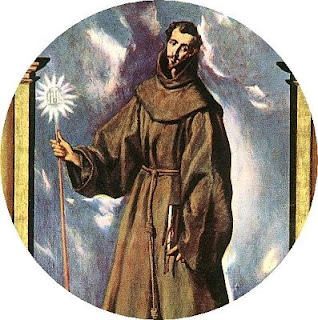


 Luke 2:21 "...Et vocatum est Nomen eius IESUS" 
("And His Name was called JESUS")

Psalm 90:14 "Because he hoped in me I will deliver him: 
I will protect him because he hath known My Name."

Zacharias 10:12 "I will strengthen them in the Lord, 
and they shall walk in His Name, saith the Lord."

Apocalypse 3:8 "I know thy works. Behold, I have given before thee a door opened, which no man can shut: because thou hast a little strength, and hast kept my word, and hast not denied My Name."

Apocalypse 15:4 "Who shall not fear Thee, O Lord, and magnify Thy Name?..."

Throughout Sacred Scripture, God Himself names those who have a great role to play in our salvation. As recorded in the fifth chapter of Genesis, He named the first man Adam, which means "Man of the Earth", 1 and He changed the name of our spiritual Father from Abram to "Abraham," which means "Father of Many Nations," and changed that of Abraham's wife, Sarai, to "Sarah," which means "Princess" and foretells that she would be the spiritual mother to kings (Genesis 17). Our first Pope had been named "Simon" before he became "Peter" to signify his status as the earthly rock of the Church as Christ is the Foundation and Head. And so, too, the Name "Jesus" has meaning: His Holy Name means "God Saves" ("Emmanuel"), and that Our Lord would receive this Name was foretold by the divinely inspired Prophet Isaias:
Isaias 7:14-15
Therefore the Lord himself shall give you a sign. Behold a virgin shall conceive, and bear a son, and his name shall be called Emmanuel. He shall eat butter and honey, that he may know to refuse the evil, and to choose the good.
Our Lady learned how she was to name her Child from the Archangel Gabriel:
Luke 1:26-33
And in the sixth month, the angel Gabriel was sent from God into a city of Galilee, called Nazareth, To a virgin espoused to a man whose name was Joseph, of the house of David; and the virgin's name was Mary. And the angel being come in, said unto her: Hail, full of grace, the Lord is with thee: blessed art thou among women. Who having heard, was troubled at his saying, and thought with herself what manner of salutation this should be. And the angel said to her: Fear not, Mary, for thou hast found grace with God. Behold thou shalt conceive in thy womb, and shalt bring forth a son; and thou shalt call his name Jesus. He shall be great, and shall be called the Son of the most High; and the Lord God shall give unto him the throne of David his father; and he shall reign in the house of Jacob for ever. And of his kingdom there shall be no end.
... and St. Joseph heard it from an angel in a dream:
Matthew 1:18-25
Now the generation of Christ was in this wise. When as his mother Mary was espoused to Joseph, before they came together, she was found with child, of the Holy Ghost. Whereupon Joseph her husband, being a just man, and not willing publicly to expose her, was minded to put her away privately. But while he thought on these things, behold the angel of the Lord appeared to him in his sleep, saying: Joseph, son of David, fear not to take unto thee Mary thy wife, for that which is conceived in her, is of the Holy Ghost. And she shall bring forth a son: and thou shalt call his name JESUS. For he shall save his people from their sins. Now all this was done that it might be fulfilled which the Lord spoke by the prophet, saying: Behold a virgin shall be with child, and bring forth a son, and they shall call his name Emmanuel, which being interpreted is, God with us. And Joseph rising up from sleep, did as the angel of the Lord had commanded him, and took unto him his wife. And he knew her not till she brought forth her firstborn son: and he called his name JESUS.
Then, when He was circumcised on the 8th day after His Nativity, He received the Holy Name:
Luke 2:21
And after eight days were accomplished, that the child should be circumcised, his name was called JESUS, which was called by the angel, before he was conceived in the womb.
And what of it? St. Peter sums it up after he healed the lame man and was then asked by the high priest, "By what power, or by what name, have you done this?":
Acts 4:8-12
Then Peter, filled with the Holy Ghost, said to them: Ye princes of the people, and ancients, hear: If we this day are examined concerning the good deed done to the infirm man, by what means he hath been made whole: Be it known to you all, and to all the people of Israel, that by the Name of our Lord Jesus Christ of Nazareth, whom you crucified, whom God hath raised from the dead, even by him this man standeth here before you whole. This is the stone which was rejected by you the builders, which is become the head of the corner. Neither is there salvation in any other. For there is no other Name under heaven given to men, whereby we must be saved.
When we say the Name "Jesus" (or "Iesus," "Iesu," etc.2) consciously, with deep reverence, we are re-realizing the core Truth of the holy Faith: "God Saves" -- and all gratitude and humility are summoned. Say that Holy Name, ponder it, feel it in your mouth and in your heart! "IESUS -- GOD SAVES!" When you pronounce it, know its meaning and humble yourself before it; feel in your heart how you are addressing and referring to Lord Christ. "IESUS -- SAVIOR!"

So holy is His Name that uttering it piously is an indulgenced act. So revered is it that: 

  • Catholic men remove their hats any time and anywhere it is heard or spoken by them, and all Catholics bow their heads when speaking it or hearing it. 3
     
  • when His Name is taken in vain, the Catholic in the room will (or at least should) make reparation by crossing himself and praying "Sit nomen Dómini benedíctum!" ("Blessed be the Name of the Lord!"), to which another Catholic who might be in the room replies, "Ex hoc nunc, et usque in sæculum!" ("from this time forth for evermore!") or "per ómnia saecula saeculórum" ("unto ages of ages").
     
  • inspired by the example and words of St. Bernardine of Siena (see below), we place the monogram of His Name ("IHS") over our doors for protection, in the same way that the Israelites in Egypt used lamb's blood during the first Passover:
    Exodus 12:21-24
    And Moses called all the ancients of the children of Israel, and said to them: Go take a lamb by your families, and sacrifice the Phase. And dip a bunch of hyssop in the blood that is at the door, and sprinkle the transom of the door therewith, and both the door cheeks: let none of you go out of the door of his house till morning. For the Lord will pass through striking the Egyptians: and when he shall see the blood on the transom, and on both the posts, he will pass over the door of the house, and not suffer the destroyer to come into your houses and to hurt you. Thou shalt keep this thing as a law for thee and thy children for ever.  
    For a pattern to use as a stencil for such purpose, click here (will open in new browser window).
     
  • His Name is invoked in times of fear and temptation, and devils flee at the sound of it.
This Catholic attitude of deep respect toward the Holy Name is exactly as it should be according to Sacred Scripture:
Philippians 2:8-10
He humbled himself, becoming obedient unto death, even to the death of the cross. For which cause God also hath exalted him, and hath given him a name which is above all names: That in the Name of Jesus every knee should bow, of those that are in heaven, on earth, and under the earth:
It is "in His Name" that the Gentiles shall hope (Matthew 12:21); "in the Name of Jesus Christ" that the Apostles baptized (Acts 2:38), healed (Acts 3:6, 16), cast out demons (Acts 16:18), preached (Acts 9:27), and anointed (James 5:14); it is "by the Name" of Jesus that signs and wonders were seen (Acts 4:30).

And it is in His Name that we should place our faith, do our works, and say our prayers:

I John 3:23
And this is his commandment, that we should believe in the Name of his Son Jesus Christ: and love one another, as He hath given commandment unto us.

Colossians 3:17
All whatsoever you do in word or in work, do all in the Name of the Lord Jesus Christ, giving thanks to God and the Father by Him.

John 16:23-24
...Amen, amen I say to you: if you ask the Father any thing in My Name, He will give it you. Hitherto you have not asked any thing in My Name. Ask, and you shall receive; that your joy may be full.
Formalized devotion to the Holy Name is the fruit of the work of St. Bernardine of Siena, A.D. 1380-1444, the Franciscan who reformed his Order and preached fiery sermons all over Italy. An excerpt from one:
When a fire is lit to clear a field, it burns off all the dry and useless weeds and thorns. When the sun rises and darkness is dispelled, robbers, night-prowlers and burglars hide away. So when Paul's voice was raised to preach the Gospel to the nations, like a great clap of thunder in the sky, his preaching was a blazing fire carrying all before it. It was the sun rising in full glory. Infidelity was consumed by it, false beliefs fled away, and the truth appeared like a great candle lighting the whole world with its brilliant flame.

By word of mouth, by letters, by miracles, and by the example of his own life, Saint Paul bore the Name of Jesus wherever he went. He praised the Name of Jesus "at all times," but never more than when "bearing witness to his faith."

Moreover, the Apostle did indeed carry this Name "before the Gentiles and kings and the sons of Israel" as a light to enlighten all nations. And this was his cry wherever he journeyed: "The night is passing away, the day is at hand. Let us then cast off the works of darkness and put on the armor of light; let us conduct ourselves honorably as in the day." Paul himself showed forth the burning and shining-light set upon a candlestick, everywhere proclaiming "Jesus, and Him crucified."

And so the Church, the Bride of Christ strengthened by his testimony, rejoices with the psalmist, singing: "O God from my youth you have taught me, and I still proclaim your wondrous deeds." The psalmist exhorts her to do this, as he says: "Sing to the Lord, and bless His Name, proclaim His salvation day after day." And this salvation is Jesus, Her savior.
During these very popular sermons, he would hold up for veneration the monogram of Christ's Name -- the letters "IHS" (or "JHS") -- surrounded by rays. This ancient monogram is a Latinization of the Greek monograms for Iesous Christos, "IH XP" and "IC XC," and it became even more popularized after St. Bernardine encouraged a playing card maker in Bologna -- a man whose business had been ruined because of the Saint's preaching against gambling -- to make holy cards depicting it instead of making his usual fare. St. Bernardine's apostleship of the Holy Name was carried on by St. John Capistran, A.D. 1385-1456, and to them both is attributed the Litany of the Holy Name.

Because of the influence of St. Bernardine's work, the Name "Jesus" was added to the Hail Mary prayer, and the Feast of the Holy Name was later added to the calendar (celebrated on the 1st Sunday of the year, or 2 January if this Sunday falls on the 1st, 6th, or 7th). The office of this Mass was written by Bernardine dei Busti, and it makes use of the beautiful 12th century hymn, Iesu Dulcis Memoria which speaks of His Name and was written by another who had devotion to it, St. Bernard of Clairvaux (A.D. 1090-1153). The entire month of January is devoted to the worship of the Holy Name and to Christ's Divine Childhood.

Honor the Holy Name of Our Lord, and use it with only the deepest reverence. As St. John the Evangelist described his vision of the end of time when writing from the island of Patmos:
Apocalypse 22:1-4
And He showed me a river of water of life, clear as crystal, proceeding from the throne of God and of the Lamb. In the midst of the street thereof, and on both sides of the river, was the tree of life, bearing twelve fruits, yielding its fruits every month, and the leaves of the tree were for the healing of the nations. And there shall be no curse any more; but the throne of God and of the Lamb shall be in it, and His servants shall serve Him. And they shall see His face: and His Name shall be on their foreheads.

 
Chaplet of the Holy Name

The Chaplet of the Holy Name is prayed on a 33 bead chaplet (3 decades of 1 large bead followed by ten small beads). 33-bead "rosaries" or 33-knot "chotki" of the Eastern tradition can be used for this devotion. To pray the Chaplet of the Holy Name:
Make an Act of Contrition (i.e., pray this prayer earnestly):
O my God, I am heartily sorry for having offended Thee and I detest all my sins because of Thy just punishments, but most of all because they offend Thee, my God, who art all good and deserving of all my love. I firmly resolve, with the help of Thy grace, to sin no more and avoid the near occasions of sin. Amen.
And pray:
Incline unto my aid, O God. O Lord, make haste to help me.
First Decade:
On the first large bead: 
Lord, Thou hast said: "Ask and ye shall receive; seek, and ye shall find; knock, and it shall be opened unto you," I seek, I knock, I ask this favor [name your intention].

On each of the first group of ten small beads:
Incline unto my aid, O God. O Lord, make haste to help me.
Second Decade:
On the second large bead:
"Amen, I say unto you, if ye ask the Father anything in My Name it shall be given unto you." It is of the Father and in Thy Name, Lord, I ask this favor.

On each of the second group of 10 small beads:
Incline unto my aid, O God. O Lord, make haste to help me.
Third Decade:
On the third large bead:
Lord, Thou hast said: "Heaven and earth shall pass away, but My Word shall not pass away," Thou wilt grant me this favor because Thou hast said it and Thy word is true.

On each of the third group of 10 small beads:
Incline unto my aid, O God. O Lord, make haste to help me.
 
Footnotes:
1 Eve, whose name means "Mother of All Living," was named by Adam. Genesis 3:20 "And Adam called the name of his wife Eve: because she was the mother of all the living." 
2 "Iesus" is the nominative case of His Name, used when His Name is the subject of a sentence (e.g., "Iesus saves," "Iesus wept," etc.). "Iesu" is the vocative sense, used when addressing Him (it's also the genitive, ablative, and dative forms of His Name). Early Latin had no letter "J," hence the spelling. But "J" was introduced later, so in Latin texts, you may see His Name spelled either with an "I" or a "J." 
3 The custom of bowing the head at the mention of His Name was formally written into law at the Second Council of Lyons, A.D. 1274, convened by Pope Gregory X: "Those who assemble in church should extol with an act of special reverence that Name which is above every Name, than which no other under Heaven has been given to people, in which believers must be saved, the Name, that is, of Jesus Christ, Who will save His people from their sins. Each should fulfil in himself that which is written for all, that at the Name of Jesus every knee should bow; whenever that glorious Name is recalled, especially during the sacred Mysteries of the Mass, everyone should bow the knees of his heart, which he can do even by a bow of his head." 

The Last Lights in the Encroaching Darkness of Imperial Rome

A look  at the final days of the Western Empire, how it could have been different, and what we can learn from it.

From The Mad Monarchist (2 August 2013)

The Roman Empire under Theodosius the Great

It was on this day in 461 AD that the Roman Emperor Majorian was deposed by Ricimer, one of the German barbarians who had adopted Roman customs and rose to prominence as a military commander. Barbarian commanders like Ricimer were not uncommon at that time; some being good (like the civilized Vandal Stilicho who helped prop up the teetering Roman Empire with his considerable skill) and others being bad (such as Odoacer who presided over the removal of the last Western Roman Emperor). However, Emperor Majorian is a much better figure to focus on. Unfortunately, very few are familiar with his inspiring story and he is usually relegated to a mere brief mention in most history books, simply listed among the last of the Roman emperors in the west during a period of rapid decline before the supposedly inevitable collapse. This has given many people the mistaken impression that, for quite some time previously, the Roman Empire was doomed to collapse and in the midst of one, long, downward spiral.

Emperor Majorian
The truth is that, even in the last period of the Western Roman Empire, there were several bright spots. The reign of Emperor Majorian may have been the last but his was not the first. Because our own times give little reason for optimism, it may be a good time to highlight some examples from history of a people pulling back from the brink of disaster. Since there is very little, in my view, that cannot be learned simply by studying the history of the Roman Empire, it may be worthwhile to take a look back at what so many view as the “decline and fall” of Imperial Rome which actually has several examples of the Roman Empire struggling back from near collapse to reassert the powerful position it had in better times. The final fall seems inevitable to us only because we have the benefit of hindsight. However, actions have consequences and people always have the freedom of choice. If certain people had made different choices in those days, the Western Roman Empire might have continued to survive for quite some time longer. Some historians have dated the “beginning of the end” of the Roman Empire at a ridiculously early date. This should not be so. It is also worth noting that many of these types have a religious prejudice that motivates them with many bending the facts or omitting certain evidence in an effort to make the case that Rome began to fall as soon as Christianity began to really take hold and put down roots.

Emperor Constantine I
One place to start would be late 324 AD. It was then that Emperor Constantine the Great, ruler of the Western Roman Empire, defeated Licinius (ruler of the east) at the Battle of Chrysopolis. By this victory, Constantine made himself Emperor of the entire Roman world and having only one man in charge was something the Roman Empire had not seen in a while. Of course, the Roman Empire was not as large as it had been in the glory days of Emperor Trajan, but it was not all that different from the size it had been under the great Augustus and just like Augustus Caesar, Emperor Constantine also worked to restore traditional Roman values and, in his case, encourage Christian values as well with laws against sexual misconduct, ritual prostitution and gladiatorial combat. He won victories over the Franks, the Germans and re-conquered territory in what is now Romania. In fact, his founding of the new capitol city of Constantinople was done, in part, to symbolize the reunion of the eastern and western empires into the one great united Roman Empire of the past. Power and prosperity was restored on such a level that, at the time of his death, Emperor Constantine was preparing a massive campaign for the conquest of Persia. Had he left different instructions in his will or had his sons managed to settle their differences peacefully, the empire of Constantine the Great might have persevered and even reached greater heights in the future than was actually the case.

Emperor Theodosius I
After the death of Emperor Constantine the Great, and the sorry end of the Constantinian dynasty, many have dated the beginning of the fall of the Roman Empire to the defeat and death of the Emperor Valens at Adrianople in 378 AD. However, Rome saw a dramatic revival just after his death in the reign of his successor Emperor Theodosius the Great. Starting out in the east, Emperor Theodosius consolidated his power and dealt firmly with every challenge to his authority, eventually suppressing all opposition in the west and becoming the last Roman Emperor to rule both the east and the west together. There was not much expansion because of the focus on internal enemies and Theodosius is most known for his establishment of Christianity as the official religion of the Roman Empire (despite what many think, Constantine only made Christianity legal, he did not enforce it as the one and only religion) while doing his best to put confine paganism to the realm of history. Emperor Theodosius began to forge a more strongly united Roman Empire with one secular and spiritual government, one emperor and one religion. He restored imperial authority, fended off attacks from external enemies, suppressed internal enemies, suppressed heresy and upheld Christianity. Again, however, after the death of Emperor Theodosius, the Roman Empire again split into the old eastern and western divisions.

After that, things began to go downhill again, though even then, there were men of energy who provided bright spots of hope for Roman civilization. One of those at his funeral was the Vandal-Roman commander Stilicho (who was actually married to the niece of Emperor Theodosius), a man who, mostly during the reign of Honorius, was dashing all over the Roman Empire fending off attacks in Italy, the Balkans and even Africa. Flavius Aetius was another inspiring Roman general who, during the reign of Emperor Valentinian III, gave cause for hope by his stunning victory over the seemingly unstoppable Attila the Hun at the battle of the Catalaunian Fields in 451 AD. However, both Stilicho and Flavius Aetius ended up being the victims of their own success, killed by their own countrymen who feared them because of their ability. This is another lesson the peoples of today would do well to remember; when success is punished rather than rewarded the only inevitable result is that failure becomes the norm.

Emperor Majorian
By the time Emperor Majorian came along (becoming Emperor of Rome in 457 AD), it is true that things were pretty far gone and, in retrospect, we can see that the end was near. Even the Roman emperors were increasingly becoming figureheads while powerful military chieftains or political cliques held the real power. However, Emperor Majorian once again proved that the old Roman virtues had not disappeared completely. At a time when there was little left of the Western Roman Empire beyond the borders of Italy (and even there some areas were precarious), in only a few short years Emperor Majorian succeeded in restoring almost everything that had previously been lost. He put new domestic policies into place but was most occupied with securing Italy and re-conquering Hispania and Gaul. His successful campaigns might well have continued and won back even more had it not been for the betrayal of others and, as stated at the outset, Emperor Majorian himself was finally arrested and deposed by a mutinous leader of the barbarians who were making up more and more of the Roman military. He was Emperor for less than four years and yet, he accomplished amazing things in that short span of time and if loyalty had been a virtue more strongly upheld, he seemed well capable of doing even more, restoring all that had been lost in the years before his reign.

Again, we see a moral failing on display. It was the corrupt political elite who set Emperor Majorian up to be deposed and later murdered because his reforms were forcing them to make sacrifices for the good of the Empire which they were not prepared to tolerate. Like others before him, Emperor Majorian was effectively punished for being too successful. Still, he is a shining example of how much just one driven man can accomplish. The noted author on Roman history Edward Gibbon described Emperor Majorian as a figure, “to vindicate the honour of the human species” which is quite a compliment coming from someone who had very little positive to say about Imperial Rome in its final days. The point is that, it is never too late to try. At some point, we cannot deny, it may be too late to succeed, but that can only be known with absolute certainty after the fact and even when things are falling apart all around us and even if there really is no realistic reason to carry on, we should be inspired by Emperors like Constantine, Theodosius and Majorian who really did seem to turn back the clock. Of course, we could go even further and point to the Eastern Roman Emperor Justinian who went quite far toward restoring the whole Roman Empire even after the west had fallen completely.

I have about as gloomy an outlook as one could have and yet, perhaps it is because of my background, the land I was born in, the honored place of a crumbling, old Spanish mission, that just because the odds against you are absolutely insurmountable, it would be absurd to think that was any reason to give up the fight.

Semper Fidelis

2 January, Antonio, Cardinal Bacci: Meditations For Each Day

The Necessity of Meditation 

1. "With desolation is all the land made desolate, because there is none that considereth in the heart." (Jer. 12:11) 
Very often the world is plunged in the desolation of evil because there is nobody who will speak with God in the silence of his heart and try to regulate his life according to His holy commandments. It is in a particularly outstanding way today that the heresies of actionism and externalism dominate the great mass of mankind. To act, to rush, to arrive… above all, to arrive! But to arrive where? 


In this frantic, frenzied and tumultuous race, in which good people are often found competing, two very sure things are forgotten, namely, that we shall finally arrive at death, and that from death we shall pass on to eternity. The whole course of our lives, therefore, should be directed towards this end. But if we are to keep this end in view, prudent reflection is essential, especially meditation, made with the assistance of the Divine light, on the eternal truths. 
 

Absorbed in the deafening din of the world around us, it is difficult to hear the voice of God. At least for a little while each day, we must create within ourselves a zone of silence in order to listen to His voice. Since God speaks readily in the silence of the heart, let us recollect ourselves before Him in this quiet oasis. At least a quarter of an hour of daily meditation is essential for the life of Christian. This should be the jumping-off board for all the actions of the day, if we wish these to be correct and productive of good. 
 

2. The masters of the spiritual life assure us that without the practice of meditation it is almost impossible for the just man to persevere in virtue, or for the tepid to become fervent, or for the sinner to be converted. God, it is true, can work miracles. At times the grace of God can strike the sinner with the suddenness of a thunderbolt and convert him. But it is the ordinary rule of the spiritual life that meditation on the truths of eternity, especially on the last things, stirs up the soul and moves it, under the influence of Divine grace, to form good resolutions. Even though the first fervour diminishes, the daily repetition of this pious practice revives and strengthens such good resolutions, and causes them to be realised in activities which are in accordance with Christian teaching. 
 

Sin and tepidity cannot co-exist with the practice of daily mental prayer, if this is carried out as it should be. If we keep our hearts united to God and listen willingly and attentively to His voice, we shall be able to effect in ourselves that total renovation of which St. Paul speaks: "But be renewed in the spirit of your mind, and put on the new man, which has been created according to God, in justice and holiness of truth." (Eph. 4:23) 
 

3. There are various ways of meditating. Each one should choose whichever suits his own character and dispositions. It will always be necessary for him at the outset, however, to place himself in the presence of God, asking for light and strength from Him; then to reflect on certain truths in an effort to apply them to his own particular circumstances and needs; and finally to make the necessary resolutions and beseech God to bless them and make them fruitful. 

It is very useful, moreover, to recall to mind frequently during the day the resolutions which have been formed, and to accompany these reflections with short prayers, ejaculations, and acts of love for God.

Eastern Rite - Feasts of 2 January AM 7530

Today is the Forefeast of Theophany and the Feast of Our Holy Father Sylvester, Pope of Rome
✠✠✠✠✠

The first day of the Forefeast of Theophany falls on January 2. Like the hymns for the Nativity, many of the Church’s hymns of this period are slightly modified versions of the hymns of Holy Week.

One of the hymns at Matins today says that the coming Feast of Theophany will be “even more radiant” than the Feast of the Nativity.

Troparion — Tone 4

Prepare, O Zebulon, / and adorn yourself, O Naphtali; / river Jordan, cease flowing / and receive with joy the Master coming to be baptized. / Adam, rejoice with our First Mother / and do not hide yourself as you did of old in Paradise; / for having seen you naked, / He has appeared to clothe you with the first garment. / Christ has appeared to renew all creation.

Kontakion — Tone 4

Today the Lord enters the Jordan and cries out to John: / “Do not be afraid to baptize me. / For I have come to save Adam, the first-formed man.”
✠✠✠✠✠

Saint Sylvester, Bishop of Rome (314-335) was born in Rome to Christian parents named Rufinus and Justa. His father soon died, and the saint remained in the care of his mother. Sylvester’s teacher, the presbyter Quirinus, gave him a fine education and raised him as a true Christian.

When he was an adult, Sylvester fulfilled the Lord’s command to love one’s neighbour. He often received strangers and travellers, serving them as a slave in his own home. During a persecution against Christians, Sylvester did not hesitate to take in the holy confessor Bishop Timothy of Antioch, who dwelt with him for more than a year, and who converted many to Christ by his preaching.

Bishop Timothy was arrested and executed on orders of the Prefect Tarquinius. Sylvester secretly took the body of the saint and buried it. This came to the attention of Tarquinius, and the saint was arrested and brought to trial. Tarquinius demanded that he renounce Christ, threatening him with torture and death. Saint Sylvester was however not intimidated, and he remained steadfast in his confession of faith and was then thrown into prison. When Tarquinius suddenly died after the trial, the saint was set free and fearlessly he evangelized the pagans, converting many to Christianity.

At thirty years of age, Saint Sylvester was ordained as a deacon, and then presbyter, by Bishop Marcellinus (296-304). After the death of Bishop Militiades (or Melchiades, 311-314), Saint Sylvester was chosen Bishop of Rome. He encouraged his flock to live in a righteous manner, and he insisted that priests strictly fulfil their duty, and not be involved with secular businesses.

Saint Sylvester became renowned as an expert on Holy Scripture and as a staunch defender of the Christian Faith. During the reign of the emperor Saint Constantine the Great, when the period of persecution had ended for the Church, the Jews arranged a public debate to determine which faith was true. Saint Constantine and his mother, the holy Empress Helen, were present together with a large crowd.

Saint Sylvester spoke for the Christians, and the Jews had one hundred and twenty learned rabbis led by Zambres, a magician and sorcerer. Quoting the sacred books of the Old Testament, Saint Sylvester convincingly demonstrated that all the prophets foretold the birth of Jesus Christ from the all-pure Virgin, and also His voluntary suffering and death for the redemption of the fallen race of mankind, and His glorious Resurrection.

The saint was declared the victor in the debate. Then Zambres tried to resort to sorcery, but the saint obstructed the evil by calling on the name of the Lord Jesus Christ. Zambres and the other Jews came to believe in Jesus Christ, and they asked to be baptized.

Saint Sylvester guided the Roman Church for more than twenty years, earning the esteem of his flock. He died peacefully in old age in the year 335.

Troparion — Tone 4

You appeared to your flock as a rule of faith, / An image of humility and a teacher of abstinence. / Because of your lowliness Heaven was opened to you; / Because of your poverty, riches were granted to you. / O holy Pope Sylvester, pray to Christ our God to save our souls!

Kontakion — Tone 2

The Trinity delights in you, O holy bishop Sylvester! / You are divine thunder, a spiritual trumpet / A planter of the Faith, / and destroyer of heresies. / As you ever stand with the angels, entreat Christ without ceasing for us all!

IN LUMINE FIDEI: 2 JANUARY – THE HOLY NAME (OF JESUS)


IN LUMINE FIDEI: 2 JANUARY – THE HOLY NAME (OF JESUS): At the Name of Jesus, let every knee bend in Heaven, on Earth, and under the Earth; and every tongue confess that the Lord Jesus Ch...

2 January, The Chesterton Calendar


JANUARY 2nd

There is no such thing as fighting on the winning side: one fights to find out which is the winning side.

'What's Wrong with the World.'

2 January, The Holy Rule of St Benedict, Patriarch of Western Monasticism

 
PROLOGUE OF OUR MOST HOLY FATHER SAINT BENEDICT TO HIS RULE

2 Jan. 3 May. 2 Sept.

Let us then at length arise, since the Scripture stirreth us up, saying: It is time now for us to rise from sleep.” And our eyes being open to the deifying light, let us hear with wondering ears what the Divine Voice admonisheth us, daily crying out: “To-day if ye shall hear His voice, harden not your hearts.” And again, “He that hath ears to hear, let him hear what the Spirit saith to the Churches.” And what saith He? “Come, my children, hearken to Me, I will teach you the fear of the Lord. Run while ye have the light of life, lest the darkness of death seize hold of you.”

3 January, The Roman Martyrology

 
Tértio Nonas Ianuárii Luna tricésima Anno Dómini 2022

The morrow is the Octave of the holy Apostle and Evangelist John.
January 3rd 2022, the 30th day of the Moon, were born into the better life:

At Rome, upon the Appian Way, holy Pope Anterus, who suffered under the Emperor Julius Maximian, and was buried in the cemetery of Callistus. (He reigned one month and 12 days in the year 236.)
Upon the same day, holy Peter, who suffered the death of the cross at the city of Aulone. (In the year 311 or 291.)
On the Hellespont, the holy martyrs Cyrinus, Primus, and Theogenes (about the year 320.) At Caesarea, in Cappadocia, the holy centurion Gordius (about the year 320), in whose praise Basil the Great delivered a noble discourse upon his feast day.
In Cilicia, the holy martyrs Zozimus and Athanasius the Notary, also the holy martyrs Theopemptus and Theona, who suffered an illustrious martyrdom in the persecution under Diocletian.
At Padua, the holy martyr Daniel (in the year 168.)
At Vienne, in Gaul, holy Florence, (8th) bishop of that see (successor to St. Paracodius), who was exiled in the time of the Emperor Gallienus, and there finished his testimony (in the year 252.)
At Paris (in the year 512), the holy virgin (and Patron of Paris) Genevieve, who was dedicated to Christ by blessed Germanus, Bishop of Auxerre, and was famous for her wondrous graces and miracles.
V. And elsewhere many other holy martyrs, confessors, and holy virgins.
R. Thanks be to God.

Memes of the Day


01 January 2022

The Liturgical Edsel

Mr Lawler is firmly in the 'NO Camp', but he's honest enough to see the evil stupidity of the Vatican's latest vicious attacks on Tradition.

From Catholic Culture

By Phil Lawler

In previous posts this week, responding to the Vatican’s new restrictions on the traditional Latin Mass (TLM), I have argued that Novus Ordo worship is disfigured by widespread unbelief, and that the Vatican is effectively scuttling the prospects for authentic liturgical renewal. Today I want to address a different question: How might we measure the success of a liturgical renewal?

Before tackling that question, however, we need to address a preliminary question: Why all the fuss about the TLM? The answer is simple enough: many Catholics have grown to love the traditional liturgy, finding the ancient ritual, which taps into historic streams of worship that run back to the Old Testament, deepens their faith and devotion.

Unfortunately most Catholics do not understand this love for the traditional rite, perhaps because most Catholics are completely unfamiliar with the TLM. Rather than attending a traditional Mass, and forming their own opinions, too many accept the shopworn criticisms that have circulated through the Catholic media since the days of the Second Vatican Council.

Thus America magazine could make the curious decision to publish an article on the new Vatican document by a writer who admits: “I have never been to a Latin Mass, except as an infant and toddler…” The author, Kevin Clarke, tells us: “I do not miss the traditional Latin Mass, and I do not know anyone who does or who will likely miss it in the future.” In other words he does not know anything about the phenomenon on which he is reporting!

Catholic priests who have never celebrated the TLM may have trouble understanding the appeal of the old liturgy, too. A priest who celebrates the Novus Ordo, with its many options, can be confident that the Mass will suit his preferences. If he is reverent, the Mass will be reverent; if he follows the rubrics, there will be no liturgical abuses. If he is irreverent, or indifferent to the Church’s instructions, the Eucharistic liturgy will be irreverent and abuses will abound—but he will not care. In any case he rarely sees the liturgy from the perspective of the embattled laity.

My own perspective

A word about my own personal experience and perspective:
  • I am old enough to remember the pre-conciliar liturgy clearly; I was trained as a master-of-ceremonies for the Solemn High Mass. My memories of the old liturgy, frankly, are not particularly fond. Today’s traditionalists might do well to bear in mind that they are a self-selected group. The beauty of the ritual would be defaced if the TLM were celebrated by the same priests who preside at slipshod Novus Ordo Masses, and if the majority of the congregation was waiting impatiently, distractedly for the Last Gospel.
  • Over the years my personal circumstances brought me into contact with other Catholic rituals. I have frequently attended the “Anglican Use” Mass, and the Divine Liturgy of the Melkite and Maronite rites. I have been deeply moved by the beauty of these very rituals, and the marked differences among them have helped me to gain a new appreciation of the profound mystery that they share. I can easily understand why the faithful of different rites cherish the distinctive features of their own liturgical ceremonies. While I would oppose grafting parts of one ritual onto another—an approach that would dilute the historical purity of the rite—surely we can learn a great deal from each other.
  • Meanwhile, for almost 40 years now, I have attended the Novus Ordo Mass daily. The particulars of the liturgical celebration have not always been ideal (although I have been blessed to find parishes and chapels where the Mass is said with reverence), but the daily encounter with our Eucharistic Lord has been, and is, the backbone of my spiritual life. I have recoiled on those few occasions when someone seemed to be questioning the validity of the Novus Ordo; this was an attack on the “source and summit” of my faith.
  • Nevertheless, in the last few years I have gravitated toward the TLM, motivated at first by exhaustion with years of liturgical abuse in the Novus Ordo, but later by a growing appreciation for the beauty that so many other traditionalist Catholics have discovered. My own case, then, in a sense illustrates the “mutual enrichment” that Pope Benedict XVI hoped an acquaintance with the traditional liturgy would encourage. And I sense that in my parish—a Novus Ordo parish, but with many members who occasionally attend the TLM—the salutary effects of that same mutual enrichment are evident.
So I firmly believe, despite the new Vatican restrictions, that Pope Benedict was wise to unleash the power of the traditional liturgy. I fail to see how giving Catholics a choice between liturgical forms should undermine the unity among the faithful. Quite on the contrary, I would argue that by giving the laity a choice, Pope Benedict was advancing the cause of liturgical reform—the cause that the Vatican cites as the reason for withdrawing that choice.

The power of choice

Consider the Edsel. When Ford brought out its new model in 1958, the company’s marketing campaign told potential customers that this was the car they had wanted—the car with “more YOU ideas.” But it wasn’t. Consumers did not like the Edsel. Fortunately they had alternatives; car-buyers could cross the street to the Chevy dealership, or for that matter find less expensive and more attractive models in Ford’s own showrooms. The Edsel marketing campaign was a failure; the cars soon disappeared.

A few years later, Catholics were introduced to a dramatically different liturgy, introduced after Vatican II, and told that this “New Mass” was just what they had wanted. Whether lay Catholics wanted liturgical reform is debatable (as is the question of whether this new liturgy, the Novus Ordo, actually corresponded to the instructions from the Vatican Council). But unlike the Edsel, the Novus Ordo was never subjected to a market test. Catholics who wanted to attend Mass had no alternative.

Were the liturgical changes popular? We don’t know. Pastors told their people that the changes were good, and lay Catholics of the 1960s—especially pious, conservative lay Catholics—were not inclined to challenge their pastors. Yet soon a new trend emerged: a long, accelerating decline in Mass attendance that continues to this day.

Did the liturgical changes cause that exodus from the pews? That too is the subject of lively debate; the Novus Ordo was introduced at a time of upheaval in society, and no doubt other factors were involved (although I am convinced that the disruption of longstanding Catholic tradition was an important part of the problem). But certainly the Novus Ordo did not bring about the Catholic revival that its enthusiastic proponents had predicted. We have been told that the new liturgy allowed for more active participation by the laity. What constitutes “active participation” at Mass is yet another topic on which a great deal of ink has been spilled. But it’s a cinch that you aren’t participating actively if you aren’t even there.

Standards of judgment

In a recent interview Boston’s Cardinal Sean O’Malley said that “young conservative clergy” are a problem for the Church. He was speaking generally about opposition to the agenda of Pope Francis, but his comments could apply to the liturgical debate as well. If “young conservative clergy”—the generation of “John Paul II priests”—are leading the move toward traditionalism, that trend would contradict the claim that Cardinal O’Malley (among other prelates) has made in the past: that the TLM is a concession made to older Catholics who have never adjusted to the post-conciliar changes.

Why are so many young priests, and so many young Catholics, attracted to the TLM? For years their pastors have told them that the traditional liturgy was unappealing. Yet at the same time, bishops have actively worked to suppress its appeal. If it were true that the TLM was unattractive—that the traditional liturgy was the Edsel—there would be no need for the latest Vatican restrictions. But the numbers suggest otherwise.

TLM parishes are growing, at a time when most parishes are shrinking. The pews of traditionalist parishes are full of large young families. Polls show that these traditionalist Catholics are far more likely to adhere to fundamental Church doctrines and moral principles than their counterparts in ordinary parishes. Perhaps most important, the young adults raised in traditionalist communities keep coming back to Mass and the sacraments, while other young Catholics drift away. Something is going right here.

A market test is not an appropriate means of judging the success of a parish; the Mass is not a consumer item. But a prudent pastor who knows his flock—who has the “smell of the sheep”—should be able to recognize within his own community which factors are helping, and which are hindering, the causes of Church unity and liturgical renewal. The diocesan bishop can make that assessment, far better than a bureaucrat in Rome.

If the goals are to encourage reverence and devotion, to evangelize, and to preserve unity in the faith, there is no need for concern about the TLM. If I owned a Cadillac dealership in 1958, I wouldn’t have worried about competition from Edsel.

/Satire/ King Herod calls a Synod /satire/

Eccles wonders what a 'Herodian Synod' before the Slaughter of the Holy Innocents might have been like.

From Eccles is Saved

Judea, about 2 BC.

King Herod is talking to his advisers about the possibility of murdering young children in Bethlehem

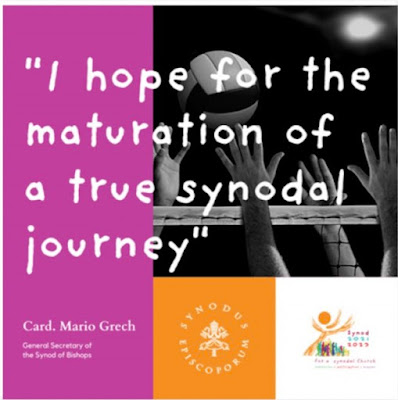
Herod: Thank you all for coming to my meeting. I hope for the maturation of a true synodal journey.

Youngest adviser: You what?

Herod: Let me explain. Traditional teaching says "Thou shalt do no murder", but I think we may agree that, in the light of accompaniment and discernment, we may re-interpret this as "Thou mayst do murder."

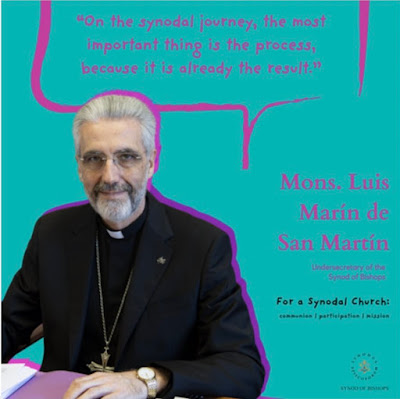
Marin de San Martin waffle

Muttering amongst the advisers, and then the senior one speaks out: "On the synodal journey the most important thing is the process, because it is already the result."

Herod: I couldn't have put it better myself. So, it's agreed then, we kill all the young kids in Bethlehem?


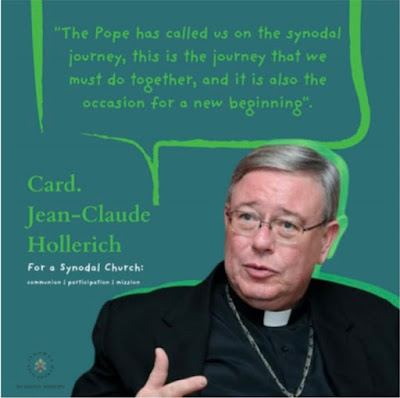
Hollerich waffle

Omnes: Yes, of course. After all, the High Priest has called us on the synodal journey, this is the journey that we must do together, and it is also the occasion for a new beginning.

Herod: Exactly. We can make up doctrine as we go along. Nobody ever called me rigid!

Is It Still Christmas? The Octave, the 12 Days, and What You Need To Know

A reasonably concise explanation of the rather complicated question of 'when is Christmas and when is it over'? But, it's definitely not over yet!

From The Pillar


Christmas is December 25, right? Or maybe it’s an eight-day celebration — something called an “octave?” But aren’t there 12 days of Christmas?

Yes.

The answer to each of those questions is “yes.” When Catholics talk about “Christmas,” they mean more than one thing — actually they mean several overlapping things. And, well, if you’re not versed in the lingo, that can get a bit confusing.

So how do you keep ’em all straight? And how do you know if it’s still Christmas?

The Pillar explains.

Merry Christmas

While it seems ubiquitous today, celebrating birthdays is not a universal custom across all cultures and times — some reasons are obvious, like the fact that not all people in all times have had an easy way even to know the date of auspicious occasions. Other reasons are important but less obvious — the fact that some cultures mark important initiation or ritual days instead of birthdays, for example.

Because of their own cultural contexts, the earliest Christians were more likely to celebrate as big annual feasts of the Incarnation either the Epiphany — which in the East commemorates the baptism of the Lord in the Jordan River — or to celebrate the Lord’s presentation and circumcision in the Temple.

But early Christianity was a cross-cultural phenomena, and Roman Christians, like North African Copts and a few others, were accustomed to annual birthday celebrations for important leaders — and in some cases, to small celebrations for the birthdays of friends and relatives.

Because of that, in some corners of the Church liturgical feasts for the Lord’s birth began quite early in Christian history.

By the fourth century, Roman Christians were celebrating annually the birth of Jesus Christ as its own liturgical feast. The date was fixed on December 25 by at least the 330s.

It is often thought that December 25 was chosen to celebrate the Lord’s nativity because it was the date of the winter solstice in the Roman calendar, and possibly already the Roman feast of a sun god. But, actually, there is little evidence that a feast for Sol Invictus was celebrated on Dec. 25 until decades after the Christian feast of Christmas was fixed on that date.

Cardinal Joseph Ratzinger, in “The Spirit of the Liturgy,” points out that before they celebrated Christmas, many Christian communities were already celebrating the Annunciation, which marks Christ’s conception.

Since the Annunciation was celebrated March 25 (also believed by many Church Fathers to be the date on which Christ was crucified), it would make sense that Christ’s birth would be celebrated nine months later, on Dec. 25.

Ok. So what’s the ‘Christmas octave’ then?

The octave of Christmas is celebrated as an eight-day feast which begins on the Nativity, Dec. 25, and continues to January 1, the Solemnity of Mary, the Mother of God.

Since at least the fourth century, Christians have celebrated the most important liturgical feasts with “octaves” — eight days of celebration. Christmas has been celebrated as an octave since at least the seventh century, and is today one of two octaves celebrated by the Church — the other is Easter.

During the Christmas octave, the “Gloria” is sung each day during Mass, and each day is generally regarded as a day of great feasting.

So, can you eat meat on Friday, Dec. 31 — when Fridays are generally regarded as a day of abstinence?

Canonists are a little bit split over whether abstinence from meat is required on a Friday during the Christmas octave. So if you’re not sure, and you live in the U.S., you could offer up some other penance, as permitted by the USCCB.

What about the ‘12 days of Christmas?’

So we’ve got Christmas Day, and then the Christmas octave.

But there is also the traditional Christmas season of 12 days, which traditionally began on Dec. 25 and ended on January 6, the Feast of the Epiphany.

This is a little tricky in the United States, since the Epiphany feast is not always on the same day. It has been moved from January 6 to “the Sunday between January 2 and January 8” — this year, January 2 itself.

But Western Christians have traditionally continued the Christmas season celebrations through January 6, during “twelvetide.”

In many cultures, gifts were exchanged throughout the season.

But why Lords A-leapin’ and all that?

Well, the song is a traditional English Christmas carol, with origins mostly unknown. But it is a great pub song, so you can probably surmise how it got so popular.


Ok, so Christmas is over on Epiphany, then?

Well, here’s the deal so far: We’ve got Christmas Day. Then we’ve got the Octave. We’ve got the traditional 12 days of Christmas.

But then, we’ve also got the liturgical season of Christmas, which ends on the Feast of the Baptism of the Lord, celebrated in 2022 on January 9.

After the feast of the Baptism of the Lord, “ordinary time” begins on the liturgical calendar, and you can definitely say that Christmas is over.

Unless, of course, you want to keep the party going.

There are a lot of Christian cultures which continue to celebrate Christmas until the Feast of the Presentation of the Lord — Candlemas — which takes place on February 2. That feast commemorates the presentation of the Lord in the Temple, which, you might recall, many Eastern Christians actually remember on Epiphany.

The Presentation Feast is called “Candlemas” because it is the day on which the Church has traditionally blessed candles for liturgical use. Why? Because when the infant Jesus was presented in the Temple, St. Simeon called him a “light to the Gentiles” — and the light of Christ has been central to celebrating the presentation ever since.

Despite some popular confusion, Candlemas is not the day on which your throat might be blessed at Mass with a pair of crossed candles. That comes the next day — February 3, the Feast of St. Blase.

And Christmas is definitely over by then.

One Mad Mom’s Predictions for 2022

Some of OMM's predictions are firmly tongue-in-cheek, others not so much so. I sincerely hope predictions 7 and 8 do come true, ASAP!

From One Mad Mom

Always fun to make predictions on the upcoming year. Here are last year’s predictions, and I think I did pretty well, if I do say so myself! https://onemadmom.foedus.co/one-mad-moms-predictions-for-2021/

With that, here are my predictions for 2022!

10. Two seconds after midnight on January 1, someone will say that Pope Francis will retire in the next few weeks , a bunch of people will get whipped into a frenzy, and it won’t happen.

9. A whole bunch more priests will be canceled in the early part of the year, and then will be vindicated in the public square in the latter half.

8. Cardinal Cupich will not be in Chicago after this year. The reason is unclear (although I have someone holding an envelope with my very specific prediction) and there is a myriad of possibilities but one is…

7. The second part of Cardinal George’s prophecy will come true and Cardinal Cupich will be the highest-ranking Church official on the cell block.

6. Since, well, COVID is forever, Pope Francis will announce the Synod on the Synod on the Synod on the Synod… What’s the rush?! Germany got bored two seconds into the New Year anyway and just admitted to going full-scale Luther. Other than the admission, nothing changed in Germany.

5. Bishop McElroy finally makes Cardinal of Washington D.C. but then he gets his 5th booster. Gosh darn it, you’ve got to give him kudos for postponing that last one until he finally achieved his dream and, oh…

4. There will be a big shuffling of the deck as the 5th booster kills off most of the world’s prelates that didn’t die after they got the 3nd one. The “German problem,” ironically, will have been solved by Bill Gates and Fauci. The recently minted Cardinal Cordileone (just because Pope Francis figured the U.S. had to have at least one other cardinal) will still be pointing out it’s not immoral to be unvaxxed. McElroy, on his deathbed, will still be arguing about how uncharitable the unvaxxed are. James Martin, SJLGBTQ+ will be saying “Yeah! What he said!”

3, Xi Jinping will announce himself to be the new pope and Pope Francis will decide “Why not!” and decide it’s a good time to retire. James Martin, SJLGBTQ+ will be his first visitor, but sadly for Martin, Xi Jinping will shoot whoever let him in. Fr. Martin’s in will be out.

2. The unvaxxed prelates will finally unite, tell Xi Jinping he’s out, and the conclave will be glorious. Buh-bye Traditiones Custodes and the “Mass wars” that come with it!

1. No matter where Cardinal Cupich ends up, he will still be a narcissistic jerk. I know. That one’s a gimmee.

In any case, I am ever hopeful the Church’s mess will be cleaned up in the New Year! A blessed New Year to you all! Virgin Most Powerful, pray for us!

Schism Is Here Because Francis Wants Revenge

Cardinal Cupich has a long history of antipathy towards sacred tradition, and it perfectly characterizes the ambiguity and mixed messages coming from Rome in our time.

Ask Father: How Does One Get Invited to the Synod ("Walking Together") on Synodality

'The powers that be ... will give all their attention and “accompaniment” to every possible aberrant group and dissidents, but not to traditional Catholics.'

From Fr Z's Blog

From a reader..

QUAERITUR:

I wanted to thank you for your original and powerful exhortation, via the death of a rabbit, to go to confession. As a consequence I did indeed go to confession and made a clean breast of some very awful sins going back a long way which had been imperfectly, if at all confessed. So the first part of my thank you is to let you know.  [Thanks for that… that post is HERE]

The second part is a suggestion. Can we start a long countermarch through the institutions? Would be possible to start with the Synod on Synodality? How does one get invited?

How does one get invited…. How does one get invited….

The powers that be, in control of the “synodal (‘walking together’) process” are absolutely closed to hearing, to seeing, to caring for people who desire traditional Catholic liturgical worship.    They will give all their attention and “accompaniment” to every possible aberrant group and dissidents, but not to traditional Catholics.

I suppose one approach might be to keep ‘pinging’ them with a note here, a note there.  I suggest that those notes be accompanied by Spiritual Bouquets.

That’s a key.   We have to pray for these people, as well.   They wish us ill.  Therefore, we have to pray for them.  They marginalize us.  We have to pray for them.  They try to strip things that are good and holy from the lives of many.  We have to pray for them.

Pray and try to forgive them.  Remember that Christ said that if we do not forgive, we will not be forgiven.

In the end all their games will fail.  Until them there is a lot of suffering to endure.  But we were chosen by God to live in this time, so the suffering has to be embraced as part of the plan.

Meanwhile, we should put aside small differences and unite our hearts and voices to strengthen precisely our hearts and our voices.