01 September 2021

Ku Klux Kale

This harridan, who identifies (emphasis on 'identifies', because she obviously doesn't believe) as a Catholic, called Our Lady of Fatima a 'fascist'.

From The American Conservative

By Rod Dreher

The Christian Century is a magazine for the senescent liberal Protestant Mainline. When I heard earlier this month that it had published an article exposing the presence of white supremacists at farmer’s markets [UPDATE: Sorry, I forgot to post the link to the piece.— RD], I laughed it off as another example of the dingbat left policing the boundaries. It should not surprise anyone that unsavory people enjoy a delicious tomato as well as the next person. If a Communist or a neo-Nazi enjoys locally grown fruits and vegetables, I can congratulate him on his good taste in food while rejecting his politics. This is called being a grown-up. When this controversy arose in 2019 in Bloomington, Indiana, the adult mayor of that city resisted calls by progressives to kick allegedly white supremacist farmers out of the farmer’s market, saying that as long as the accused vendors were following the law, he was not going to play the role of thought police.

It turns out, though, that the article’s author, a vigilant progressive named Rebecca Bratten Weiss, identifies poor old Self as a gateway drug to the Ku Klux Kale:

Among traditionalist Catholics, one localist trend was labeled by writer Rod Dreher—himself a preeminent spokesman for polite Christian ethno-nationalism—as “crunchy conservatism.” The “crunchy cons” wed environmentalism and holistic living with traditional social mores, withdrawing from the influence of the globalized and secularized world. Piggybacking off this, Dreher proposed his “Benedict Option”—a suggestion that Christians should follow the example of St. Benedict of Nursia by distancing themselves from the evils of the world and living in intentional community with others of shared values.

“Polite Christian ethno-nationalism”? Golly. I wonder how the neurotic Bratten Weiss figures that. Then again, there doesn’t have to be logic for these people to make a vicious accusation like that. If they feel it — and they are always sniffing out wrongthinkers — it must be true. Do I even need to point out here that she clearly hasn’t read The Benedict Option?

Judging by her self-description on her website, Bratten Weiss has a rich inner life:

She has spoken at various academic and cultural events on topics ranging from Nietzsche’s aesthetics and Bronte’s feminism, to ecology in literature and vulgarity in religion.

Rebecca recently completed work on The Dirt, an eco-feminist novel exploring the impact of the fracking industry on a dysfunctional Ohio family.

She is also in the process of revising The Peacemakers, a speculative literary sci-fi in which women in a near-future matriarchy control men via advanced AI technology.

She is a member of the George Sandinistas, and one of the founders of the Muse Writers Collective.

Bratten Weiss looks cheerful, serene, and not at all likely given over to bitter binges on Sylvia Plath and Kate Bush:

 

I had never heard of this unhappy woman until a friend sent me her Christian Century essay last night. Apparently she is a Catholic who has a Patheos blog in which she writes things like this:
How surprising to learn that she used to be an adjunct teacher of English at Franciscan University of Steubenville. And she is some kind of ecumenist, as we learn from this 2019 essay. Excerpts:

Driving home with a load of hay, listening to Johnny Cash, wondering what I could burn as a sacrifice to Hecate, I start thinking that probably not many women on this road, driving truckloads of hay, and listening to Cash, are also contemplating witchcraft. Does this make me necessarily more interesting? Or is it automatically less interesting, because “being interesting” is a motive force for me? Not the only motive force, but maybe it taints everything it touches, so there’s a certain embarrassingly meta quality about all my love, or curiosity, or revenge.

Meta or not, the desire to burn something as a sacrificial offering is real. Thinking about burning is real. I have a truck full of a combustible material, and my truck is driven by combustion. I’m rumbling along on the cusp of a flame.

Bless her heart, I do not doubt it! More:

The internal combustion engine is insufficient for the goddess, however, and I have no intention of burning the hay. The questions about burnt offerings become pragmatic. Like, where to do it? If I start a fire in the back yard the kids will all come gathering around, asking if they can roast marshmallows. But I can’t just go wandering off into the neighbor’s field and start burning things (or can I?).

Then there’s the question of what to burn. Something I value, or something I hate? Which would Hecate prefer?

If I get the answers wrong, who knows, some solid citizen might call and have them send the firetrucks after me, and then it’s pretty awkward if I’d opted to burn, say, the testicles of some Nazi dudes who just happened to be scampering across my backyard at the right time. When I just happened to have my scythe handy. Oops. Now I have this whole conflagration of testicles to explain.

Even if it’s what Hecate wants, the fact is, when you’re castrating Nazis and burning their balls as an offering to ancient Greek goddesses, people tend not to be very understanding. They’re all “oh, the incivility!” Or “this is why Trump keeps winning.”

Now I’m worried that I went too far there, talking about castrating Nazis. Now I’m worried that I’m not interesting or edgy, but instead the kind of person from whom you instinctively back away.

You think? Hey, she said it, not I!

Anyway, as is often the case with censorious progressives, the witchy Bratten Weiss misses the irony of her condemning right-wing farmer’s market types for their exclusivity, in an essay in which she appears to claim that farmer’s markets should be zealously defended as a safe space for progressives and fellow travelers. Down with fascist eggplant! In fact, she hates localism itself, if localists are anything other than progressives:

From the perspective of Christian ethics, localism can be thought of as a way of living out both the mandates of charity and the responsibilities of stewardship.

A chance at political unity, a possible fix to the bleakness of rampant inequality, an emphasis on our moral responsibilities, both to the environment and to the worker—if localism sounds too good to be true, it may be because I have not yet addressed the ways in which it can go tragically wrong. On its own, it is not only insufficient, it can be dangerous. Too great an emphasis on the romance of the immediate can lead to fear of the other. Care for one’s own community can morph into isolationism. Localism can bleed into nationalism—and even White supremacy.

There was a time when I was unaware of this overlap. I rarely discussed politics with other growers; I assumed people who were invested in local food and sustainable agriculture must be liberal or progressive. I associated a familiar hippie farmers market aesthetic with ecological responsibility, multiculturalism, and peaceful coexistence.

Uh oh! People like Bratten Weiss ruin everything. When I wrote Crunchy Cons back in the mid-2000s, I was delighted to draw attention to people like the fundamentalist Christian family in north Texas who raised meat organically because they believed that was the best way to honor God’s Creation. There’s a quote in the book from the patriarch who says how surprised he was to discover that he had more in common with some hippie organic growers than he did with fellow Christian Republicans who lived a more conventional suburban life. Funny, but these folks weren’t threatened by the progressives who shared their love of organic, small-scale agriculture, and neither were the progressive small farmers threatened by them. They found common ground, and even solidarity. I guess Bratten Weiss, who is two tics away from a gran mal seizure, would want to cut the balls off the fundamentalist family’s sons and sacrifice them to a pagan goddess or something.

Bratten Weiss may be a Catholic, but she is definitely a Puritan. I was recently talking with a wealthy conservative white Catholic friend from the South who was explaining to me his discovery of the value of localism. He and his wife bought some land in the historically black part of their town, and are using it to help their black neighbors build community. They let black folks and others use the land for a farmer’s market, and for meetings between black community leaders and the local police, to build closer relationships (he showed me a photo on his smartphone of a recent gathering). He told me that even as relations between the black community and police in other parts of the country have grown worse, they have strengthened in his town, because it turns out that a lot of black people there don’t hate the police; they just want better policing. He talked about a woman black pastor in his town who makes this work of community-building possible. And he talked about long-term plans to restore what was once a thriving commercial sector of black-owned businesses.

My friend said that he has grown disillusioned with national politics, and now focuses on building up localism. This guy is very conservative. I’m guessing that his black woman pastor friend is … not. But they work together because they both want to make the town they share into a better place for them all to live. If Bratten Weiss showed up in their town, she would no doubt do her best to drive these two apart to purify the movement. People like that — and we have them on the Right too — are so exhausting. They are the kind of people from whom you instinctively back away. Unfortunately, they hold a lot of cultural and institutional power right now in America. Which is a big reason that we are in such a mess.

The Loreto Talks: Part 1

Bill Biersach discusses the Litany of Our Lady and the titles given to Her therein.

After 14 Years, Pontifical North American College (Rome) cancels all Traditional Latin Masses, and all TLM training

'This is a very important piece of the puzzle of the systemic cultural genocide Francis is imposing on Traditional Catholics.'


Announced today to the NAC community -- the PNAC is the National College of the United States in Rome, and the most influential American seminary in the world. It is under the direction of the United States Conference of Catholic Bishops (USCCB).

This is a very important piece of the puzzle of the systemic cultural genocide Francis is imposing on Traditional Catholics. Our only options are to resist or to die and disappear.

Please, mention Rorate when reporting this piece of news.


Word of the Day: Salic Law

SALIC LAW. Originally the entire code of laws compiled by King Clovis (466-511), at first ruler of that part of the Salians. Eventually it referred only to that provision of the law which restricted a woman's succession to the throne.

See also LEX SALICA.

ANNOUNCEMENT: Meet the Editorial Board!

The new editorial board at 1P5. All good men who've been shared and quoted here on Musings of an Old Curmudgeon.

From One Peter Five

By Timothy Flanders

Dear OnePeterFive donors, supporters and readers,

As Eric Sammons announced a few weeks ago, OnePeterFive has been acquired by Crisis Publications and we intend to continue the mission of rebuilding Catholic culture and restoring Catholic tradition. We seek to obey the command of the Blessed Apostle to be rigidly traditional (II Thess. ii. 15), yet also to rebuild Catholic culture, piece by piece, according to the words of Pope St. Pius X:

We must repeat with the utmost energy in these times of social and intellectual anarchy when everyone takes it upon himself to teach as a teacher and lawmaker—the City cannot be built otherwise than as God has built it; society cannot be setup unless the Church lays the foundations and supervises the work; no, civilization is not something yet to be found, nor is the New City to be built on hazy notions; it has been in existence and still is: it is Christian civilization, it is the Catholic City. It has only to be set up and restored continually against the unremitting attacks of insane dreamers, rebels and miscreants. OMNIA INSTAURARE IN CHRISTO (Notre Charge Apostolique).

Today the Church and the world are indeed filled with “insane dreamers, rebels and miscreants” seeking to build the City of Man instead of the City of God. What Pius XI said in 1937 against their New Tower of Babel is no less true but rather confirmed and vindicated today:

They wished to build other social edifices which, powerful and imposing as they seemed at first, all too soon revealed the weakness of their foundations, and today are crumbling one after another before our eyes, as everything must crumble that is not grounded on the one corner stone which is Christ Jesus (Divini Redemptoris, 38).

Today we see many bishops and world leaders seeking to build on a foundation other than Christ Jesus. But this too, like every other City of Man, will soon be revealed as a house built upon sand (Mt. vii. 24-29). We ask you to join your prayers to the work of OnePeterFive, that God may grant us the grace to truly rebuild and restore according His will, and not our own; for His glory, and not our own. Not to us, O Lord, not to us; but to thy name give glory (Ps. cxiii. 9).

If you have any means, please become a financial supporter of this effortAll donors will have Masses said for their intentions. Many families are facing difficulties in our time, and we intend to do our part, by grace, to build the City of God while everything else is crumbling.

At this time we have assembled an editorial board who will be contributing, guiding and shaping this project. These are lay leaders, fathers, scholars who seek to restore the vocation of the lay order for Christendom. We also have a number of priests involved to help in restoring the spiritual power of Christendom. It is crucial that these two powers, the lay and the cleric, form the organic bond once more that existed “before Church and state,” as Mr. Andrew Willard Jones elucidates. More on this below. For now, we introduce the lay leaders of this project, and ask you to keep us in your prayers for the mission of this journal.

Timothy S. Flanders, Editor-in-Chief

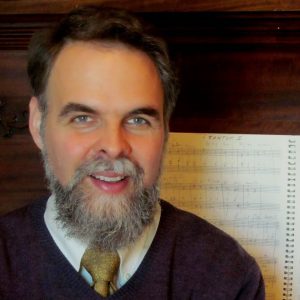
Timothy Flanders is the author of City of God versus City of Man: The Battles of the Church from Antiquity to the Present, which is forthcoming, and Introduction to the Holy Bible for Traditional Catholics. His writings have appeared at OnePeterFive and Crisis, as well as in Catholic Family News. In 2019 he founded The Meaning of Catholic, a lay apostolate dedicated to uniting Catholics against the enemies of Holy Church, as well as its imprint, Our Lady of Victory Press. He holds a degree in classical languages from Grand Valley State University and has done graduate work with the Catholic University of Ukraine. He lives in the Midwest with his wife and four children.

Peter Kwasniewski, PhD, Contributing Editor

Dr. Peter Kwasniewski was the first writer published at OnePeterFive since its founding and has contributed over one hundred and fifty articles to the journal over the years, besides numerous other Catholic publications both popular and academic including New Liturgical MovementLifeSiteNewsThe Remnant, and Catholic Family News. He is a graduate of Thomas Aquinas College and The Catholic University of America and has taught at the International Theological Institute in Austria, the Franciscan University of Steubenville’s Austria Program, and Wyoming Catholic College, which he helped establish in 2006. He is also a composer of sacred music. He now works full time dedicating his life to the articulation and defense of Catholic Tradition in all its dimensions. He has published thirteen books, including Reclaiming Our Roman Catholic Birthright: The Genius and Timeliness of the Traditional Latin Mass (Angelico, 2020), The Ecstasy of Love in the Thought of Thomas Aquinas (Emmaus, 2021), and Are Canonizations Infallible? Revisiting a Disputed Question (Arouca, 2021). His work has been translated into at least eighteen languages. Visit his website at www.peterkwasniewski.com.

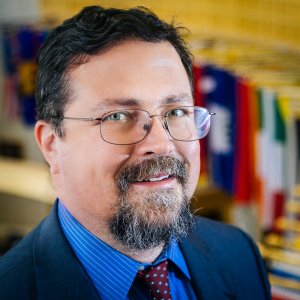
Michael Sirilla, PhD, Contributing Editor

Dr. Michael Sirilla has been involved with OnePeterFive since its founding. In 2017 wrote a short treatise (“On the Moral Liceity of Publicly Correcting the Pope”) which in many ways forms the moral framework for our writing at OnePeterFive. He is the professor of dogmatic and systematic theology at the Franciscan University of Steubenville. A Thomist in the Dominican interpretive tradition, he holds his PhD in Systematic Theology from the Catholic University of America. He has a special research focus in fundamental theology, ecclesiology, and theology of the episcopacy. He is the author of “The Ideal Bishop: Aquinas’s Commentaries on the Pastoral Epistles,” published by The Catholic University of America Press (2017). He is married with seven children.

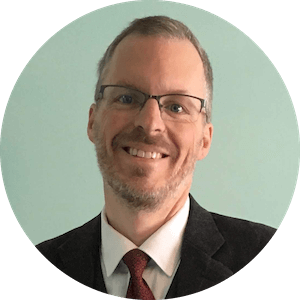
Eric Sammons, Contributing Editor

Eric SammonsEric Sammons, father of seven, is the Executive Director of Crisis Publications. He is the author of eight books, including Deadly Indifference: How the Church Lost Her Mission and How We Can Reclaim It. He has contributed 100 articles to OnePeterFive, as well as publishing at Catholic AnswersCrisis MagazineThe FederalistCatholicVote, and Bitcoin.com.

Joseph Shaw, PhD, Contributing Editor

Dr. Joseph Shaw is the editor of one of the most important texts on the Roman Rite in our times, The Case for Liturgical Restoration: Una Voce Position Papers on the Extraordinary Form (Angelico Press) forward by His Eminence, Raymond Cardinal Burke. He has a Doctorate in Philosophy from Oxford University, where he also gained a first degree in Politics and Philosophy and a graduate Diploma in Theology. He has published on Ethics and Philosophy of Religion and is the Chairman of the Latin Mass Society of England and Wales and Secretary of Una Voce International. He teaches Philosophy at Oxford University and lives nearby with his wife and nine children.

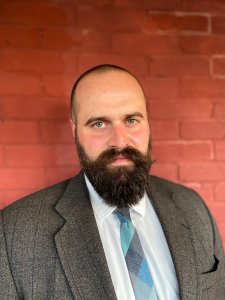
Kennedy Hall, Contributing Editor

Kennedy HallKennedy Hall is the author Terror of Demons: Reclaiming Traditional Catholic Masculinity (forthcoming from TAN) and Family Be Damned, a novel published by Our Lady of Victory Press. He is a writer Catholic Family NewsLifeSiteNews and is the host of the Conservative talk-radio show, The Kennedy Profession on the Crusade Channel. He is married with four children and lives in Ontario, Canada. You can find his work at kennedyhall.ca.

STAY TUNED

Our first priest columnist will be introduced and published tomorrow. We will also discuss further the organic unity between lay and cleric and how it will shape the work of OnePeterFive.

Critical Race Capitalism

Another major company goes 'woke'. Time to switch carriers if you use Verizon currently. The bottom line is all they understand or care about.

From City Journal

By Christopher F. Rufo

Verizon teaches employees that America is fundamentally racist and promotes “defunding the police.”

Verizon has launched an internal program teaching that the United States is a fundamentally racist nation and encouraging employees to support a variety of left-wing causes, including “defunding the police.”

According to documents that I have obtained from a whistleblower, Verizon launched the “Race & Social Justice” initiative last year and has created an extensive race reeducation program based on the core tenets of critical race theory, including “systemic racism,” “white fragility,” and “intersectionality.”

In the flagship “Conscious Inclusion & Anti-Racism” training module, Verizon diversity trainers instruct employees to deconstruct their racial and sexual identities and, according to their position on the “privilege” hierarchy, embark on a lifelong “anti-racism journey.” Employees are asked to list their “race, ethnicity, gender, gender identity, religion, education, profession, and sexual orientation” on an official company worksheet, then consider their status according to the theory of “intersectionality,” a core component of critical race theory that reduces individuals to a network of identity categories, which determine whether they are an “oppressor” or “oppressed.”

In a video presentation featuring a full-screen title card reading “Let’s talk about privilege,” then-Global Chief Diversity, Equity, and Inclusion officer Ramcess Jean-Louis (who has recently moved to Pfizer in a similar role) says: “As a black man in [America], we are viewed as less than. We are viewed as inferior. We are viewed that our life is not as valuable as anyone else.” Set to dramatic piano music and intercut with footage of the “Central Park dog walker” Amy Cooper, the video states that “weaponized White privilege” causes grave “danger” to African-Americans. Jean-Louis, speaking dramatically, to the point of nearly crying, concludes: “If we are not being viewed as humans, if we’re not being viewed as whole people with souls, these things happen and they will continue to happen.”

After establishing the intersectional hierarchy and threat of “weaponized White privilege,” Verizon instructs employees on the firm’s elaborate racial-etiquette system, which provides specific rules for engaging in “conversation about race.” The diversity trainers explain that employees should not commit “microaggressions” and “microinequities,” defined as “indirect expressions of racism, sexism, ageism, ableism, or another form of prejudice” that are “seemingly innocuous” and often “unconscious or subtle,” but make members of certain racial and sexual classes “feel different, violated, or unsafe.” Members of the privileged classes must instead engage in the “lifelong process” of demonstrating “accountability with marginalized individuals.”

As part of the company’s “antiracism” education series, #Next20, Verizon vice president David Hubbard interviewed Khalil Muhammad, great-grandson of former Nation of Islam leader Elijah Muhammad and newly minted professor of race at Harvard. During his presentation, called American History 101, Muhammad argued that America is fundamentally racist and needs a “new origin story,” replacing the narrative of “American exceptionalism” with the narrative that America was founded on “systems of racism” that remain at the root of our society. Muhammad argued that the Founding Fathers built a slave economy and that “this early version of global capitalism” produced the “economic incentives” that prevail to this day, with modern corporations “exploiting poor people in low-income communities” in a similar way to the slaveowners of the past. “This isn’t just Marxist talking points,” Muhammad said. “It’s just the fact.”

Later in the discussion, Muhammad claimed that the current American police force is designed to maintain a “two-tier society,” enforce geographic segregation, and protect the “wealth gap” between white and black Americans. The raison d’être of policing, Muhammad said, is to “make sure that kids are locked up,” “make sure that people stay in their communities,” and “make sure that they’re criminalizing poverty”—what he called “the bread and butter of systemic racism.” Black crime statistics showing that black Americans commit crimes disproportionately, Muhammad contended, “are themselves an expression of systemic racism,” used to establish “the collective guilt of black people” and to “[justify] inequality and racism and discrimination.”

What should be done? In another #Next20 conversation on “criminal justice reform,” Verizon hosted an activist named Adrian Burrell who openly advocated for “defunding the police.” As Burrell told Verizon employees: “I feel like over policing doesn’t work. And I feel like those same resources that are aimed towards hiring [police officers] with racist biases . . . need to be aimed at bringing more resources to the community at a at a root level, and then you just won’t need so many police.” Burrell added: “If you want to call that ‘abolishing the police,’ or if you want to call that ‘defunding the police,’ so be it.”

Verizon claims that this conversation, and its broader antiracism program, will “accelerate systemic change.” In reality, however, the company is promoting the conventional wisdom of the academic Left and the American bureaucracy. Diversity lecturers such as Muhammad, pretending to bring radical insights, have simply commodified critical race theory and sold it back to Fortune 100 companies—ignoring how fashionable ideas such as “defunding the police” are deeply unpopular with voters, including the majority of African-Americans.

Verizon’s corporate slogan is “Built Right.” If Verizon executives want to live up to it, they should scrap their antiracism program.

Happy New Year!!!

Happy New Year's Day, AM 7530!!!


No, I haven't gone mad. In the Byzantine Calendar, used liturgically in the Catholic Churches of the Byzantine Rite and by the Eastern Orthodox who follow the New Calendar, today is the anniversary of the Creation 7530 years ago.

Whilst the West uses AD, anno Domini, In the Year of Our Lord, the East uses AM, anno mundi, In the Year of the World.

The Byzantine Catholic Troparion for the New Year:

O Lord, Maker of the universe, * who alone has power over seasons and times, * bless this year with your bounty, * preserve our country in safety, and keep your people in peace. * Save us through the prayers of the Theotokos.


Let the festivities begin!

Christmas Vacation

MM announces a few days off and promises the posts I've already shared. 

From The Mad Monarchist (20 December 2013)

As your resident mad man seems a bit more weary than usual (and having some medication acting up at the moment) this seems as good a time as any to start my holiday break. It is a few days earlier than last year but hopefully that means it will end a few days sooner as well. There is the 'year in review' to work on and in the days and weeks ahead there will be posts on how South Vietnam was bungled, a country that championed monarchy in Asia, the Divine Right, some soldiers of monarchy from Spain and Russia, that "third force" everyone used to talk about but that never really worked, a profile of a particularly accomplished King of Portugal, more in the "Royal Friends of Texas" series and one of the worst presidents America has ever had to suffer (and who was certainly no great friend of monarchy in the world). I hope you will all look forward to those. For those who are not already, feel free to follow me on Facebook for the occasional update and, of course, I hope everyone has a very happy Christmas. In the meantime, peruse the archives as you please and, as always, stay "mad" everyone. God bless.

The Mad Monarchist

1 September, Antonio, Cardinal Bacci: Meditations For Each Day

The Problem of Evil

1. In his second letter to the Thessalonians, the Apostle Paul speaks of the Anti-Christ, “the man of sin… the son of perdition, who opposes and is exalted above all that is called God…” “Already,” he says, “the mystery of iniquity is at work.” (Cf. 2 Thess. 2:3-7) From the beginning of the Church’s history until the present time it has always been the same.

There always have been and always will be men who do evil not from human weakness, but from motives of malice so diabolical as to present something of a mystery to us. These can be called Anti-Christ because they seem to be incarnations of the devil, the spirit of iniquity. They delight in spreading error, in corrupting minds, and in persecuting the Church. They are steeped in all kinds of baseness and nothing pleases them better than to succeed in inducing the young and the innocent to follow them in their sinful ways. For this purpose they employ all the advantages which modern technical progress has to offer – the press, the cinema, the radio, and television. In short, they use God’s gifts in their commercialisation of sin in order to draw souls away from Him.

The realisation of this terrifying fact provokes two questions. (1) How can such evil be permitted by God, Who made man for Himself and redeemed him with the Blood of His only-begotten Son? (2) What steps can we take to control this alarming and universal deluge of evil?

2. St. Augustine answers the first question by pointing out that the infinite and good God created us without any assistance from ourselves, but does not will to save us without our cooperation since He has endowed us with the gift of liberty. Moreover, He prefers to draw good from evil rather than to prevent the evil itself. We must answer the second question ourselves, remembering that we have a serious obligation to combat evil in ourselves and in our fellow-men. What have we done up to now and what do we propose to do in the future?

3. According to St. Augustine, great good can come from the evil which God permits. In the first place, God displays His infinite goodness and mercy. Even though He permits us to offend Him out of respect for our human liberty, He is always ready to forgive us, even as He forgave the penitent thief. In the second place, by permitting evil God gives the good an opportunity of practicing virtue, especially the virtue of patience. If there were no persecutors, there would be no martyrs and the Church would be deprived of the glory which makes her most like her founder, Jesus Christ. Finally, each of us has a particular duty to fulfil in resisting the onslaught of evil. As followers and soldiers of Christ, we cannot remain passive. The invasion by the forces of evil demands a counter-attack by the forces of good in defense of the faith and of the Church. As Christians, we are the sons of martyrs. We must not refuse, therefore, to make our lives a continuous martyrdom for the triumph of goodness in ourselves and in others. The faithful exercise of virtue and of the apostolate is often a form of martyrdom.

Eastern Rite - Feasts of 1 September AM 7530

Today is the Beginning of the Indiction, that is, the New Year and the Feasts of the Commemoration of Our Holy Father Symeon the Stylite and His Mother Martha and the Synaxis of the Most Holy Mother of God of Miasena.
✠✠✠✠✠

The first day of the Church New Year is also called the beginning of the Indiction. The term Indiction comes from a Latin word meaning, “to impose.” It was originally applied to the imposition of taxes in Egypt. The first worldwide Indiction was in 312 when the Emperor Constantine (May 21) saw a miraculous vision of the Cross in the sky. Before the introduction of the Julian calendar, Rome began the New Year on September 1.

According to Holy Tradition, Christ entered the synagogue on September 1 to announce His mission to mankind (Luke 4:16-22). Quoting Isaiah 61:1-2, the Savior proclaimed, “The spirit of the Lord is upon Me; because He has anointed Me to preach the gospel to the poor; He has sent Me to proclaim release to captives, and recovering of sight to the blind, to set at liberty those who are oppressed, to proclaim the acceptable year of the Lord...” This scene is depicted in a Vatican manuscript (Vatican, Biblioteca. Cod. Gr. 1613, p.1).

Tradition says that the Hebrews entered the Promised Land in September.

Troparion — Tone 2

O Creator of the universe, / Thou didst appoint times by Thy power; / bless the crown of this year with Thy goodness, O Lord. / Preserve in safety Thy rulers and cities: / and through the intercessions of the Theotokos, save us!

Kontakion — Tone 4

O Creator and Master of time and the ages, / Triune and Merciful God of all: / grant blessings for the course of this year, / and in Thy boundless mercy save those who worship Thee and cry out in fear: / “O Savior, grant blessings to all mankind!”

✠✠✠✠✠

Saint Simeon the Stylite was born in the Cappadocian village of Sisan of Christian parents, Sisotian and Martha. At thirteen years of age, he began to tend his father’s flock of sheep. He devoted himself attentively and with love to this, his first obedience.

Once, after he heard the Beatitudes in church, he was struck by their profundity. Not trusting to his own immature judgment, he turned therefore with his questions to an experienced Elder. The Elder readily explained to the boy the meaning of what he had heard. The seed fell on good soil, and it strengthened his resolve to serve God.

When Simeon was eighteen, he received monastic tonsure and devoted himself to feats of the strictest abstinence and unceasing prayer. His zeal, beyond the strength of the other monastic brethren, so alarmed the igumen that he told Simeon that to either moderate his ascetic deeds or leave the monastery.

Saint Simeon then withdrew from the monastery and lived in an empty well in the nearby mountains, where he was able to carry out his austere struggles unhindered. After some time, angels appeared in a dream to the igumen, who commanded him to bring back Simeon to the monastery.

The monk, however, did not long remain at the monastery. After a short while he settled into a stony cave, situated not far from the village of Galanissa, and he dwelt there for three years, all the while perfecting himself in monastic feats. Once, he decided to spend the entire forty days of Great Lent without food or drink. With the help of God, the monk endured this strict fast. From that time he abstained from food completely during the entire period of the Great Lent, even from bread and water. For twenty days he prayed while standing, and for twenty days while sitting, so as not to permit the corporeal powers to relax.

A whole crowd of people began to throng to the place of his efforts, wanting to receive healing from sickness and to hear a word of Christian edification. Shunning worldly glory and striving again to find his lost solitude, the monk chose a previously unknown mode of asceticism. He went up a pillar six to eight feet high, and settled upon it in a little cell, devoting himself to intense prayer and fasting.

Reports of Saint Simeon reached the highest church hierarchy and the imperial court. Patriarch Domninos II (441-448) of Antioch visited the monk, celebrated Divine Liturgy on the pillar and communed the ascetic with the Holy Mysteries.

Elders living in the desert heard about Saint Simeon, who had chosen a new and strange form of ascetic striving. Wanting to test the new ascetic and determine whether his extreme ascetic feats were pleasing to God, they sent messengers to him, who in the name of these desert fathers were to bid Saint Simeon to come down from the pillar.

In the case of disobedience, they were to forcibly drag him to the ground. But if he was willing to submit, they were to leave him on his pillar. Saint Simeon displayed complete obedience and deep Christian humility. The monks told him to stay where he was, asking God to be his helper.

Saint Simeon endured many temptations, and he invariably gained victory over them. He relied not on his own weak powers, but on the Lord Himself, Who always came to help him. The monk gradually increased the height of the pillar on which he stood. His final pillar was 80 feet in height. Around him a double wall was raised, which hindered the unruly crowd of people from coming too close and disturbing his prayerful concentration.

Women, in general, were not permitted beyond the wall. The saint did not make an exception even for his own mother, who after long and unsuccessful searches finally succeeded in finding her lost son. He would not see her, saying, “If we are worthy, we shall see one another in the life to come.” Saint Martha submitted to this, remaining at the foot of the pillar in silence and prayer, where she finally died. Saint Simeon asked that her coffin be brought to him. He reverently bid farewell to his dead mother, and a joyful smile appeared on her face.

Saint Simeon spent 80 years in arduous monastic feats, 47 years of which he stood upon the pillar. Many pagans accepted Baptism, struck by the moral staunchness and bodily strength which the Lord bestowed upon His servant.

The first one to learn of the death of the saint was his close disciple Anthony. Concerned that his teacher had not appeared to the people for three days, he went up on the pillar and found the dead body stooped over at prayer. Patriarch Martyrius of Antioch performed the funeral before a huge throng of clergy and people. They buried him near his pillar. At the place of his ascetic deeds, Anthony established a monastery, upon which rested the special blessing of Saint Simeon.

We pray to Saint Simeon for the return to the Church of those who have forsaken Her, or have been separated from Her.

Troparion — Tone 1

You were a pillar of patient endurance, / having imitated the forefathers, O Venerable One: / Job in suffering, and Joseph in temptations. / You lived like the bodiless ones while yet in the flesh, O Simeon, our Father. / Beseech Christ God that our souls may be saved.

Kontakion — Tone 2

Seeking the things of the Highest, / and having made your pillar a fiery chariot, you were joined to the heights. / Therefore, you have become a companion to the angels, O Venerable One, / and with them you are praying incessantly to Christ God for us all.
✠✠✠✠✠

Saint Martha lived in Cilicia of Asia Minor during the fourth and fifth centuries and came from a poor family. She and her husband Sisotion were the parents of Saint Simeon the Stylite.

At the age of eighteen, Simeon received the monastic tonsure without his parents’ knowledge. Many years later, Martha came to the saint’s pillar in order to see him. Simeon sent word to her not to come, for if they were worthy, they would see each other in the life to come. Martha insisted on seeing him, and he had someone tell her to wait for a while in silence. Saint Martha agreed to this and waited at the foot of the hill where her son’s pillar stood. There she departed to the Lord.

When he heard that his mother had died, Saint Simeon ordered that her body be brought to the foot of his pillar. He prayed over his mother’s body for some time shedding many tears, and witnesses said that a smile appeared on Saint Martha’s face.

Troparion — Tone 8

By a flood of tears, you made the desert fertile, / and your longing for God brought forth fruits in abundance. / By the radiance of miracles you illumined the whole universe! / Our Mother Martha, pray to Christ God to save our souls!
✠✠✠✠✠
The Miasena Icon of the Most Holy Theotokos was thrown into Lake Zagura in the ninth century in an effort to save it from the iconoclasts. After a long time, the wonderworking icon emerged from the water unharmed and was brought to the Miasena Monastery.

IN LUMINE FIDEI: 1 SEPTEMBER – SAINT GILES (Abbot and Confessor)

IN LUMINE FIDEI: 1 SEPTEMBER – SAINT GILES (Abbot and Confessor): Giles (Aedigius) was born in Athens in the middle of the seventh century to an illustrious family. From his childhood Giles applied him...

IN LUMINE FIDEI: SEPTEMBER – THE MONTH OF THE SEVEN SORROWS OF THE ...

IN LUMINE FIDEI: SEPTEMBER – THE MONTH OF THE SEVEN SORROWS OF THE ...: The Seven Sorrows of the Blessed Virgin Mary is a devotion which dates back to the thirteenth century when the first altar to the Mater...

1 September, A Chesterton Calendar

SEPTEMBER 1st

If a modern philanthropist came to Dotheboys Hall I fear he would not employ the simple, sacred and truly Christian solution of beating Mr. Squeers with a stick. I fancy he would petition the Government to appoint a Royal Commission to inquire into Mr. Squeers. I think he would every now and then write letters to the newspapers reminding people that, in spite of all appearances to the contrary, there was a Royal Commission to inquire into Mr. Squeers. I agree that he might even go the length of calling a crowded meeting in St. James's Hall on the subject of the best policy with regard to Mr. Squeers. At this meeting some very heated and daring speakers might even go the length of alluding sternly to Mr. Squeers. Occasionally even hoarse voices from the back of the hall might ask (in vain) what was going to be done with Mr. Squeers. The Royal Commission would report about three years afterwards and would say that many things had happened which were certainly most regrettable, that Mr. Squeers was the victim of a bad system; that Mrs. Squeers was also the victim of a bad system; but that the man who sold Squeers' cane had really acted with great indiscretion and ought to be spoken to kindly. Something like this would be what, after four years, the Royal Commission would have said; but it would not matter in the least what the Royal Commission had said, for by that time the philanthropists would be off on a new tack and the world would have forgotten all about Dotheboys Hall and everything connected with it. By that time the philanthropists would be petitioning Parliament for another Royal Commission; perhaps a Royal Commission to inquire into whether Mr. Mantalini was extravagant with his wife's money; perhaps a commission to inquire into whether Mr. Vincent Crummies kept the Infant Phenomenon short by means of gin.

Introduction to 'Nicholas Nickleby.'

1 September, The Holy Rule of St Benedict, Father of Western Monks

PROLOGUE OF OUR MOST HOLY FATHER SAINT BENEDICT TO HIS RULE

1 Jan. 2 May. 1 Sept

Hearken, O my son, to the precepts of thy Master, and incline the ear of thine heart; willingly receive and faithfully fulfil the admonition of thy loving Father, that thou mayest return by the labour of obedience to Him from Whom thou hadst departed through the sloth of disobedience. To thee, therefore, my words are now addressed, whoever thou art that, renouncing thine own will, dost take up the strong and bright weapons of obedience, in order to fight for the Lord Christ, our true king. In the first place, whatever good work thou beginnest to do, beg of Him with most earnest prayer to perfect; that He Who hath now vouchsafed to count us in the number of His children may not at any time be grieved by our evil deeds. For we must always so serve Him with the good things He hath given us, that not only may He never, as an angry father, disinherit his children, but may never, as a dreadful Lord, incensed by our sins, deliver us to everlasting punishment, as most wicked servants who would not follow Him to glory.

2 September, The Roman Martyrology

Quarto Nonas Septémbris Luna vicésima quinta Anno Dómini 2021

On the morrow we keep the feast of holy Stephen, King of Hungary, adorned with many graces from God, who was the first to turn the Hungarians to believe in Christ, and who was received by the Virgin Mother of God into heaven upon the very day of her Assumption, but by the appointment of Pope Innocent XI, his feast is rather kept upon the 2nd day of September, whereon the Christian army, by the help of this holy King, wrested the strong fortress of Buda (from the Turks.)
September 2nd 2021, the 25th day of the Moon, were born into the better life:

At Rome, the holy martyr Maxima, who confessed Christ along with holy Ansanus, in the persecution under the Emperor Diocletian, and was beaten to death with cudgels.
At Pamiers, in Gaul, (in the second century,) the holy martyr Antonine, whose relics are kept with great reverence in the church of Palencia in Spain.
Likewise the holy martyrs Diomede, Julian, Philip, Eutychian, Hesychius, Leonides, Philadelphus, Menalippus, and Pantagapa, whereof some finished their testimony by fire, some by water, some by the sword, and some by the cross.
At Nicomedia, (in the persecution under the Emperor Diocletian,) the holy martyrs Zeno and his sons, Concordius and Theodore.
On the same day, (at Syracuse,) the holy brethren Evodius and Hermogenes and their sister Callista, all martyrs.
Upon the same day is commemorated at Lyon, in Gaul, (in the fourth century,) the holy Confessor Justus, Bishop (of that see,) a man of wonderful holiness of life, gifted with the spirit of prophecy he resigned his Bishopric, and withdrew himself into the desert of Egypt, along with Viator his Reader. There he led for some years a life bordering upon the life of Angels, and, when the worthy end of his labours came, departed hence to receive a crown of righteousness from the Lord. It was the 14th day of October, but it was upon the 2nd of September that his sacred body was brought to Lyon, along with the bones of his blessed servant Viator.
Also at Lyon, (in the fifth century,) was born into the better life the holy Confessor Elpidius, Bishop (of that see.)
In the March of Ancona, (in the fifth century,) at the town called by his name, which rejoices to own his sacred body, the holy Abbot Elpidius.
On Mount Soracte, the holy Abbot Nonnosus, who by his prayer moved a stone of great weight, and was famous.
V. And elsewhere many other holy martyrs, confessors, and holy virgins.
R. Thanks be to God.

Memes of the Day