31 May 2021

Ask Father: Why Do Bishops Tuck Their Crosses Under Their Jackets.

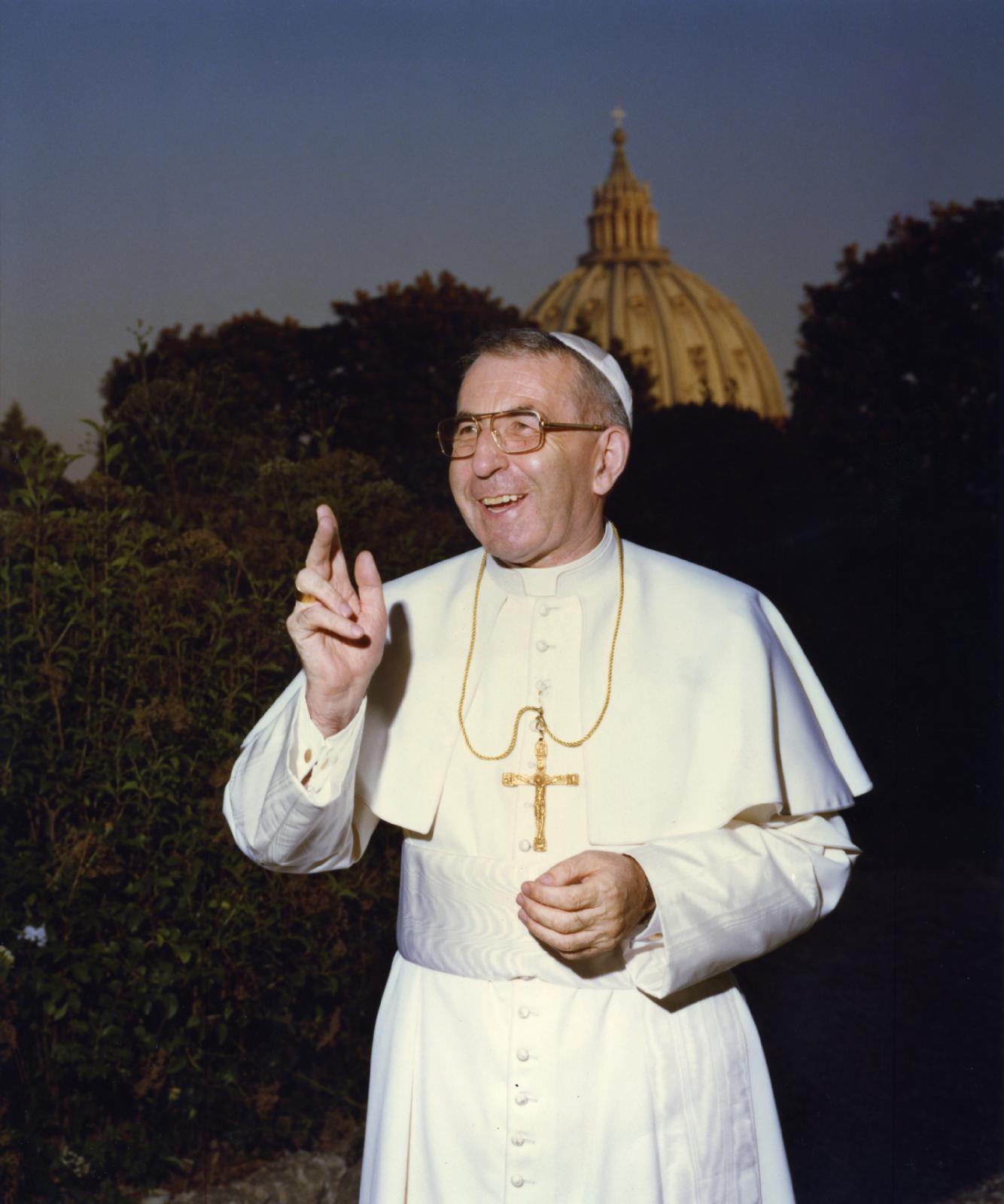
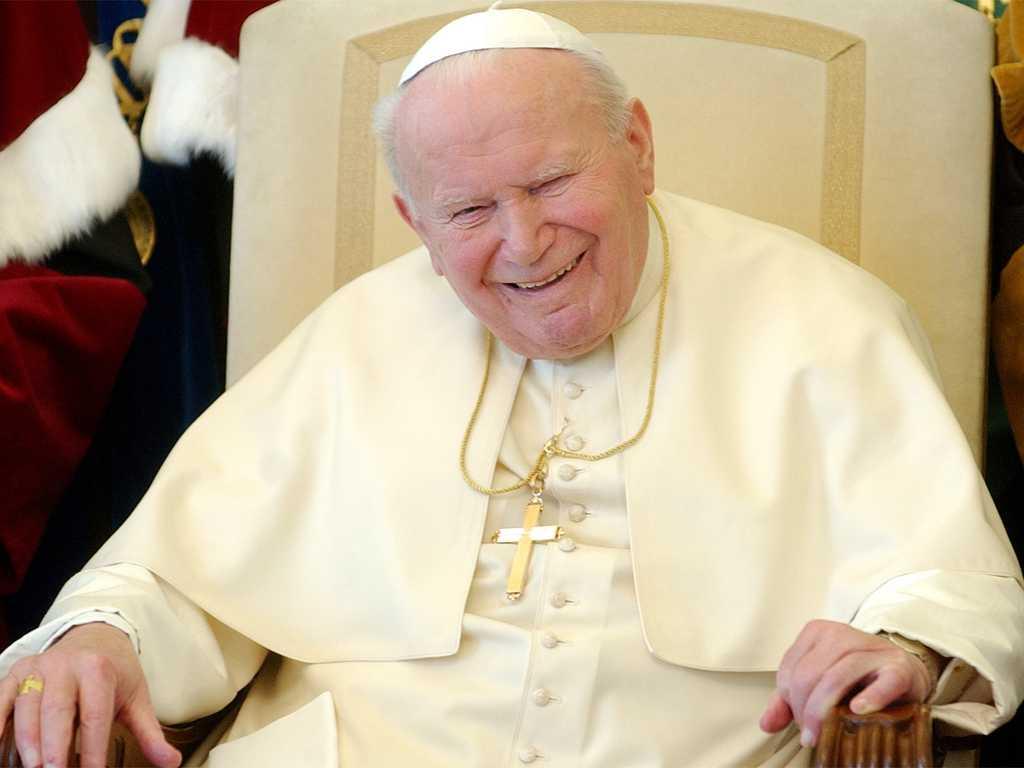
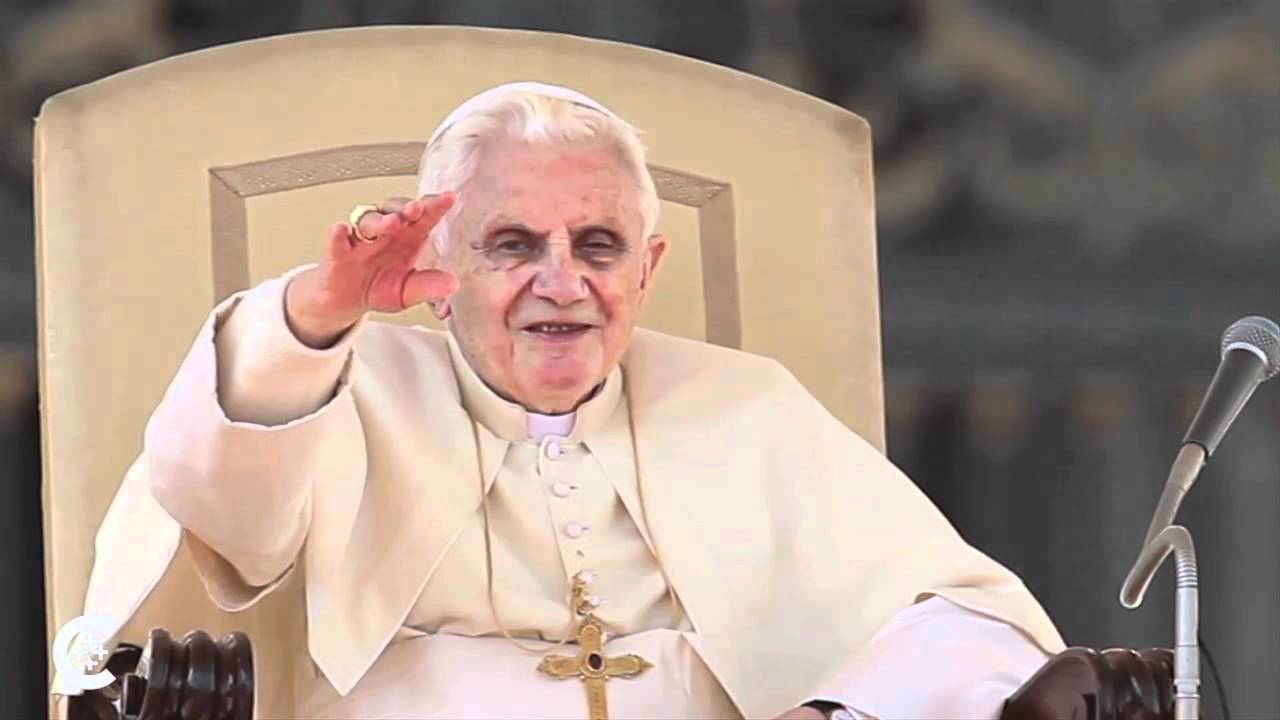
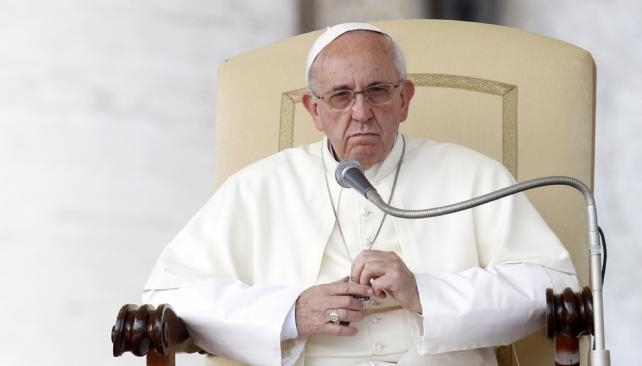
Fr Zed answers an off-the-wall question. The things people WILL worry about! The last picture is priceless!

From Fr Z's Blog

From a  reader…

QUAERITUR:

Thank you for your excellent blog! Can you explain why some bishops hide their pectoral crosses by pulling the cross across the chest and tucking it under their jackets? There is something a bit disturbing about it as it feels as though they are deliberately hiding the cross, and it’s something I’ve wondered about for a long time. Thank you for your insight in this small matter. And may God bless you!

Ah!  Finally a break from the insignificant stuff, like validity of sacraments, to something really important: ecclesiastical haberdashery.

I have never been a bishop and I have never played one on TV.  I did in a play, once, but that’s another universe away.    My point is that I have never had to deal with wearing a pectoral cross on a daily, all day, basis.   Therefore, my speculation is worth precisely what it is worth.

I suspect that the tendency of bishops, when wearing a suit (in Italian: in borghese) to tuck their pectoral crosses into their pockets is more a practical matter than a statement of meager faith or cowardice in view of bearing witness to their faith.   I suspect that the cross “gets in the way” a lot.  “Which the irony is rich!”, as Preserved Killick would say.

Cf. 1 Corinthians 1:23

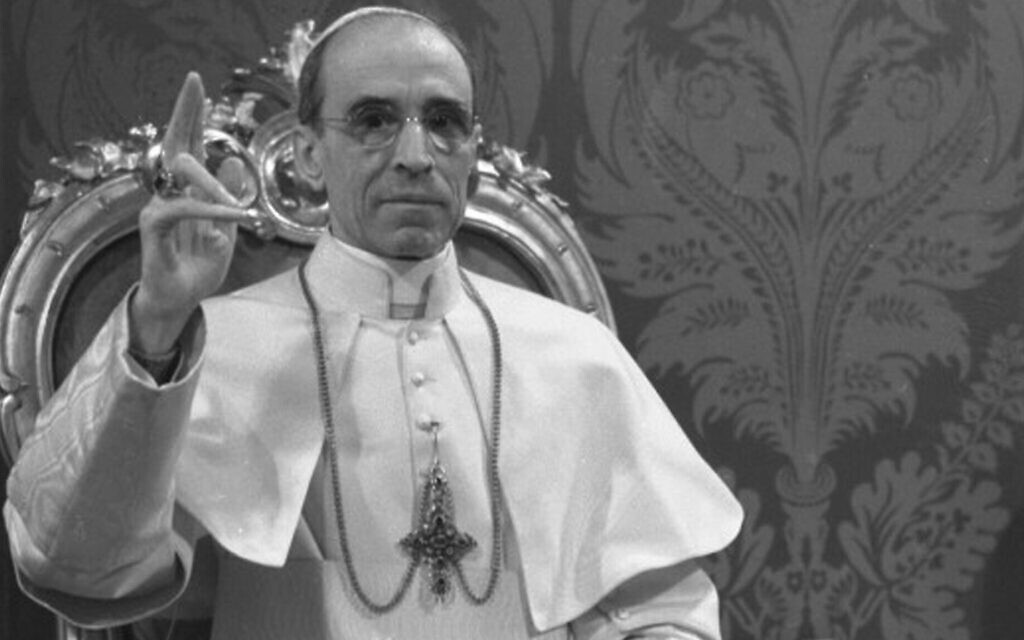
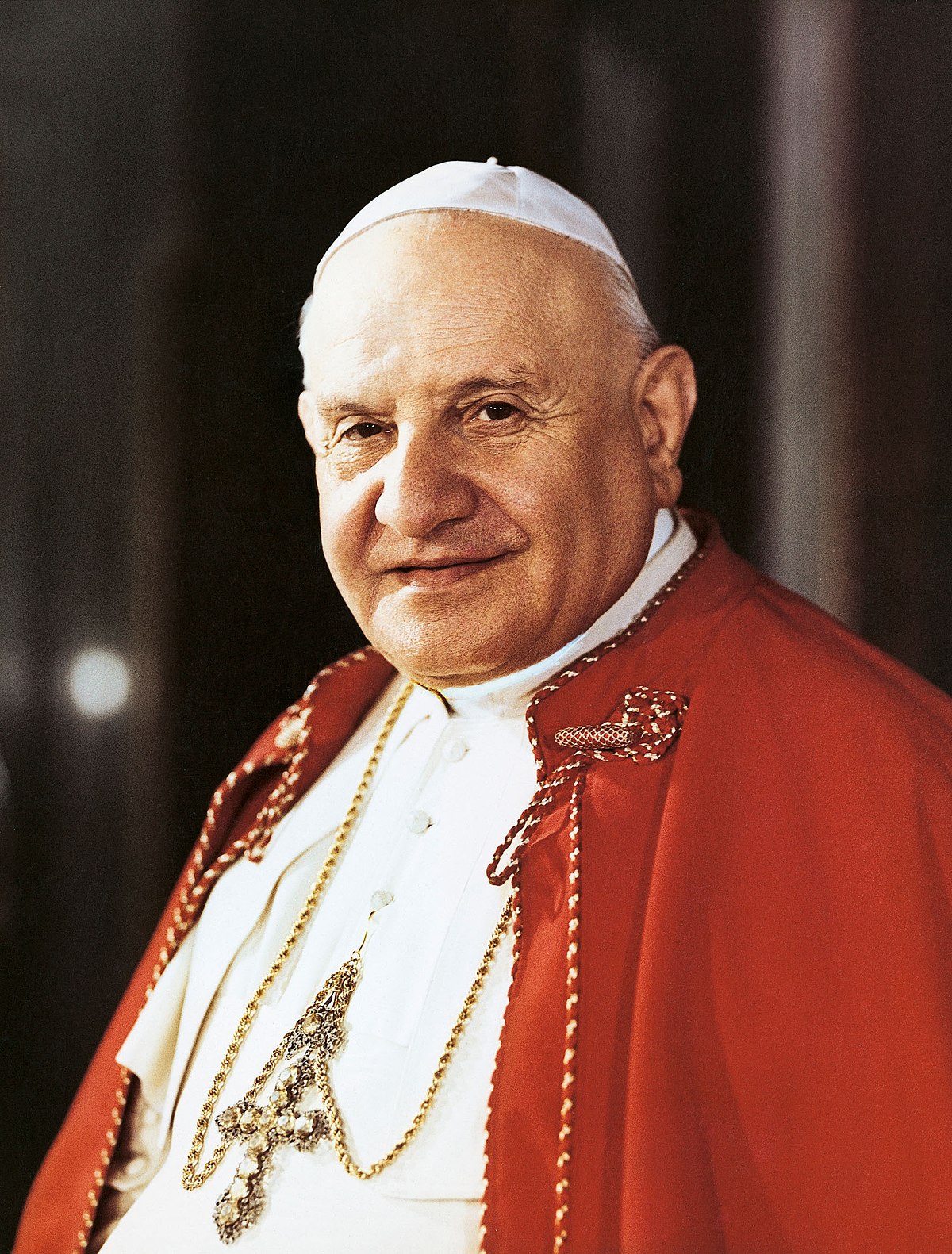
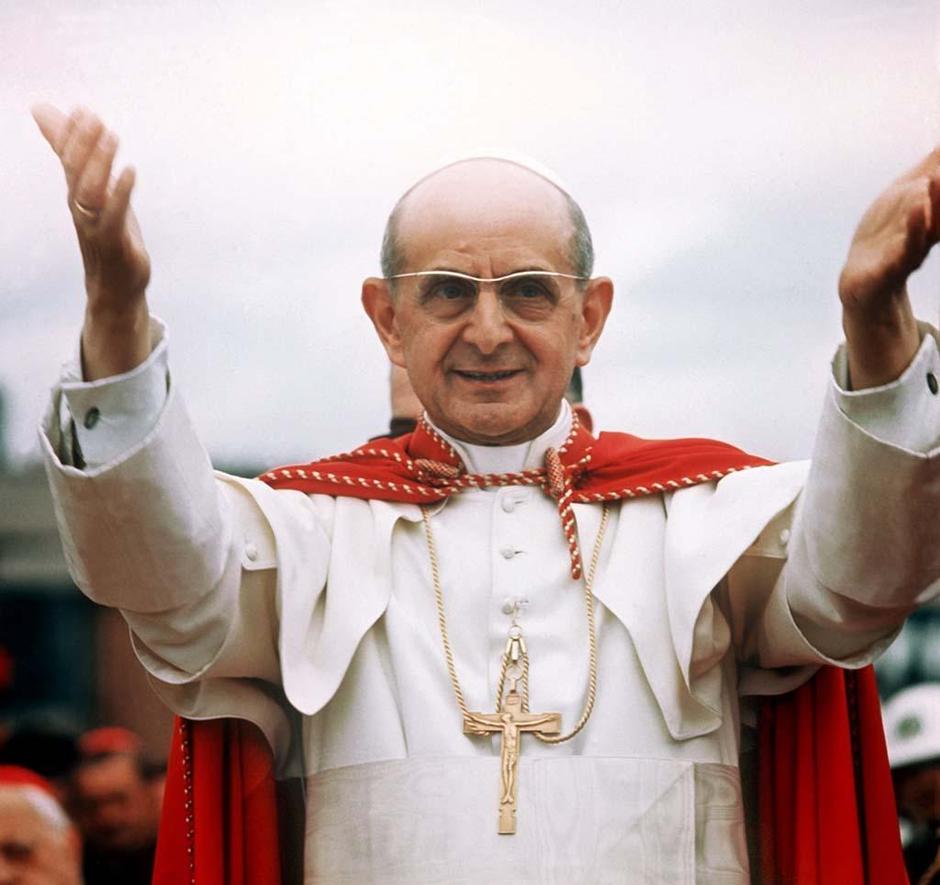
Back in the day, bishops wore their cassocks.  Back in the same day, bishops did not just let their pectoral dangle on a too-longish chain, thus becoming an obstacle (there’s that irony again).  They would generally hoist the cross up (more irony) and with a hook suspend it from a button or from a specially placed button hole, thus letting the two slack lengths of chain drape to either side.   That was practical, because it kept the cross under control and it also looked spiffy.   There were, of course, variations and exceptions.  For example, you will see photos of John XXIII with the hitched up version and without.  But it is safe to say that was a general rule of style.

I wouldn’t read too much into it, except that right now, the hitched up version could signal a more traditional inclination.

Respect for Our Ancestors

True progress quietly and persistently moves along without notice. - St Francis de Sales

In the modern and postmodern age, we may not know what is right and true, but what we all know for sure, is that we must not impede progress. We must relentlessly march forward at any cost and the temptation to look back at what was is the opposite of progress. And by this very loose logic, we are constantly stirred up by so called progressives into disregarding our existing traditions and holding past traditions in contempt. But real progress isn’t just about moving forward, it’s about moving in the right direction. If you’re headed in the wrong direction, the most progressive thing you can do, is turn around and go backwards. So, instead of insisting that what we’re doing now is better than what we used to do because it happens later in a sequence of time, perhaps we should abandon this fallacious rhetoric about progress and start asking ourselves, what is the right direction? What is true? And then do that. It’s this so-called progressive attitude that has ingrained in us this idea that people who merely happen to be walking around in this moment in time, are more advanced than our ancestors because we happened to appear at a later date. When you look at it that way, the strength of that conviction becomes a bit weaker, I hope. But it’s certainly an attitude and a prejudice that we seem to carry – to the point that if someone proposes a solution to an existing problem, if those who oppose the solution can compare it to something from an age past, they can immediately denounce it as going backwards without ever having to defend their belief that it’s wrong. Well, I think it’s worth exploring whether this contempt for our ancestors is justified because we’ve inherited a lot from them that we seem to take for granted – we seem to act like we are the makers of our own fortune, but that doesn’t seem to be very accurate to me. Let’s consider a first fact, which is that to whatever degree you go back in generations, you will discover that our ancestors faced far greater adversity than we do. Some didn’t have cars, some had to build their own homes, some had to grow their own food, some didn’t have electricity and had to do everything by hand, some didn’t have plumbing or education. Some didn’t have anaesthesia so when they had to face a difficult medical procedure, they just had to bite down on something hard. Most didn’t have genetically modified crops or modern irrigation so that if the weather didn’t cooperate, their food supply failed and they had to simply survive with what little they had. They didn’t have natural gas to heat their homes, they didn’t have screens to amuse themselves, they washed their clothes by hand, they went to the bathroom in a shack in the freezing cold, they bathed in cold water, they worked long hours, they fought in wars, and on, and on, and on. The takeaway that we should perceive from all of that adversity is that they had a lot of problems to solve… and they did solve them, which means, we could learn a LOT from them. The fact that we don’t have those problems, isn’t because we solved them, it’s because we take the solutions for granted. And, in spite of all of that adversity, not only did they survive, but they thrived. Going back hundreds of years in Western Civilization, what we find is that with the exception of a few hiccups or disasters, each successive generation was better positioned than the previous one. In spite of all the hardships that they faced, they predominantly left their children better off than they found themselves. Now if anything can be called progress, it’s that. And this was certainly true for the Baby Boomer generation (or my parents’ generation). Their parents left them with a much better position than they found themselves in in spite of the fact that their lives were interrupted by a world war for several years. Baby boomers were the most economically prosperous generation ever.

The Popes and Democracy - Part IV. The Master Plan of the Devil 41. Giving to Man what Belongs to God

I am not concerned, here, with the human causes and agencies which made this development possible. They are only secondary causes and agencies. The Reformation, which I have taken as the initial cause, was itself a consequence, - largely that of the corruption within the Church. But that corruption was also the consequence of something else, because, in history, everything that follows is a consequence of something else. We could go back very far into the past without finding the initial cause. So I have taken the Reformation as the beginning, it representing a coherent movement, an organised human endeavour, as opposed to a mere state of affairs. There is no doubt that, without attempting to put the blame on anyone in particular, for the responsibilities were evenly distributed on either side, the Reformation did break the oneness of Divine Revelation. Since the Bible was then interpreted in different ways, the Rationalists had their chance to show that Revelation was unreliable. As explained above, this could only lead to the eventual rejection of God. Having rejected the authority of God, society could only be subjected, sooner or later, to the authority of man. It was inevitable that all powers would be crystallised into one man, or a small group of men. And so came Democracy, Fascism, Socialism, and Communism. In all these regimes or systems, authority is supposed to come from man, not from God, whilst in the past it was publicly acknowledged that the king was exercising the authority of God, and the coronation ceremonies had a sacramental character that was far more than a mere symbol. It was the consecration of the King to his people by the hands of the Bishop. That is the way it should be, namely, that temporal power be bestowed upon one man by the spiritual power of the Church. (Note, however, that the so-called "divine right" of the Kings is an extreme view contrary to Catholic doctrine. Only Bishops have a divine right.)

Word of the Day: Middle Ages

MIDDLE AGES. The period preceding the Renaissance. Once taken to date from A.D. 476, the fall of the Roman Empire, it is now more correctly held to begin about 1100 and extend to the end of the fifteenth century. Also once viewed as a sterile period, it has come to be recognized as one of the most cultivated and productive eras of human history. It was the age that reached the highest realization of Christendom as a cultural unity built on a common faith.

Memorial Day, My Grandfather Oxley and My Argument With the American Legion

My hometown, Marysville, Kansas, where my Grandfather Oxley lived out the last years of his life and where he is buried does Memorial Day in a fashion which has died out most places.

In the days immediately before the Holiday, the veterans' organisations, American Legion, Veterans of Foreign Wars, and Disabled American Veterans, along with the Boy and Girl Scouts, decorate the graves of all the veterans buried in their district. Each grave, including that of one soldier, killed in the Indian Wars who lies in a grave on the bluff above the Big Blue River, unmarked except by his veteran's flag holder, is decorated with an evergreen wreath with small American Flags inserted in it, and a larger US Flag placed in the veteran's flag holder on each burial site. There are Grand Army of the Republic markers for the Civil War veterans, and United Spanish War Veterans' markers for the veterans of the Spanish American War, the Philippine Insurrection, and the China Relief Expedition, sent to help quell the Boxer Rebellion. For the veterans of the Wars from World War One onward, there are American Legion markers, one of which is on my Grandfather's grave, since he served in WW I and belonged to the Legion. As I pointed out in my post. My Oxley Grandparents, he had served in three different units in two different armies.

The City Cemetery, where he is buried, is adorned with an 'Avenue of Flags' with flagstaffs bearing the US Flags that covered the coffins of the veterans buried there. Each pole has a small plaque bearing the name of the man whose coffin the flag flying on that staff covered. In the back corner of the cemetery, where there are no graves as yet, is a 'Flanders Field', where there is a white cross with red poppies tied to its intersection for every veteran buried there, with each vet's name painted on his cross.

At 08.00 on Memorial Day a service is held at the bridge over the Big Blue River in which a wreath is cast on the water in honour of those who were lost at sea during the wars. At 09.00 a Requiem Mass is celebrated at St Gregory's Parish Cemetery. Then at 10.00, the main service is held at the City Cemetery with all the normal, old fashioned things: patriotic music, a prayer, the firing of a 21 gun salute and patriotic speeches. It culminates with the 'Decoration of the Mound' The 'Mound' is a cenotaph consisting of an enclosure made of stone, slightly larger than a standard grave plot, and about three feet high. It is filled with earth and is topped by a luxuriant growth of green grass. The 'Decoration' consists of a wreath-laying by members of the service organisations, people representing the no longer extant organisations like the GAR and the USWV, and representatives of civic clubs and organisations. It ends with the Boy and Girls Scouts advancing on the Mound, and each of them placing a small American Flag thereon. At the end of the Decoration of the Mound, two buglers one by the Mound and one back by the Flanders Field play 'Taps'. The one by the Mound plays first, and then the distant one 'echoes' the mournful tune in a most moving way.

Each attendee at the service is given a printed program of the agenda, which contains a necrology of veterans who have died since the last observance, and a complete list of all the veterans buried in the district along with notes on their service. For years, my Grandfather was listed as a peacetime soldier, based on his two peacetime enlistments in the US Army. Each year, I pointed out that he had served in an Allied army during wartime. It seemed to do no good.

When he died, the Canadian Army had offered to send a colour guard to his funeral in light of his service to the Empire during the Great War, but we declined, telling them that the American Legion would supply the colour guard, thereby saving the Canadian taxpayers money. That was what made his 'peacetime soldier' listing so ironic. To belong to the American Legion, which he did, and to have the Legion marker/flag holder above the grave, a man must have served in the military between carefully defined dates. In the case of WW I, the dates are from 6 April 1917, the Declaration of War, until 11 November 1918, the Armistice (World War Two's dates go from the day of Pearl Harbor, the day before the Declaration of War until 31 December 1946). Thus, my Grandfather had been on active service during the period defined.

Finally, after years of politely arguing, I got it through their heads that the very fact that he had been a member of their fine organisation gave the lie to the idea that he had been a peacetime soldier. He is now listed as Oxley, Charles A., Gnr, Royal Field Artillery, 1915-1918 (two peacetime enlistments, US Army).

Success!

My Experiences with the Ecclesiastical Bureaucracy

Shortly after I became a Catholic, I became a member of the Third Order of Our Lady of Mount Carmel, or as they're called today, a Lay Carmelite. I wasn't yet a full-blown Traditionalist, so after formation, I made my Profession and took my vows in the terms of the New Rule.

After the issuance of the motu proprio Ecclesia Dei and as I became more and more Traditional I decided to see what I could do toward 'officially' following the Old Rule of the Third Order. So I wrote to the Congregation for Institutes of Consecrated Life and Societies of Apostolic Life, only to have them reply that it wasn't in their remit and that I should ask the Pontifical Commission Ecclesia Dei.

So, I wrote to the PCED asking if I could follow the old, pre-Conciliar Rule of the Third Order. After a few weeks, I received a very nice letter from His Eminence Paul Augustin, Cardinal Mayer informing me that it was perfectly acceptable for me to follow the Old Rule since it was actually stricter than the new. Essentially he said that by following the Old Rule, I was doing more than required by the Rule currently in force.

Emboldened by my success with that endeavour, I wrote my Ordinary asking for my children to receive the First Sacraments in the Traditional Rite. As what I thought was an unnecessary courtesy, I copied the letter to the PCED in Rome.

Weeks went by with no answer. I wasn't actually that surprised, since my Archbishop was well known for not responding to the laity unless they were wealthy donors to his pet projects and he was no friend of Tradition.

However, after several weeks, I received a letter from His Eminence at the PCED. It informed me that if I would assure him that I 'accepted the 'validity' of the New Mass, he would 'encourage' the Archbishop to agree to my request. I had not, in any way, indicated doubt about the validity of the Novus Ordo.

A day or two later, I received a reply from His Grace. It was obvious to me that he had had no intention of replying until he realised that Rome was involved.

The letter itself was a classic example of modern liberalism in the Church. The first page (of four) explained how much he supported the Holy Father in his issuance of Ecclesia Dei and why he wouldn't grant my request. This, of course, was in direct opposition to the very words of the Holy Father in ED,

To all those Catholic faithful who feel attached to some previous liturgical and disciplinary forms of the Latin tradition I wish to manifest my will to facilitate their ecclesial communion by means of the necessary measures to guarantee respect for their rightful aspirations. In this matter I ask for the support of the bishops and of all those engaged in the pastoral ministry in the Church.

He 'explained' that his Priests' Council had forbidden the use of Latin and the Old Rite, except for four TLMs per month, scheduled at inconvenient times in two separate cities on alternating weeks. No Holy Day Masses and if there was a fifth Sunday, Trads were out of luck.

The rest of the letter consisted of a screed accusing me of being a 'secret Lefebvreite' out to divide the Church. This, despite the fact that I had never mentioned Monseigneur Lefebvre or the SSPX in my letter.

To complete the irony, at the time we lived practically at the midway point between two SSPX priories. Had I wanted to have recourse to the Society (now, I undoubtedly would!), it would have been an easy drive to either.

I replied to him saying that I had obviously been badly catechised because I had learnt that authority in the Church originated in the Pope and descended to the Bishops. I said I had not realised that 'Priests Councils' had the power to usurp the Ordinary's authority in direct defiance of the Pope's decree.

That ended our correspondence. My wife said I would get myself excommunicated. Thinking of Msgr Lefebvre, I said I would be in good company!

My last brush with the bureaucracy did not involve Rome or my Bishop. I became involved in an FSSP Latin Mass Community near my home. Several members came to know of my membership in the Third Order of Carmel and asked if we could start a group in our Community.

Innocently I wrote to my Superiors, asking for help, and if possible copies of the Old Rule and related documents. Oh, how naive I was! I assumed that they would take the same attitude that Cardinal Mayer had taken earlier. Was I ever wrong!

In reply, I got a letter that mirrored the reply I had received from my Archbishop. First, they told me how much they supported the Holy Father in issuing Ecclesia Dei and how much they respected the Priests of the Fraternity of St Peter. Then they told me that they considered the motu proprio to have been a prudential mistake because they felt that those of us who attended FSSP Masses had a 'faulty ecclesiology'. In other words, we were all 'secret Lefebvreites' out to divide the Church.

After thinking about it, I wrote the Prior General of the Order in Rome, asking if this was the policy of the Order, and if not could he help me? 

After waiting several months for a reply, I wrote a letter to the Prior General of the Theresian Reform, the Order of Discalced Carmelites, asking for help.

Do you know, that after 20 years, I'm still waiting for an answer to either of those letters?!

Today is St Petronilla's Day and my Grandmother Weismiller's Name Day.

The name migrated into Swedish as 'Pitronella', which was her baptismal name. When she came to the US as a girl of 11, she shortened it to 'Nelly', a common name at the time, and an equally common shortening of Pitronella. She used it the rest of her life and her tombstone bears it.

She always worried that it wasn't her 'real' name, but in those free and easy days before identity theft and 9/11, in most jurisdictions, you could use any name you liked, as long as there was no fraud or criminality involved.

Rest in peace, Grandma!

Here is a bit about St Petronilla from Catholic Online:

St. Petronilla is believed to have been the daughter of St. Peter. Until the XVII Century, she was called his physical daughter, and since then, she has been thought a spiritual daughter who was consecrated to his service. Legends quoted in Manichćan documents relate that Peter cured her of a palsy. Stories found in the writings of St. Marcellus (and retold in The Golden Legend) say that Peter, who thought his daughter too beautiful, asked God to afflict her with a fever, of which he refused to cure her until she began to be perfected in the love of God. She is said to have refused Count Flaccus' hand in marriage. Traditions say she died a natural death, but accounts of her martyrdom can be found. Petronilla is thought to have been Aurelia Petronilla, a scion of the gens Flavius, the family of Vespasian and Domitian. She was also related to St. Domitilla, who was exiled in I Century to Pandateria, whose property on the Via Ardentina became a catacomb cemetery. Inscriptions there describe Petronilla as a martyr. During the papacy of Siricius (384-399), a basilica was built on the site of her tomb. In the VIII Century, Gregory III established a place of public prayer in the basilica, and her relics were translated to St. Peter's, where a chapel was dedicated in her honour. Charlemagne (d. 814) and Carloman (d. 771) were considered adopted sons of St. Peter, and they, along with the French monarchs who succeeded them, considered Petronilla their sister.
Her chapel became the chapel of the kings of France. Her emblem, like that of St. Peter, is a set of keys.
Saint Petronilla (Aurelia Petronilla) is an early Christian saint. She was venerated as a virgin martyr by the Catholic Church. She died in Rome at the end of 1st century, or possibly in the 3rd century.
Petronilla is traditionally identified as the daughter of Saint Peter, though this may stem simply from the similarity of names. It is believed she may have been a convert of the saint (and thus a "spiritual daughter"), or a follower or servant. It is said that Saint Peter cured her of palsy.
Roman inscriptions, however, identify her simply as a martyr. She may have been related to Saint Domitilla.
Stories associated with her include those that relate that she was so beautiful that Saint Peter had locked her up in a tower to keep her from eligible men; that a pagan king named Flaccus, wishing to marry her, led Petronilla to go on a hunger strike, from which she died.

Burial

The Burial of Saint Petronilla, by Guercino, 1621–22
Almost all the 6th- and 7th-century lists of the tombs of the most highly venerated Roman martyrs mention St. Petronilla's grave as situated in the Via Ardeatina near Sts. Nereus and Achilleus. These notices have been completely confirmed by the excavations in the Catacomb of Domitilla. One topography of the graves of the Roman martyrs, Epitome libri de locis sanctorum martyrum, locates on the Via Ardeatina a church of St. Petronilla, in which Sts. Nereus and Achilleus, as well as Petronilla, were buried.
This church, built into the above-mentioned catacomb, has been discovered, and the memorials found in it removed all doubt that the tombs of the three saints were once venerated there.
A painting, in which Petronilla is represented as receiving a deceased person (named Veneranda) into heaven, was discovered on the closing stone of a tomb in an underground crypt behind the apse of the basilica. Beside the saint's picture is her name: Petronilla Mart. (yr). That the painting was done shortly after 356, is proved by an inscription found in the tomb.

It is thus clearly established that Petronilla was venerated at Rome as a martyr in the 4th century, and the testimony must be accepted as certainly historical, notwithstanding the later legend which recognizes her only as a virgin (see below). Another known, but unfortunately no longer extant, memorial was the marble sarcophagus which contained her remains, under Pope Paul I translated to St. Peter's Basilica. In the account of this in the Liber Pontificalis the inscription carved on the sarcophagus is given thus: Aureae Petronillae Filiae Dulcissimae ("of the golden Petronilla, the sweetest daughter"). The sarcophagus was discovered, in the very chapel dedicated to her in Old St Peter's, under Pope Sixtus IV, who hastened to inform Louis XI of France. Extant 16th-century notices concerning this sarcophagus assert that the first word was Aur, (Aureliae), so that the martyr's name was Aurelia Petronilla. The second name comes from Petro or Petronius, and, as the name of the great-grandfather of the Christian consul, Titus Flavius Clemens, was Titus Flavius Petro, it is very possible that Petronilla was a relative of the Christian Flavii, who were descended from the senatorial family of the Aurelii. This theory would also explain why Petronilla was buried in the catacomb of the Flavian Domitilla. Like the latter, Petronilla may have suffered during the persecution of Domitian, perhaps not till later.
Saint Petronilla, Sano di Pietro.
In the 4th-century Roman catalogue of martyrs' feasts, which is used in the Martyrologium Hieronymianum, her name seems not to have been inserted. It occurs in the latter martyrology, but only as a later addition. Her name is given under 31 May and the Martyrologies of Bede and his imitators adopt the same date. The absence of her name from the 4th-century Roman calendar of feasts suggests that Petronilla died at the end of the first or during the 2nd century, since no special feasts for martyrs were celebrated during this period. After the erection of the basilica over her remains and those of Sts. Nereus and Achilleus in the 4th century, her cult extended widely and her name was therefore admitted later into the martyrology. A legend, the existence of which in the 6th century is proved by its presence in the list of the tombs of the Roman martyrs prepared by Abbot John at the end of this century, regards Petronilla as a real daughter of Saint Peter. In the Gnostic apocryphal Acts of St. Peter, dating from the 2nd century, a daughter of St. Peter is mentioned, although her name is not given.
The legend being widely propagated by these apocryphal Acts, Petronilla was identified at Rome with this supposed daughter of St. Peter, probably because of her name and the great antiquity of her tomb. As such, but now as a virgin, not as a martyr, she appears in the legendary Acts of the martyrs St. Nereus and Achilleus and in the Liber Pontificalis. From this legend of Sts. Nereus and Achilleus a similar notice was admitted into the historical martyrologies of the Middle Ages and thence into the modern Roman Martyrology.

The Chapel of St. Petronilla

In 757 the coffin containing the mortal remains of the saint was transferred to an old circular building (the mausoleum of Emperor Honorius dating from the end of the 4th century) near St. Peter's. This building was altered and became the Chapel of St. Petronilla.
Her chapel became the burial place for French kings. Her association with the French crown stems from the fact that Charlemagne and Carloman were considered Saint Peter's adopted sons after 800. Petronilla, as the supposed daughter of Peter, became their patroness and of the treaties concluded between the Holy See and the Frankish emperors.
When St. Peter's was rebuilt in the 16th century, the old chapel and former mausoleum were demolished and Saint Petronilla's relics were translated to an altar dedicated to her in the upper end of the right side-aisle of the new basilica (near the cupola). The chapel includes embellishments by Michelangelo and Bramante.
Guercino painted an altarpiece called The Burial of Saint Petronilla in 1623. It simultaneously depicts the burial and the welcoming to heaven of the martyred Saint Petronilla. The altar is dedicated to the saint and contains her relics.
Her feast falls on 31 May. Mass on this day in St. Peter's is offered for France and attended by French residents of Rome.
She is patroness of the dauphins of France because a dolphin (in French, dauphin) was reputedly found carved on her sarcophagus.
A fictional portrait of Saint Petronilla.
Ambrogio Lorenzetti painted a Santa Petronilla Altarpiece in the 1340s. The Healing of St. Petronilla is the name of a tapestry made for Guillaume de Hellande, Bishop of Beauvais, in the 15th century.
✠✠✠✠✠
The Roman Martyrology has this to say about her:
At Rome, the holy Virgin Petronilla, daughter of the blessed Apostle Peter. She looked down upon an offer of marriage from the noble Flaccus, and took three days to consider the matter, the which time she spent in fasting and prayer, and upon the third day, immediately after receiving the Sacrament of Christ, she gave up the ghost.

Monarch Profile: King William IV of the United Kingdom

Unfortunately, it was at his coronation that many ancient and glorious customs were allowed to pass into history, never to be revived.

From The Mad Monarchist (8 May 2014)

Fair or not, it is a fact that the life and reign of King William IV has been largely overshadowed in history by his successor Queen Victoria. It is not uncommon for King William IV to be given barely a mention simply as the predecessor to the Queen who gave her name to an age and became the longest-reigning monarch in British history. However, while he may not stand out much from the ranks of British monarchs, he was a solid overseer of his dominions and led a life of remarkable service that should not be forgotten. The future monarch Prince William Henry was born on August 21, 1765 at Buckingham Palace, the third son of Their Majesties King George III and Queen Charlotte of the United Kingdom of Great Britain and Ireland. With two elder brothers ahead of him in the line of succession, no one ever thought he would one day wear the crown himself. He did not have much of a childhood, spending most of his early years at Richmond but, in those days, children were expected to grow up rather quickly. When he was only thirteen his private education ended and he was shipped off to the Royal Navy as a midshipman, learning the ropes (literally and figuratively) to become an officer.

To the modern reader this may seem somewhat shocking but 13-year old midshipmen were not uncommon in those days, some, in fact, were younger than that and boys working as “powder monkeys” onboard ship could be considerably younger still. The teenage prince was, of course, a special case but received very little special treatment. He took his lessons with the other young gentlemen, took his turn performing menial tasks, played pranks, had fights and got in trouble like all the rest. He also saw combat at the battle of Cape St Vincent in 1780 during the American War for Independence. He served ashore in New York and was even the focus of a kidnapping plot by the rebel forces of the Continental Army. However, British intelligence learned of the scheme and assigned a guard to the prince, so the plot was called off. Prince William was a dedicated officer who loved the navy and the navy life. In 1785 he earned his commission as a lieutenant and in 1786 was appointed captain of HMS Pegasus, serving in the West Indies under the famous Admiral Horatio Nelson. The legendary admiral had a high opinion of Prince William and the two became fast friends with the Prince giving the bride away at Nelson’s wedding to Frances Nisbet in 1787. Later, the Prince was promoted to command a frigate and in 1789 became a Rear Admiral. That same year King George III granted him the titles of Duke of Clarence and St Andrews and Earl of Munster.

This entitled him to a seat in the House of Lords and, like his brothers, tended to associate himself with the Whigs in opposition to his father the King. This ended up costing him more than he would have ever expected. Having resigned from active duty in the Royal Navy upon entering the political fray, he found it difficult to return to the service he loved. Probably just as a thoughtless show of rebellion, he opposed the British declaration of war on France. It was a stupid thing to do and when he was applied to return to the navy, eager to take part in the war at sea, he was denied. Even after publicly changing his position and speaking out in support of the war, the conflict with France would pass without the Prince being given any significant command or seeing any front-line service. This left him with nothing to do but argue politics in the House of Lords and he would have been much better suited to a career at sea as his political views tended to be scattered and inconsistent. He thought the laws related to marriage and family were too harsh and that the penalties against dissenting Christians were oppressive but saw nothing wrong with the continued legality of slavery in the British colonies. It might have caused some to remember the nickname Prince William was given by his family as a youth; “Silly Billy”.

Perhaps because of this, views on the Duke of Clarence tended to be divided. In many ways he quite liberal, being a staunch advocate of Catholic emancipation but he was also more supportive of his family and was never able to be as cruel toward his father as his older brother King George IV had been. Most liked him, whether viewing him as forward thinking or just a good natured, simple sailor. He lived, for a time, with his mistress, a London actress, but later married Princess Adelaide of Saxe-Coburg-Meiningen. Not considered a great beauty, she was nonetheless an excellent wife, faithful, supportive and very religious. Unfortunately, the two never had any children who long survived so that the only offspring of the Duke of Clarence were the ten illegitimate children he fathered during his years with his mistress “Mrs. Jordan”. Still, he had a happy and genuinely good marriage with Princess Adelaide who, perhaps, helped reform him just a bit. The choice he made was also more important than it may have first appeared since his only surviving elder brother, King George IV, had only one legitimate child who predeceased him. So it was that, at a fairly advanced age for the time, the Duke of Clarence became heir to the throne. For most of his life he had given it very little thought, but once the Crown was within reach, he took great care to live to obtain it. He went to great lengths in an effort to remain in good health.

On June 26, 1830 at six in the morning, the Duke was awakened and told that his brother was dead and he was now King William IV of the United Kingdom of Great Britain and Ireland and Hannover. He said he had always wanted to sleep with a queen and went back to bed with his newly elevated wife Queen Adelaide. However, once he was later fully awake, few other monarchs displayed such unabashed joy as King William IV. He dashed off, alone, driving his own open carriage through the streets of London, shaking hands with his new subjects, offering a ride to those who desired one and even getting some kisses of congratulations from some prostitutes. Some were aghast at his behavior, particularly after all the preening and finery of George IV, but many others viewed it favorably. Many ordinary people were pleased that their new monarch seemed so “normal” and viewed him as a good man of common sense who would sort things out in the government. It seemed rather heart-warming to have the new monarch actually approach common people on the street and tell them how happy he was to be their new king. Needless to say, his coronation on September 8, 1831 was a much less extravagant affair than that of his brother, whose coronation had been the most lavish in all of British history. King William IV was a practical, unassuming and dedicated monarch who was all about the “business” and not about the “show”. Still, he was not without a sense of humor. When the Privy Council was first brought in to him and dropped to one knee, he mischievously asked, “Who is Silly Billy now?”

Despite the outrage of the more grand members of the court and aristocracy, the great majority of the people cheered King William IV for his simplicity and care to spend as little of their tax money as possible. King William looked to the future with the hope and optimism of the reformer, and perhaps with the naiveté of one as well but that would fade quickly. Queen Adelaide, on the other hand, remained the nervous one. Always preparing piously for the end of the world, as Queen she prepared for a possible revolution, admiring the late Queen Marie Antoinette and hoping she could behave with such stoic courage when the mob came for her. She need not have worried. When King William IV, not waiting for any preparations to be made or for guards to line the streets, dashed over to Westminster, hurriedly placed the crown on his head at an odd angle and declared Parliament dissolved (clearing the way for the passage of the Reform Bill) the public cheered him mightily for sending the politicians home. The Whigs adored him, thinking he was firmly on their side, which, of course, he was not. He was a dutiful monarch who was not about to support anything he thought detrimental to the welfare of his people.

King William IV was nothing if not a hard worker. His first prime minister, the Duke of Wellington, said that he accomplished more with William IV in ten minutes that he had been able to get done with George IV in ten days. He got along well with Earl Grey, the Whig Prime Minister who had replaced Wellington but he was not about to be the servant of the Whig party either. When King William became convinced that reforms were becoming too much and being done too quickly, he determined to apply the brakes. In 1834 he dismissed the Whigs from office and appointed Sir Robert Peel to the post of Prime Minister but Peel found it impossible to form a government and, in the end, the King had to invite the Whigs to come back again. King William IV would be the last British monarch to appoint a Prime Minister without the support of Parliament and while he supported many liberal ideas for reform and greater democracy, he did so in an effort to win support for the existing institutions and seemed rather shocked when this did not always prove to be the case. He had seen his father, King George III, dismiss ministers, call new elections and have the people vote in accordance with his wishes for the most part. However, with the reforms, King William saw himself lose popularity for doing the same and came to accept that the scales of power were tipping in favor of Parliament and the House of Commons during his reign.

On the world stage, King William IV was friendly with the United States, supported Belgian independence and the candidacy of Duke Leopold of Saxe-Coburg-Gotha to be King of the Belgians. However, he opposed unnecessary intervention in foreign countries and never even visited his Kingdom of Hanover in Germany. Under the system that existed then, the Austrians actually had more influence in Hanover than the British did and when the brilliantly conservative Austrian Chancellor Prince Metternich took action to prevent the spread of liberalism in Germany, it was only with difficulty that King William IV saw this pushed back. He gave Hanover a new constitution that was friendlier to the middle class and gave much more power to the parliament but it was a flash in the pan, more suited to Britain than Germany and after his death, the next King of Hanover would see these changes done away with. In his domestic life, King William was mostly troubled by disputes and drama within the Royal Family. As he had no children of his own, the most intense of these involved the succession and his adamant opposition to his sister-in-law the Duchess of Kent, mother of Princess Victoria who would succeed William on the throne. The King took great offense at the Duchess disrespecting Queen Adelaide, disliked her tyrannical nature and was suspicious of the influence the controller of her household, John Conroy, seemed to have over her. King William was determined to live long enough to see Princess Victoria reach adulthood so that the Duchess of Kent would never be able to hold the power of regent for her daughter.

Determined to the end, King William IV managed to do exactly that. He died on June 20, 1837 at Windsor Castle, just one month after his niece turned eighteen. Today, his relatively short reign is often overlooked but it was a crucial period in British history. Despite his earlier opposition, King William IV signed the abolition of slavery in the British colonies, enacted laws to stop child labor and provide assistance for the poor. On the negative side, his reign marked the ascendancy of Parliament dominated by the House of Commons but it would be wrong to paint William IV as being a man of any particular political ideology. He opposed the extremes of both the left and the right and was a thoughtful, competent constitutional monarch. Like the sailor he started off as, King William IV provided a steady hand on the wheel of the great ship of state and steered it along a moderate course through political waters that would have upset things and caused great disasters in less capable hands.

31 May, Antonio, Cardinal Bacci: Meditations For Each Day

Pray for Us... at the Hour of Our Death

1. We have come to the end of this month, which we have dedicated to Mary. Let us remember, however, that apart from this month of May we should dedicate our whole lives to her up to the final moment of death. We are always in need of Mary's patronage and intercession with God. Let us always have recourse to her, therefore, especially in danger and in suffering, but most especially at the decisive moment of death, for this is the moment on which eternity depends. This day will arrive sooner or later, but it will certainly come, “at an hour that you do not expect.” (Luke 12:40)
In the second part of the Hail Mary the Church places on our lips these words of supplication: “Holy Mary, Mother of God, pray for us sinners now and at the hour of our death. Amen.” How many times we have recited this prayer! But do we ever think of death? Let us remember that a meditation on death is the most valuable lesson in life. One day we shall find ourselves face to face with God, drawing our last breath on earth. It may be on a sick bed, it may be in the middle of a street—we do not know. It may be after a long illness at the end of which we are comforted by the Holy Sacraments and blessed by a priest, or it may be quite unexpected. But it is certain that death will come. Let us aim, therefore, at being always prepared; so that it may not come when we have no good works to offer and when our hearts are full of ourselves and of worldly interests. Like Mary, let us lead lives of holiness, and we shall be sure to die holy deaths. Let us beseech our heavenly Mother to be by our side at that final moment to sustain us in the conflict and to consign our souls to her divine Son, Jesus.
2. Our divine Redeemer, although He was God, did not except Himself from the law of death. It was appropriate, therefore, that His divine Mother should have been no exception either. But Mary had shared in the torments of her Son's death upon Calvary and so obtained from Him the privilege of a death so sweet and gentle as hardly to justify the name at all. Her soul was separated from her body as if in an ecstasy of love and was united even more indissolubly with God. She did not die of a natural disease, but out of love for God. She had always loved God with all the ardour of the noblest of creatures and her life ended in a final outpouring of love. It was the climax of a continuous ascent towards God. Death should be like this for us also. It can be like this if we follow her example, especially in the boundlessness of her love for God.
3. O Mary, my tender Mother, be at my side throughout my life, but especially at the hour of death. Shelter me beneath your maternal mantle and never let me be far apart from you. Grant that I may have a calm and peaceful death like yours, a death made easy by a great love for Jesus and for you, as well as by the reception of the Holy Sacraments and by your special blessing. Amen.

Eastern Rite - Apostle Hermas

Today is the Feast of 31 the Holy Apostle Hermas.
✠✠✠✠✠
The Holy Apostle Hermas was a bishop in Philippopolis, Thrace. He was a Greek, but he spent some time in Rome. The holy Apostle Paul greets him in the Epistle to the Romans (Rom 16:14). The Apostle Hermas endured much grief from the pagans for preaching the Gospel, but he died in peace.

According to Tradition, Saint Hermas is the author of The Shepherd, an instructive book based on revelations from angels.

IN LUMINE FIDEI: 31 MAY – SAINT PETRONILLA (Virgin)

IN LUMINE FIDEI: 31 MAY – SAINT PETRONILLA (Virgin): Petronilla is said to have been a spiritual daughter of Saint Peter, who took her with him to Rome where she became paralysed. Simon Magus...

IN LUMINE FIDEI: 31 MAY – MONDAY AFTER TRINITY SUNDAY

IN LUMINE FIDEI: 31 MAY – MONDAY AFTER TRINITY SUNDAY: Dom Prosper Guéranger: Having by His divine light added fresh appreciation towards the sovereign mystery of the august Trinity,...

31 May, A Chesterton Calendar

MAY 31st

Our civilization has decided, and very justly decided, that determining the guilt or innocence of men is a thing too important to be trusted to trained men. If it wishes for light upon that awful matter, it asks men who know no more law than I know, but who can feel the things that I felt in the jury-box. When it wants a library catalogued, or the solar system discovered, or any trifle of that kind, it uses up its specialists. But when it wishes anything done which is really serious, it collects twelve of the ordinary men standing round. The same thing was done, if I remember right, by the Founder of Christianity.

'Tremendous Trifles.'

31 May, The Holy Rule of St Benedict, Father of Western Monks

CHAPTER VII. Of Humility

30 Jan. 31 May. 30 Sept.

The second degree of humility is, that a man love not his own will, nor delight in fulfilling his own desires; but carry out in his deeds that saying of the Lord: “I came not to do mine own will, but the will of Him Who sent me.” And again Scripture saith: “Self-will hath punishment, but necessity wins the crown.” *

1 June, The Roman Martyrology

Kaléndis Júnii Luna vicésima Anno Dómini 2021

June 1st 2021, the 20th day of the Moon, were born into the better life:

At Rome, the holy martyr Juventius.
At Caesarea, in Palestine, [in the year 308,] the blessed martyr Pamphilus, the Priest. He was a man wonderful for his holiness, his teaching, and his goodness towards the poor. In the persecution under the Emperor Galerius Maximian, he was first tortured for Christ's faith's sake, under the President Urban, and cast into prison then under Fermilian he was called back again to suffer, and then along with others finished his testimony. There then suffered also the Deacon Valens, Paul, and nine others whose memory is celebrated upon other days.
At Autun, [in the year 273,] holy Reverian, Bishop [of that see,] the Priest Paul, and ten others, who were crowned with martyrdom under the Emperor Aurelian.
In Cappadocia, the holy martyr Thespesius, who, after being tortured, was beheaded under the Emperor Alexander Severus and the Prefect Simplicius.
In Egypt, the holy martyrs, the sergeant Ischyrion, and five other soldiers, who were put to diverse kinds of death, under the Emperor Diocletian, for believing in Christ; also the holy martyr Firmus, who, in the persecution under Maximian, was terribly scourged, bruised with stones, and at last beheaded.
At Perugia, the holy soldiers Felin and Gratinian, who were diversely tormented under the Emperor Decius, and by a glorious death obtained the palm of martyrdom.
At Bologna, the holy martyr Proculus, who suffered under the Emperor Maximian.
At Amelia, the holy martyr Secundus, who was thrown into the Tiber, under the Emperor Diocletian, and so finished his testimony.
At Citta-di-Castello, in Umbria, the holy Roman soldier Crescentian, who was crowned with martyrdom under the same Emperor Diocletian.
In Umbria also, [in the year 400,] the holy Priest Fortunatus, famous for graces and wonders.
At the Monastery of Lerins, [in the year 430,] the holy Abbot Caprasius.
At Trier, [in the year 1035,] the holy monk Simeon, who was enrolled among the Saints by Pope Benedict IX.
At Burgos, in Spain, [in the year 1037,] in the Monastery of Ogna, the holy Benedictine Abbot Enecon, illustrious for his holiness and the fame of his miracles.
V. And elsewhere many other holy martyrs, confessors, and holy virgins.
R. Thanks be to God.

Memes of the Day


30 May 2021

Was Pearl Harbor A Mistake for Japan? Oh. Hell. Yes.

The author, Professor of Strategy at the US Naval War College, explains why Japan made a major mistake in attacking Pearl Harbor.

From The National Interest

By James Holmes

Here's What You Need to Remember: Doing less—or forswearing an effort entirely—always constitutes a viable strategic option. Doing nothing was an option Japan should have exercised rather than assail Pearl Harbor. That’s the lesson from alt-history.

Suppose Robert E. Lee had laid hands on a shipment of AK-47s in 1864. How would American history have unfolded? Differently than it did, one imagines.

Historians frown on alt-history, and oftentimes for good reason. Change too many variables, and you veer speedily into fiction. The chain connecting cause to effect gets too diffuse to trace, and history loses all power to instruct. Change a major variable, especially in a fanciful way—for instance, positing that machine-gun-toting Confederates took the field against Ulysses S. Grant’s army at the Battle of the Wilderness—and the same fate befalls you. Good storytelling may teach little.

What if Japan had never attacked Pearl Harbor? Now that’s a question we can take on without running afoul of historical scruples. As long as we refrain from inserting nuclear-powered aircraft carriers sporting Tomcat fighters into our deliberations, at any rate.

When studying strategy, we commonly undertake a self-disciplined form of alt-history. Indeed, our courses in Newport and kindred educational institutes revolve around it. That’s how we learn from historical figures and events. Military sage Carl von Clausewitz recommends—nay, demands—that students of strategy take this approach. Rigor, not whimsy, is the standard that guides ventures in Clausewitzian “critical analysis.” Strategists critique the course of action a commander followed while proposing alternatives that may have better advanced operational and strategic goals.

Debating strategy and operations in hindsight is how we form the habit of thinking critically about present-day enterprises. Critical analysis, maintains Clausewitz, is “not just an evaluation of the means actually employed, but of all possible means—which first have to be formulated, that is, invented. One can, after all, not condemn a method without being able to suggest a better alternative.” The Prussian sage, then, scorns Monday-morning quarterbacking.

That demands intellectual self-discipline. “If the critic wishes to distribute praise or blame,” concludes Clausewitz, “he must certainly try to put himself exactly in the position of the commander; in other words, he must assemble everything the commander knew and all the motives that affected his decision, and ignore all that he could not or did not know, especially the outcome.” Critics know how a course of action worked out in retrospect. They must restrict themselves to what a commander actually knew in order to project some realistic alternative.

It doesn’t take too much imagination to postulate alternative strategies for Imperial Japan. Indeed, eminent Japanese have themselves postulated alternatives. My favorite: the high naval command should have stuck to its pre-1941 playbook. The Pearl Harbor carrier raid was a latecomer to Japanese naval strategy, and it was the handiwork of one man, Adm. Isoroku Yamamoto. Had Yamamoto declined to press the case for a Hawaiian strike, or had the high command rebuffed his entreaties, the Imperial Japanese Navy would have executed its longstanding strategy of “interceptive operations.”

In other words, it would have evicted U.S. forces from the Philippine Islands, seized Pacific islands and built airfields there, and employed air and submarine attacks to cut the U.S. Pacific Fleet down to size on its westward voyage to the Philippines’ relief. Interceptive operations would have culminated in a fleet battle somewhere in the Western Pacific. Japan would have stood a better chance of success had it done so. Its navy still would have struck American territory to open the war, but it would have done so in far less provocative fashion. In all likelihood, the American reaction would have proved more muted—and more manageable for Japan.

The Hollywood version of Yamamoto puts the result of Pearl Harbor well, prophesying in Tora! Tora! Tora! that “we have awakened a sleeping giant and filled him with a terrible resolve.” That’s a rich—and rather Clausewitzian—way of putting it. Clausewitz defines a combatant’s strength as a product of capability and willpower. Yamamoto alludes to the United States’ vast industrial and natural resources, depicting America as a giant in waiting. He also foretells that the strike on Battleship Row will enrage that giant—goading him into mobilizing those resources in bulk to smite Japan.

Assaulting the Philippines may have awakened the sleeping giant—but it’s doubtful it would have left him in such a merciless mood. He would have been groggy. Here’s Clausewitz again: the “value of the political object” governs the “magnitude” and “duration” of the effort a belligerent mounts to obtain that political object. How much a belligerent wants its political goals, that is, dictates how many resources—lives, national treasure, military hardware—it invests in an endeavor, and how long it sustains the investment.

It pays a heavy price for goals it covets dearly. Lesser goals warrant lesser expenditures.

The Philippine Islands constituted a lesser goal. The archipelago constituted American territory, having been annexed in the aftermath of the Spanish-American War of 1898. But the islands also lay on the far side of the Pacific Ocean, thousands of miles from American shores. And they had been absent from daily headlines since the days when imperialists like Theodore Roosevelt wrangled publicly with anti-imperialists like Mark Twain about the wisdom of annexation. Americans reportedly had to consult their atlases on December 7 to find out where Pearl Harbor was located. The Philippines barely registered in the popular consciousness—full stop.

Regaining the Philippines, then, would have represented a political object commanding mediocre value at best—especially when full-blown war raged in Europe and adjoining waters, beckoning to an America that had been Eurocentric since its founding. Chances are that the U.S. effort in the Pacific would have remained wholly defensive. The U.S. leadership would have concentrated resources and martial energy in the Atlantic theater—keeping its prewar promise to allied leaders in deed as well as in spirit.

Bypassing the Hawaiian Islands, in short, would have spared Japan a world of hurt—as Admiral Yamamoto foresaw. Forbearance would have granted Tokyo time to consolidate its gains in the Western Pacific, and perhaps empowered Japan’s navy and army to hold those gains against the tepid, belated U.S. counteroffensive that was likely to come.

Now, let’s give Yamamoto his due as a maritime strategist. His strategy was neither reckless nor stupid. Japanese mariners were avid readers of the works of Alfred Thayer Mahan, and going after the enemy fleet represents sound Mahanian doctrine. Crush the enemy fleet and you win “command of the sea.” Win maritime command and contested real estate dangles on the vine for you to pluck afterward.

And indeed, the Mahanian approach did pay off for the Imperial Japanese Navy—for a time. Japanese warriors ran wild for six months after Pearl Harbor, scooping up conquest after conquest. But a vengeful giant can regenerate strength given adequate time. As Yamamoto himself predicted, Japan could entertain “no expectation of success” if the war dragged on longer than six months or a year.

Doing less—or forswearing an effort entirely—always constitutes a viable strategic option. Doing nothing was an option Japan should have exercised rather than assail Pearl Harbor. That’s the lesson from alt-history.

The Truth About About American Mass Shootings

'Is the US really facing a gun crime epidemic?' Not in reality and this analysis shows why.

From UnHerd

By Kat Rosenfield 

Is the US really facing a gun crime epidemic?


On May 25, one year after George Floyd died under the knee of police officer Derek Chauvin, activists, mourners, and neighbours gathered to honour the anniversary — and ended up face-down on the street themselves. Not dying, but diving for cover, as gunshots rang out on the Minneapolis block that has since become known as George Floyd Square.

Chauvin will go to prison for Floyd’s murder, having been found guilty of murder in a court of law, but the sweeping civil unrest that followed the 2020 killing — and which still continues in some spaces unabated — is its greater legacy. Riots and looting left multiple urban neighbourhoods in ruins; more productive forms of protest led to tangible policy change. Punitive bail policies that target the already disadvantaged have been revoked; new laws have been passed restricting the use of chokeholds and no-knock warrants; more states are requiring the use of police body cameras and mandating the swift release of footage when an encounter with the cops results in violence or death.

But at the same time, an unsettling rise in violent crime over the past year threatens to undermine the cause. Last weekend, multiple shootings occurred in various American cities — and media outlets leaped to declare a crisis. “Bloody weekend in America renews call to stop the shootings,” wrote The Times, which pointed out that the “mass shootings” had “brought total number killed by guns in the US this year to 7,601, with an additional 9,504 dying from suicides.”

“America has already endured 230 mass shootings and 13 mass murders in 2021,” said Axios on Monday. Today, the Gun Violence Archive — a non-profit organisation that tracks all shootings in the US — puts the total number of mass shootings so far this year at 232: the California Bay area saw its worst incident since the early 90s in San Jose on Wednesday. Indeed, since the Times story was published on Tuesday, the Archive has tallied up 257 more deaths caused by guns, bringing this year’s total to 7,858 — or, if you include suicides, 17,626.

Crime and policing have become so fraught, so politicised, that despite the need for urgent action, productive discussion on these topics is a rarity in America. And no issue better illustrates the unbridgeable divide than the debate over gun violence. At one extreme is the gun enthusiast, a card-carrying member of the NRA who owns dozens of weapons — as is his inalienable right, according to the second amendment — and mocks the sissy libs who want to take them away. At the other is the blue-state pacifist, who has never held a gun in his life but nevertheless would like to abolish them entirely, including taking them out of the hands of police. In between them is a landscape littered with bullet casings and dead bodies that both sides shamelessly use as props in an endless, seemingly unresolvable debate about who’s to blame: the guns, or the people using them.

“What’s clear, as the president has said, is that we are suffering from an epidemic of gun violence in this country,” said the White House spokeswoman Karine Jean-Pierre in response to events in San Jose, “both from mass shootings and in the lives that are being taken in daily gun violence that doesn’t make national headlines.” But if you look behind the headlines, the distinction she draws is blurred. CNN, whose headline read, “There were at least 12 mass shootings across the US this weekend,” included a pivotal disclaimer a few lines in: “CNN defines a mass shooting as an incident with four or more people killed or wounded by gunfire — excluding the shooter.” This definition also stems from the Gun Violence Archive, which interprets a mass shooting as any incident in which at least four victims (not including the shooter or shooters) are shot and either injured or killed.

But in shaping its coverage around this definition, the media elides distinctions that are vital to understanding the different ways that gun violence manifests — and arguably misleads readers who don’t realise how much nuance is being lost. The GVA makes no distinction between an incident of terrorism like the Pulse nightclub tragedy; a disgruntled employee “going postal” at his workplace (as happened in San Jose); or a drug-related skirmish in which two rival gang members start shooting at each other and the wounded are innocent bystanders who simply caught in the crossfire. They’re all lumped together under the “mass shooting” umbrella.

But for most people, whose awareness of gun violence centres on high-profile, high-fatality incidents in places like schools or churches, the words “mass shooting” evoke something quite specific: the image of a lone gunman — always male, usually white — firing into a crowd of innocent, unarmed people without warning. A mass shooting is Stephen Paddock raining down bullets from a Las Vegas hotel suite, as a crowd of concertgoers screams and scatters below. It’s Adam Lanza murdering innocent children and teachers at Sandy Hook elementary school with a bag full of semiautomatic weapons. It’s Eliot Rodgers’ incel massacre.

This type of shooting, also known as a rampage or spree killing, is rare as compared with other forms of violence; in 2020, a year in which roughly 20,000 Americans were killed by guns, there were no rampage killings in the US at all. Yet we tend to highlight these incidents above others in discussions about gun violence — or, as CNN did here, use language that evokes them — not just because they’re particularly horrifying, but because they’re easy to politicise. Defining “mass shootings” in an overbroad way allows us to insist that the problem is guns, not crime, and that the solution lies in gun reform, not law enforcement.

And because this type of gun violence often involves illegally obtained firearms, gun reform legislation or more stringent background checks would have done nothing to take the weapons out of these killers’ hands.This is a narrative generally favoured by politicians on the Left, for whom gun control is a relatively easy issue on which to take a hardline stance without losing voters (whereas a tough-on-crime position can alienate those further Left.) It’s also the one preferred by the Biden administration, which actively steered the conversation in this direction in a recent press conference. When asked about the weekend’s violence, White House press secretary Jen Psaki said:

“Certainly there’s a gun problem. Between mass shootings that get a lot of attention, that we lower the flags, there are hundreds, thousands who lose their lives and that’s one of the reasons the president will continue to advocate for the Senate passing universal background checks.”

Passing major gun control measures was one of Biden’s bigger campaign promises, and universal background checks are just one part of that; the President’s gun reform wish list also includes more legal liability for gun manufacturers, banning assault weapons and high-capacity magazines, and closing loopholes that allow people with records of domestic abuse and stalking to get their hands on weapons. He’s also proposed a gun buyback program and taken aim at kits that allow the creation of “ghost guns,” unlicensed firearms with no serial number, which are popular with criminals. Unfortunately, the background check measures have passed in the House but stalled in the Senate, where Democrats lack the numbers to push them through and can’t seem to convince any Republicans to cooperate across the aisle.

Psaki’s pivot away from rising violence and toward gun reform legislation is a politically savvy move — but it also pivots away from the truth. Even if you believe (as I do) that universal background checks are a great idea, focusing on this and other reforms that primarily affect the sale of licensed firearms is a way of avoiding the complicated nature of tragedies like the spate of shootings last weekend.

Many of these tragedies took place in communities plagued by continual violence, where murders happen so frequently that pop-up shrines to commemorate shooting victims are a common roadside presence, and where perpetrators frequently escape arrest because residents fear retaliation if they talk to the cops. Some were gang or drug-related, and several involved conflicts between multiple armed assailants who ended up hitting innocent bystanders when they were trying to shoot at each other. In Youngstown, Ohio, an altercation at a nightclub spilled into the street and exploded in gunfire that left two people dead. In North Charleston, South Carolina, fourteen people were shot, and one teenage girl killed, after a fight broke out at an “unauthorized concert”; the police are still looking for multiple shooters. In Minneapolis, another nightclub shooting allegedly began with a confrontation between gang members who both pulled guns and began firing.

The truth is buried somewhere here, but conversations like these will never reveal it. It’s all heat and no light, all the time. Yes, some politicians are trying to strike a balance on criminal justice reform: NYC mayoral candidate Andrew Yang recently suggested revisiting the city’s elimination of cash bail for non-felony offenders to address the issue of hate crimes, in which perpetrators have gone on to attack someone else as soon as they’re back on the street. He is an outlier, though — and even in deep blue New York City, the mayoral race has become dominated by the issue of gun violence. It’s not a coincidence that Yang’s fiercest opponent is Eric Adams, a more conservative former police officer who has promised to take a tough-on-crime approach to reducing shootings.The “mass shooting” narrative, in which the biggest threat is the ubiquity of the guns themselves, also obscures the tangled web of class, cultural and community factors that create these horrific tragedies — as well as the human cost to ordinary people who live every day with the endemic threat of violence. And the Left’s obsessive focus on more unusual forms of gun violence, whether it’s police shootings or rampage killers, misses the ugly truth that people in communities plagued by crime are far more likely to be killed by a neighbour than they are by a cop.

The prominence of a given death seems to depend more on the identity of the villain than the victim. When police shot and injured Jacob Blake in Kenosha, Wisconsin last year, there were protests, riots, and strikes by multiple professional sports teams, as the whole country rallied around the idea that black lives matter. And yet, the two dozen black children killed in incidents of community violence since the start of 2021 don’t seem to matter to anyone; there are no protests, no namesake legislation, no hashtagged outpouring of rage and grief. Perhaps one of the strangest omissions in this narrative, considering the source, is that both the victims and the shooters in last weekend’s brutality were virtually all people of colour.

Of course, while the Left pivots towards guns-not-violence, the Right will pounce on its own pet issues. The phrase “black-on-black crime” will make an appearance, invoking ugly racial stereotypes while ignoring the anguish of the communities and families who live with such constant grief, fear, and loss. Policies favoured by the Left, from defunding police departments to bail reform, will be blamed for leaving more criminals on the street while giving law enforcement fewer means to deal with them. They will note that it’s not just shootings that are up, but crime across the board: car-jackings, muggings, brutal assaults in broad daylight. They’ll blame progressive lawmakers for empowering criminals to offend with no fear of arrest, from Chesa Boudin in property crime-plagued San Francisco to Jacob Frey in violence-ridden Minneapolis. They’ll be a little too gleeful when one of the police-free autonomous zones in places like Portland or Seattle devolves into chaos that results in someone’s death.

Nobody will offer policy solutions; everyone will point fingers across the aisle. The Blue Lives Matter crowd says, what can police do? Their hands are tied. Their opponents counter that their hands aren’t  tied, they’re just sitting on them — on purpose.

Meanwhile, America has settled into two separate, well-worn grooves, forever digging deeper instead of rising up and out in search of common ground. The Right will go on taking ghoulish delight in spiking crime rates, perhaps quietly hoping that it’ll get worse yet, so that come 2024 they can claim that Joe Biden’s America is indistinguishable from the dystopian nightmare of the sci-fi film The Purge — the kind of country where you’d have to be crazy not to have a few guns for self-protection.

And the Left will remain safely ensconced in their white upper-crust neighbourhoods, vowing to “save” their poorer, blacker neighbours from the racist rule of law, whether the neighbours want this or not (and they don’t: across the board, including in black communities, police abolition remains a largely unpopular proposal.) They’ll sneer back and forth about the Ferguson Effect, in which community distrust of police leads the cops to pull back from policing in vulnerable neighbourhoods, which in turn leads to a spike in crime rates (a real and dangerous phenomenon, or a myth that coddles cowardly racist cops, depending on your political sensibilities.) They’ll start another unwinnable war over the second amendment.

And in the meantime, whatever it is that’s causing Americans to kill each other at a nearly 20% greater rate than they were at this time in 2020 will continue to cost lives.

But unless the violence fits the narrative, most of us will never hear about it. Even as national media descended upon Minneapolis to await the verdict in Derek Chauvin’s murder trial, little mention was made of the countless lives lost or upended by violence in the city since last May. Since the death of George Floyd, at least 100 people have been murdered in Minneapolis. Nearly 200 have been shot. Among the dead are several children. The four-block grid now known as George Floyd Square remains closed off, guarded by security checkpoints to keep law enforcement out; possibly for this reason, it is something of a magnet for acts of violence, including drive-by shootings.

On March 6 of this year, when one man was shot and killed just steps from the same place where Chauvin killed Floyd, police reported meeting resistance when they tried to enter the scene. But when shots rang out yesterday, sending those who came to honour George Floyd’s memory diving for cover, it was a different story: according to witnesses, the police never showed up at all.