16 August 2026
Twelfth Sunday After Pentecost: On the Abuse of Divine Mercy ~ St Alphonsus
A sermon for today. Please remember to say 3 Hail Marys in honour of St Alphonsus.

Feast of St Joachim ~ Grandfather of Jesus and Model of Faith
A sermon for today. Please remember to say 3 Hail Marys for the Priest.
St Roch, Confessor

From Fr Alban Butler's Lives of the Saints:
WE find this eminent servant of God honored, especially in France and Italy, amongst the most illustrious saints in the fourteenth century, soon after his death: nevertheless, says F. Berthier, we have no authentic history of his life. All that we can affirm concerning him is, that he was born of a noble family at Montpelier, and making a pilgrimage of devotion to Rome, he devoted himself in Italy to serve the sick during a raging pestilence. Maldura says this happened at Placentia. Falling himself sick, and unable to assist others, and shunned and abandoned by the whole world, he made a shift to crawl rather than walk into a neighboring forest, where a dog used to lick his sores. He bore incredible pains with patience and holy joy, and God was pleased to restore him to his health. He returned into France, and in the practice of austere penance, and the most fervent piety and charity, he wore out his last years at Montpellier, where he died, as it is commonly said, in 1327. Some postpone his death to the decline of that century, and think he went into Italy only in 1348, when historians mention that a pestilence made dreadful havoc in that country. Many cities have been speedily delivered from the plague by imploring his intercession, in particular that of Constance during the general council held there in 1414. His body was translated from Montpellier to Venice in 1485, where it is kept with great honor in a beautiful church; but certain portions of his relics are shown at Rome, Arles, and many other places. See Pinius the Bollandist, t. 3. Augusti, p. 380. F. Berthier, the last continuator of F. Longueval’s Hist. de l’Eglise de France, t. 13,1. 37, ad an. 1327, and the life of St. Roch by Maldura, translated into French by D’Andilly. Also Pagi the Younger Bened. XIV. &c.
St Joachim, Father of the Blessed Virgin Mary, Confessor
.jpg)
From the Catholic Encyclopedia
Joachim (whose name means Yahweh prepares), was the father of the Blessed Virgin Mary.
If we were to obey the warning of St. Peter Damian, we should consider it a blameable and needless curiosity to inquire about those things that the Evangelists did not deem it advisable to relate, and, in particular, about the parents of the Blessed Virgin (Serm. iii de Nativ. B.M.V.). Tradition nevertheless, grounded on very old testimonies, very early hailed Saints Joachim and Anne as the father and mother of the Mother of God. True, this tradition seems to rest ultimately on the so-called "Gospel of James", the "Gospel of the Nativity of the Blessed Mary", and the Pseudo-Matthew, or "Book of the Nativity of the Blessed Virgin Mary and of the Childhood of the Saviour"; and this origin is likely to rouse well-founded suspicions. It should be borne in mind, however, that the apocryphal character of these writings, that is to say, their rejection from the canon, and their ungenuineness do not imply that no heed whatever should be taken of some of their assertions; side by side, indeed, with unwarranted and legendary facts, they contain some historical data borrowed from reliable traditions or documents; and difficult though it is to distinguish in them the wheat from the tares, it would be unwise and uncritical indiscriminately to reject the whole. Some commentators, who believe that the genealogy given by St. Luke is that of the Blessed Virgin, find the mention of Joachim in Heli (Luke, iii, 23; Eliachim, i.e. Jeho-achim), and explain that Joseph had, in the eyes of the law, become by his marriage the son of Joachim. That such is the purpose and the meaning of the Evangelist is very doubtful, and so is the identification proposed between the two names Heli and Joachim. Neither can it be asserted with certainty, in spite of the authority of the Bollandists, that Joachim was Heli's son and Joseph's brother; nor, as is sometimes affirmed, from sources of very doubtful value, that he had large possessions in herds and flocks. Much more interesting are the beautiful lines in which the "Gospel of James" describes how, in their old age, Joachim and Anne received the reward of their prayers to obtain issue. Tradition has it that the parents of the Blessed Virgin, who, apparently, first lived in Galilee, came later on to settle in Jerusalem; there the Blessed Virgin was born and reared; there also they died and were buried. A church, known at various epochs as St. Mary, St. Mary ubi nata est, St. Mary in Probatica, Holy Probatica, St. Anne, was built during the fourth century, possibly by St. Helena, on the site of the house of St. Joachim and St. Anne, and their tombs were there honoured until the close of the ninth century, when the church was converted into a Moslem school. The crypt which formerly contained the holy tombs was rediscovered on 18 March, 1889.
St. Joachim was honoured very early by the Greeks, who celebrate his feast on the day following the Blessed Virgin's birthday; the Latins were slow to admit it to their calendar, where it found place sometimes on 16 Sept. and sometimes on 9 Dec. Assigned by Julius II to 20 March, the solemnity was suppressed some fifty years later, restored by Gregory XV (1622), fixed by Clement XII (1738) on the Sunday after the Assumption, and finally raised to the rank of double of the second class by Leo XIII (1 Aug., 1879).
Collect of St Roch, Confessor ~ Indulgenced on the Saint's Feast (See Note)
According to the Apostolic Penitentiary, a partial indulgence is granted to those who, on the feast of any Saint, recite in his honour the oration of the Missal or any other approved by legitimate Authority.

V. O Lord, hear my prayer.
R. And let my cry come unto thee.
Let us pray.
Grant, we beseech Thee, almighty God: that the venerable feast of Blessed Roch, Thy Confessor, may increase our devotion and further our salvation.
Let us pray.
Grant, we beseech Thee, almighty God: that the venerable feast of Blessed Roch, Thy Confessor, may increase our devotion and further our salvation.
Through Jesus Christ, Thy Son our Lord, Who liveth and reigneth with Thee, in the unity of the Holy Ghost, God, world without end.
R. Amen.
Collect of St Joachim, Father of the Blessed Virgin Mary, Confessor ~ Indulgenced on the Saint's Feast
According to the Apostolic Penitentiary, a partial indulgence is granted to those who, on the feast of any Saint, recite in his honour the oration of the Missal or any other approved by legitimate Authority.

V. O Lord, hear my prayer.
R. And let my cry come unto thee.
Let us pray.
O God, Who, out of all Thy Saints, didst choose blessed Joachim to be the father of the Mother of Thy Son, mercifully grant that as we hold his Festival in honour, we may ever feel his protection.
Through the same Jesus Christ, Thy Son, Our Lord, Who liveth and reigneth with Thee in the unity of the Holy Ghost, God, world without end.
Through the same Jesus Christ, Thy Son, Our Lord, Who liveth and reigneth with Thee in the unity of the Holy Ghost, God, world without end.
R. Amen.
15 August 2026
Pastoral Mush Mouth
See the original column that Mr Ruse wrote The Church of the “New Gaze”, to which the usual suspects responded with unchristian vitriol here.
From Crisis
By Austin Ruse
The part of the Church that prides itself on “love” and “tolerance” and “walking with” and “meeting you where you are” means it in only a highly limited sense. It certainly does not apply to conservatives.
A retired priest from Southern California recently published a column on Substack about a very private and personal issue his mother had with the use of contraception. It still appears to me that Arthur Holquin used his mother’s tragic situation as a device to promote his heterodox views on contraception. When called out on it, Holquin turned on me and suggested I was “attacking” his mother on a very private matter—a very private matter that Holquin advertised to his thousands of followers.
Holquin was not happy I wrote about his column. As I said, he accused me of using his deceased mother as a pretext to advance a position. This kind of accusation is a rhetorical trick of the Left; accuse the other side of doing precisely what you have done. It was odd, too, that in his response, he used his mother once more, or rather her skirts to hide behind, though I predicted that in my column two weeks ago.
As on cue, his thousands of followers gleefully joined in and helped the world understand that I am “hateful,” a “sad little man,” “wicked,” “diabolical,” so on and so lovingly on. Understand this is the part of the Church that prides itself on “love” and “tolerance” and “walking with” and “meeting you where you are,” something they mean in only a highly limited sense. It certainly does not apply to those smelly “conservatives.”
I want to make a few things clear. I did not “attack” his mother. I didn’t even criticize her. My column was not even about her. It was about him. I questioned Holquin’s use of her situation as a pretext to advance his heterodox views on the morality of artificial contraception, something that seems to have been forced on her by her husband, Holquin’s father, a Protestant who said, according to Holquin, the ban on contraception was a “rule without a reason.”
Holquin used her situation to explain how sad he was when Pope Paul VI co-opted the contraception debate for himself and away from a committee of “experts” and the pope determined to uphold longstanding Church teaching. Right there you can see Holquin’s heterodoxy, his dissent from Church teaching. And he was in the seminary at the time!
While pursuing graduate studies, Holquin was happy to obtain a clearer picture of why Church teaching was wrong through a certain professor at the Catholic University of Louvain, then known as a hotbed of dissent. This professor was a priest named Louis Janssens, whom Holquin describes as
an influential Louvain voice in the conciliar-era debates on marriage and conscience—before his retirement. The subject was the history of conjugal morality, and Janssens traced it in the inevitable Louvain manner: patiently, exhaustively, with an eye for every twist and turn, every historical development and every dead end.
Ah yes, every twist and turn, every dead end, every historical development. In his column, Holquin said he came away from Janssens’ class
permanently changed. What had seemed to me, as a younger man, a simple matter of a rule kept or broken revealed itself as a long and intricate tradition—one in which the human person, in the fullness of intention and circumstance, could never be reduced to the bare physical structure of an act.
This is pastoral mush mouth designed to dissent, confuse, and lead astray.
Janssens was highly influential in his day and one of the leaders of the opposition to Church teaching on contraception. Others far more learned than I have addressed his heterodoxy, including Janet Smith, Germain Grisez, William May, and many others.
The Church is right and Holquin is wrong about contraception. Putting aside the conjugal barrier it places between man and wife and the closing off of the lives God wills, the Pill—and all that goes along with it—has been one of the great scourges of our age.
If you consider that the Pill has led many to a false sense of security that often fails and therefore leads to abortion, you can see it has resulted in millions of pre-born murders. Abortion cashes the blank check written by the Pill. The Pill turbocharged the sexual revolution, which has resulted in more deaths than any dictator in history, probably all of them combined. It opened the door to the abomination of homosexual “marriage.” The Pill has turned millions away from the Church and has led millions to live in mortal sin. The Pill is among the greatest weapons against humanity ever invented by the Devil.
My column two weeks ago and this column today are not about the tragic situation of Arthur Holquin’s mother. They are about Church teaching, those who accept it, and those who reject it. It appears abundantly clear that Msgr. Arthur Holquin falls in the latter category. I would be happy to be proven wrong. But please, no pastoral mush mouth.
Anthony Fauci & the Bureaucratic Regime
If Satan didn't already hold the title, Anthony Fauci could be evil personified. I can think of no one in US history responsible for more unnecessary deaths.
From The Imaginative Conservative
By Joseph K. Woodard, PhD
Anthony Fauci’s alleged malfeasance is an inevitable consequence of the bureaucratic regime, metastasized into our broader culture, especially in progressive cities.
 In the late 1980s, while I was finishing my PhD at Claremont Graduate School, President Ronald Reagan appointed my thesis advisor, Dr. William Barclay Allen, to the United States Commission on Civil Rights. A year later, in 1988, Dr. Allen tapped me as his executive assistant, a mind-boggling experience and grist for lifelong reflection.
That year’s major hearings, the heart-wrenching Enforcement of the Indian Civil Rights Act and the media-circus Civil Rights Aspects of Public Health Policies and Initiatives to Control AIDS, exposed me to the categorical cruelty and waste of regulatory regimes, science’s corruption by political patronage, and a bureaucratic regime’s total identification of the common good with patron-client dependency.
Fauci and the politics of the AIDS crisis
The AIDS hearings were an education in bureaucratic deceit, in the person of Anthony Fauci. The real issue, soft-peddled by Fauci and buried by the mainstream media, was the pressing need for the time-tested three pillars of epidemiology: contact-tracing; closing known loci of infection; and restraining recalcitrant carriers. In the 1950s, the three pillars contained highly infectious tuberculosis, and HIV was much more containable. It was transmitted only by blood or semen. Its loci of infection were street-drug “shooting galleries” and gay bathhouses. And its transmitters were intravenous drug users (25 percent) and homosexuals (70 percent) via anal intercourse.
Early in the epidemic, then-Surgeon General C. Everett Koop had warned, “Anal intercourse is so dangerous” with any disease, given the inevitable trauma to the rectum, “that no-one should ever do it.” HIV’s spread was so dependent on blood-blood (sharing needles) or semen-blood transmission, that the spouses of carriers who avoided sodomy were mostly uninfected. So a containment policy was obvious. Had it been implemented, it might have saved well over a hundred thousand young gay lives. The problem, however, was voiced by the baffled president of the Texas Medical Association: “Mr. Chairman, this is a disease with a lobby.”
By 1988, there were approximately 40,000-45,000 AIDS-related deaths. So in a week of hearings, we heard from everyone: tearful Christian hospice workers, the decimated hemophiliacs (victims of contaminated blood supplies), insurance providers, EMS blood-handlers, prison staff (sodomy again), and, of course, angry gay activists. The theatre’s back wall was occupied by ACT UP-AIDS Coalition to Unleash Power, dozens of chanting gay protesters, all wearing Bozo-the-Clown masks. USCCR Chairman Clarence Pendleton gave them 10 minutes to vent, then told them they’d have to remain silent if they didn’t want to be thrown out. So they stayed quiet, yet remained the constant focus of the cooperative network film crews.
ACT-UP’s contention was that gay-hating American bigots were blocking medical science from inventing—tomorrow!—a cure for their lifestyle choice. But in fact, ACT-UP was caught in a cleft stick. If AIDS posed little danger to the general public, it would get little research funding. If it were a great danger to the public, the bathhouses would be closed. So ACT-UP founder Larry Kramer’s solution was to short-circuit any rational policy deliberation by means of Enraged Minority Victimhood, and the more enraged, the better. “If it bleeds, it leads,” as editors say, and if it’s wearing a clown mask, it opens the evening news.
At the hearings, the oh-so-moderate Dr. Fauci argued that public education—exclusively promoting the use of condoms—was already reining in the gay transmission rate (and this, despite having visited a bathhouse). Further, he argued, the drug AZT was showing great promise. So, he concluded, any attempt to quarantine the disease would have minimal effect. Given the research demands of other diseases, like cancer and heart disease, the level of research funding seemed, well, adequate.
Yet the sceptical USCCR counsel challenged: wasn’t the disease transmitted almost entirely by IV-drug use or sodomy? Fauci remained vague, balked at the term “sodomy,” and waffled on anything resembling a quarantine. And he was the expert.
USCCR chairman Clarence Pendleton and my boss, Bill Allen, saw the potential disaster. Both black men had been long-time opponents of the 1964 Civil Rights Act and the War on Poverty’s destruction of the black family. Pendleton had famously branded affirmative action programs as “working on the government plantation” (with the likes of Jesse Jackson and Vernon Jordan being the programs’ richly remunerated overseers). And now these two Reagan appointees saw another civil rights catastrophe looming, sacrificing real people for the movement. Unfortunately, the other commissioners were mostly political grifters. The “gay community” had insisted, implicitly but angrily, that bathhouse sodomy was intrinsic to their minority identity, and insisted that contact-tracing was discriminatory.
So, inevitably, the three pillars faded from sight.
The Fauci-Kramer collusion
Over the next decade, Fauci and Kramer regularly debated on the network news, Kramer furiously berating Fauci for his failure to find a cure, and Fauci agreeing patiently that, yes, perhaps more funding would bring a cure more quickly. Predictably, the funding ballooned all out of proportion to the relative number of AIDS victims, in a cohort representing just 3 or 4 percent of the population. Yet equally predictably, it took until 1996 before the drug “cocktails” started effectively suppressing HIV.
So, the bathhouses stayed open, and AIDS deaths peaked at 50,000 per year, with poor, young cannon-fodder for the privileged apparatchiks of a victimized minority.
When ACT-UP founder Kramer died in 2020, Fauci proudly boasted to NBC, PBS, and Rolling Stone that he and Kramer had been colluding since 1987, for a year prior to our hearings. He would dine with Kramer in New York, or Kramer with him in DC, planning the media campaign to keep AIDS at the head of the victim queue. Greased by Fauci, research funding flowed, and not even the Heart Fund dared complain. Such was the dawn of politicized scientism, the religion of a bureaucratic culture. “We loved each other,” Fauci told the NYT, though Kramer kept up the pantomime until his death.
In decades past, ordinary citizens would have been enraged at a high-level bureaucrat, brazenly torquing “the science” to favor an interest group (or its spokespersons). Yet thirty years later, the mainstream media lauded the Fauci-Kramer collusion as bureaucratic compassion for an oppressed minority, victimized by bigoted legislators and electorates. No one cared to connect the dots between the open bathhouses and the many young collateral casualties. Surely, gay men would have continued in their sodomy, but ending the institutionalized, anonymous promiscuity of the bathhouses, with multiple partners nightly, would have saved many, many lives.
Kramer was an extremely choleric character, totally invested in the Gay Nation, so he may have honestly accepted the human cost of his (or his movement’s) political ascendancy. But the contrast between Fauci’s laissez-faire HIV policy and his COVID authoritarianism, 22 years later, is a bitter one. Ironically, when given a chance to quarantine the entire population and direct an even larger bundle of research funding, he did not let the crisis go to waste.
For a bureaucratic gauleiter, a hundred thousand deaths are merely a statistic.
The irony and the bureaucracy
The grander irony is the fact that the Western medical institution was a Catholic inheritance, an expression of Christian love, animated by the vision of the Imago Dei in each and every human person (including each young gay male). Yes, the medical profession is timeless, coterminous with civilization itself. And Hippocrates established its ethical standard with his (now abandoned) fourth-century BC oath.
But nursing the sick was always a familial responsibility, like teaching the young and sheltering homeless relatives. Princes had more urgent concerns: defending borders, administering justice, building roads, and collecting taxes. The Church alone nurtured the hospital or hospice as a free, voluntary institution, an organ of the Body of Christ offering familial love, first in the monasteries, and then serving pilgrims to the Holy Land.
For the next thousand years—to within living memory—our most trusted hospitals were run by religious orders. The Church earned her moral authority through familial services of nursing, teaching, and sheltering, services voluntary, personal, and sacrificial. In contrast, government is always coercive. Given its duties of defense, civil justice, and public works, the State’s actions are necessarily mandatory, categorical, and monetary. Bound by a substantive code of justice, the State cannot care discerningly and sacrificially for the Imago Dei in each unique person.
In short, the categorical State cannot love.
Tragically, in the early 1900s, America’s progressive Protestant elite betrayed their Christian duty by indenturing American education to the emerging bureaucratic regime. With the inevitable growth of bureaucracy, the State then absorbed shelter as welfare, and nursing as the medical industry. So our free society’s services of love were sucked into the bureaucratic bubble, for which, Thomas Sowell says, regulations are everything, and results, nothing.
In the 1960s, teachers’ unions nationwide imagined they could build the society of the future, initiating socialism’s Long March through our schools. So, over a century, civic education became industrial training and now socialist indoctrination; shelter became welfare dependency and now foederati subsidies, and tragically, nursing care became industrial protocols and now herd management (with culling now commonplace).
Anthony Fauci’s alleged malfeasance is an inevitable consequence of the bureaucratic regime, metastasized into our broader culture, especially in progressive cities.
First, in a bureaucratic culture, we celebrate our status as worker bees in an authoritarian hive, with docility the highest virtue. Second, threats to the hive are defined by the precautionary principle: Any potential catastrophe warrants any hypothetical remedy, of whatever public expense. Third, the culture assumes that its apparatchiks willingly observe its regulations and protocols. This was perhaps true of imperial China’s Confucian mandarins, but, as John Adams famously said, free government is possible “only for a moral and virtuous people.” For the selfish and malicious, regulations and protocols become opportunities rather than obstacles. So, for clever bullies, public school zero-tolerance for bullying policies are opportunities to harass their fellows, gaming the system.
Final note: USCCR chairman Clarence Pendleton died one month after the AIDS hearings, suffering a heart attack on his exercise bike. Penny was a great American, ignored or mocked by the political elite and mainstream media, like all black conservatives, for his rejection of racial clientage and his insistence on black self-reliance and family integrity. (His legacy was celebrated in the Lincoln Review VIII:4 Summer 1988.)
__________
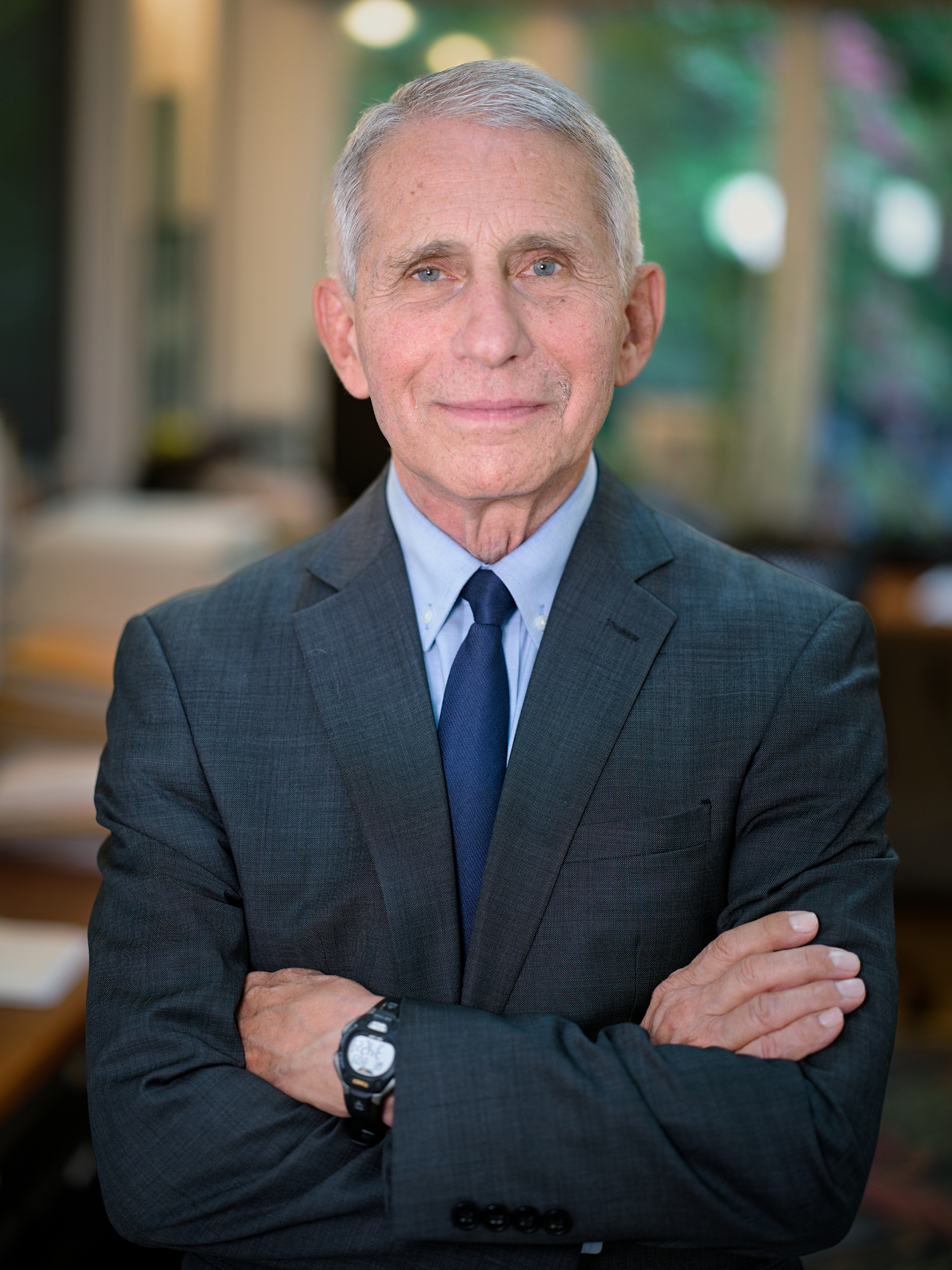
The featured image, uploaded by Christopher Michel, is “Anthony Fauci in 2023.” This file is licensed under the Creative Commons Attribution-Share Alike 4.0 International license, courtesy of Wikimedia Commons.
Bishop Challoner's Meditations ~ August 16th
.jpg)
ON THE GOSPEL READ ON THE FESTIVAL OF THE ASSUMPTION OF THE BLESSED VIRGIN, LUKE X., &c.
Consider first, how our Lord, going into a certain town, a certain woman named Martha received him into her house; and she had a sister called Mary, who sat also at the Lord’s feet, and heard his word, & c. O how happy, my soul, were these holy sisters, who had it thus in their power to receive the Lord of glory into their house; to entertain him there, to hear his word, and to converse familiarly with him, and to minister to him! O how happy should we have been if we had lived at that time, and could have been favoured in the like manner! But stay, my soul, and see if this same Lord does not offer thee the like favours at present; and if it be not entirely thy own fault if thou art not a great saint in consequence of them. For does he not still abide amongst us in the blessed Sacrament? Does he not there come in person into our house? Does he not bring all his treasures of divine grace with him, to enrich our souls? May we not by a spiritual communion invite him to us whenever we please? May we not by a spirit of recollection and mental prayer entertain him, and converse with him as long as we please? Does he not often visit us with his grace? Does he not often stand at the door of the heart and knock? Have we not his heavenly word with us? May we not minister to him when we please, and serve him in the person of the poor, which service he declares he looks upon as done to himself? If so, what reason have we to regret our not having lived at the time of our Saviour, seeing he is always living with us?
Consider 2ndly, how very differently these two holy sisters were then employed; the one being busy about much serving, and full of care in providing for the entertainment of our Lord; the other sitting still at his feet, and quietly attending to his divine word. And yet they were both employed about him; they both dedicated themselves to his love and service. In this they represent to us two different kinds of lives of the servants of God, the active and contemplative; or, if you please, two different kinds of functions of the Christian life: the one consisting in action, the other in contemplation; the one in the variety of good works done with a good intention, for the service of Christ; the other in a more quiet retirement and recollection, and a more close attention to God by mental prayer. Both of these are good, both of them highly commendable; because both of them tend to the love and service of God: but the latter is preferred by the judgment of truth itself; because it makes that its occupation here, which is to be its eternal employment hereafter. Mary has chosen the better part, which shall not be taken from her. Learn thou, my soul, of Martha, ever to direct thy common actions with all the functions and labours of thy calling, by a pure intention to the service of Christ; learn to sanctify them all by calling in Mary, that is recollection and prayer, to thy assistance. But learn also of Mary to retire as often as thou canst from the noise and hurry of the world, to the feet of Christ; learn of her, as often as thou hasts thy choice, to choose that better part of contemplation and love, which is to be thy eternal occupation.
Consider 3rdly, that this gospel is applied by the church to the blessed Virgin and to her assumption, because she was the happy woman that received in an extraordinary manner Christ into her house; she perfectly fulfilled in her life both the functions of Martha and Mary; of Martha in the services she rendered to our Lord in his humanity, for all the thirty years he was under her roof; and of Mary, by the perpetual contemplation and love of his divinity; so that even in the midst of the duties of the active life, the eye of her heart was always upon her God; she ever attended to the one thing necessary; she ever made choice of the better part; and on this day of her exaltation she was put in the full possession of it for eternity – according to that, Mary has chosen the better part which shall not be taken from her.
Conclude, O my soul, to follow her great example in choosing always the better part, that thou mayest partake in her everlasting happiness.
16 August, Antonio, Cardinal Bacci: Meditations For Each Day

Lapses into Sin
1. When we have spent many years fighting our evil inclinations, praying, and forming resolutions, it saddens us when we fall into grave sin once again. A lapse like this can be very discouraging and can make us feel that it is impossible to resist temptation. We may even feel that we are not destined by God to enjoy everlasting happiness. This is a very dangerous temptation which could lead us into ruin. It is part of the tactics of the devil to tempt us to sin and, when we have fallen, to persuade us that our fall was unavoidable and that we may as well resign ourselves to sinning because we are predestined to hell.
Predestination is a gigantic theological problem which has tormented the minds and consciences of many. It is a difficult question, but in practice it can be answered in a few words. It is certain that “God...wishes us all to be saved.” (I Tim. 2:4) It is certain that God became man and shed His precious blood for our salvation. How then could we be predestined to hell? How could we be denied the graces necessary for salvation? Our constant falls do not indicate that God has abandoned us, but show that we have abandoned Him. If we sincerely do everything of which we are capable, God will not deny us His assistance.
2. Away, then, with all thoughts of discouragement. Let us ask humbly for forgiveness every time we fall, for God understands our weakness. Then let us begin again with confidence in God's grace.
But why, we may ask, does God permit us to fall time and time again without giving us the grace to resist? In such a case we must accept the mystery of God's dealings with us. God often allows us to fall in order to humble us and to make us realise that we are powerless without Him. Pride is often the cause of our sins, and our pride must be curbed. “God resists the proud, but gives grace to the humble.” (Cf. James 4:6) Instead of giving in to discouragement, therefore, we should acknowledge our own weakness and pray again to God to help us.
3. There are other explanations for our repeated lapses into sin. Sometimes we do not resist temptation immediately and it takes root in our souls. We may neglect to pray for God's assistance. We may have neglected to avoid the occasions of sin and have played about with danger. We may not be sufficiently determined to make any sacrifice rather than commit sin.
Let us consider our lapses and we shall discover that they can be explained in one of these ways. There is no need to lose confidence in God, therefore. Rather should we renew our good resolutions and reinforce them by constant prayer. Nobody who prays continually can keep falling into sin.
Eastern Rite ~ Feasts of 16 August AM 7534
Today is the Afterfeast of the Dormition, the Commemoration of the Transfer from Edessa to Constantinople of the Holy Icon “Not Made with Hands” of Our Lord, God and Saviour Jesus Christ, also called the Holy Veil, and the Feast of the Holy Martyr Diomedes.
In today’s hymns at Vespers, the Mother of God is praised as “only created being to pass from earth to heaven in the flesh.”
Troparion — Tone 1
In giving birth you preserved your virginity, / in falling asleep you did not forsake the world, O Theotokos. / You were translated to life, O Mother of Life, / and by your prayers, you deliver our souls from death.
Kontakion — Tone 2
Neither the tomb, nor death could hold the Theotokos, / who is constant in prayer and our firm hope in her intercessions. / For being the Mother of Life, / she was translated to life by the One who dwelt in her virginal womb.
The Transfer of the Icon of our Lord Jesus Christ Not-Made-by-Hands from Edessa to Constantinople occurred in the year 944. Eusebius, in his History of the Church (I:13), relates that when the Saviour was preaching, Abgar was the ruler of Edessa. He was stricken with leprosy all over his body. Reports of the great miracles performed by the Lord spread throughout Syria (Mt.4:24) and even reached Abgar. Without having seen the Saviour, Abgar believed in Him as the Son of God. He wrote a letter requesting Him to come and heal him. He sent his own portrait painter Ananias to Palestine with this letter and commissioned him to paint a likeness of the Divine Teacher.
Ananias arrived in Jerusalem and saw the Lord surrounded by many people. He was not able to get close to Him because of the large crowd which had gathered to hear the Saviour. Then he stood on a high rock and tried to paint Christ's portrait from afar, but this attempt did not succeed. Then the Saviour saw him, called him by name, and gave him a short letter for Abgar in which He praised the ruler's faith. He also promised to send His disciple to heal him of his leprosy and guide him to salvation.
Then the Lord asked for some water and a cloth to be brought to Him. After washing His Face, He dried it with the cloth, and His Divine countenance was imprinted upon it. Ananias brought the cloth and the Saviour's letter to Edessa. Reverently, Abgar pressed the holy object to his face and received partial healing. Only a small trace of the terrible affliction remained until the arrival of the disciple promised by the Lord. This was Saint Thaddeus, an Apostle of the Seventy (August 21), who preached the Gospel and baptized Abgar and all the people of Edessa. Abgar attached the Holy Napkin to a board and placed it in a gold frame adorned with pearls. Then he placed it in a niche above the city gates. On the gateway over the Icon he inscribed the words, “O Christ God, let no one who hopes on Thee be put to shame.”
For many years the inhabitants had the pious custom of bowing down before the Icon whenever they went forth from the gates. Later, one of Abgar's great-grandsons, who ruled Edessa, fell into idolatry and decided to remove the Icon from the city wall and to replace it with an idol. In a vision, the Lord ordered the Bishop of Edessa to hide His Icon. The bishop came by night with his clergy, lit a lampada before the Icon, and placed a ceramic tile in front of the Icon to protect it, and then he sealed the niche with bricks.
As time passed, people forgot about the Icon. But in the year 545, when the Persian emperor Chosroes I besieged Edessa and the city's position seemed hopeless, the Most Holy Theotokos appeared to Bishop Eulabios and ordered him to remove the Icon from the sealed niche, saying that it would save the city from the enemy. When he opened the niche, the bishop found the Holy Mandylion, and the lampada was still burning before the Icon, and an exact copy was produced upon the tile protecting the Icon.
The Persians lit a huge fire outside the city walls. Bishop Eulabios carried the Icon Not-Made-by-Hands around the city walls, and a violent wind turned the flames back on the Persians. The defeated Persian army retreated from the city.
In his Church History, the sixth-century writer Evagrios Scholastikos refers to the Holy Mandylion (or Napkin) as The Icon made by God (Η θεοτεύκος εἰκών).
In the year 630 Arabs seized Edessa, but they did not hinder the veneration of the Holy Napkin, the fame of which had spread throughout the entire East. In the year 944, the emperor Constantine Porphyrogenitos (912-959) wanted to transfer the Icon to Constantinople, so he paid a ransom to the emir of the city for it. With great reverence, the Icon of the Saviour Not-Made-by-Hands and the letter which He had written to Abgar, were brought to Constantinople by clergy.
On August 16, the icon of the Saviour was placed in the Pharos church of the Most Holy Theotokos. There are several traditions concerning what happened later to the Icon Not-Made-by-Hands. According to one, Crusaders stole it during the occupation of Constantinople (1204-1261), but the ship on which the sacred object was taken, perished in the waters of the Sea of Marmora.
According to another tradition, the Icon Not-Made-by-Hands was transported to Genoa in 1362, where it is preserved in a monastery dedicated to the Apostle Bartholomew. It is known that the Icon Not-Made-by-Hands repeatedly produced exact copies of itself. One of these, named “On the tile,” was made when Ananias hid the Icon in the wall on his way to Edessa. Another, imprinted on a cloak, wound up in Georgia. Possibly, the various traditions about the original Icon Is explained by the existence of several exact copies.
During the time of the Iconoclast heresy, the defenders of the holy icons, who shed their blood for them, sang the Troparion to the Icon Not-Made-by-Hands. In proof of the validity of venerating icons, Pope Gregory II (715-731) sent a letter to the Byzantine Emperor, in which he mentioned Abgar's healing and the sojourn of the Icon Not-Made-by-Hands at Edessa as a commonly known fact.
The Icon Not-Made-by-Hands was put on the standards of the Russian army, in order to protect them from the enemy. In the Russian Church, it is a pious custom for a believer to read the Troparion for the Icon of the Saviour Not-Made-by-Hands when entering the temple, together with other prayers.
According to the Prologue, there are four known Icons of the Saviour Not-Made-by-Hands:Abgar's original Icon at Edessa (August 16).
The one at Kamuliana (Καμουλιανά), which is mentioned by Saint Gregory of Nyssa (January 10). According to Saint Νikόdēmos of the Holy Mountain (July 14), the Kamuliana Icon appeared in the year 392, but it resembled an icon of the Mother of God (August 9).
During the reign of Emperor Tiberius (578-582), Saint Mary Synklitike (August 11) was healed by the Icon on the tile (August 16).
The Feast of the Transfer of the Icon Not-Made-by-Hands is observed along with the Afterfeast of the Dormition. The commemoration of the third Icon Not-Made-by-Hands mentioned above is called “The Saviour on Linen Cloth.”
The particular reverence for this Feast in the Russian Church is also expressed in iconography, and the Icon Not-Made-by-Hands was one of the most widely distributed.
Troparion — Tone 2
We venerate Your most pure image, O Good One, / and ask forgiveness of our transgressions, O Christ God. / Of Your own will You were pleased to ascend the Cross in the flesh / to deliver Your creatures from bondage to the Enemy. / Therefore with thanksgiving we cry aloud to You: / “You have filled all with joy, O our Saviour, / by coming to save the world.”
Kontakion — Tone 2
Uncircumscribed Word of the Father / as we behold the victorious image of Your true incarnation, / not made by hands, but divinely wrought / in Your ineffable and divine dispensation towards us, / we honor it with veneration!
The Martyr Diomedes was born in Cilician Tarsus. He was a physician and a Christian, and he treated not only ills of the body but also of the soul. He enlightened many pagans with belief in Christ, and baptized them. The Church venerates him as a healer and mentions him during the Mystery of Holy Unction.
Saint Diomedes travelled much, converting people to the true Faith. When he arrived in the city of Nicea, the emperor Diocletian (284-305) sent soldiers to arrest him. Along the way from Nicea to Nicomedia, he got down from the cart so as to pray, and he died.
As proof of carrying out their orders, the soldiers cut off his head but became blinded. Diocletian gave orders to take the head back to the body. When the soldiers fulfilled the order, their sight was restored and they believed in Christ.
Troparion — Tone 4
Your holy martyr Diomedes, O Lord, / through his sufferings has received an incorruptible crown from You, our God. / For having Your strength, he laid low his adversaries, / and shattered the powerless boldness of demons. / Through his intercessions, save our souls!
Kontakion — Tone 2
(Podoben: “You sought the heights...”)
You appeared as a bright star announcing Christ with your radiance, / which is repulsive to this world, O Martyr Diomedes; / extinguishing the allure of false gods, / you enlighten the faithful, / always interceding for us all.
✠✠✠✠✠

In today’s hymns at Vespers, the Mother of God is praised as “only created being to pass from earth to heaven in the flesh.”
Troparion — Tone 1
In giving birth you preserved your virginity, / in falling asleep you did not forsake the world, O Theotokos. / You were translated to life, O Mother of Life, / and by your prayers, you deliver our souls from death.
Kontakion — Tone 2
Neither the tomb, nor death could hold the Theotokos, / who is constant in prayer and our firm hope in her intercessions. / For being the Mother of Life, / she was translated to life by the One who dwelt in her virginal womb.
✠✠✠✠✠

The Transfer of the Icon of our Lord Jesus Christ Not-Made-by-Hands from Edessa to Constantinople occurred in the year 944. Eusebius, in his History of the Church (I:13), relates that when the Saviour was preaching, Abgar was the ruler of Edessa. He was stricken with leprosy all over his body. Reports of the great miracles performed by the Lord spread throughout Syria (Mt.4:24) and even reached Abgar. Without having seen the Saviour, Abgar believed in Him as the Son of God. He wrote a letter requesting Him to come and heal him. He sent his own portrait painter Ananias to Palestine with this letter and commissioned him to paint a likeness of the Divine Teacher.
Ananias arrived in Jerusalem and saw the Lord surrounded by many people. He was not able to get close to Him because of the large crowd which had gathered to hear the Saviour. Then he stood on a high rock and tried to paint Christ's portrait from afar, but this attempt did not succeed. Then the Saviour saw him, called him by name, and gave him a short letter for Abgar in which He praised the ruler's faith. He also promised to send His disciple to heal him of his leprosy and guide him to salvation.
Then the Lord asked for some water and a cloth to be brought to Him. After washing His Face, He dried it with the cloth, and His Divine countenance was imprinted upon it. Ananias brought the cloth and the Saviour's letter to Edessa. Reverently, Abgar pressed the holy object to his face and received partial healing. Only a small trace of the terrible affliction remained until the arrival of the disciple promised by the Lord. This was Saint Thaddeus, an Apostle of the Seventy (August 21), who preached the Gospel and baptized Abgar and all the people of Edessa. Abgar attached the Holy Napkin to a board and placed it in a gold frame adorned with pearls. Then he placed it in a niche above the city gates. On the gateway over the Icon he inscribed the words, “O Christ God, let no one who hopes on Thee be put to shame.”
For many years the inhabitants had the pious custom of bowing down before the Icon whenever they went forth from the gates. Later, one of Abgar's great-grandsons, who ruled Edessa, fell into idolatry and decided to remove the Icon from the city wall and to replace it with an idol. In a vision, the Lord ordered the Bishop of Edessa to hide His Icon. The bishop came by night with his clergy, lit a lampada before the Icon, and placed a ceramic tile in front of the Icon to protect it, and then he sealed the niche with bricks.
As time passed, people forgot about the Icon. But in the year 545, when the Persian emperor Chosroes I besieged Edessa and the city's position seemed hopeless, the Most Holy Theotokos appeared to Bishop Eulabios and ordered him to remove the Icon from the sealed niche, saying that it would save the city from the enemy. When he opened the niche, the bishop found the Holy Mandylion, and the lampada was still burning before the Icon, and an exact copy was produced upon the tile protecting the Icon.
The Persians lit a huge fire outside the city walls. Bishop Eulabios carried the Icon Not-Made-by-Hands around the city walls, and a violent wind turned the flames back on the Persians. The defeated Persian army retreated from the city.
In his Church History, the sixth-century writer Evagrios Scholastikos refers to the Holy Mandylion (or Napkin) as The Icon made by God (Η θεοτεύκος εἰκών).
In the year 630 Arabs seized Edessa, but they did not hinder the veneration of the Holy Napkin, the fame of which had spread throughout the entire East. In the year 944, the emperor Constantine Porphyrogenitos (912-959) wanted to transfer the Icon to Constantinople, so he paid a ransom to the emir of the city for it. With great reverence, the Icon of the Saviour Not-Made-by-Hands and the letter which He had written to Abgar, were brought to Constantinople by clergy.
On August 16, the icon of the Saviour was placed in the Pharos church of the Most Holy Theotokos. There are several traditions concerning what happened later to the Icon Not-Made-by-Hands. According to one, Crusaders stole it during the occupation of Constantinople (1204-1261), but the ship on which the sacred object was taken, perished in the waters of the Sea of Marmora.
According to another tradition, the Icon Not-Made-by-Hands was transported to Genoa in 1362, where it is preserved in a monastery dedicated to the Apostle Bartholomew. It is known that the Icon Not-Made-by-Hands repeatedly produced exact copies of itself. One of these, named “On the tile,” was made when Ananias hid the Icon in the wall on his way to Edessa. Another, imprinted on a cloak, wound up in Georgia. Possibly, the various traditions about the original Icon Is explained by the existence of several exact copies.
During the time of the Iconoclast heresy, the defenders of the holy icons, who shed their blood for them, sang the Troparion to the Icon Not-Made-by-Hands. In proof of the validity of venerating icons, Pope Gregory II (715-731) sent a letter to the Byzantine Emperor, in which he mentioned Abgar's healing and the sojourn of the Icon Not-Made-by-Hands at Edessa as a commonly known fact.
The Icon Not-Made-by-Hands was put on the standards of the Russian army, in order to protect them from the enemy. In the Russian Church, it is a pious custom for a believer to read the Troparion for the Icon of the Saviour Not-Made-by-Hands when entering the temple, together with other prayers.
According to the Prologue, there are four known Icons of the Saviour Not-Made-by-Hands:Abgar's original Icon at Edessa (August 16).
The one at Kamuliana (Καμουλιανά), which is mentioned by Saint Gregory of Nyssa (January 10). According to Saint Νikόdēmos of the Holy Mountain (July 14), the Kamuliana Icon appeared in the year 392, but it resembled an icon of the Mother of God (August 9).
During the reign of Emperor Tiberius (578-582), Saint Mary Synklitike (August 11) was healed by the Icon on the tile (August 16).
The Feast of the Transfer of the Icon Not-Made-by-Hands is observed along with the Afterfeast of the Dormition. The commemoration of the third Icon Not-Made-by-Hands mentioned above is called “The Saviour on Linen Cloth.”
The particular reverence for this Feast in the Russian Church is also expressed in iconography, and the Icon Not-Made-by-Hands was one of the most widely distributed.
Troparion — Tone 2
We venerate Your most pure image, O Good One, / and ask forgiveness of our transgressions, O Christ God. / Of Your own will You were pleased to ascend the Cross in the flesh / to deliver Your creatures from bondage to the Enemy. / Therefore with thanksgiving we cry aloud to You: / “You have filled all with joy, O our Saviour, / by coming to save the world.”
Kontakion — Tone 2
Uncircumscribed Word of the Father / as we behold the victorious image of Your true incarnation, / not made by hands, but divinely wrought / in Your ineffable and divine dispensation towards us, / we honor it with veneration!
✠✠✠✠✠

The Martyr Diomedes was born in Cilician Tarsus. He was a physician and a Christian, and he treated not only ills of the body but also of the soul. He enlightened many pagans with belief in Christ, and baptized them. The Church venerates him as a healer and mentions him during the Mystery of Holy Unction.
Saint Diomedes travelled much, converting people to the true Faith. When he arrived in the city of Nicea, the emperor Diocletian (284-305) sent soldiers to arrest him. Along the way from Nicea to Nicomedia, he got down from the cart so as to pray, and he died.
As proof of carrying out their orders, the soldiers cut off his head but became blinded. Diocletian gave orders to take the head back to the body. When the soldiers fulfilled the order, their sight was restored and they believed in Christ.
Troparion — Tone 4
Your holy martyr Diomedes, O Lord, / through his sufferings has received an incorruptible crown from You, our God. / For having Your strength, he laid low his adversaries, / and shattered the powerless boldness of demons. / Through his intercessions, save our souls!
Kontakion — Tone 2
(Podoben: “You sought the heights...”)
You appeared as a bright star announcing Christ with your radiance, / which is repulsive to this world, O Martyr Diomedes; / extinguishing the allure of false gods, / you enlighten the faithful, / always interceding for us all.
IN LUMINE FIDEI: 16 AUGUST – SAINT JOACHIM (Father of the Blessed Virgin)

IN LUMINE FIDEI: 16 AUGUST – SAINT JOACHIM (Father of the Blessed Virgin): Dom Prosper Guéranger: From time immemorial the Greeks have celebrated the feast of Saint Joachim on the day following our Lady’s birth...
IN LUMINE FIDEI: 16 AUGUST – TWELFTH SUNDAY AFTER PENTECOST (GOOD SAMARITAN SUNDAY)
.jpeg)
IN LUMINE FIDEI: 16 AUGUST – TWELFTH SUNDAY AFTER PENTECOST (GOOD SAMARITAN SUNDAY): Dom Prosper Guéranger: On this Sunday, which is their Twelfth of Saint Matthew, the Greeks read in the Mass the episode of the young ri...
16 August, The Chesterton Calendar
%20(3).jpg)
AUGUST 16th
I am not prepared to admit that there is, or can be, properly speaking, in the world anything that is too sacred to be known. That spiritual beauty and spiritual truth are in their nature communicable and that they should be communicated, is a principle which lies at the root of every conceivable religion. Christ was crucified upon a hill, and not in a cavern, and the word Gospel itself involves the same idea as the ordinary name of a daily paper. Whenever, therefore, a poet or any similar type of man can, or conceives that he can, make all men partakers in some splendid secret of his own heart, I can imagine nothing saner and nothing manlier than his course in doing so.
'Robert Browning.'
16 August, The Holy Rule of St Benedict, Patriarch of Western Monasticism
.jpg)
CHAPTER LXI. Of Stranger Monks, how they are to be received
16 Apr. 16 Aug. 16 Dec.
But if during that time he was found burdensome or prone to vice, not only must he not be admitted among the brethren, but he must even be courteously bidden to depart, lest others should be corrupted by his evil living. If, however, he is not such as to deserve to be sent away, let him not merely on his own asking be received and admitted into the community, but even be persuaded to remain, that the others may be taught by his example: because in every place we serve one God, and fight under one King. And if the Abbot perceive him to be a man of this kind, he may put him in a somewhat higher place. It shall be in the Abbot’s power to assign not only to a simple monk, but also to any of the aforesaid priests or clerics, a higher place than that due to them by their entrance into the Monastery, if he see that their lives are such as to deserve it. But let the Abbot take care never to receive a monk from any known monastery, without his own Abbot’s consent, and letters of recommendation; as it is written: “What thou wilt not have done to thyself, do not thou to another.”
17 August, The Roman Martyrology
%20(1)%20(2)%20(2).jpg)
Sextodécimo Kaléndas Septémbris Luna quarta. Anno Dómini 2026
August 17th 2026, the 4th day of the Moon,
On the morrow is the Octave of the holy martyr Lawrence.
Upon the same 17th day of August, were born into the better life:
At Carthage, in Africa, [in the year 483,] the holy martyrs Liberatus the Abbot, Boniface the Deacon, Servus and Rusticus the Sub-Deacons, the monks Rogatus and Septimus, and the boy Maximus. In the persecution by the Vandals under King Hunneric, they were put to diverse and unheard-of tortures, on account of their confession of the Catholic faith and their defence of one baptism at last they were nailed to the wood upon which they were to be burnt, and the fire was several times kindled but by the power of God always extinguished. Then the king commanded to beat in their heads with the handles of oars, and so they finished the lovely course of their fight, and were crowned by the Lord.
At Caesarea, in Cappadocia, [about the year 273,] the holy martyr Mamas, who endured one long martyrdom from his childhood to his old age, and at last happily finished it under the President Alexander in the reign of the Emperor Aurelian. The holy fathers Basil and Gregory of Nazianzus highly extol him.
In Achaia, [in the Peloponnesus, about the year 253,] the holy martyr Myron, a Priest, who was beheaded at Cyzicus, [in Asia Minor,] after many torments, under the President Antipater, in the time of the Emperor Decius.
At Nicomedia, [in the year 303,] the holy martyrs Straton, Philip, and Eutychian. They were condemned to the beasts, but as these left them unhurt they finished their testimony by fire.
At Terni, [in Spoleto, in the sixth century,] the holy Confessor Anastasius, Bishop [of that see.]
At Ptolemais, in Palestine, [about the year 260,] the holy martyrs Paul and Juliana his sister, who suffered under the Emperor Valerian.
℣. And elsewhere many other holy martyrs, confessors, and holy virgins.
℟. Thanks be to God.
On the morrow is the Octave of the holy martyr Lawrence.
Upon the same 17th day of August, were born into the better life:
At Carthage, in Africa, [in the year 483,] the holy martyrs Liberatus the Abbot, Boniface the Deacon, Servus and Rusticus the Sub-Deacons, the monks Rogatus and Septimus, and the boy Maximus. In the persecution by the Vandals under King Hunneric, they were put to diverse and unheard-of tortures, on account of their confession of the Catholic faith and their defence of one baptism at last they were nailed to the wood upon which they were to be burnt, and the fire was several times kindled but by the power of God always extinguished. Then the king commanded to beat in their heads with the handles of oars, and so they finished the lovely course of their fight, and were crowned by the Lord.
At Caesarea, in Cappadocia, [about the year 273,] the holy martyr Mamas, who endured one long martyrdom from his childhood to his old age, and at last happily finished it under the President Alexander in the reign of the Emperor Aurelian. The holy fathers Basil and Gregory of Nazianzus highly extol him.
In Achaia, [in the Peloponnesus, about the year 253,] the holy martyr Myron, a Priest, who was beheaded at Cyzicus, [in Asia Minor,] after many torments, under the President Antipater, in the time of the Emperor Decius.
At Nicomedia, [in the year 303,] the holy martyrs Straton, Philip, and Eutychian. They were condemned to the beasts, but as these left them unhurt they finished their testimony by fire.
At Terni, [in Spoleto, in the sixth century,] the holy Confessor Anastasius, Bishop [of that see.]
At Ptolemais, in Palestine, [about the year 260,] the holy martyrs Paul and Juliana his sister, who suffered under the Emperor Valerian.
℣. And elsewhere many other holy martyrs, confessors, and holy virgins.
℟. Thanks be to God.
Subscribe to:
Posts (Atom)