"Modern society can offer endless distractions, but it is incapable of satisfying our deepest human needs. It can offer money and power, but it cannot provide deep roots or a means of salvation."
From The Imaginative Conservative
By Glen A. Sproviero, JD
Like medieval monks who preserved civilization after the fall of Rome, traditionalists can live active lives and work to keep the flame of Western culture alive. To do so, we must build loving families, construct independent schools, and erect parallel institutions to challenge those that have betrayed their purpose.
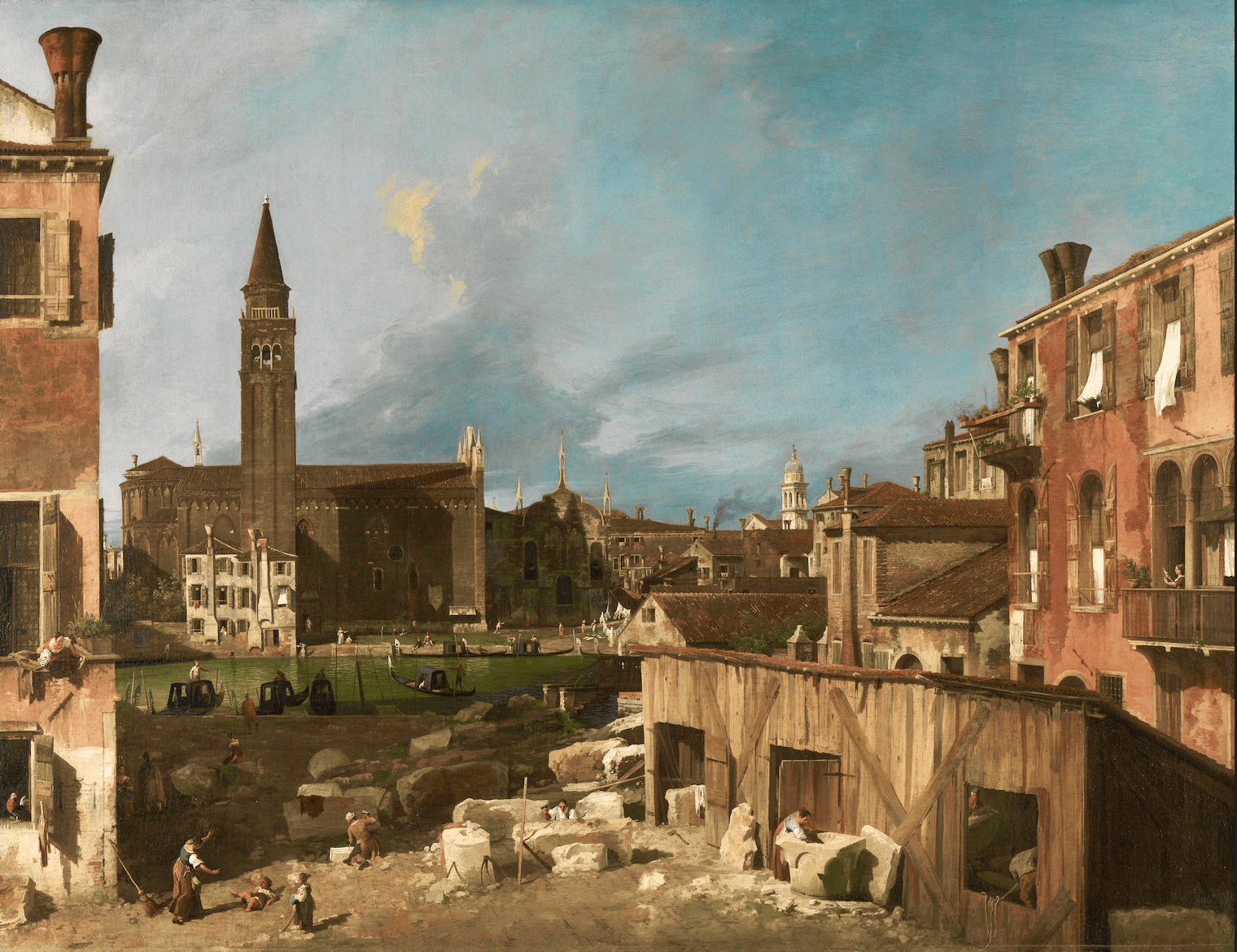 Some time ago, while living in the ancient university town of St Andrews, I watched a stonemason spend many months repairing the tall front steps of several centuries-old dwellings near the harbor. It is said that those houses were the former homes of fishermen, but over time, moss and moisture worked to weaken their stability and deface their once handsome facades rendering them uninhabitable. While there was a staid, romantic beauty in their decay, the mason’s efforts slowly and deliberately restored the dignity of those structures without undermining their innate character. With each new brick, he resurrected the old homes and stamped his own craftsmanship on them for future generations to enjoy.
Today, the work of that craftsman and the world in which we lived feels increasingly distant – a remnant of a civilization we are told to leave behind. “The stones cry out to us,” Sir D’Arcy Thompson observed, but have we lost our ability to hear them? In the hyper-connected present, the slow and careful labor of preservation is a distant care compared to the frantic mandate of “disrupters” who promise to show us the way toward a new and inevitable future. Rather than preservation and care, why not simply knock it all down and build a glass tower in its place?
Now, a bizarre uniformity haunts the public square.
From boardrooms and universities to media and popular culture, the message to embrace disruption and subvert old ways has nurtured a cultural phenomenon that we must always exist in a state of revolutionary change. This anthropology of disruption bears profound consequences for both our culture and for the human soul.
What does that anthropology teach about the human person and our nature? It says that we are autonomous and masterless, free from inherited obligations rather than forged by them, and oriented toward continual change rather than stewardship. In this view, disruption is our highest calling and the door to worldly success. It provides a path to freedom without obligation.
Disrupters, we are told, are the deep-thinking leaders that we should all aspire to be. “Question everything” and “break the rules” are the commands of every major institution in American life. From Wall Street and Silicon Valley to Washington and Stanford, the vocabulary of disruption and its celebration as a compass for discovering material wealth and political power is unyielding. More than a corporate trend, this is evolving into a self-conscious dogma celebrated by Marc Andreessen’s “Techno-Optimist Manifesto,” where the constraints of ethics, law, and cultural norms are treated as social heresies, while the acceleration of change is tantamount to a spiritual calling. In the business world, this can be understandable (to a point), but when it is distilled throughout broader culture, the dangers are amplified.
While conservatives have long warned of the dangers of the revolutionary impulse, the seduction of the American mind by the soft ideology of progress has conditioned us to accept aggressive change as a cultural status quo. As a society, we have convinced ourselves that a life in constant unrest is healthy and socially advantageous. Human beings, the narrative implies, are meant to live as atomistic beings who continually set their own course and rebel against anything that preceded the triumphant present. Discontent with whatever we don’t create or fail to understand, we have crafted a vision of order to reflect our own preferences and facilitate a life of ease.
But at some point, the rule-breaking became mundane, with the notion of disruption becoming the predictable and unimaginative script of the establishment. Yesterday’s freedom fighter no longer speaks truth to power, but regurgitates the talking points of a technocratic elite that profits from a deracinated and unstable populace.
This need not be so, as conservatives have an opportunity to do more than gripe or consign themselves to a rear-guard defensive action. They can terrify the progressive establishment by turning what Russell Kirk called “the permanent things” – those enduring truths, conventions, and social bonds that make life unique and interesting – into a source of cheerful rebellion.
Turning away from exhausted tropes and the mutilated orthodoxies of modern mass society, the conservative mind can act as a wellspring to nurse the withering vines of a fatigued and destitute post-modern imagination. It can challenge the pernicious anthropological assertion, accepted with little argument, that human culture is intended to exist in a constant state of flux.
Look about you and everywhere you will see absolute mobility and a life of ease as hallmarks of human freedom. Untethered from God, family, and community – responsible only to the preferences of the self and indulgent of the appetitive side of his being – mass man has unwittingly abdicated his citizenship and, indeed, his humanity to become a subscriber and a user. Who needs to leave their couch when food delivery apps and online shopping can fill every need and care for our every desire? Who needs human interaction and discussion when echo-chamber blogs and thirty-second video clips can lead us to freedom and terrestrial paradise?
This is why mediating institutions matter. The family, religious institutions, and civic organizations – Edmund Burke’s “little platoons” – are fundamental pillars of human life. But a psychology of disruption that constantly strives for change undermines them all.
Even more concerning is that this revolution does not use a guillotine or a firing squad, but the gentle flow of predictive analytics. This is catastrophic given that these are the critical social institutions that stand between the fragile individual and the behemoth state. Even more tragic is that this portends a quiet, steady subversion of what it means to be a human person.
When we treat our cultural inheritance like a never-ending software update, we fall into what C.S. Lewis called “chronological snobbery,” in which we assume that past ideas are always subservient to those of the present. Stripped of historical memory and a sense of place, modern man cannot help but feel anxious and unmoored, leaving him uniquely vulnerable to top-down administrative engineering.
Traditionalists must resist this liquid onslaught and rearm the garrisons of the moral imagination, moving beyond political grievance and taking intentional steps to restore a dying culture. Through a type of prescriptive dissidence, in which we embrace our local neighborhoods and build parallel institutions to challenge the corrupted organs of power, we can hope to restore the inner souls of our community.
We can take concrete steps to advance this cause, countering the anthropology of endless, exhausting change with habits of permanence.
As an initial matter, we must embrace the family. Entering a lifelong relationship and having children is the most effective way to shock a dying culture back to life. Teaching children to love and to live, and embracing them as an inextricable part of the eternal constitution of society is a paramount element of any genuine renewal.
While the intellect can falter and skepticism take hold, a person always knows where he physically stands. The soil that is our home, the place where we grow up and the community into which we are embedded, is a powerful antidote to the nomadic wanderlust of untethered hyper-modernity. When we live in a community with deep roots or move to a place where we intend to remain, we make an investment that could potentially last generations. This encourages face-to-face social interactions and the erection of an economy that is not entirely bound to globalism and broader market fluctuations. Neighbors can help each other and foster deep relationships that cultivate creative synergies that stand athwart mass markets and the all-encompassing power of popular culture. It builds traditions that anchor society and a sense of duty that ensures its survival.
Most importantly, the cultivation of faith is nonnegotiable. Religion is the basis of culture, and the ideological fanaticism of contemporary life is too-often the product of the failure to understand – or to permit – religion to play its natural role. A spiritual endeavor, culture cannot withstand the challenge of pure will and political power without its chastening and soul-nourishing presence. Without faith, we cannot be truly human and instead subject ourselves to totalitarian wrath and ideological whim.
Yet we have reason for hope – reason to be happy and to persevere.
Like medieval monks who preserved civilization after the fall of Rome, traditionalists can live active lives and work to keep the flame of Western culture alive. To do so, we must build loving families, construct independent schools, and erect parallel institutions to challenge those that have betrayed their purpose. We cannot simply romanticize an idealized past that never existed, nor can we afford to retreat from the torrent of political and intellectual combat that shapes our contemporary affairs. “When bad men combine,” said Edmund Burke, “the good must associate.” Two centuries ago, that great statesman called us to engage with the enemies of the permanent things so that we do not simply become the victims of our own disillusion.
How do we take our stand?
Modern society can offer endless distractions, but it is incapable of satisfying our deepest human needs. It can offer money and power, but it cannot provide deep roots or a means of salvation.
But by embracing tradition, we make a radical stance against the status quo of liquid modernity and reject the inertia of a meaningless, empty movement that exhausts our souls and enfeebles our intellect. We can escape the cycle of boredom and despair that masquerades as the novel and exciting, understanding that the most daring and adventurous path is the one that rejects the pathology of endless disruption for its own sake. If we care to listen, the stones do indeed cry out to us and invite us to use them as a foundation to renew our shaken culture.
__________
The featured image is “The Stonemason’s Yard” (circa 1725), by Canaletto, and is in the public domain, courtesy of Wikimedia Commons.

No comments:
Post a Comment
Comments are subject to deletion if they are not germane. I have no problem with a bit of colourful language, but blasphemy or depraved profanity will not be allowed. Attacks on the Catholic Faith will not be tolerated. Comments will be deleted that are republican (Yanks! Note the lower case 'r'!), attacks on the legitimacy of Pope Leo XIV as the Vicar of Christ, the legitimacy of the House of Windsor or of the claims of the Elder Line of the House of France, or attacks on the legitimacy of any of the currently ruling Houses of Europe.