They also consume vast amounts of energy to run them and water to cool them, besides being an ugly blot on the visual landscape. And, they're unnecessary!
From The Imaginative Conservative
By John Horvat
Beauty has subjective elements, but there are certain objective principles that must be followed. Data centers are ugly because they do not deal with these fundamental elements. They introduce an appearance of brutality that leaves people overwhelmed and crushed.
 All across the country, data centers are popping up like mushrooms. Likewise, people everywhere are mobilizing against them.
People hate the data centers. Nearly three-quarters of Americans oppose them, especially when built in their backyards.
The controversy around them has caught politicians off guard. Everyone thought they would be win-win situations. Pro-center leaders from both major parties are now scrambling to slow the movement down.
In theory, data centers have everything to offer—jobs, tax revenue and business opportunities. Communities benefit from private-sector firms that inject billions of dollars into needy rural areas at no cost to taxpayers. Schools fill up and their budgets increase. Everyone would seem to come out ahead.
Trying to Explain the Hatred
Despite the benefits, there is a data center revolt. Most reasons involve very practical considerations. Residents say they fear higher water and electric bills due to the centers’ demands. Some cite environmental concerns like air quality and noise. Others don’t like the intrusion of outsiders who come in with lucrative deals and even secret negotiations that divide communities. Yet others don’t trust the big tech companies or construct conspiracy theories around AI.
Proponents of the centers, including the President, are quick to label any opposition as backward and anti-progress. They accused data center deniers of not wanting their communities to prosper. They say the dissenters hold their communities hostage because of irrational anxieties.
The issue is polarizing communities everywhere.
One Overlooked Reason: Ugliness
In the middle of the controversy, there is one objection that people are afraid to mention. In a world ruled by money, this reason might be considered an embarrassment. However, it is hard to deny. It is better just to say it out loud.
Data centers are ugly.
Something about them causes uneasiness. The gut reaction of many is to say stop. Keep them out. They don’t belong here.
A Deeper Problem
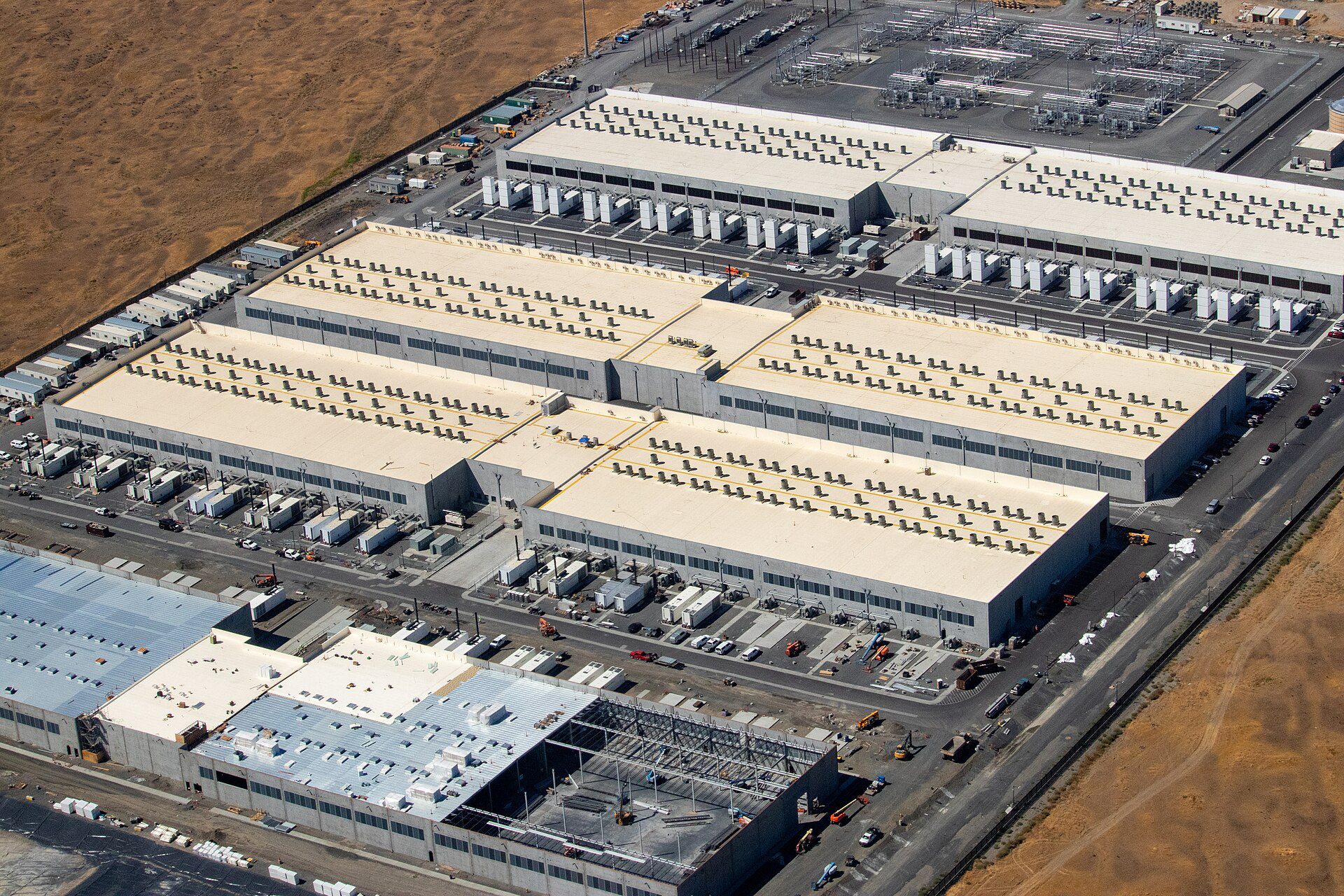
Saying the centers are ugly does not mean they are disordered. They are generally huge, well-designed, windowless buildings surrounded by well-landscaped lawns and parking lots. Developers do everything possible to make them practical and efficient.
However, the problem of ugliness is much deeper than just design and engineering. It involves a human desire for beauty that extends beyond the material part of reality. When this desire is suppressed, things become soulless and depressing. People need beauty because it speaks to the soul about God and His Creation.
Beauty has subjective elements, but there are certain objective principles that must be followed. Data centers are ugly because they do not deal with these fundamental elements. They introduce an appearance of brutality that leaves people overwhelmed and crushed.
No Proportion
First, beauty depends on proportionality. Things that are too big or too small cause anxiety since this lack of proportion makes things difficult to know and understand.
The human instinct of sociability demands proportion. As social beings, people have a natural tendency to form relationships and create environments that facilitate their understanding and appreciation of everything around them. When things are unknown or unknowable by their lack of proportion, people feel like strangers in their own land.
Thus, the monstrous size of the data centers dwarfs everything around them. The facilities are giant, unknown boxes resembling computer chips, attached in the middle of a community, without architectural style or adornment. The stark structures give the impression of heaviness that weighs down the area. Many centers have a hostile, fortress-like appearance that isolates them from the community and from the things locals hold to be proportional and therefore beautiful.
A second reason for the ugliness is that the data center is a very sterile, often gloomy structure with countless rows of machines inside and few workers. The buildings are soulless and lifeless, and therefore ugly. They are not meant to foster joy or community. They are not tied to places, since they can exist wherever resources are available. They survive as intruders to the neighborhood without seeking to make connections or contribute to its history.
Not Part of the Culture
Finally, for something like these centers to be beautiful, there must be those organic links with the local population and its culture. What makes the instinct of sociability very uneasy is the lack of points of reference within the culture. The mere knowledge that there exists something without relation to the community in the area causes uneasiness, and not the joy of beauty.
A place should reflect the population that for generations has molded it to its tastes and preferences. Data centers do not have, nor seek, this connection to local people or their culture. It is purely a functional relationship. No one would take a visitor to see the local data center.
The Permanent Things
Thus, people hate the data centers. They may not be able to say why, but it touches upon things that are difficult to explain, like ugliness. Sometimes it involves lands, homes, and memories that are worth more than money and cannot be replaced once gone.
What is missing is that human element, which does not fit into the fast-paced, sterile environments of vast cyber-networks. It is what Russell Kirk referred to as the “permanent things,” those norms of beauty, truth, goodness, justice, and charity that owe their existence and authority to a power higher than the information networks—indeed to a transcendent God.
Individuals are made up of body and soul. Limiting the discussion to the material needs of big tech stifles the human spirit. The spiritual needs, which are superior to the material, need to be addressed. These topics cannot be left out of the debate and ignored.
Looking for Solutions
The solution to the data center crisis is very simple. Or so it might seem.
Let the data centers be made beautiful. Let their structures inspire admiration and awe. Let local styles and preferences be used that reflect the rich beauty and culture of the surrounding communities.
Such solutions might seem easy, but there is something about a data center that seems to cry out that this is impossible. The data center does not lend itself to such adornment. Its functions will not allow it to escape the bounds of materialistic dreariness.
Encasing its machines inside a cathedral-like structure would only make it eerie and dystopian—a scene from a science fiction drama. It is almost as if the data center must be ugly to fulfill its purpose.
However, these problems do have solutions, but the issue must be on the table. The key is to recognize it as a problem. Then human ingenuity can work to mitigate or disguise the damage this cult to ugliness causes.
Better yet, the controversy could help raise questions about the purposes of the data center. Perhaps the mad rush to AI is misdirected. It could be that AI models will not make things better.
There needs to be a discussion of the causes of the frenetic intemperance of clashing desires that lie at the root of so many postmodern problems. To resolve the problem of ugly data centers, there must be a general return to order and, above all, to beauty.
__________
The featured image, uploaded by Tedder, is a photograph, “Part of AWS’s us-west-2 availability zone, showing three datacenters with a fourth under construction” (Date 11 August 2023, 11:35:25). “This file is licensed under the Creative Commons Attribution-Share Alike 4.0 International license, courtesy of Wikimedia Commons.

No comments:
Post a Comment
Comments are subject to deletion if they are not germane. I have no problem with a bit of colourful language, but blasphemy or depraved profanity will not be allowed. Attacks on the Catholic Faith will not be tolerated. Comments will be deleted that are republican (Yanks! Note the lower case 'r'!), attacks on the legitimacy of Pope Leo XIV as the Vicar of Christ, the legitimacy of the House of Windsor or of the claims of the Elder Line of the House of France, or attacks on the legitimacy of any of the currently ruling Houses of Europe.