"The “demons within” (are) the unruly passions and urges, the consequences of original sin that keep threatening to destroy us."
From The Imaginative Conservative
By David Torkington
It is important to remember that St Thomas Aquinas said the vocation of God’s apostles in every age is to contemplate and then share the fruits of contemplation with others. When we all start to do this then we will be back on the road to do what God had created us for in the beginning.
 The Renaissance (circa 1350–1620) was not caused by the Black Death (1348–1350), otherwise known as the Plague, that began in the middle of the fourteenth century, but the spread of its moral teaching was certainly deeply influenced by it. The Plague was so horrific, so widespread and so destructive that people began to ask how God could allow such a thing to happen. Where was he when the collective prayers of Christendom rose up to plead with him to stop it. Where was he in those apocalyptical times, and why was his Church on earth so impotent to prevent almost half the population of Europe dying terrible gruesome deaths. Instead of looking to God and his Church then, many started to look elsewhere for spiritual guidance, for principles on which to base their lives. When the Renaissance conveniently unearthed the ancient philosophical religions that the early Church had condemned, they began to turn to them. This was most especially true of what came to be called humanism that did not depend so much on, as they thought, passively waiting on God, but on man actively taking charge of his own destiny and the moral principles that promised to secure it. Soon, statues or busts of Socrates, the father of these ancient philosophical religions were to be found in major European towns and cities alongside statues depicting Christ and the saints.
From this time forward two spiritualities began to travel side by side, one emphasizing human endeavour the other divine endeavour. In the fifteenth century these two trends could actually be seen depicted in architecture. In Italy, for instance, the cradle of the Renaissance, magnificent buildings proclaimed the glory of what man’s action can achieve while humble hermitages were being built by the great Franciscan reformers amongst others, to proclaim what the glory of God’s action can achieve in the poor and humble of heart who seek him in prayer. In the sixteenth century the trend that over-emphasizes the importance of human action in personal spiritual renewal, could be seen in the Exercises of St Ignatius, while simultaneously, the emphasis on what God’s action can achieve could be seen in the works of great mystical writers like St Teresa of Ávila and St John of the Cross. These two trends or pathways continued to journey on side by side in the seventeenth century until at the end of that century the condemnation of Quietism unleashed a powerful anti-mystical lobby that permanently undermined the classical teaching on mystical theology. Henceforth, the two different pathways would disappear as the spirituality that maximised the action of man’s endeavour became a single major highway along which man’s endeavour became paramount. In other words, the emphasis already seen in the Exercises of St Ignatius seeped into every other order or congregation to a greater or lesser degree, drawing them together on the same man-made highway to God.
Generalizations inevitably lack the finesse of more detailed and more nuanced explanations, but they do have the advantage of giving a bird’s eye view, that a serious student can develop for themselves in more detail at ground level. I insist that the bird’s eye view is not wrong, and if you are tempted to doubt it, it can be seen today mushrooming at ground level in the Church and to the highest level. Here, human endeavour and fallible human processes of seeking the truth, like “discernment” are preferred to the God-given truth received through the infused virtues and the gifts of the Holy Spirit given to all in the profound mystical prayer which has been lost to sight. What I saw breaking up a Dominican congregation over forty years ago, has been doing the same to many other religious institutions in the intervening years. It is alive and well, and actively doing the same today, not just in, but to the whole Church, and at the highest level. It does not just seek to discern what it has already decided to do, without any meaningful dialogue, but it subtly condemns the God-given spirituality that Jesus Christ introduced to the early Church with catch-all-phrases such as “clerical rigidity”. But let me take a look in a little more detail to see how man’s endeavour to seek the truth and renew himself can be undermined by the original sin that has undermined us all.
The Credo of the humanism that was born at the Renaissance was, “I believe in man, what man can do, what man can achieve with his unaided human endeavour.” The Credo of Christianity that was born on the first Pentecost is, “I believe in God, in what he can do, in what he can achieve with his divine endeavour, working in those who open themselves to receive him.” The new religious congregations founded after the rise of humanism then, like the Jesuits, were deeply influenced by what man can achieve, working alone by his own endeavour. Those founded before the rise of humanism are more influenced by what God can achieve working through those who firstly turn to him, and continually turn to him in prayer, so that he can work through them to do what is impossible without him. The discernment process that you find in the Exercises of St Ignatius are a good example of these two different approaches. For the older orders it is in mystical contemplation that the Holy Spirit, gives the wisdom and the other infused virtues that enable a person to see the truth about oneself, about God, and what he wants of you. As the Jesuits have no mystical tradition, they have devised the process of what is called “discernment” to do for them what the Holy Spirit does in mystical contemplation. The only effective way that a person can discern God’s will for themselves, or for others is in the light of the Holy Spirit, not in the light of manmade rules or instructions. Even if they were divinely inspired, they will be misunderstood and misapplied by those who have not been sufficiently purified in the mystic way to receive the “infused gift of Wisdom”.
In order to understand the discernment process in the Exercises, I must remind you of what I have said earlier. That the devil exists is the teaching of the Church. That he is seen to have attacked Christ is clear from scripture, but from the outside. It must be quite clear that the Evil One could not get inside Christ either when he was on earth or in heaven, which is good news for us. For although the Devil is the ultimate personification of Evil, he cannot enter into the glorified body of Christ, so those who enter into his mystical body are safe from direct confrontation with him. Therefore, although we may be assailed by powerful temptations, we are safe from direct confrontation with the Evil One, or the “Enemy”, as he is described in the Exercises.
When I have spoken in the past about the “demons within” I made it clear that I am using the phrase metaphorically. I am therefore referring to the unruly passions and urges, the consequences of original sin that keep threatening to destroy us. I am not referring to demonic creatures, agents of the devil, that dwell within us like pernicious gremlins gleefully plotting to destroy us. This is an important distinction that must be made as, beginning with the Desert Fathers this distinction can become blurred so that you cannot always tell when a person is speaking literally or metaphorically. In the Exercises, however, it seems that the active presence of the “Enemy”, who is, as St Ignatius puts it is “known by his serpent’s tail and the bad end to which he leads us”, is to be taken literarily, as are the good and bad Angels, or good or evil spirits to which he repeatedly refers (see Fr David Flemings presentation of the Spiritual Exercises page 216). It gives rise to the simplistic imagery of the good angel standing on one shoulder whispering into your right ear trying to get you to do good things while a bad angel stands on the other shoulder trying to seduce you into doing bad things.
If such a presentation of the spiritual combat was helpful over four hundred years ago, I cannot help feeling that modern readers would find it far more helpful to be told the truth that coincides with their experience. That is, that the evil that we do comes from our fallen nature as St Paul experienced for himself without any reference to good or bad angels, to say nothing of the “Enemy” as a serpent with a perceivable tail. He writes, “I fail to carry out the things I want to do, and I find myself doing the very things I hate…. and so the thing behaving in that way is not myself, but sin living in me. When I act against my own will, then, it is not my true self doing it, but sin which lives in me” (Romans 7:14–20). In recent years this discernment process has been taken out of the Exercises and presented as a programme for spiritual advancement in its own right. Anyone who has been dazzled by the expertise of a sincere and competent presenter would be advised to read the rules for discernment in the Exercises for themselves. Then see them in the context of the other teachings in the Exercises. They would then see that even the greatest of presenters is doing no more than trying to modernise practices that would be better left to be studied by spiritual antiquarians to understand a specific expression of the faith at a particular time in Church history.
The rampant humanism that inspires them, guarantees that they are riddled with the semi-Pelagianism that always prevails when a spirituality places all the emphasis on personal endeavour to make themselves perfect despite a perfunctory reference to grace. The relentless concentration on oneself and on trying to discern one’s motives, inevitably leads to the scrupulosity that the Exercises are forced to address, for they are the inevitable consequences of self-centred spiritual monomania. All the great Jesuits, with whom I have raised the question of their spiritual training, take the whole matter with a “pinch of salt”, that they try to laugh off. If pressed, the only good point to which they draw your attention is that it is such a “terrible treadmill” that it ensures that only those with deeply embedded psychological security will survive. Many other survivors of the “spiritual” training programmes of other orders would, in my experience agree with them, and point out that at least they would be far less harmful than psychological programmes with which some religious orders tried to replace them. I have noticed over the years that despite the emphasis that the Jesuits put on the Exercises, most of the high-flying Jesuits whom I have known over the years, are a little embarrassed by the rather crude and simplistic language in which their founder wrote them. This is not to mention the undisguised stoicism and the biblical fundamentalism that makes them rather defensive. I have also noticed that few, if any, of the well-known Jesuits run the retreat centres where retreatants are guided through the Exercises. It is usually a job left to lesser-known Jesuits, or to religious men or women of other orders and sometimes even to lay-devotees.
If all the time given to trying to understand this questionable programme for perfection, with the endless examinations of conscience that all concentrate on self, were used to concentrate on God instead then spiritual advancement would be far safer, far quicker, and far less dangerous. Notice that the solution to the predicament that St Paul found himself in did not induce him to turn within to try and discern the source of his dilemmas and seek the wisdom of current pagan religious philosophies but, in his own words, he could only be rescued, “Thanks be to God through Jesus Christ, Our Lord” (Romans 7:25). In the very next chapter, he goes on to expand on precisely what he means when he writes, “For I am certain of this: neither death nor life, no angel, no prince, nothing that exists, nothing still to come, not any power, or height or depth, nor any created thing, can ever come between us and the love of God made visible in Christ Jesus our Lord” (Romans 8:38–39). In short, and as I keep emphasizing, the devil cannot exist in, never mind operate within the glorified body of Christ and in those who have been led there after baptism as their new home where they “live and move and have their very existence”.
Quite apart from the predominance of concentration on self rather than on God, those who do take the Exercises seriously, and try to update them for the faithful at large can, and have done, serious damage both to individuals and to communities. In my own personal experience that I have described, it broke into two a large Dominican Congregation by using methods of discernment taught at the Jesuit renewal centre in Denver, Colorado, USA. The Dominicans sent to be trained there discerned that those other Dominicans who wanted to follow the Classical Dominican Tradition instead of the latest pop socio-psychological techniques to change themselves, with a lot of “help” from Professor Rulla’s depth psychology, were being led astray by the “Enemy”. I have to own up to a certain vested interest in this aff air, as it was discerned that I was possessed by the “Enemy” and only exorcism could free me. Forty years later, those who did the discerning have completely disappeared off the religious map. Those who returned to their own Dominican tradition are now thriving as a new Dominican Congregation, and the one who led them astray is just finishing his tenth book on prayer, so you can judge for yourself whether or not he is still in need of exorcism!
Sadly and more seriously, many of those abused by the Jesuit academic, Professor Rulla and his devotees schooled in his evil psychological machinations, are still suffering from post-traumatic stress. This I know from experience, helping those harmed by the misuse of depth psychological techniques in the spiritual life. Their arrogance implicit in believing that they can do and do far more quickly what only the Holy Spirit can do in the spiritual life, has the sulphurous stench of evil about it. Even now after forty years I am still helping one of them. The instigators of this particular form of psychological abuse and their perpetrators are in my opinion devilish, and I am not speaking metaphorically. Of course I believe that possession is possible for those who are outside the mystical body of Christ, and I believe there will be devilish rewards awaiting them. I do not know precisely where Dante would place them in his Inferno, but I have a few ideas of my own!
At the end of my first year of Philosophy I had to write a dissertation on Stoicism. In the oral examination Fr Germaine Heron, the professor of Philosophy had only one complaint about my work. “It seems that you are a fan,” he said. “I expected you to provide me with a criticism, but all you have done is to produce a eulogy!” He was of course quite right. I was a fan of the stoical ideals that had sunk into my spiritual DNA that had been presented to us at school by the secular priests who taught us, and by the Jesuit priests who gave our annual retreats. Nor had the training in the noviciate done anything but encourage my stoical endeavour to make myself into a saint. I clearly remember deciding to master a different virtue each month to make myself into a saint, so that when my parents came for my first profession at the end of the year their erstwhile and errant offspring would be no more. The familiar shape and form would still be there but it would be no more than the outer shell that enclosed the newmade man within. If I achieved my objective, which I did not, he would have been far more like Marcus Aurelius of Rome than Jesus Christ of Nazareth. However, unknown to me at the time a change was beginning to take place deep down within me. Inside the dark chrysalis into which my prayer life had plunged me in the noviciate, a transformation was gradually taking place from which in God’s time a new creature would emerge. If this creature would not be like a butterfly, then at least it would be like a man who would know that without a shadow of a doubt, that only God and his love could do what the stoicism to which I had once aspired could never do.
Professor Heron was adamant that the stoics were the most arrogant of men, because they believed that they could make themselves into perfect human beings by their own unaided endeavour, and those others too, whom they tried to change into their own image and likeness. This was the arrogance that I saw in those at whose hands I suffered, with so many others, when the new evangelists from Denver, Colorado, came to force a new modern form of stoicism on others and tried to destroy those who stood in their way. Classical stoicism was bad enough, but when the new stoics had their own pop-psychological techniques, that they believed were infallible, to add to, if not replace the manmade, anthropocentric spirituality of the Exercises, then the Pelagians, with whom St Augustine had fought so long and so hard, were back in town. In the God-centred spiritualities that puts all the emphasis on God and what he can achieve through those who are ever open, ever docile, and ever submissive to receive his Holy Spirit, the faithful are always characterised by humility. It is the humility of those who know without a shadow of a doubt that they are doing nothing and he is doing everything.
It is the Holy Spirit who leads a person to perfection with the loving kindness that gradually shows them all that separates them from the union that they desire and supports and sustains them through the purification that is his work, not man’s. That is why St John of the Cross says the “Dark Night” is safe for it is the place where God’s love is ever shining. It continually shines through the darkness to be received by those who it makes ever humbler. This is where true humility is learnt, not by being humiliated, by their stoical task masters, but by experiencing he who is mighty doing great things within them. As their humility deepens it magnifies the light of love that is purifying them accelerating their spiritual growth that Christ may be born again, this time in those who are made humble enough to receive him.
I have been spending so much time writing about Ignatian Spirituality because since Quietism and the demise of traditional Catholic Mystical Spirituality it is Jesuit spirituality that to a greater or lesser degree has seeped into most other religious orders most especially orders of women. The Jesuits have in the past and continue to produce great intellectual and theological scholars that can match and even excel in the world of secular scholarship. However, when the infused gift of wisdom is required that only comes through mystical contemplation, then they are found, not only wanting, but often in serious error. From the outset it has been their proclaimed objective as Catholic humanists to understand and harness the ever-progressing wisdom of the world for the good of the Church. But pure secular knowledge and learning, no matter how great, without the infused virtues given by God, most particularly wisdom, will prevent them from doing what is part of their very raison d’être .
I have already shown how the serious misuse of psychology by Jesuits, and others, has had on my life and on that of many others. However, what is happening today by Jesuits in the very highest positions of influence in the Church, without the gift of Wisdom that comes from God through contemplation, is turning out to be little less than catastrophic. They are expressly using and encouraging others to use the discernment that they learnt in their training to come to frightening conclusions that even, or especially the humblest of the laity, can see are light years away from the teachings of Christ. It is so easy to use discernment to arrive at the conclusions that you have already come to before you even begin the process. This man-made process, that purports to include the Holy Spirit, is seriously wanting. However, it continues to deceive the innocent that their conclusions are not just infallible but inspired by the Holy Spirit.
The many thousands of different denominations, that grew out of the Protestant reformation, should be proof enough that those who deceive themselves into believing that they are able to discern what the Holy Spirit wants of them or wants of others are deceiving themselves. This is especially true of those who have rejected the mystical prayer and the mystical purification that alone enables the Holy Spirit to give the infused virtues, and in this case the infused virtue of wisdom, to those who need his guidance. Self-centred, sinful human beings who have rejected the purification that comes from carrying the cross in prayer, believe in magic if they believe that their man-made methods and techniques can give them a direct line to the wisdom of God. I am reminded of the members of a Catholic Youth club, who were totally convinced that the Holy Spirit was guiding them through the Ouija board that had taken over their lives. They were amazed at how they were being guided to some incredible conclusions by the Holy Spirit who never failed to answer their questions. Once I put blindfolds over their eyes the answers that they received from the “Holy Spirit” were reduced to gibberish! If it were possible to put spiritual blindfolds on to those who believed they were being led by the Holy Spirit, then the answer that they received would be gibberish too. That they come to the answers they want, more usually the answers they had decided upon before the process of discernment begins, is a clear indication that, like the children in the youth club, they are deceiving themselves and for that matter others too.
In the last forty years or so since I first experienced the misuse of the discernment process, I have no idea how many other priests, religious, and laity have had their lives or their way of life ruined by unprepared, misinformed and unpurified crusaders trying to renew others with what would later ruin their own lives too. What I do know is that their methods are still with us and being implemented on a wider and an even higher level than ever before. That synods have been used by the Church in the past and used successfully for the good of the Church is undeniable, but the very ingredients that once made them so effective do not seem to be verified in what is coming to be called “synodality”. For synods to be successful then dialogue is essential. Dialogue with God, with the people of God, and with oneself – with one’s own conscience, in which listening is paramount. For dialogue with God to be effective and enable the participants to participate without personal sinfulness, self-interest, pride or prejudice or the other moral imposters destroying this process, then prayer and the purification that makes deep prayer possible must be sufficiently advanced in all taking part. Only this safeguard can guarantee that the participants are listening to God and not to themselves. For genuine dialogue with the people of God to take place, and not just with the like-minded, a certain basic degree of personal holiness learnt in prayer beyond first beginnings is essential. Finally, dialogue with oneself through one’s own conscience can only be guaranteed when the reason has been sufficiently purified to enable it to apply the traditional teaching of the Church to the matters in hand.
In AD 537 the greatest church in Christendom was built in what was then called Constantinople, in honour of the Holy Spirit in thanksgiving for his part in implementing Gods plan in the first Christian centuries. Understandably then it was called Hagia Sophia or Holy Wisdom. At the Last Supper Jesus promised that the Holy Spirit would come to fill the apostles and his future followers with his Wisdom so that they could continue the work of our redemption. He put it this way at the Last Supper. “I still have many things to say to you, but they would be too much for you now. But when the Spirit of Truth comes he will lead you to the complete truth” (John 16:12–13).
When in about AD 48 fi fteen or more years after the Crucifi xion, several serious questions that were dividing the early Christians had to be resolved, a gathering of the faithful was called together to sett le the matt ers. St Peter presided but other apostles were there too, including St Paul. This conclave that came to be called the Council of Jerusalem was seen as the prototype and forerunner of the later ecumenical councils. Please notice that those involved had come, not to take part in some sort of discernment process devised by human beings, but in serious debate and discussion that was successful because deep and prolonged prayer had suffi ciently purifi ed their minds and hearts, making then porous to the wisdom of the Holy Spirit. We have seen how this had taken place over many years in the lives of the apostles in “retreat” at Jerusalem and in St Paul’s “noviciate” in the Arabian desert and in Taris, where they had been radically purifi ed in such a way that they were open and docile to the inspiration of the Holy Spirit. Furthermore, their experience had led them to insist on at least two years of prayerful preparation for all those who were preparing for baptism, after which this preparation would become part of their daily lives, as described by the fathers of the Church.
The fruitfulness and effectiveness of all later Councils, Conclaves and Synods depended on prolonged and serious arguments and debates of the participants who for many years had their minds, their reasons and their hearts purified in profound contemplative prayer. It was the quality of the collective prayerfulness of the participants that preceded these conclaves that determined the quality of the presence and the power, the influence and the inspiration of the Holy Spirit. Their conclusions therefore would always be attributed to the Holy Spirit working through those who, through their prayerfulness were at all times open to receive his wisdom. That is why when announcing the results of their deliberations at the Council of Jerusalem, St Peter uttered those famous words. “It has been decided by the Holy Spirit and ourselves” (Acts 15:28).
In Catholic Councils, Conclaves and Synods it is primarily the Holy Spirt who is at work, but his work depends on the collective quality of the holiness of those who are sufficiently open to receive him. This is how God’s will is sought in the Catholic Church. The same means of seeking his will was copied by the monks in their monasteries and the mendicants in their priories and friaries through their chapters. It was only when later congregations like the Jesuits had rejected contemplative prayer and the purification that would make the working of their minds and heart both sensitive and open to the Holy Spirit, that they had to devise man-made methods and techniques to discover or in their words “discern the truth” to which only the Holy Spirit can lead people. That other priests and religious have all but forgotten the profound purifying prayer that can open them the more readily to the Holy Spirit has prevented them from seeing clearly and so opposing a semi-Pelagian means and methods of seeking true Wisdom. True God-given Wisdom is only fully open to those who have become poor in spirit and humble and pure of heart, in the purification that only comes through encountering He who is mighty, in profound contemplative prayer.
Thanks to the reasons that I have given to show why this prayer has been all but abandoned in the Church in general, the so called discernment process that once thrived at a lower level has been adopted at the highest level in the Catholic Church. Then, to add insult to injury, religious communities dedicated to contemplative prayer are being attacked and dismantled while inviting all and sundry to take part in discernment processes in which, often enough the conclusions have already been decided before the “discernment” begins. Although, as I have insisted that other religious orders have forgotten the contemplative prayer that was once their spiritual bedrock, they have not, like the Jesuits, invented their own man-made methods of trying to discern God’s will and become actively involved in spreading it to others. That is why I have singled the Jesuits out.
If they would only read the first few chapters of St John of the Cross’s masterwork The Dark Night of the Soul they would see enumerated all the sins and selfishness, all the faults and failings and all the wickedness and the wrongdoings that necessitate the Holy Spirt leading a person into contemplative purification. Just as all these human evils that are present within everyone at the beginning, prevent a person from entering into the pure God-given contemplation as detailed by St Teresa of Ávila, they also prevent the process of “discernment”. They prevent this process from achieving, not just what it claims to achieve, discerning God’s will but often leads them to do the very opposite. For the truth of the matter is the one they call the “Enemy” can rule through the unpurified and unbridled evil instincts, drives and impulses that are still very much alive and active within them. In short, they deceive themselves and they deceive others and with disastrous consequences.
Such universal Synods as the Councils of Nicaea, Chalcedon and Ephesus are examples of how the Holy Spirit can work through those who are open to receive him, in an age when the dominant spirituality was theocentric not anthropocentric. Synods are not just for saints, but for sinners too who persevere in the prayer that opens them to Wisdom, not to man’s wisdom but to God’s Wisdom. When anthropocentric spiritualities predominate, any sort of discernment process, and at any level is fraught, because it can so easily be taken over by the self-serving Ego within, as I have seen often enough for myself. This is one more reason why I have written this book, so that we can learn to return to the theocentric spirituality that Christ himself gave us. It is in this spirituality that what St Paul calls the “old man” can be destroyed in us, so that the “new man” which is Christ, can guide us by his wisdom.
One of the frightening features of a discernment process in the anthropocentric spirituality that predominates today, is that when a person comes to the conclusions that they have usually come to before the process begins, then they believe that their conclusions are, “of God”. When this happens, woe betide anyone who tries to argue with, or stand against, anyone who believes that they are being led or inspired by God. This time it will not be Marcus Aurelius, but Oliver Cromwell who rides again! In anthropocentric spiritualities it is predominantly human action that promises to bring about their version of heaven on earth. In theocentric spiritualities it is predominantly divine action that promises to bring about God’s version of heaven on earth.
Whenever their anthropocentric spirituality is questioned then the questioner is put in their place by reminding them that of course the Mass, the sacraments and the grace of God are necessary. But as always, they are in fact assumed rather than emphasized and not given the emphasis that they are in the theocentric spirituality given to us by Christ himself. The sacraments and the love of God that pours out of them are not magic, they can only be fully received by the pure in heart who have been purified in the profound mystical purification that takes place in the contemplative prayer that has played no part in their spirituality for over five hundred years. Yet for centuries they have gaslighted all who oppose them by making them feel that they are some form of inferior spiritual species for not seeing and accepting without question a spirituality that is long since dead, but sadly far from buried, to the continual jeopardy of renewal in the Church.
If their discernment processes were predominantly “of God” then they would have long since discerned how to discern when and how the Holy Spirit leads a person from meditation into contemplation. It seems hardly believable, but they have not only been unable to do this, but they have continually rejected or undermined those who could, including such great Doctors of the Church as St John of the Cross, St Teresa of Ávila and St Catherine of Siena. This failure alone should make any objective observer question a discernment process that they seem to think should be accepted without question. It seems hardly credible that a religious congregation that insists on a far longer period of preparation than any other should exclude the deep purifi cation of the heart at the expense of the education of the mind. That they do this with the best of intentions, is unfortunately not enough to redeem them from being blind leaders of the blind who, unless they radically return to authentic Catholic spirituality should be stopped.
Just as we know that this spirituality was originally in balance by its acceptance by the Church, the imbalance into which it has fallen is proven by the evidence of subsequent history, most particularly modern history, some of which I have been able to draw to your attention. Its imbalance is now so evident and therefore so dangerous that it must be called to book. Its adherents, however, are well adapted to defend themselves. When, despite their renowned intellectual prowess in other matters, they find themselves disadvantaged by rational debate in this matter, they tend to reduce the argument to the personal. Like the scientologists they attack and undermine the credibility of their opponents rather than engage in objective discussions of what has clearly deviated from the theocentric spirituality that Christ introduced into the early Church. A false sense of charity, that is more akin to political correctness, has prevented other clergy from outwardly expressing their misgivings even though we are in the last minute of extra time, and if we do not return to the Spirituality of the Gospels without delay then the consequences that are already in motion could quickly escalate into complete pandemonium.
It is important to remember that St Thomas Aquinas said the vocation of God’s apostles in every age is to contemplate and then share the fruits of contemplation with others. When we all start to do this then we will be back on the road to do what God had created us for in the beginning. When at the end of his life St Thomas experienced the love of God like never before he stopped writing. That is why his great Summa was never finished. Compared to the love of God that he then began to experience, all he had written before was he said, no more than straw. This love of God and all the infused virtues that are communicated through it are for all, high or low, educated or uneducated, lay or religious, enabling them to do what God has created them for in this life and to enjoy eternal life in the next. They cannot be obtained through discernment, but only by dying to self as St Francis taught, that can alone induce the Holy Spirit to possess us and bring Christ to birth again in us. Then we will be guided by his love and the infused virtues contained within it, for our salvation and for that of the whole world. Seek first above all else, God and his Kingdom of love, and everything else, including the wisdom that you seek, will be given to you.
___________
This essay is chapter fifty-nine of The Primacy of Loving and is published here by gracious permission of the author.
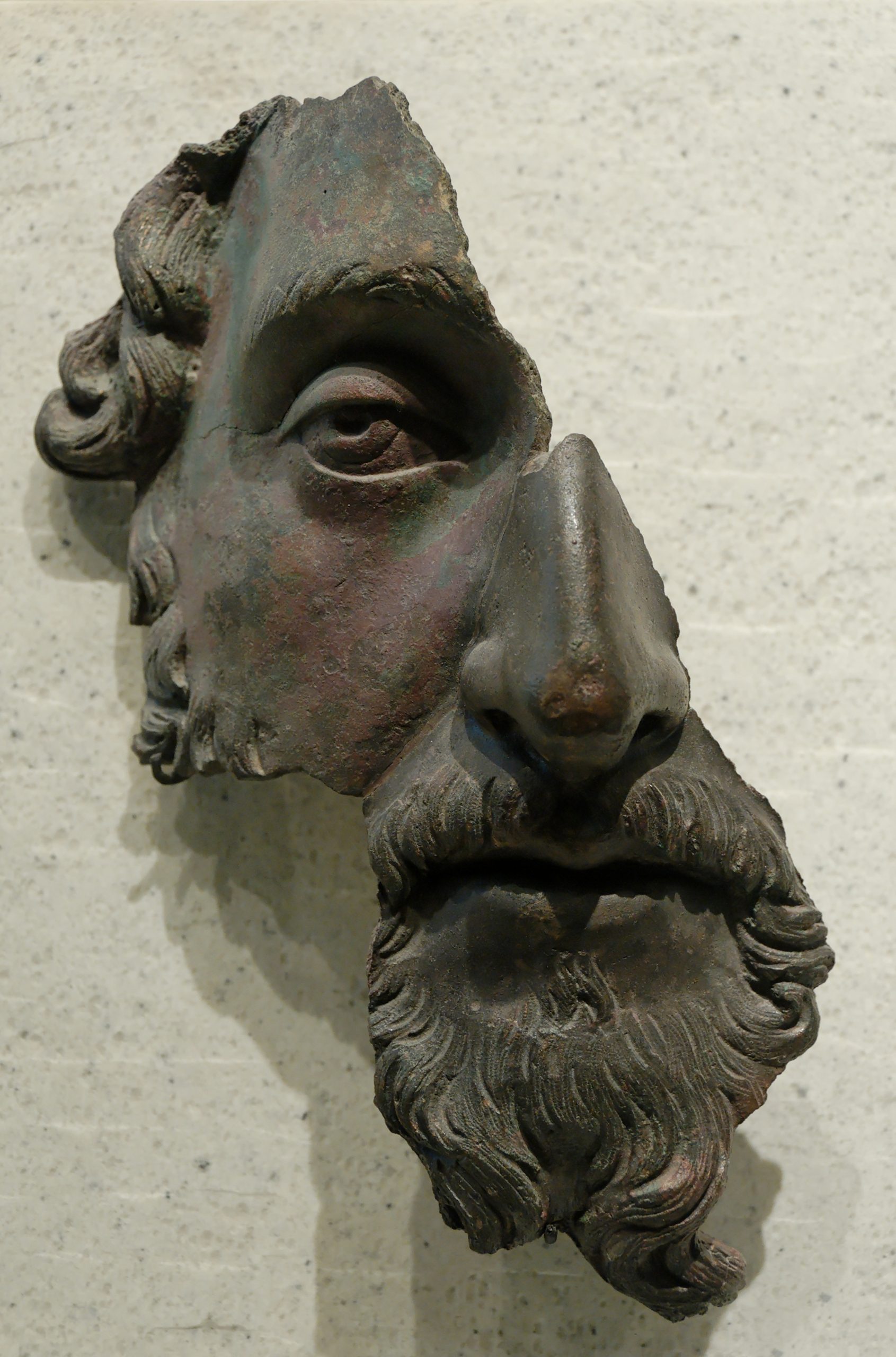
The featured image, uploaded by Marie-Lan Nguyen, is a photograph of “Marcus Aurelius, fragment of a bronze portrait. Roman artwork” (after A.D. 170), and is in the public domain, courtesy of Wikimedia Commons.

No comments:
Post a Comment
Comments are subject to deletion if they are not germane. I have no problem with a bit of colourful language, but blasphemy or depraved profanity will not be allowed. Attacks on the Catholic Faith will not be tolerated. Comments will be deleted that are republican (Yanks! Note the lower case 'r'!), attacks on the legitimacy of Pope Leo XIV as the Vicar of Christ, the legitimacy of the House of Windsor or of the claims of the Elder Line of the House of France, or attacks on the legitimacy of any of the currently ruling Houses of Europe.