"When we die, there will be dozens or even hundreds of books that we would have wanted to read had time permitted." How true this is!
From The Imaginative Conservative
By Joseph Pearce
When we die, there will be dozens or even hundreds of books that we would have wanted to read had time permitted. It is in this sense that I feel that the neglect of the great Russian author, Fyodor Dostoevsky, constitutes a sin of omission on my part.
 Broadly speaking, there are two types of sin. There are sins of commission and sins of omission. The former is doing what we shouldn’t be doing; the latter is failing to do what we should be doing. In bibliophilic terms, there are books we shouldn’t be reading and books that we should be reading. The reading of bad or harmful books when we should be reading good and healthy books is committing both sins at once. Speaking personally, I am rarely guilty of reading bad or harmful books (life is too short for the squandering of such time) but I am guilty of failing to read books that I should be reading. To be fair to myself and to every other reader, it needs to be conceded that life is also too short to read every book that we ought to read; none of us can be held responsible for failing to do the impossible. When we die, there will be dozens or even hundreds of books that we would have wanted to read had time permitted. These will not be sins of omission but merely the failure to succeed in the mission impossible. Yet we are responsible for choosing our reading carefully. It is in this sense that I feel that the neglect of the great Russian author, Fyodor Dostoevsky, constitutes a sin of omission on my part.
I went through a Dostoevsky phase over twenty years ago, shortly after I moved to the United States. In quick succession, I read Notes from Underground, Crime and Punishment and The Brothers Karamazov, the last of which, being chunkier and more challenging, I read in greater haste and with less commitment than it demanded. As the years have rolled relentlessly by, I’ve felt a growing sense of my neglect of Dostoevsky’s genius. This has been exacerbated by the reading of other books which have reminded me of his brilliance and historical importance. In The Drama of Atheist Humanism, Henri de Lubac charts the harmful influence of four nineteenth century champions of atheism, Comte, Feuerbach, Marx and Nietzsche. Having discussed the destructive philosophies of these four men in the first two parts of his book, de Lubac devotes the whole third part of his book to Dostoevsky. Entitled “Dostoevsky as Prophet”, this section of de Lubac’s masterful work illustrates Dostoevsky’s challenge to atheist humanism. Specifically, Dostoevsky’s novels are shown to serve as an antidote to the nihilism of Nietzsche, even though they were written prior to the publication of Nietzsche’s major works. It’s as if Dostoevsky foresaw that the atheist humanism of Comte, Feuerbach and Marx would lead inexorably to Nietzsche’s privileging of prideful power over self-sacrificial love.
A few months after reading The Drama of Atheist Humanism, I opened the pages of The Two Greatest Novels Ever Written by Peter Kreeft, a philosopher who is always worth reading and always worth taking seriously. The “two greatest novels” in question, the wisdom of which formed the basis of Kreeft’s book, were The Lord of the Rings and The Brothers Karamazov. The only quibble I had with the book was the misnaming of The Lord of the Rings as a novel. It is a prose epic, which has more in common with The Iliad, The Odyssey, The Aeneid, Beowulf and The Divine Comedy than with any novel. Nonetheless, Kreft’s critique of the wisdom of both works reminded me once again that I was continuing to neglect Dostoevsky shamelessly and that my revisiting of his greatest novel was long overdue.
Finally resolved to read The Brothers Karamazov again and this time more carefully, I asked some friends of mine who were scholars of Russian literature which translation I should read. On being told that the translation by Richard Pevear and Larissa Volokhonsky was the best, I set aside the two editions of the novel that I owned, which were by other translators, and purchased the Pevear and Volokhonsky edition.
Accepting the inadequacy and absurdity of endeavouring to summarize the philosophical essence of this truly great novel in a few hundred words, I will remind myself and the reader that I have already taken this quixotic approach to the classics in my book Classic Literature Made Simple: Fifty Great Books in a Nutshell. If I have already had the brazen audacity to put The Iliad, The Odyssey, The Aeneid, The Divine Comedy, Don Quixote and sundry works of Shakespeare in the idiomatic nutshell, why should I show any greater deference to, and reverence for, The Brothers Karamazov? It is, therefore, with utterly shameless chutzpah that I declare my intention to revisit Dostoevsky next week to put The Brothers Karamazov in a nutshell.
__________
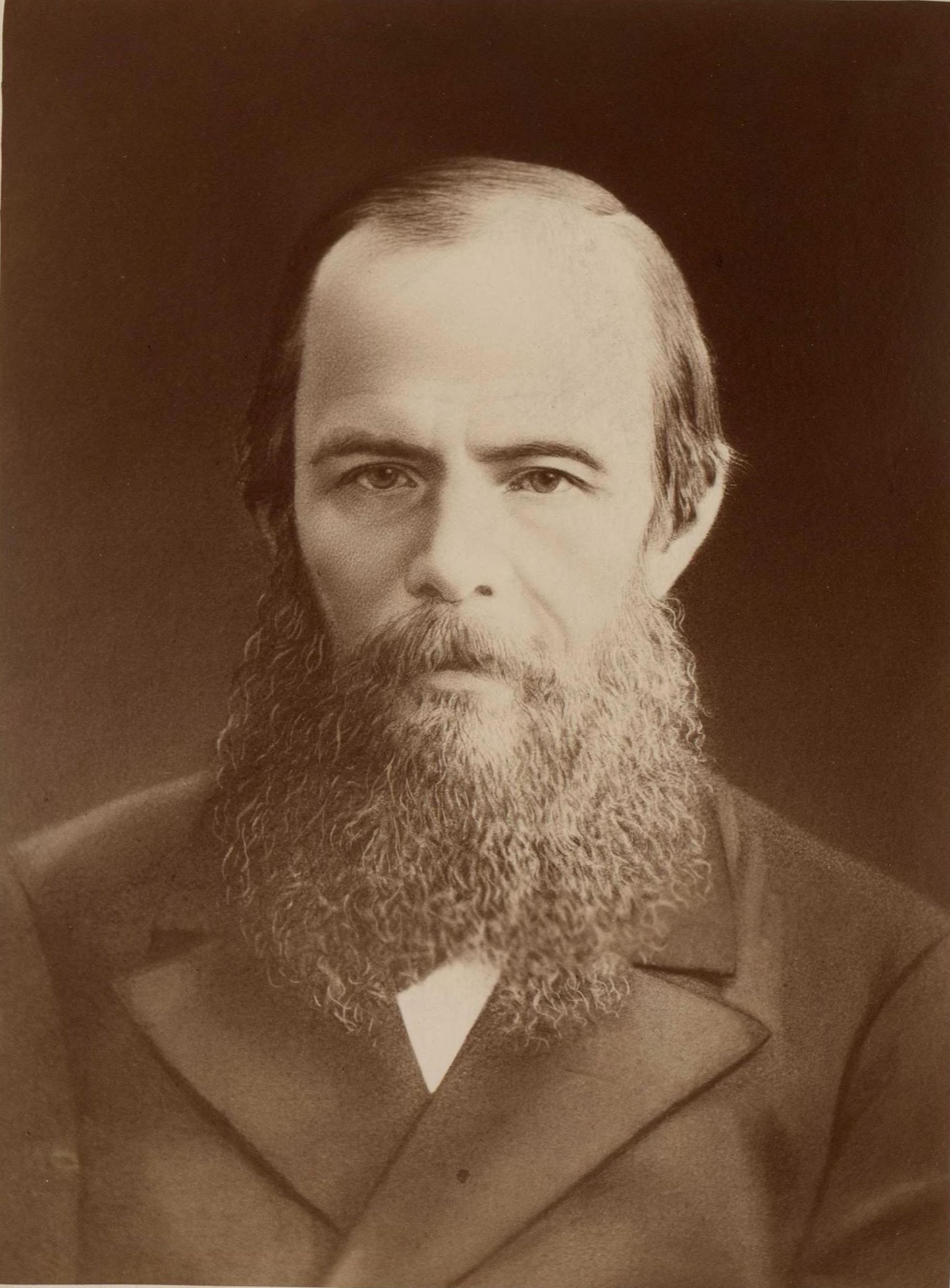
The featured image is a photograph of Fyodor Dostoevsky and is in the public domain, courtesy of Wikimedia Commons.

No comments:
Post a Comment
Comments are subject to deletion if they are not germane. I have no problem with a bit of colourful language, but blasphemy or depraved profanity will not be allowed. Attacks on the Catholic Faith will not be tolerated. Comments will be deleted that are republican (Yanks! Note the lower case 'r'!), attacks on the legitimacy of Pope Leo XIV as the Vicar of Christ, the legitimacy of the House of Windsor or of the claims of the Elder Line of the House of France, or attacks on the legitimacy of any of the currently ruling Houses of Europe.