11 November 2026
Pope St Martin I & the Dogma of Mary’s Perpetual Virginity | On Faith and Truth
A sermon for today. Please remember to say 3 Hail Marys for the Priest.

St Lebwin, Patron of Daventer

From Fr Alban Butler's Lives of the Saints:
THIS saint was by birth an English Saxon, and in his own language was called Liafwin. From his infancy he was a child of grace, a lover of retirement, an enemy to the pleasures of the world, and much given to prayer, watching, the mortification of the senses, and to all works of mercy. By praying fervently for the divine wisdom he deserved to be abundantly replenished with it. And having once been at the expense of laying the foundation of solid virtue, which always costs dear to flesh and blood, in the destruction of the old man, he saw the spiritual edifice rise in his heart with joy; yet always labored to perfect it with fear and trembling. He was amiable and venerable to all, and something divine seemed to shine in his countenance. Being promoted to priest’s orders, that he might employ his talent for the salvation of souls, he went over into Lower Germany, where several apostolic missionaries were employed in planting the gospel. He addressed himself to St. Gregory, whom St. Boniface had appointed his vicar at Utrecht, for the administration of that diocese. This holy man received him with great joy, and sent him with Marcellin, or Marchlem, who had been from his childhood a disciple of St. Willibrord, to carry the light of the gospel into the country which is now called Over-Yssel. St. Lebwin was received as an angel from heaven by a lady named Abachilde, and many being converted, the man of God built a chapel on the west bank of the river at Hiulpe, now called Wulpe, about a league from Daventer, about the year 772. But many shut their ears to the truth, from whom the sain had much to suffer; but he seemed to gather greater courage from persecutions, and feared no danger in so great a cause. The Saxons who inhabited the neighboring country, held a yearly assembly at Marklo, upon the river Weser, to deliberate on the public affairs of their nation. They were divided into three ranks or classes; the Edlinges or noblemen, the Frilinges or yeomen, and the servile tribe. Out of every rank twelve men were chosen from each village to meet at this great council. St. Lebwin repaired thither, and, clothed in his priestly ornaments, entered the assembly, holding a cross before his breast in his right hand, and having a book of the gospels under his other arm. While the multitude were intent upon their superstitious sacrifices, with a countenance full of dignity and majesty, he cried out to them with a loud voice, saying: “Hear me, all of you. Listen to me, or rather to God who speaks to you by my mouth. Know that the Lord, the Maker of the heavens, the earth, and all things, is one only true God.” He went on affirming that he came an ambassador from God, to make him known to them, foretelling that if they refused to hear his voice, they should be speedily destroyed by a prince, whom God in his indignation would raise up against them. While he spoke, many of the Saxons ran to the hedges, plucked up stakes and sharpened them in order to murder him; but the saint, protected by God, passed through the midst of them, and escaped. Then an honorable person among them stood up, and said, they had often received with humanity and respect ambassadors from men; much more ought they to honor an ambassador from God, who will punish an affront offered to him. Whereupon, it was agreed that the messenger of God should be permitted to travel and preach where he pleased; of which liberty he made good use. But afterwards, when the Saxons waged war against Charlemagne, they persecuted the Christians; and a troop, making an inroad as far as Daventer, burned the church which our saint had erected there. After their departure he rebuilt it, and, being denied the more compendious sacrifice of himself, finished his martyrdom by labors and austerities before the close of the eighth century, and was buried in his church at Daventer, where his relics have been famous for miracles. Bertulf, the twentieth bishop of Utrecht, founded there a collegiate church of canons, of which St. Lebwin is titular saint. See his life authentically written by Hucbald, monk of Elnon or St. Amand’s, in the reign of Charles the Bald, also St. Radbod’s, bishop of Utrecht, Eclogue in his praise, and Altfrid in the life of St. Ludger; Pagi, Crit., t. 3, p. 336; Mabill. Annal. Ben., t. 2, and Batavia Sacra, p. 93.
St Martin, Pope & Martyr

From Fr Alban Butler's Lives of the Saints:
From his letters, Theophanes, and especially Anastasius, in Pontific. et in ep. ad Martin. Narnieus. episc. The Vener. Card. Baronius, Fleury,1. 38, et Jos. Assemani. Comm in Kalend. t. 6, p. 253.
A. D. 655.
ST. MARTIN was a native of Todi in Tuscany, and became renowned is the clergy of Rome for his learning and sanctity. While he was deacon of that church he was sent by pope Theodorus in quality of apocrisiarius of nuncio to Constantinople, where he showed his zeal against the reigning heresy of the Monothelites. Upon the death of Theodorus, after a vacancy of near three weeks, Martin was elected pope in July, 649, and, in the October following, held in the Lateran church a council of one hundred and five bishops, against the Monothelites, in which he condemned the ring leaders of that sect, particularly Sergius and Pyrrhus, who had been formerly bishops of Constantinople, and Paul, who was then in possession of that see. The Ecthesis of Heraclius and the Typus of Constans, two imperial edicts, were likewise censured; the former, because it contained an exposition of faith entirely favorable to the Monothelites; the latter, because it was a formulary by which silence was imposed on both parties, and it was forbid by it to mention either one or two operations in Christ. “The Lord,” said the Lateran fathers,” hath commanded us to shun evil and do good; but not to reject the good with the evil. We are not to deny at the same time both truth and error.”
The emperor Constans sent Olympius, his chamberlain, in quality of exarch into Italy, with an order either to cause Martin to be massacred, or to send him prisoner into the East. Olympius, coming to Rome while the council was assembled, endeavored to raise a schism; but not succeeding by open violence, had recourse to treachery, and commanded one of his attendants to murder the pope while he was administering the communion in the church of St. Mary Major, which might be more easily done, as the pope carried the communion to every one in his own place. The servant who had undertaken to execute this commission, afterwards swore that he had been struck with blindness, and could not see the pope. Olympius, therefore, seeing the pope had been thus protected by heaven, declared to him the orders which he had received, made his peace with him, and marched into Sicily, then in the hands of the Saracens, where his army perished, and he died of sickness. The emperor then sent Theodorus Calliopas exarch, with Theodorus Pellurus, one of his chamberlains, with a strict charge to seize Martin, whom he accused of heresy, because he condemned the type; and charged him with Nestorianism, as the Egyptians did all Catholics. The new exarch and the chamberlain arrived at Rome with the army from Ravenna, on Saturday, the 15th of June, 653. The pope, who had been sick ever since October, shut himself up in the Lateran church, but sent some of his clergy to salute the exarch, who inquired where the pope was1, saying, he desired to adore him,* which he repeated the next day. Two days after, on Monday, Calliopas accused him of having arms concealed; but the pope bade him search his palace, which he did; and no arms being found, the pope said, “Thus have calumnies been always employed against us.” Half an hour after, the soldiers returned and seized the pope, who lay sick on a couch near the gate of the church; and Calliopas presented the clergy a rescript of the emperor, commanding St. Martin to be deposed as unworthy of the popedom. The clergy cried out, “Anathema to him who shall say that pope Martin hath changed any point of faith, and to him who perseveres not in the Catholic faith till death.” Calliopas, fearing the multitude, said, “There is no other faith but yours; nor have I any other:” several of the bishops said, “We will live and die with him.” The pope was led out of the church into the palace, and on the 18th of June, taken thence at midnight, and carried in a boat down the Tiber to Porto, where he was put, on board of a vessel to be conveyed to Constantinople. After three months’ sail he arrived at the isle of Naxos, where he stayed with his guards a whole year, being allowed to lodge in a house For a long time he was afflicted with a dysentery and a loathing of food When the bishops and inhabitants sent him any provisions, the guards plun dered them, and abused with injurious language and blows those who brought him presents, saying, “Whoever shows any kindness to this man is an enemy to the state.” St. Martin was more afflicted at the injuries which his benefactors received than at his own sufferings. He was brought to Constantinople on the 17th of September, in 654, and, after much ill usage, lay in a dungeon without speaking to anybody but his keepers for near three months, from the 17th of September to the 15th of December. In one of his letters he wrote as follows: “It is now forty-seven days since I have been permitted to wash myself either in cold or warm water. I am quite wasted and chilled, and have had no respite, either upon sea or land, from the flux which I suffer. My body is broken and spent, and, when I would take any nourishment, I want such kind of food as is necessary to support me; and have a perfect aversion and loathing to what I have. But I hope that God, who knows all things, when he shall have taken me out of this world, will bring my persecutors to repentance.”2 On the 15th of December, he was examined by the Sacellarius, or treasurer, in the chamber of that magistrate, in presence of the senate, which was then assembled there. He was removed thence to a terrace, where the emperor might have a sight of him from his window; and the Sacellarius ordered his guards to divest him of the marks of his episcopal dignity. Then, delivering him into the hands of the prefect of the city, he said, “Take him, my lord prefect, and pull him to pieces immediately.” He likewise commanded those that were present to anathematize him. But not above twenty persons cried out anathema: all the rest hung down their heads, and retired overwhelmed with grief.
The executioners, laying hold of the saint, took away his sacerdotal pallium, and stripped him of all his clothes, except a tunic which they left him without a girdle, having torn it from the top to the bottom, so that his naked body was exposed to sight. They put an iron collar about his neck, and dragged him in this manner from the palace through the midst of the city, the jailer being fastened to him, and an executioner carrying the sword before him, to show that he was condemned to die. The people wept and sighed, except a small number who insulted him; but the martyr preserved a calm and serene countenance. Being come to the prtorium he was thrown into a prison with murderers; but about an hour afterwards was taken thence, and cast into the prison of Diomedes, so much hurt and bruised, that he left the staircase besmeared with his blood, and seemed ready to give up the ghost. He was placed on a bench, chained as he was, and almost dead with cold; for the winter was very severe. He had none of his own mends or servants about him, but a young clerk who had followed him weeping. The jailer was chained to him, and the order for his execution was expected every moment: and the holy pope impatiently waited for martyrdom. But it was delayed, and his irons were knocked oil. The emperor went next day to visit the patriarch Paul, who lay very sick, and related to him all that had been done against the pope. Paul sighed, and said, “Alas! this is still to augment my punishment.” And he conjured the emperor to be satisfied with what the pope had suffered. Paul lied soon after, and Pyrrhus, who had been formerly patriarch, was very desirous to recover that see. During his exile he had abjured the Monothelite heresy under pope Theodorus at Rome, and had been entertained as a bishop by that church according to its accustomed law of hospitality towards strangers. Constans sent Demosthenes, deputy to the Sacellarius, to examine St. Martin in prison, whether Pyrrhus had made his recantation at Rome of his own accord, or through solicitations. St. Martin satisfied him that he had done it of his own accord; though he had soon relapsed again. Demosthenes said, “Consider in what glory you once lived, and to what a condition you are now reduced. This is entirely owing to yourself.” The pope only replied, “God be praised for all things.”
St. Martin continued in the prison of Diomedes near three months, to the 10th of March, 655, when he was ordained to be banished to the Taurica Chersonesus on the 15th of May. The famine was so great in that country that the pope assured his friends, in one of his letters: “Bread is talked of here, but never seen. If some relief is not sent us from Italy, or Pontus, it is impossible to live.”3 He wrote another letter in September, wherein he says:4 “We are not only separated from the rest of the world, but are even deprived of the means to live. The inhabitants of the country are all pagans; and they who come hither, besides their learning the manners of the people of the country, have no charity, nor even that natural compassion which is to be found among barbarians. Neither do they bring any thing from other places in the barks which come hither to be loaded with salt; nor have I been able to buy any thing but one bushel of corn, which cost me four gold pence. I admire the insensibility of all those who have heretofore had some relation to me, who have so entirely forgot me, that they do lot so much as seem to know whether I am in the world. I wonder still more at those who belong to the church of St. Peter, for the little concern they show for one of their body. If that church has no money, it wants not corn, oil, or other provisions, out of which they might send us some small supply. What fear hath seized all these men, which can hinder them from fulfilling the commands of God, in relieving the distressed? Have I appeared such an enemy to the whole church, or to them in particular? However, I pray God, by the intercession of St. Peter, to preserve them steadfast and immoveable in the orthodox faith. As to this wretched body, God will have care of it. He is at hand; why should I give myself any trouble? I hope in his mercy, he will not prolong my course.” The good pope was not disappointed of his hope; for he died on the 16th of September, in 655, having held the holy see six years, one month, and twenty-six days. He was interred in a church of the Blessed Virgin, within a furlong from the city of Chersona: a great concourse of people resorted to his tomb. His relics were afterwards carried to Rome, and deposited in a church dedicated long before in honor of St. Martin of Tours. He is honored by the Latins, on the 12th of November, the day of the translation of his relics to Rome, and by the Greeks on the 13th of April; also on the 15th and 20th of September. By the Muscovites on the 14th of April. His constancy and firmness appear in his letters. They are well written, with strength and wisdom: the style is great and noble, worthy of the majesty of the holy see.
The saints equally despised the goods and the evils of this life, because they had before their eyes the eternal glory with which momentary labors and sufferings will be abundantly recompensed. Can we be called Christians, who, by our murmuring and impatience under the least trials, and by recoiling at the least harsh word, show ourselves to be strangers to the spirit, and enemies to the cross of Christ? It is only by bearing the marks of his sufferings, and by practising the heroic virtues which tribulation calls forth, that we can enter into the bliss which he has purchased for us by his cross. If with the saints we look up at the joys which are to be the recompense of our patience, and consider attentively the example of Christ, we shall receive our sufferings, not only with resignation, but with joy as graces of which we are most unworthy.
Collect of St Lebwin, Confessor ~ Indulgenced on the Saint's Feast (See Note)
According to the Apostolic Penitentiary, a partial indulgence is granted to those who on the feast of any Saint recite in his honour the oration of the Missal or any other approved by legitimate Authority.

V. O Lord, hear my prayer.
R. And let my cry come unto thee.
Let us pray.
Grant, we beseech Thee, almighty God: that the venerable feast of Blessed Lebwin, Thy Confessor, may increase our devotion and further our salvation.
Let us pray.
Grant, we beseech Thee, almighty God: that the venerable feast of Blessed Lebwin, Thy Confessor, may increase our devotion and further our salvation.
Through Jesus Christ, Thy Son our Lord, Who liveth and reigneth with Thee, in the unity of the Holy Ghost, God, world without end.
R. Amen.
Collect of St Martin I, Pope & Martyr ~ Indulgenced on the Saint's Feast
According to the Apostolic Penitentiary, a partial indulgence is granted to those who, on the feast of any Saint, recite in his honour the oration of the Missal or any other approved by legitimate Authority.

V. O Lord, hear my prayer.
R. And let my cry come unto thee.
Let us pray.
Look forgivingly on Thy flock, Eternal Shepherd, and keep it in Thy constant protection, by the intercession of blessed Martin, Thy Martyr and Sovereign Pontiff, whom Thou didst constitute Shepherd of the whole Church.
Let us pray.
Look forgivingly on Thy flock, Eternal Shepherd, and keep it in Thy constant protection, by the intercession of blessed Martin, Thy Martyr and Sovereign Pontiff, whom Thou didst constitute Shepherd of the whole Church.
Through Jesus Christ, Thy Son our Lord, Who liveth and reigneth with Thee, in the unity of the Holy Ghost, God, world without end.
R. Amen.
Archbishop Héctor Agüer: Rest in Peace
O God, Who hast made Thy servant Héctor to flourish among the Ministers of Apostolic Succession in the honourable Office of Bishop, grant, we beseech Thee, that he may also be joined with them in perpetual fellowship.
Through Jesus Christ, Thy Son our Lord, Who liveth and reigneth with Thee, in the unity of the Holy Ghost, God, world without end.
R. Amen.

From Rorate Cæli
Through Jesus Christ, Thy Son our Lord, Who liveth and reigneth with Thee, in the unity of the Holy Ghost, God, world without end.
R. Amen.

From Rorate Cæli
The best Argentine prelate of the past few decades, Archbishop Héctor Agüer, Emeritus of La Plata, died yesterday. The history of the Church would have been very different if he had been the one made Archbishop of Buenos Aires and Cardinal by John Paul II.
Born and raised in Buenos Aires, Hécton Ruben Agüer went to the seminary there and was made auxiliary of Buenos Aires in February of 1992 -- Bergoglio was made Auxiliary months later, against the advice of the Superior General of the Jesuits. The same Bergoglio, as Francis, accepted his retirement on the very day Agüer turned 75: a rarity. And named none other than Tucho Fernández to be his successor.
Hector was a faithful and orthodox bishop, highly respectful of Tradition; we have published many of his columns here in the past few years, when, in retirement, he felt once again free to share his thoughts.
Good and faithful servant: May he rest in peace.
China-Shop Bull & Lord of the Manor
Dr Deavel reviews a recent biographical look at Chesterton, The Man Who Was Chesterton, by José R. Ayllón, PhD, a Spanish philosopher.
From The Imaginative Conservative
By David Deavel, PhD
José R. Ayllón’s “The Man Who Was Chesterton” succeeds because it captures the Chesterton who debated and argued like “a bull in the china shop of his time” but “only made friends” due to “his kindness and sense of humor.” No wonder his friend Edward Macdonald said on his death, “He was the lord of the manor.”
The Man Who Was Chesterton, by José R. Ayllón, translated by Aurora Rice (198 pages, Arouca Press, 2026)
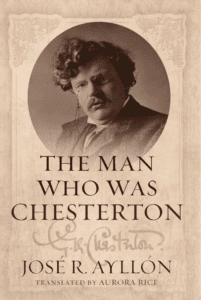 Great openings are priceless. “Call me Ishmael.” “It was the best of times, it was the worst of times.” “It is a truth universally acknowledged, that a single man in possession of a good fortune, must be in want of a wife.” Most of my readers likely knew the books immediately upon reading those lines. While José R. Ayllón’s new popular biography of Chesterton, translated by Aurora Rice, may not be quite in the ranks of Melville, Dickens, and Austen, I must say that the opening line is in that category: “This is an attractive biography because Chesterton is an attractive figure.”
Upon reading it, I had two instantaneous reactions. The first is that the statement is illogical. If the artist is bad enough, even the most attractive figures can be depicted as ugly in words, paint, photography, sculpture, or whatever medium is chosen. The second reaction is that, abstracting from the logical problem, I, the reviewer, will be the judge of whether this is an attractive, good, or even passable book!
To forestall any worry those angry, italicized words might have caused you, let me just issue a spoiler. If the opening sounds boastful, it is to be judged under the iron-clad law of rhetoric attributed to both Dizzy Dean and Muhammad Ali: “It ain’t braggin’ if you can back it up.”
The Man Who Was Chesterton is attractive because delightfully written. I don’t know the Spanish original, but Aurora Rice’s English translation renders it in an accessible, light, and occasionally poetic fashion that surely mirrors the original text (ex., “The June sun shone on the pavement and the crowded streets were gay; London had snatched a holiday”).
The biography is a brief but full 178 pages of text that includes no notes or technical apparatus and is divided into two parts. “Part One: His life, his world” has four chapters of straight, chronological biography running to 106 pages. “Part Two: His Thought” has four chapters of survey and analysis of themes and important works in 72 pages. Not academic in tone or construction, it is a smart biography that is clearly based on a great deal of reading of both Chesterton’s works and secondary literature, including modern biographies and contemporary accounts of GKC by W. R. Titterton and others.
Perhaps the most surprising source that plays a large role in this biography is the memoir of Gilbert’s sister-in-law, Ada Jones Chesterton. I’ve never read it, in part because of the well-known false account Ada gave of Gilbert and Frances’s marriage—analyzed quite well by Frances’s biographer, Nancy Brown, among others.
Ayllón never cites this part of Ada’s work, but he does treat many of the other parts of her account of matters on Fleet Street, more broadly, and The New Witness and GK’s Weekly, in particular, as reliable. Given that my suspicions were raised, I read her reported testimony carefully but found nothing obviously off. Ada’s reports of attempting somewhat deviously to negotiate higher fees for Chesterton’s writing and of ruing his less-than-stringent editing (“Gilbert writes like an angel and edits like Poor Poll”) have the ring of truth.
What makes Part One so delightful and, yes, attractive is that it really does cover both Chesterton’s life and world in a way that shows Chesterton moving in a setting and among a cast of characters. Ada comes alive in this book as do the many figures who played such a huge part of his life: Frances; parents, Edward and Marie Louise; brother, Cecil; friends Belloc, Baring, Shaw, Wells, and Fr. O’Connor; the young Nicholls sisters who befriended him; and others who walk across the stage more briefly. One topic not discussed as much elsewhere but covered here is the many contemporary debating societies’ role in Chesterton’s life and career. They provided outlets for influence and opportunities for friends.
Perhaps Ayllón might have roughed Ada up a bit for the marriage account or talked about Dorothy Collins a bit more, but the completeness accomplished in under 200 pages is remarkable. The book has the same casual and intimate tone of Maisie Ward’s and Joseph Pearce’s biographies and a surprising amount of depth.
Ayllón’s second part on Chesterton’s thought is not as quick a read or as complete as the first, but this is not surprising. Story gallops while theory trots, even when done well. The chapters are flow, however, because Ayllón interleaves bits of biography showing the importance of each subject to Gilbert’s life.
The four chapters cover Chesterton’s thoughts on women (and men), agnosticism and belief, his approach to history, and his treatment of the Middle Ages. Like the biographical bits, Chesterton’s social thought is also woven into the accounts of all the topics.
Further, as in the biographical section, Ayllón introduces briefly other thinkers connected to Chesterton—this time by way of those attracted to and influenced by him. The reader finds accounts of how Chesterton affected the lives and minds of various figures including Ronald Knox, Christopher Dawson, C. S. Lewis, and Joseph Pearce.
The Man Who Was Chesterton succeeds because it captures the Chesterton who debated and argued like “a bull in the china shop of his time” but “only made friends” due to “his kindness and sense of humor.” No wonder his friend Edward Macdonald said on his death, “He was the lord of the manor.” Ayllón’s biography depicts the man and the manor.
Bishop Challoner's Meditations ~ November 12th

IF ANY MAN WILL COME AFTER ME, LET HIM DENY HIMSELF. MATT. xvi. 24
Consider first, that the disciple of Jesus Christ, by the rule of the gospel, is not only obliged to renounce, (at least in affection,) all things else for the sake of his master, but what is the hardest of all, he must also renounce and deny himself. And this his renouncing of himself is absolutely insisted upon by our Lord, as the first, the most essential, and the most indispensable condition for every one that would come after him, and belong to him. Yes, Christians, there is that irreconcilable opposition between this self, strangely corrupted by sin, surrounded with darkness, and bent upon evil, and the purity and sanctity of Jesus Christ, and the bright light of his truth, that there is no coming, in a proper manner, at the one without renouncing the other; there is no coming at divine charity, which teaches us to love our God with our whole heart, (the principal of all Christian duties,) without declaring an eternal war with self-love, the capital enemy to the love of God, and the parent of all vices. And therefore we are not only commanded in the gospel to renounce and to deny ourselves, in order to follow Christ, but also to hate ourselves, or as it is expressed in the original, (Luke xiv. 26, and John xii. 25,) to hate our souls in this world in order to save them in the next. See, my soul, upon what conditions thou art to be a disciple of the Son of God; thou must not only renounce all things else, thou must also renounce and hate thyself too.
Consider 2ndly, the grounds upon which is founded this strict obligation of denying and of renouncing ourselves in this world: namely, that we may be in a proper condition to give ourselves up entirely to God; and thus leaving ourselves, may find him, and be eternally his. So that in effect, this denying and renouncing ourselves is the best way we can have of loving ourselves, because it procures us the greatest good, and brings us to our sovereign good. As on the other hand, that unhappy self-seeking and loving to gratify ourselves brings misfortunes upon us, both for time and eternity. If then we are to renounce the affections to all things else, in order to follow Christ, lest the love of them should divide our heart, and take it off from him - how much more are we to renounce self-love for the love of him, as being much stronger than all our other affections; and far more apt to captivate our heart and shut out the love of God? Yes, my soul, thy self-love is indeed the greatest enemy both of thy God, and of thy own true and everlasting welfare, and therefore thou must not only renounce it, but abhor it too, with almost perfect hatred, and turn all thy forces against it in order to abolish and destroy it.
Consider 3rdly, and attend to the sentiments of a great servant of God upon this subject. 'My son, thou must give all for all, and be nothing of thy own. Know that the love of thyself is more hurtful to thee than anything in the world... Thou canst not possess perfect liberty unless thou wholly deny thyself. All self-seekers and self-lovers are bound in fetters, full of desires, full of cares, unsettled and seeking always their own ease, and not the things of Jesus Christ, but oftentimes devising and framing that which shall not stand; for all shall come to nothing that proceeds not from God. Take this short and perfect word: "Forsake all, and thou shalt find all; leave thy desires, and thou shalt find rest." Consider this well, and when thou shalt have put it in practice, thou shalt understand all things.' - Following of Christ, 1. iii., c. 27 and 32. And again: "Son, as much as thou canst go out of thyself, so much shall thou be able to enter into me. As the desiring of nothing abroad brings peace at home, so the relinquishing thyself interiorly joins thee to God. I will have thee learn the perfect renouncing of thyself in my will, without contradiction or complaint. Follow me, I am the way, the truth, and the life. If thou wilt be my disciple, deny thyself,' c. 56. My soul, let these be thy sentiments also, and strive to conform thy practice to them.
Conclude to give up both thyself and all things else to follow Christ, and by following him to come at thy sovereign good, and to enjoy him for all eternity. If thou wert to give ten thousand worlds to purchase such a treasure, all that thou wouldst give would fall infinitely short of the value of it.
12 November, Antonio, Cardinal Bacci: Meditations For Each Day

Daily Progress
1. Every day of our lives should be a further step towards perfection. Holiness should be our goal in life. If we set before ourselves any illusory targets at which to aim, we are making a serious mistake and shall have cause in the end to appreciate the truth of the prophet's warning: “You have sowed much and brought in little.” (Agg. 1:6) Jesus Christ, moreover, has given us this commandment: “You are to be perfect, even as your heavenly Father is perfect.” (Mt. 5:48)
The ideal is high, certainly, and it is impossible for human resources, but Jesus assures us that nothing is impossible with God. (Cf. Luke 18:27) We can do nothing without God's help, but with His grace we can do everything. “I can do all things in him who strengthens me.” (Phil. 4:13)
Naturally, we cannot hope to accomplish everything in one day. We should desire to reach the highest possible level of perfection and ought not to be discouraged by the many difficulties which we are sure to encounter on the way. But it would be presumptuous to expect to achieve perfection in a single moment.
The road to sanctity is long and arduous. It is essential to stride this path resolutely and with complete confidence in God. We should go forward with enthusiasm, not depending on our own poor resources, but on divine grace.
This is a matter of life and death, and here we speak of eternal life. If we cease to advance and fall into indolence and inactivity, God will leave us to ourselves and we shall be lost. A man who is not advancing in the spiritual life must lose ground sooner or later, because he is not obeying the command of Jesus Christ.
2. There are two ways in which we should make constant daily progress. The first is in the removal of our defects and imperfections. As “The Imitation of Christ” insists, we should soon become holy if we were to conquer at least one sin every year. It is opportune at this stage to ask ourselves how many years we have already spent on earth. During these years how many personal defects can we claim to have remedied? Perhaps there was a time when we were better than we are now. If we have wasted time and have abused our Creator's gifts and favours, we should humble ourselves and do penance before God.
Finally, we should resolve to do our best to remedy at least one defect every day. We should select first of all whatever imperfection we know to be the most dangerous. This will be difficult and even heroic work, but it is very necessary. We must work on our own character as a sculptor works on a block of marble, hammering, cutting, and chiselling patiently and perseveringly. With the help of God we shall be successful. Even as the Saints succeeded, so we shall succeed if we depend on God's grace and make the necessary sacrifices.
3. The second way in which we should make daily spiritual progress is by adorning our soul with virtues. When we have cleansed our soul of the scars of sin, there still remains the positive task of adorning it with Christian virtues. We should begin by acquiring the virtue of humility, which is the foundation of the entire spiritual life. One can never be too humble. It is difficult to become humble and it involves lifelong renunciation and sacrifice.
Once we have acquired this virtue, however, the sunshine and dew of divine grace cause others to spring up beside it. It will be easier then to advance day by day nearer to perfection.
Eastern Rite ~ Feasts of 12 November AM 7534
Today is the Feast of the Holy Hieromartyr Josaphat, Archeparch of Polotsk, and the Commemoration of the Passing into Eternal Life of Blessed Hieromartyr Hryhorii Lakota, Auxiliary Eparch of Przemyśl.

St. Josaphat Kuntsevych, a bishop and monk whose example of faith inspired many Eastern Orthodox Christians to return to full communion with the Holy See.
Born in 1580 in the western Ukrainian region of Volhynia, John Kuntsevych did not become “Josaphat” until his later life as a monk. He also was not initially a full member of the Catholic Church, born to Orthodox Christian parents whose church had fallen out of communion with the Pope.
Although the Eastern churches began to separate from the Holy See in 1054, a union had existed for a period of time after the 15th century Ecumenical Council of Florence. But social, political and theological disputes caused the union to begin dissolving even before the Turkish conquest of Byzantium in 1453. By John’s time, many Slavic Orthodox Christians had become strongly anti-Catholic.
During this time, Latin missionaries attempted to achieve reunion with the individual eastern patriarchs. The approach was risky, sometimes politicizing the faith and leading to further divisions. But it did yield some notable successes, including the reunion of John’s own Ruthenian Church in the 1596 Union of Brest.
John was trained as a merchant’s apprentice and could have opted for marriage. But he felt drawn to the rigours and spiritual depth of traditional Byzantine monasticism. Taking the monastic name of Josaphat, he entered a Ukrainian monastery in 1604.
The young monk was taking on an ambitious task, striving to re-incorporate the Eastern Orthodox tradition with the authority of the Catholic Church in the era of its “Counter-reformation.” Soon, as a priest, subsequently an archbishop, and ultimately a martyr, he would live and die for the union of the churches.
While rejecting the anti-Western sentiments of many of his countrymen, Josaphat also resisted any attempt to compromise the Eastern Catholic churches’ own traditions. Recognizing the urgent pastoral needs of the people, he produced catechisms and works of apologetics, while implementing long-overdue reforms of the clergy and attending to the needs of the poor.
Josaphat’s exemplary life and zeal for the care of souls won the trust of many Orthodox Christians, who saw the value of the churches’ union reflected in the archbishop‘s life and works. Nevertheless, his mission was essentially controversial, and others were led to believe lurid stories and malicious suggestions made about him. In 1620, opponents arranged for the consecration of a rival archbishop.
As tensions between supporters and opponents began to escalate, Josaphat lamented the onset of attacks that would lead to his death. “You people of Vitebsk want to put me to death,” he protested. “You make ambushes for me everywhere, in the streets, on the bridges, on the highways, and in the marketplace. I am here among you as a shepherd, and you ought to know that I would be happy to give my life for you.”
He finally did so, on a fall day in 1623. An Orthodox priest had been shouting insults outside the archbishop’s residence, and trying to force his way inside. Josaphat had him removed, but the man assembled a mob in the town. They arrived and demanded the archbishop’s life, threatening his companions and servants. Unable to escape, Josaphat died praying for the men who shot and then beheaded him before dumping his body in a river.
St. Josaphat’s body was discovered incorrupt, five years later. Remarkably, the saint’s onetime rival - the Orthodox Archbishop Meletius - was reconciled with the Catholic Church in later years. St. Josaphat was canonized in 1867. Hryhorij Lakota was born 31 January 1893 in Holodivka, in Galicia, Lviv region, in the Empire of Austria.
He studied theology in Lviv. He was ordained to the priesthood in 1908. In 1911, he later received his PhD in Theology in Vienna. He was appointed auxiliary bishop of Przemyśl on 16 May 1926.
On 9 June 1946, he was arrested by the NKVD and sentenced to ten years imprisonment, as part of Joseph Stalin's suppression of the Ukrainian Greek-Catholic Church after the so-called 'Lviv Sobor' ('Synod of Lviv'). In exile in Vorkuta, Russia, he was recognized for his humaneness and humility as he took on unbearable conditions to make life easier for others. Fr Alfonsas Svarinskas recounts Bishop Hryhorij's behaviour in camp as reflecting the Christian virtues.
He was martyred at the Abez labour camp, near Vorkuta on 12 November 1950.
a✠✠✠✠✠
St. Josaphat Kuntsevych, a bishop and monk whose example of faith inspired many Eastern Orthodox Christians to return to full communion with the Holy See.
Born in 1580 in the western Ukrainian region of Volhynia, John Kuntsevych did not become “Josaphat” until his later life as a monk. He also was not initially a full member of the Catholic Church, born to Orthodox Christian parents whose church had fallen out of communion with the Pope.
Although the Eastern churches began to separate from the Holy See in 1054, a union had existed for a period of time after the 15th century Ecumenical Council of Florence. But social, political and theological disputes caused the union to begin dissolving even before the Turkish conquest of Byzantium in 1453. By John’s time, many Slavic Orthodox Christians had become strongly anti-Catholic.
During this time, Latin missionaries attempted to achieve reunion with the individual eastern patriarchs. The approach was risky, sometimes politicizing the faith and leading to further divisions. But it did yield some notable successes, including the reunion of John’s own Ruthenian Church in the 1596 Union of Brest.
John was trained as a merchant’s apprentice and could have opted for marriage. But he felt drawn to the rigours and spiritual depth of traditional Byzantine monasticism. Taking the monastic name of Josaphat, he entered a Ukrainian monastery in 1604.
The young monk was taking on an ambitious task, striving to re-incorporate the Eastern Orthodox tradition with the authority of the Catholic Church in the era of its “Counter-reformation.” Soon, as a priest, subsequently an archbishop, and ultimately a martyr, he would live and die for the union of the churches.
While rejecting the anti-Western sentiments of many of his countrymen, Josaphat also resisted any attempt to compromise the Eastern Catholic churches’ own traditions. Recognizing the urgent pastoral needs of the people, he produced catechisms and works of apologetics, while implementing long-overdue reforms of the clergy and attending to the needs of the poor.
Josaphat’s exemplary life and zeal for the care of souls won the trust of many Orthodox Christians, who saw the value of the churches’ union reflected in the archbishop‘s life and works. Nevertheless, his mission was essentially controversial, and others were led to believe lurid stories and malicious suggestions made about him. In 1620, opponents arranged for the consecration of a rival archbishop.
As tensions between supporters and opponents began to escalate, Josaphat lamented the onset of attacks that would lead to his death. “You people of Vitebsk want to put me to death,” he protested. “You make ambushes for me everywhere, in the streets, on the bridges, on the highways, and in the marketplace. I am here among you as a shepherd, and you ought to know that I would be happy to give my life for you.”
He finally did so, on a fall day in 1623. An Orthodox priest had been shouting insults outside the archbishop’s residence, and trying to force his way inside. Josaphat had him removed, but the man assembled a mob in the town. They arrived and demanded the archbishop’s life, threatening his companions and servants. Unable to escape, Josaphat died praying for the men who shot and then beheaded him before dumping his body in a river.
St. Josaphat’s body was discovered incorrupt, five years later. Remarkably, the saint’s onetime rival - the Orthodox Archbishop Meletius - was reconciled with the Catholic Church in later years. St. Josaphat was canonized in 1867.
✠✠✠✠✠
He studied theology in Lviv. He was ordained to the priesthood in 1908. In 1911, he later received his PhD in Theology in Vienna. He was appointed auxiliary bishop of Przemyśl on 16 May 1926.
On 9 June 1946, he was arrested by the NKVD and sentenced to ten years imprisonment, as part of Joseph Stalin's suppression of the Ukrainian Greek-Catholic Church after the so-called 'Lviv Sobor' ('Synod of Lviv'). In exile in Vorkuta, Russia, he was recognized for his humaneness and humility as he took on unbearable conditions to make life easier for others. Fr Alfonsas Svarinskas recounts Bishop Hryhorij's behaviour in camp as reflecting the Christian virtues.
He was martyred at the Abez labour camp, near Vorkuta on 12 November 1950.
IN LUMINE FIDEI: 12 NOVEMBER – SAINT MARTIN I (Pope and Confessor)

IN LUMINE FIDEI: 12 NOVEMBER – SAINT MARTIN I (Pope and Confessor): Martin was born at Todi in Umbria. Upon ascending the pontifical throne, he strove by letters and embassies to recall Paul, Patriarch of ...
12 November, The Chesterton Calendar

NOVEMBER 12th
Likelier across these flats afar,These sulky levels smooth and free,The drums shall crash a waltz of warAnd Death shall dance with Liberty;Likelier the barricades shall blareSlaughter below and smoke above,And death and hate and hell declareThat men have found a thing to love.
'The Napoleon of Notting Hill.'
'The Napoleon of Notting Hill.'
12 November, The Holy Rule of St Benedict, Patriarch of Western Monasticism

CHAPTER XXXV. Of the Weekly Servers in the Kitchen
13 Mar. 13 July. 12 Nov.
Let the brethren wait on one another in turn, so that none be excused from the work of the kitchen, except he be prevented by sickness or by some more necessary employment; for thus is gained a greater reward and an increase of charity. But let assistance be given to the weak, that they may not do their work with sadness; and let all have help according to the number of the community and the situation of the place. If the community be large, let the Cellarer be excused from work in the kitchen, and also those, as already mentioned, who are occupied in more urgent business. Let the rest serve each other in turn with all charity. Let him who endeth his week in the kitchen, make all things clean on Saturday, and wash the towels where with the brethren dry their hands and feet. Let both him who goeth out and him who is coming in wash the feet of all. Let him hand over to the Cellarer the vessels of his office, clean and whole; and let the Cellarer deliver the same to him who entereth, that he may know what he giveth and what he receiveth.
13 November, The Roman Martyrology

Idibus Novémbris Luna tértia. Anno Dómini 2026
November 13th 2026, the 3rd day of the Moon,
Upon the morrow we keep the feast of the holy Confessor Diego, of the Order of Friars Minor, who was born into the better life upon this present day.
Upon the same 13th day of November, were born into the better life:
At Ravenna, the holy martyrs Valentine, Solutor, and Victor, who suffered in the persecution under Diocletian.
At Aix, in Provence, (in the year 304,) that illustrious martyr the blessed Mitrius.
At Caesarea, in Palestine, (in the year 308,) in the persecution under the Emperor Galerius Maximian, the holy martyrs Antonine, Zebinas, German, and the Virgin Ennatha. Ennatha was flogged and then burnt, and the men were beheaded because they openly rebuked the President Firmilian for his wickedness in offering sacrifice to the gods.
In Africa, (in the year 437,) the holy martyrs Arcadius, Paschasius, Probus, and Eutychian. These were all Spaniards who, during the persecution under the Vandals, could no wise be brought to turn aside unto the Arian misbelief. For this cause the Arian king Genseric first proscribed them, then banished them, afterwards tormented them with terrible sufferings, and lastly put them to death in diverse ways. Then also became glorious the faithfulness of the little lad, Paulillus, the brother of holy Paschasius and Eutychian, and as he would not give up the Catholic faith, he was cudgelled for a long time and condemned to the lowest bondage.
At Rome, holy Pope Nicholas the Great, eminent for his Apostolic vigour. (He reigned from April 28, 858 to November 13, 867. He was the 107th Pope.)
At Tours, (in the year 444,) holy Brice, Bishop of that see, a disciple of the blessed Bishop Martin.
At Toledo, (in the year 658,) holy Eugene, Bishop (of that see.)
In Auvergne, (in the year 527,) holy Quintian, Bishop (of Rodez and of Clermont.)
At Cremona, the holy Confessor Homobuono, who was famous for miracles, and whose name Innocent III enrolled among those of the Saints.
℣. And elsewhere many other holy martyrs, confessors, and holy virgins.
℟. Thanks be to God.

Traditional Catholic Evening Prayers in English | November
The Life of St Martin, Bishop & Confessor

HERE FOLLOWETH THE LIFE OF ST. MARTIN
Martin was born in the castle of Sabaria in the country of Pannonia, but he was nourished in Italy at Pavia with his father, which was master and tribune of the knights under Constantian and Julian Cæsar. And Martin rode with him, but not with his will. For from his young infancy he was inspired divinely of God, and when he was twelve years old he fled to the church against the will of all his kin, and required to be made new in the faith. And from thence he would have entered into desert, if infirmity of malady had not let him. And as the emperors had ordained that the sons of ancient knights should ride instead of their fathers, and Martin, which was fifteen years old, was commanded to do the same, and was made knight, and was content with one servant, and yet ofttimes Martin would serve him and draw off his boots.
THE POOR MAN ALL NAKED
In a winter time as Martin passed by the gate of Amiens, he met a poor man all naked, to whom no man gave any alms. Then Martin drew out his sword and carved his mantle therewith in two pieces in the middle, and gave that one half to the poor man, for he had nothing else to give to him, and he clad himself with that other half.THE DREAM OF ST. MARTIN
The next night following, he saw our Lord Jesu Christ in heaven clothed with that part that he had given to the poor man, and said to the angels that were about him: Martin, yet new in the faith, hath covered me with this vesture. Of which thing this holy man was not enhanced in vain glory, but he knew thereby the bounty of God.HE IS BAPTIZED
And when he was eighteen years of age he did do baptize himself, and promised that he should renounce the dignity to be judge of the knights, and also the world, if his time of his provostry were accomplished."PROTECTED AND KEPT BY THE SIGN OF THE CROSS"
Then held he yet chivalry two years. And in the meanwhile the barbarians entered among the Frenchmen, and Julian Cæsar, which should have fought against them, gave great money unto the knights. And Martin willing no more to fight, refused his gift, but said to Cæsar: I am a knight of Jesu Christ, it appertaineth not to me for to fight.Then Julian was wroth, and said that it was not for the grace of religion that he renounced chivalry, but for fear and dread of the present battle following. To whom Martin, not being afeard, said to him: Because that thou holdest it for cowardice, and that I have not done it for good faith, I shall be to-morn all unarmed tofore the battle, and shall be protected and kept by the sign of the cross, and not by shield ne by helm, and shall pass through the battles of the enemies surely.
And then he was commanded to be kept for to be on the morn all unarmed against the enemies. But on the morn the enemies sent messengers that they would yield them and their goods, whereof it is no doubt but that by the merits of this holy man that this victory was had without shedding of blood.
ST. MARTIN AND THE THIEVES
And then forthon he left chivalry and went to St. Hilary, bishop of Poictiers and he made him acolyte. And he was warned of our Lord in his sleep that he should yet visit his father and mother which yet were paynims, and also that he should suffer many tribulations. For as he went over the mountains he fell among thieves. And when one of the thieves had lifted up an axe for to have smitten him in the head, he bare the stroke with his right hand, and then that other took his hands and bound them behind him at his back, and delivered him to another to hold him. And it was asked of him if he were afraid or doubted. To whom Martin answered that he was never tofore so sure, for he knew well that the mercy of God was ready and would come in temptations, and then began to preach to the thief and converted him to the faith of Jesu Christ; and then the thief brought Martin forth on his way, and afterward lived a good life.VISIT TO HIS PARENTS
And when he was past Milan, the devil appeared to him in a man's likeness, and demanded him whither he went. And he said: Thither whereas our Lord would that he should go.And the devil said to him: Wheresoever thou goest the devil shall always be against thee.
And Martin answered to him: Our Lord is mine helper, and therefore I doubt nothing that may be done to me, and then anon the fiend vanished away. Then he went home and converted his mother, but his father abode still in his error.
ST. MARTIN IS EXILED BY THE ARIAN HERETICS
And when the heresy Arian grew in the world, he was beaten openly and put out of the city, and came to Milan, and did do make there a monastery, but he was cast out of the Arians, and went with one priest only into the isle of Gallinaria and there took for his meat, herbs. And among others he took a herb envenomed, which was named hellebore. And when he felt that he should die and was in peril, he chased away the pain and peril of the venom by the virtue of prayer.TWO DEAD MEN RECALLED TO LIFE
And then he heard that the blessed Hilary returned from his exile, and went to meet him, and ordained a monastery by Poictiers.And there was one renewed in the faith which he had in keeping. And when he went a little out and came again, he found him dead without baptism. And then he went into his cell and brought the corpse thither, and there kneeled by the corpse, and by his orisons he remised him in his life again. And as that same [man] rehearseth oft, that when the sentence was given against him, he was put in a dark place, and two angels said to the Judge: "This is he for whom Martin is pledge," and then he [the Judge] commanded that he should be removed unto his body, and so was yielded alive to Martin.
And also he re-established the life to another that was hanged.
CHOSEN BISHOP BY THE PEOPLE OF TOURS
And truly, when the people of Tours had no bishop, they required strongly him to be their bishop, and he refused it. But there was one which was to him contrary because he was of evil habit and despicable of cheer, and one there was among the other which was named Defensor. And when the lector was not present, another took the psalter and read the first psalm that he found, in which psalm was written this verse: Ex ore infantium, "God, thou hast performed the laud by the mouth of children and young suckers, and for thine enemies thou shalt destroy the enemy defensor."1 And thus that Defensor was chased out of the town by all the people.And then he was ordained bishop. And because he might not suffer the tumult ne noise of the people, he established a monastery at two leagues from the city, and there lived in great abstinence with four score disciples, of whom divers cities chose of them to be their bishops.
ST. MARTIN EXPOSES THE FALSE MARTYR
And there was a corpse in a chapel which was worshipped as a martyr, and St. Martin could find nothing of his life ne of his merits. He came on a day on the sepulchre of him, and prayed unto our Lord that he would show to him what he was, and of what merit. And then he turned him on the left side and saw there a right obscure and a dark shadow. Then St. Martin conjured him, and demanded him what he was. And he said to him that he was a thief, and that for his wickedness was slain. Anon then St. Martin commanded that the altar should be destroyed.ST. MARTIN HAS HIS WAY WITH THE EMPEROR VALENTINIAN
It is read in the Dialogue of Severus and Gallus,2 disciples of St. Martin, that there be many things left out in the life of St. Martin which be accomplished in the said Dialogue. So on a time St. Martin went to Valentinian the emperor for a certain necessity, and the emperor knew well that he would require such thing as he would not give to him, and Martin came twice to have entered, but he might not enter. Then he wrapped him in hair and cast ashes on him, and made his flesh lean of a whole week by fastings, and did great abstinence, and then the angel warned him to go to the palace and no man should gainsay him. And then he went to the emperor, and when he saw him he was angry because he was let come in, and would not arise against him till that the fire entered into his chamber, and felt the fire behind him. Then he arose all angry and confessed that he had felt the virtue divine, and began to embrace St. Martin, and granted to him all that he desired, and offered to him many gifts, but he refused and took none.A CHILD RECALLED TO LIFE
And in this Dialogue it is read how he raised the third dead person. For when a youngling was dead, his mother prayed St. Martin, with weeping tears, for to raise him to life. And he kneeled down and made his prayer, and the child arose tofore them all. And all the paynims that saw this converted them to the faith of Jesu Christ.ST. MARTIN’S POWER OVER THE NATURAL WORLD
And all things obeyed to this holy man, as well things not sensible as vegetative, and not reasonable, as things insensible, as the fire and water.For when he had commanded to set fire in a temple, the flame was brought with the wind upon a house that was joining. And he mounted upon the house and set himself against the fire, and anon the flame returned against the might of the wind, so that there was seen the fighting of the elements.
And when a ship should have perished in the sea, there was therein a merchant which was not Christian, and escried and said: "God of St. Martin help us!" And anon the tempest ceased, and the sea became all still and even.
And also to him obeyed things vegetative as trees, for he destroyed in a place right old trees. And there was a tree of a pine, which was dedicated to the devil, he would have razed down that tree, and the villains and paynims withsaid him so that one of them said to him: If thou hast affiance in thy God, we shall hew down this tree, and thou shalt receive it. And if thy God be with thee as thou sayest, thou shalt escape. And he granted it, and then the tree was hewn and bounden for to fall upon him. And when it should fall he made the sign of the cross against it, and it fell on that other side and slew almost all the villains that were there, and then the others were converted to the faith when they had seen this miracle.
And many beasts not reasonable obeyed to him, like as it is said in the Dialogue: Hounds followed a hare, and he commanded them to leave to follow him, and anon they tarried, and abode still, like as they had been overcome. A serpent passed over a river, and St. Martin said to the serpent, "I command thee in the name of God that thou return anon." And the serpent returned by the words of St. Martin, and went to that other side, and then St. Martin said, all weeping, "The serpents understand me well, and the men will not hear me."
On a time as a hound barked on one of the disciples of St. Martin, the disciple returned and said to the hound: I command thee in the name of St. Martin that thou hold thy peace, and anon the hound was all still as his tongue had been cut off.
EXAMPLES OF ST. MARTIN’S HUMILITY, DIGNITY, AND PITY
He Kisses The Foul Leper
The blessed St. Martin was of great humility; for he met at Paris a foul leper, horrible to all men, and he kissed him and blessed him, and anon he was all whole. When he was secretly in the revestiary he had no chair, ne no man never saw him in the church sit, but in his cell he sat upon a threefoot stool.He is Visited By Apostles and Saints
He was of much great dignity, for he was like unto the apostles, and that was by the grace of the Holy Ghost that descended in him in the likeness of fire, like as he descended in the apostles, and the apostles visited him, as he had been seen one of them.And as it is read in the Dialogue that, he sat on a time alone in his cell, and Severus and Gallus abode him without the gates, the which were smitten suddenly with great fear, for they heard divers people speak together within the cell, and then they told it to St. Martin. And St. Martin said: I will tell it to you, but I pray you to tell it to nobody, Agnes, Thecla and Mary came to me.
And he confessed that they had oft visited him, and also Peter and Paul were come oft and visited him.
A Snub for the Emperor
And he was of great humility, for when the emperor Maximian had on a time bidden him to a feast, the drink was brought to Martin for to drink, and each man weened that he would have given after to the king, but he gave it to his priest, for he wist well that there was none worthy to drink tofore the priest, and judged in himself that it was not a thing worthy if he had given it to the king or his neighbours tofore the priest.His Patience
He was of much great patience, for he kept so great patience that he that was sovereign priest was oft-time hurt of his clerks without punishing them, ne therefore put he them not out of charity. Never man saw him angry, ne never man saw him weep, ne laugh, ne never was in his mouth but Jesu Christ, ne in his heart but pity, peace and mercy.It is read in the same Dialogue that St. Martin was clad with a bright clothing, blue, and with a great coarse mantle hanging here and there upon him, and rode upon his ass. And horses that came against him were afeard of him in such wise that they that rode on them fell down to the earth. And then they took Martin and beat him grievously.
And he, saying nothing, suffered gladly the strokes. And they enforced them to beat him the more, and him seemed that he felt no harm, ne set not by the strokes, ne was not moved ne angry with them.
And then they returned to their horses, whom they found lying fast to the ground, and they might no more move them than a rock till they returned to St. Martin, and confessed their sin and trespass that they had so done by ignorance, and prayed him to pardon them and to give them licence to depart. And so he did, and then the beasts arose and went forth their way a good pace.
His Great Business in Prayers
He was of great business in prayers, for there was never hour ne moment, as it is said in his legend, but that he prayed or else went to his lesson. For he never ceased but he read or prayed in his courage. For like as it is custom to the smiths that work in iron, that otherwhile when they smite the iron, for to allege and ease them of their labour, they smite on the stithie or anvil, in like wise St. Martin always when he laboured or did anything he prayed continually. He was alway of great cruelty toward himself, and hard and sharp.He Refuses the Bed of Straw
Severus saith in an epistle unto Eusebius, that on a time when he came into a place of his diocese, the clerks had made ready for him a bed full of straw. And when he lay thereon, he target doubted that it was softer than it was which he was woned to lie on, for he was accustomed to lie on the bare ground, and but one coverlet of hair upon his bed. And then he, being angry, arose and threw away the straw, and laid him down on the bare ground. And about mid-night all that straw was set afire. Martin arose and supposed to have escaped and might not, for he was so environed with fire that his clothes burned. And then he returned to his prayers accustomed, and made the sign of the cross, and abode in the middle of the fire without any touching of it, and felt the flames well-smelling and sweetly, which he had tofore found evil burning. And then the monks were all moved, and ran thither, and found St. Martin in the middle of the flames without hurt. And they had supposed that he had been all destroyed and burnt with the fire.His Pity for the Penitent and for the Poor
He was much piteous against them that would be repentant and be penitent; them would he receive into the bosom of pity. And when the devil reproved this holy man St. Martin because he received to penance them that had once fallen, and St. Martin answered to him: If thou, most cursed wretch, wouldst leave to torment the people and repent thee of thy cursed deeds, I would trust so much in our Lord that he would give to thee his mercy.He was much piteous unto the poor people. It is read in the said Dialogue that the blessed St. Martin went on a time to the church, and a poor man followed him, and St. Martin commanded his archdeacon that he should go clothe this poor man. And when he saw he tarried over long to clothe him, he entered into the sacristy and did off his own coat, and gave it to the poor man, and commanded that he should go his way anon.
And when the archdeacon warned him to go to do the service, Martin said that he might not go till the poor man were clothed, and meant himself. But he [the archdeacon] understood him not. For he saw him clothed and covered with his cope, and wist not that he was naked under, and therefore he rought not of the poor man.
And then he [Martin] said to him: Why bring ye nothing for the poor man? Bring ye me then a vesture and let me be clothed for the poor man.
And then he [the archdeacon] being constrained went to the market and bought a vile coat and a shirt for five pence, which was worth nought, and came and angrily threw it down at his feet. And St. Martin took it up, and clad him withal secretly, and the sleeves came to his elbows and the length was but to his knees, and so went to sing the mass. And as he sang mass a great light of fire descended upon his head, and was seen of many that were there, and therefore he is said like and equal to the apostles.
And to this miracle addeth Master John Beleth that, when he lifted up his hands at the mass, as it is of custom, the sleeves of the alb slid down unto his elbows. For his arms were not great ne fleshly, and the sleeves of his coat came but to his elbows, so that his arms abode all naked. Then were brought to him by miracle sleeves of gold and full of precious stones, of angels, which covered his arms convenably.
He saw on a time a sheep shorn and said: This hath accomplished the commandment of the gospel, for he had two coats, and hath given to him that had none, and thus, said he, ye ought to do.
Power to Chase Away the Devils
He was of great power to chase away the devils, for he put them out ofttimes from divers people. It is read in the same Dialogue that a cow was tormented of the devil and was wood and confounded much people. And as St. Martin and his fellowship should make a voyage this wood cow ran against them. And St. Martin lifted up his hand and commanded her to tarry, and she abode still without moving. Then St. Martin saw the devil which sat upon the back of the cow, and blamed him, and said to him: Depart thou from this mortal beast, and leave to torment this beast that noyeth nothing.And anon he [the devil] departed. And the cow kneeled down to the feet of this holy man, and at his commandment she returned to her company full meekly.
He was of much great subtlety for to know the devils, they could not be hid from him, for in what place they put themselves in, he saw them. For sometime they showed them to him in the form of Juplter or of Mercury, and otherwhile they transfigured them in likeness of Venus or of Minerva, whom every each he knew, and blamed them by name.
It happed on a day that the devil appeared to him in the form of a king, in purple, and a crown on his head, with hosen and shoes gilt, with an amiable mouth and glad cheer and visage. And when they were both still a while, the devil said: Martin, know thou whom thou worshippest? I am Christ that am descended into earth, and will first show me to thee.
And as St. Martin all admarvelled, said nothing, yet the devil said to him: Wherefore doubtest thou, Martin, to believe me when thou seest that I am Christ?
And then Martin, blessed of the Holy Ghost, said: Our Lord Jesu Christ saith not that he shall come in purple ne with a crown resplendent. I shall never believe that Jesu Christ shall come but if it be in habit and form such as he suffered death in, and that the sign of the cross be borne tofore him.
And with that word he vanished away, and all the hall was filled with stench.
THE END OF ST. MARTIN’S LIFE
St. Martin knew his death long time tofore his departing, the which he showed to his brethren.The Lesson of the Water Birds
And whiles he visited the diocese of Toul for cause to appease discord that was there. And as he went he saw in a water birds that plunged in the water, which awaited and espied fishes and ate them, and then he said: In this manner devils espy fools. They espy them that be not ware; they take them that know not, but be ignorant, and devour them that be taken. And they may not be fulfilled ne satiate with them that they devour.And then he commanded them to leave the water, and that they should go into desert countries, and they assembled them and went into the woods and mountains.
St. Martin’s Death
And then he abode a little in that diocese, and began to wax feeble in his body and said to his disciples that he should depart and be dissolved. Then they all weeping said: Father, wherefore leavest thou us, or to whom shalt thou leave us all desolate and discomforted? The ravishing wolves shall assail thy flock, and beasts.And he then, moved with their weepings, wept also, and prayed, saying: Lord if I be yet necessary to thy people I refuse nothing the labour, thy will be fulfilled.
He doubted what he might best do, for he would not gladly leave them, ne he would not long be departed from Jesu Christ. And when he had a little while been tormented with the fevers and his disciples prayed him, whereas he lay in the ashes, dust and hair, that they might lay some straw in his couch where he lay, he said: It appertaineth not but that a Christian man should die in hair and in ashes, and if I should give to you another ensample I myself should sin.
And he had his hands and his eyes towards the heaven, and his spirit was not loosed from prayer. And as he lay towards his brethren, he prayed that they would remove a little his body, and he said: Brethren, let me behold more the heaven than the earth, so that the spirit may address him to our Lord.
And this saying he saw the devil that was there, and St. Martin said to him: Wherefore standest thou here, thou cruel beast? Thou shalt find in me nothing sinful ne mortal, the bosom of Abraham shall receive me.
And with this word he rendered and gave up unto our Lord his spirit, in the year of our Lord three hundred four score and eighteen, and the year of his life eighty-one. And his cheer shone as it had been glorified, and the voice of angels was heard singing of many that were there.
His Body is Returned to Tours
And they of Poictiers assembled at his death as well as they of Tours and there was great altercation. For the Poictevins said, "He is our monk, we require to have him," and the others said, "He was taken from you and given to us." And at midnight all the Poictevins slept, and they of Tours put him out of the window, and was borne with great joy and had over the water of Loire by a boat unto the city of Tours.Severus Hears the Angels Sing
And as Severus, bishop of Cologne, on a Sunday after Matins, visited and went about the holy places, the same hour that St. Martin departed out of this world, he heard the angels singing in heaven. Then he called his archdeacon and demanded him if he heard anything, and he said: Nay. And the bishop bade him to hearken diligently, and he began to stretch forth his neck and address his ears and leaned upon his staff. Then the bishop put himself to prayer for him. Then he said that he heard voices in heaven, to whom the bishop said: It is my Lord, St. Martin, which is departed out of the world, and the angels bear him now into heaven. And the devils were at his passing, but they found nothing in him and went away all confused.And the archdeacon marked the day and the hour, and knew verily after, that St. Martin passed out of this world that same time. And Severus, the monk which wrote his life, as he slept a little after Matins, like as he witnesseth in his epistle, St. Martin appeared to him clad in an alb, his cheer clear, the eyes sparkling, his hair purple, holding a book in his right hand, which the said Severus had written of his life, and when he had given him his blessing, he saw him mount up into heaven. And as he coveted for to have gone with him, he awoke, and anon the messengers came, which said that that same time St. Martin departed out of this world.
St. Ambrose in a Vision Says the Office for the Dead
And in the same day St. Ambrose, bishop of Milan, sang mass, and slept upon the altar between the lesson of the prophecy and the epistle, and none durst wake him, and the subdeacon durst not read the epistle without his leave. And when he had slept the space of three hours they awoke him, and said: Sire, the hour is passed and the people be weary for to abide, wherefore command that the clerk read the epistle.And he said to them: Be not angry. Martin my brother is passed unto God, and I have done the office of his departing and burying, and I could no sooner accomplish ne make an end of the last orison because ye hasted me so sore.
Then they marked the day and the hour, and they found that St. Martin was then passed out of this world and gone to heaven.
MIRACLES OF ST. MARTIN
Master John Beleth saith that kings of France were wont to bear his cope [in Latin, cappa] in battle, and because they kept this cope they were called chaplains [cappelani].And after his death three score and four years, when St. Perpetua had enlarged his church, and would transport the body of St. Martin therein, they were in fastings and vigils once, twice, thrice, and they might not move the sepulchre. And as they would have lifted it, a right fair old man appeared to them and said: Wherefore tarry ye, see ye not that St. Martin is all ready to help you if ye set to your hands with him?
And then anon they lifted up the sepulchre and brought it to the place whereas he is now worshipped, and then anon this old man vanished away.
This translation was made in the month of July. And it is said that there were then two fellows, one lame and that other was blind, the lame taught the blind man the way, and the blind bare the lame man, and thus gat they much money by truandise, and they heard say that many sick men were healed when the body of St. Martin was borne out of the church on procession. And they were afraid lest the body should be brought tofore their house, and that peradventure they might be healed, which in no wise they would not be, for if they were healed, they should not get so much money by truandise as they did. And therefore they fled from that place and went to another church whereas they supposed that the body should not come. And as they fled they encountered and met the holy body suddenly, unpurveyed. And because God giveth many benefits to men not desired, and that would not have them, they were both healed against their will, and were right sorry therefor.
And St. Ambrose saith thus of St. Martin:
He destroyed the temple of the cursed error, he raised the banners of pity, he raised dead men, he cast devils out of bodies in which they were, and alleged by remedy of health them that travailed in divers maladies and sicknesses. And he was found so perfect that he clad Jesu Christ instead of a poor man, and the vesture that the poor man had taken, the Lord of all the world clad him withal. That was a good largess that divinity covered. O glorious vesture and inestimable gift, that clothed and covered both the knight and the king. This was a gift that no man may praise, of which he deserved to clothe the deity. Lord, thou gavest to him worthily the reward of thy confession, thou puttedst under him worthily the cruelty of the Arians, and he worthily for the love of martyrdom never dreaded the torments of the persecutors. What shall he receive for the oblation of his body, that for the quantity of a little vesture, which was but half a mantle, deserved to clothe and cover God and also to see him? And he gave such great medicine to them that trusted in God that some he healed by his prayers and others by his commandments.
Then let us pray to St. Martin, et cetera.
Subscribe to:
Posts (Atom)