31 January 2024

Wednesday of Septuagesima Week

The guilty pair appear before the great God, whom they have offended; and instead of acknowledging their guilt, they seek to palliate and excuse it. But divine justice pronounces their condemnation, and the sentence will be felt by their posterity, even to the last generation. The two beings that had committed the heinous crime had been enriched with every gift of nature and grace. It was not with them as it is with us. Concupiscence, which gives us an inclination for what is wrong; ignorance and forgetfulness, which cloud the intellect of fallen man—these miseries had nothing whatever to do with the fall of our first parents. They sinned through sheer ingratitude. They began by weighing the proposal of revolt, when they ought to have spurned it with indignation and conquered by flight. Then, by degrees, the proposed crime seemed no great harm, because though God would lose their obedience, they would gain by the disobedience! And at length, the love of God was made to give place to the love of self, and they declared their independence! Yet God had mercy on them because of their posterity.
The angels were all created at one and the same instant, and each of them was subjected to the trial which was to decide his eternal future. Each angel depended on his own act, on his own choice between fidelity to his Creator and rebellion against Him; so that they who rebelled drew on themselves the eternity of God’s chastisement. The human race, on the contrary, existed not save as represented in its two first parents, and was plunged by and with them into the abyss of God’s reprobation: therefore, God, who spared not the angels, mercifully spared the human race.
But let us listen to the three sentences pronounced by God after the fall of man. The first is against the serpent, and is the severest. The curse, which is already upon him, is deepened, and the pardon, which is about to be promised to the human race, is to be given in the form of an anathema against that wicked spirit that has dared to war with God in the work of His hands.
“I will put enmities between thee and the woman; she shall crush thy head.” (Genesis 3:15) Thus does God avenge Himself on His enemy. The victory won over the woman is made to turn against the proud conqueror, and become his humiliation and his defeat. In the fiendish craft, he had directed his first attack not against the man, but against the woman. She, by nature, was weaker and more credulous; and if he conquered her, he hoped—too well, alas!—that Adam would be led to turn against his Creator, in order not to displease the creature. All happened as he willed it: but now, see how God uses the woman to foil and punish him. He enkindles in her heart an implacable hatred against His and our enemy. This cruel serpent may raise his proud head and, here and there, find men that will adore him: the day will come when a woman’s foot shall crush his head, which refused to bend before God. This daughter of Eve, whom all generations are to call blessed, (Luke 1:48) shall be prefigured by other women: by Debbora, Judith, Esther, and others, all celebrated for their victories over the serpent. She shall be followed until the end of time by an uninterrupted succession of Christian virgins and matrons who, with all their weakness, shall be powerful in cooperating with God’s designs and, as the apostle says, “the unbelieving husband shall be sanctified by the believing wife.” (1 Corinthians 7:14)
Thus will God punish the serpent’s pride. Before pronouncing upon our first parents the sentence they have deserved, He promises to bless their posterity, and pours into their own hearts a ray of hope.
Then did Adam look back on the Eden of delights, and sitting wept; he his his face in his hands, and said: O merciful God! have mercy on me the fallen one!
He saw the angel that drove him from the garden of God; and as he beheld him shutting its gates against him, he heaved a deep sigh, and said: O merciful God! have mercy on me the fallen one!
Weep, Eden, over thy master thus made poor! Let the rustling of thy leaves become a prayer, asking our Creator that he close thee not. O merciful God! have mercy on me the fallen one!
St John Bosco: Kindness Tames the Wild and Wounded
Dealing With Betrayal
There was a time when an oath meant something. Every Council Father at VII had sworn the Oath Against Modernism. A lot of good that did!

From Catholicism
By Charles Coulombe, KCSS
Honesty is such a lonely word
Everyone is so untrue
Honesty is hardly ever heard
And mostly what I need from you
—Billy Joel
IF there is a single word that sums up the world in which we live, it is betrayal. In Church and State, oaths mean nothing; the powerful prey upon the weak — and the bleakness of our situation was dumped well and truly in our faces by COVID. I have written recently in these pages about the many institutions in New England alone which have forsaken their original, sane — albeit WASP — roots to become WOKE. Multiply this literally across the planet, and you have a disgusting chronicle of betrayal. Often enough, the WOKE-ing of such an institution includes a ritual denunciation for racism, sexism, speciesism, planetism, galaxyism, or whatever other sparkly nugget of abuse has captured the little minds of the current management, of the founder or founders of said institution. But whether a school, museum, learned society, or some such other organisation, honest, non-hypocrites would resign their positions and salaries, and build anew after their own precious ideas. But such are rarely to be found among the WOKE in power. This betrayal is not limited to the founders, of course, but also to all those who have faithfully supported the institution — down to current members who joined because they agreed with the original vision.
Still, the evil of betrayal grows, the higher up the food chain one proceeds. In government, it is far worse — not least because said betrayal is at the financial expense of those betrayed. When King Charles III succeeded his mother, across Britain and the Commonwealth there were accession proclamations made by various political figures in sonorous language, speaking of the mercy of God and loyalty to the new Sovereign. But so many of those making these proclamations were republicans and atheists; it really is a wonder the words did not choke in the mouths of some of them. Of course, in our own country the same might be said for any number of oath-takers swearing to uphold the Constitution of the United States of America.
But bad as betrayal in the State is, it is far worse still in the Church — the unique institution created to make Salvation possible for the human race. Canon 1752 speaks of “the salvation of souls, which must always be the supreme law in the Church.” One does not need to be an historian to notice that for a number of decades, that has often appeared to be the opposite of reality as Catholics must live it. In a wide number of ways, it has often seemed to be the ruin of souls that any of our ecclesiastical masters are going for. We shall return to this momentarily.
For most of us, however, betrayal on these levels is simply something we must live with, about which we can do little save complain. But there is another level of betrayal: personal. We can lie or be lied to, cheat or be cheated by those we know personally. There is a reason why the divorce rate climbs ever higher. Child molestation is such a horrid crime not only because of the corruption of innocence, which surely cries to Heaven for vengeance, but because it usually involves the betrayal of a young person by someone whom he had good reason to trust. Far less of a crime is the failure of a friend to help a friend — but it still involves betrayal on some level. It is in the personal sphere — and the personal sphere only — in which most of us have the opportunity to create the kind of world we would like to see.
It falls to each of us to be the kind of spouse, parent, older mentor, and/or friend that we believe everyone else should be. Key to this is the virtue of loyalty. Now loyalty cannot be blind or unquestioning — indeed, sometimes loyalty to a friend requires admonishing him about one sin or another. But here one must be very careful that it is love of the friend that motivates one, rather than a desire to feel superior.
I am mentioning this because it often happens that betrayal by our betters can filter down into our own lives — and I do not merely mean the suffering we endure at their hands. We each of us must somehow live with what those in control in Church and State do to us. Life and people being what they are, our reactions and the reactions of those whom we hold dear shall not always be the same. Often enough, these differences can poison our personal relationships, as we and those of our friends and family with whom we differ clash ever more frequently over the issues our betters present us with. What gets lost in all of this is that very frequently (though not always) it is not basic principles we are fighting over, but particular applications — prudential judgements, if you will. Our tempers and our temperatures rise, and we thrill to the endorphins anger releases. Oh, the thrill of being right! But apart from the fact that we may not be, there is also the fact that ultimately we may be losing a relation or loved due purely to the actions of an authority figure who could care less whether we live or die. In other words, in addition to the initial betrayal of his office by his evil measures, he adds to it by adding pointless dissensions between his subjects.
Let me give a concrete example from life. When I was young, the New Mass came in, and Paul VI demanded compliance. Leaving aside the illegalities or otherwise of his actions, I wish to concentrate on the actual results on the personal level. It was, to put it mildly, division. Some believed that the Latin Novus Ordo was all that one should want; hence the birth of the Latin Liturgy Association. Others struggled to retain the Traditional Mass, through such organisations as Una Voce. Archbishop Lefebvre went so far as to risk the charge of schism with the foundation of the Society of St. Pius X. Some warned darkly that the mistranslation “for all” in the words of consecration invalidated the vernacular Novus Ordo. Others held that it was all the work of antipopes, and that since the death of Pius XII the Chair of St. Peter is vacant. Friendships were broken and families split over the matter — as symbolised by the august Matt clan, longtime owners/publishers of the Wanderer. The refusal of brother Walter to accept the New Mass led to his leaving the family journal and starting The Remnant. In some perfectly orthodox quarters (doctrinally speaking) mere yearning for the TLM was seen as a sign of “schismatic tendencies.” Fortunately, that was put to rest by John Paul II’s 1985 “indult,” and the emergence of “approved Latin Mass communities” after 1988.
But what impressed me about all this — above the actual issues involved — was one simple truth. Laymen should not have had to worry about any of these things. The fact that they were forced to was the result of an amazing amount of betrayal on the part of the hierarchy. But I resolved then that I was not going to allow the views of anyone I knew in these areas to alienate me — unless of course dogma were involved. After all, I might be wrong, even as St. Vincent Ferrer backed an anti-Pope; and even if I were right as could be about an issue, what good was it if my “rightness” stimulated such nastiness in me as to drive a sincere Catholic away from the Faith, to say nothing of my friendship.
Why do I bring up all this ancient history? Well, after two decades of progress in regaining Tradition, the current Pontificate and many of the Bishops are once again bringing back the nonsense of the 1960s and 70s — once more forcing laity, clergy, and religious alike to make choices they should never have to make. In a word, after a short respite, we are back to hierarchical betrayal. As before, this will again poison personal relationships if we allow it to. So, we must make a determined effort not to damage our personal spheres at the whims of those above us. It is bad enough that they have the power they misuse so badly. Why should they be given further power over our very lives?
Instead, as they force us into ever more unpalatable choices, let us not turn those who make different responses than we into enemies. Let us pray that they see things as we do — and that we ourselves are in the right. Let us aim our impatience and enmity not at our fellow sufferers, who are as confused and removed from the exercise of power as we, but at our masters who have put us all in this position. And then let us pray for them; the devil is behind all of this, and he never treats his tools well after death, if they join him. Let us do our best to avoid the hatred and despair which he seeks to rouse in us through his human — and often unknowing — allies. After all, we ourselves have allied with him whenever we have fallen into mortal sin. May we, our friends and relations, yes, and our rulers, ecclesiastical and civil, ever find our way back to God, as often as we fall.
Ss Cyrus & John, Martyrs

CYRUS, a physician of Alexandria, who by the opportunities which his profession gave him, had converted many sick persons to the faith; and John, an Arabian, hearing that a lady called Athanasia, and her three daughters, of which the eldest was only fifteen years of age, suffered torments for the name of Christ at Canope in Egypt, went thither to encourage them. They were apprehended themselves, and cruelly beaten: their sides were burned with torches, and salt and vinegar poured into their wounds in the presence of Athanasia and her daughters, who were also tortured after them. At length the four ladies, and a few days after, Cyrus and John, were beheaded, the two latter on this day. The Syrians, Egyptians, Greeks, and Latins, honour their memory. See their acts 1 by St. Sophronius, commended in the seventh general council, and published with remarks by Bollandus. 1
Note 1. St. Cyrus is the same as Abba-Cher, mentioned in the Coptic calendar on this day, which is the 6th of their month Mechir. He is called Abbacyrus in the life of St. John the Almoner, written by Leontius, in many ancient Martyrologies, and other monuments of antiquity. Abbacyrus is a Chaldaic word, signifying the Father Cyr. As this saint was an Egyptian, it is probable he was originally called Pa-Cher, or Pa-Cyrus, the Egyptians having been accustomed to prefix the article Pa to the names of men, as we see in Pa-chomis, Pa-phantis, Pa-phnutis, &c.
It is said in the acts of our two martyrs, that they were buried at Canopus, twelve furlongs from Alexandria, and that their relics were afterwards translated to Manutha, a village near Canopus, which was celebrated for a great number of miracles wrought there. These relics are now in a church at Rome, called St. Apassara: this word being corrupted by the Italians from Abbacyrus. Formerly there were many churches in that city dedicated under the invocation of these two holy martyrs. See Chatelain, notes on the Rom. Mart. p. 469. et seq. [back]
Collect of Ss Cyrus & John, Martyrs ~ Indulgenced on the Saint's Feast (See Note)
According to the Apostolic Penitentiary, a partial indulgence is granted to those who on the feast of any Saint recite in his honour the oration of the Missal or any other approved by legitimate Authority.

Let us pray.
Grant, we beseech Thee, almighty God: that the venerable feast of Blessed Cyrus & John, Thy Martyrs, may through their intercession be strengthened in love of Thy Name.
Collect of the St John Bosco, Confessor ~ Indulgenced on the Saint's Feast
According to the Apostolic Penitentiary, a partial indulgence is granted to those who on the feast of any Saint recite in his honour the oration of the Missal or any other approved by legitimate Authority.
.jpg/220px-Don_Bosco_%40_Torino%2C_1880_(original).jpg)
Let us pray.
Through Jesus Christ, thy Son our Lord, Who liveth and reigneth with thee, in the unity of the Holy Ghost, God, world without end.
30 January 2024
Seeing Both Sides: St. Thomas Aquinas
One of the highest compliments I've ever been paid was by the publisher of a TradCath review comparing me to the author of this essay!
From The Imaginative Conservative
By Joseph Sobran

Before I discovered Shakespeare, the writer I most admired was St. Thomas Aquinas. Dazzling as Shakespeare is, I think I was right the first time. Apples and oranges, of course; but in this case I think the apple diet would have been better for me.
Many, not all of them Catholics, regard Aquinas as the most profound thinker of whom we have record. I’m not qualified to judge that; I’d be like Mr. Magoo judging a beauty contest.
I can’t even call myself a Thomist. I dabbled in his writings in my teens, when I converted to Catholicism. But it was enough to give me a taste of his austere joy in contemplation.
I’ve just been reading some recent theological controversies, and how I wished St. Thomas could have stepped in to settle them. The disputes were full of vigorous, thought-provoking arguments; but the arguments were also adulterated by overstatements, imprecision, and even personal accusations. The phrase odium theologicum sprang to mind. And in some cases the disputants hadn’t taken the preliminary step of defining their terms.
In other words, if you’re not careful, theological debates can become alarmingly similar to political journalism, where truth-seeking easily turns into mere partisan polemics, or just bickering with annoying people. The goal is victory over a humiliated opponent. This spirit is not necessarily charitable.
The spirit of Aquinas is very different. He isn’t merely charitable to his opponents; he is always on his opponent’s side. That is, he wants to confront opposing arguments at their best, even if he has to reformulate them himself and make them purer, stronger, and more precise than their advocates have done.
Aquinas has the rare quality of wanting to know all that can possibly be said for the other side. He understands that you can’t find good answers without good questions. The human mind needs both.
There are no cheap shots or straw men in the Summa Theologica. Aquinas has no need of them; they would only corrupt what he is trying to do. When he debates the existence of God, he doesn’t cast aspersions on wicked atheists; he simply tries to make the strongest case for atheism before he gives his reasons for rejecting them and for affirming God’s existence. Thinking is complicated enough, without being further complicated by personalities – even one’s own personality.
Given the immense, impersonal calm of his writings, it’s hard to recall that Thomas Aquinas himself was once a figure of controversy. In modern times his sanctity has been turned against him, and he has often been caricatured and dismissed as slavishly orthodox – the modern stereotype of medieval man. But there is a startling boldness in his orthodoxy. Time and again the reader finds him seeming to contradict the obvious meaning of Scripture, Aristotle, or St. Augustine; only to find him patiently explaining that the passage in question must be understood in a certain sense.
Aquinas was born in Italy around 1225 to a noble family (his second cousin was the Emperor Francis II) who were shocked by his decision to become a Dominican friar. Nicknamed “the Dumb Ox” for his bulk and quiet manner, he taught at the University of Paris. He died in 1275. That is pretty much all we know of his life, except for a few anecdotes.
One of these is the famous story of a banquet with the king of France, Louis IX, at which Aquinas sat brooding absent-mindedly on a theological dispute. In the middle of dinner, an idea occurred to him, and he burst out, “That will answer the Manichaeans!” Far from taking offense, the king ordered pen and paper brought immediately so that his guest might scribble down his brainstorm.
Aquinas left a huge body of work (all of it in Latin), which is still being edited. Though he won renown in his own day, he was also controversial. A few years after his death, the Archbishop of Paris ordered his works burned, thinking their deep debt to the pagan Aristotle heretical. Yet he was canonized a saint only a short time later, and his influence spread; he had become the preeminent Catholic theologian and philosopher long before Pope Leo XIII declared him a Doctor of the Church late in the nineteenth century.
G.K. Chesterton said that Aquinas had made Christendom more Christian by making it more Aristotelian. I think I know what he means; but I’m content to admire St. Thomas Aquinas himself as a writer of the most exquisite Christian manners.
The Civilizationists
I've been using 'culturalist' in the same sense for years. 'Civisationist' is defined as 'an individual who embraces the history, customs and traditions of a place and people — his homeland or region and countrymen — in contrast and opposition to the economic and political globalist.'
From Catholicism.org
By Gary Potter
There is a new word I’ve come across lately: civilizationist. I don’t know who coined it and it’s an awkward word but communicates well enough I may take to using it. Those who do signify by it someone who is more than merely in favor of civilization. After all, a secular left liberal may claim to prefer civilization to its opposite, barbarity, even if it’s the latter that he spreads in all his doing.
The civilizationist is an individual who embraces the history, customs and traditions of a place and people — his homeland or region and countrymen — in contrast and opposition to the economic and political globalist. He believes in rootedness and identity. He also thinks fences make for good neighbors. The globalist wants to “tear down barriers” with all peoples homogenized into their “shared humanity.”
Where the civilizationist sees a man attached to, and nurtured by, family, community and religion, the globalist aims to dissolve such attachments and reduce him to a consumer who will wind up shopping not merely for goods and services but also a creed, a spouse, even a gender. It is also common for this consumer to abandon one thing for another (a spouse, for instance) in the same way a car-owner will trade an old vehicle for a new model or a social-media addict will discard last year’s smartphone for this year’s iteration.
Notable civilizationists include, perhaps first and foremost among Western European ones, Hungary’s Prime Minister Viktor Orban. He has repeatedly declared his nation under his leadership to be Christian and a bulwark against globalism. As a civilizationist, Matteo Salvini, Interior Minister and dominant personality in the Italian government that came to power last spring, is almost as weighty a figure as Orban. If elections next May for members of the European Parliament go as many now predict, Orban and Salvini together could be running a new E.U. of sovereign nations (if it isn’t simply scrapped) in place of the present globalist one that gets its directions from Angela Merkel and Emmanuel Macron.
Poland’s President Andrzej Duda is another important civilizationist, as is Austrian Chancellor Sebastian Kurz, at 34 the youngest head of government in the world.
Among the things these and other European civilizationists have in common is opposition to their lands being overrun by Middle Eastern and African Muslim aliens who are classified by the E.U. as “refugees” or “immigrants”.
Not all civilizationists are men of the West. The political party headed by Prime Minister Abe of Japan runs schools where children are taught reverence for the emperor and appreciation of the nation’s pre-World War II customs and traditions. In Turkey President Recep Tayyip Erdogan is rolling back Kemalist secularism, invoking the country’s glory days when it was the center of the Ottoman Empire and seat of the Islamic Caliphate.
Another leader who does not hail from Western Europe but of whom we must speak is Vladimir Putin. As President of the only major power left in which Christianity, albeit in schismatic form, plays a visible role in the public life of the nation, he certainly counts as a civilizationist. At some times more than others he seems to share Dostoyevsky’s old vision of Russia rescuing Western Europe from the liberalism that came to dominate it as the Revolution begun in France in 1789 unfolded, culminating finally in the formation of the E.U.
“Some times more than others,” I said. A recent time was last month when Sebastian Kurz flew to Russia to meet with Putin, not in Moscow but St. Petersburg, where the men opened an exhibition at the Hermitage Museum that recalled the days when St. Petersburg and Vienna were the capitals of two great empires allied against Napoleon and his drive to impose the Revolution everywhere on the Continent by military force.
Some would probably count Donald Trump among civilizationists. Should he be? Let it be remembered that he made Saudi Arabia the first country he visited on his first trip overseas as President, just for the sake of a “huge” (his word) arms deal. Nothing, in my view, could more epitomize the principal result of the Revolution: the aristocracy replaced by the bourgeoisie as the ruling class of society with the agricultural way of life of nobleman and peasant replaced by commerce, followed by a methodical weakening of family, community and religion, institutions that can stand between the individual and the power of the state when they are strong.
Trump, who has said classical music bores him and boasts that he doesn’t read books (and proves it by his inability to speak in complete sentences), also lacks the culture to be a true civilizationist. However, he is the President we have, and even if it is only because he wishes to please and be admired that he often aligns himself with civilizationists, it is to be hoped that the forces of globalism represented by the “consensus of the intelligence community” do not succeed in toppling him or rendering him utterly impotent. U.S. society can ill afford such an upset of constitutional order, or what is left of it.
Francis I is the Pope we have. Trapped in a 1960s/Vatican II time warp, “puzzled” (his word) that any young persons prefer the Mass of all time to the one of Paul VI for worship, and apparently unable at his advanced age to adjust to new realities, he fantasizes that the Church was at her best in the heyday of liberation theology. This is not grounds for despair. Francis I won’t be Pope forever. When he is gone it may take a time for the Barque of Peter to reverse course, but it will eventually — as it always has whenever its captains have let themselves be deflected momentarily from that which is their function: to uphold and defend constant teaching, not try to change it. Think of when renegade bishops and priests led millions out of the Church into Protestantism. The catastrophe was followed by the Counter-Reformation, and with it that apogee of civilization the Age of the Baroque complete with all its glorious music, painting and architecture.
It is something to which we can aspire. Let us be civilizationists. Forget going to Walmart on Sunday. Stay home after Mass and listen to some Vivaldi instead. Even dream of Walmart being closed on the Sabbath, as are its stores in Poland now that a law passed this year by the country’s retraditionalizing government requires places of business to close on the Lord’s Day. Such things can be done! The civilizationists are doing them.
The Emperor's Birthday
Did he have to use the war cry of the Empire of War Criminals? He could simply have said Happy Birthday instead, but his love affair with War Criminals dictated otherwise.
From The Mad Monarchist (24 December 2011)

Bishop Challoner's Meditations ~ January 31st
%20(1)%20(1)%20(1)%20(1)%20(2)%20(1)%20(1)%20(1)%20(1)%20(1)%20(1)%20(2)%20(1)%20(1)%20(2).jpeg)
ON THE JUDGMENTS OF GOD UPON MORTAL SIN
Consider first, that besides all the sad effects of mortal sin already mentioned, which are more than sufficient to demonstrate how heinous this worst of evils is in the sight of God, there still remains divers other convincing arguments of the hatred God bears to it, from the manifold judgments he has of old, and daily executes upon them who are guilty of it; and will continue to execute to the end of the world, and even to all eternity. Witness, of old, the judgment of the deluge, which in punishment of the general corruption of all flesh, swept off at once all the sinners of the earth, and hurried them down to hell. Witness the judgment of fire from heaven, on Sodom and the neighbouring cities; witness the many judgments on the rebel Israelites in the wilderness, particularly that remarkable one of the earth opening and swallowing up alive Kore, and his companions; and the fire from the Lord destroying in an instant fourteen thousand seven hundred of their abettors, Num. xvi. Witness, in every age of the world, millions that have been hurried away when they least expected it, by violent or untimely death in punishment of their crying sins; besides many instances of flourishing cities yea, and of whole nations too, destroyed by wars, pestilences, famines, earthquakes, &c., all brought upon them by their sins. O great God! who shall not fear thy almighty wrath, which always looks towards wilful sinners? Who shall not fear the dreadful evil of mortal sin, which thus provokes thy avenging justice.
Consider 2ndly, that though these visible judgments of God upon impenitent sinners, by which they are snatched away before their time by unprovided death, in the midst of their sins, be both very common, and very terrible; yet there is another kind of more secret judgments, which he daily executes upon thousands which is far more dreadful damnation. And that is, when in punishment of their abuse of grace and obstinacy in sin, he gives them up at length to a reprobate sense, and to a blindness and hardness of heart; so that they have now no more fear or thought of God or his judgments, or any concern at all for their souls, or for eternity. Now this is indeed the broad road to final impenitence, and is, in its consequences, the very worst of all God's judgments. It was thus he did by the Jews, according to the prediction of the royal prophet, Ps lxviii, 'Letting their eyes be darkened, that they should not see, and bowing down their back always - adding iniquity upon their iniquity,' &c., viz., by withdrawing his lights and his graces from them, and so giving them up to their own wicked inclinations; and thus he daily does with thousands of habitual sinners, in punishment of their slighting and resisting his repeated calls, Proverbs i. 24, &c., suffering them to go on in their wretched ways, and to add daily sin upon sin (without ever thinking of repentance), and consequently hell upon hell; which proves in the long run a far more dreadful judgment upon them than if, upon their first sin, the earth had opened and swallowed them down alive into hell.
Consider 3rdly, the judgments of God upon mortal sin, in the eternal duration of the torments of hell. O, sinners, go down, now whilst you are alive, into that bottomless pit and take a serious view of the rigour of God's justice there, of that worm that never dies, of that fire that never is extinguished, of that everlasting rage and despair, and of all that complication of the worst of evils that is to be found in that woeful dungeon, and then tell me what you think of the hatred God must bear to every mortal sin, when he, who is infinitely good and infinitely just, and cannot punish any one beyond what he richly deserves, condemns every soul that dies under any such guilt, to all this extremity of misery for all eternity. Surely the dismal prospect of this scene of woe must suffice to convince you of the enormity of mortal sin. But if anything be here wanting to full conviction, turn your eyes upon Jesus Christ the Son of God, and see how he was treated by the justice of his Father for our sins, which he had taken upon himself to expiate; see him agonizing in the garden, and sweating blood, under their enormous weight; see the multitude and variety of torments he endures for them, till his expiring upon a cruel and disgraceful cross; and how, notwithstanding the infinite dignity of his person, the divine justice would admit of nothing less than all these sufferings of his own Son for the expiation of any one mortal sin; and I am persuaded that the sight of a God, crucified for sin, must more effectually demonstrate to you the hatred God bears to this monstrous evil than the sight of hell itself, with all its dreadful and everlasting torments.
Conclude by giving thanks to God for having spared thee so long in thy sins, and resolving now to labour in earnest to avert, by a serious and speedy conversion, those judgments, which thou mayest have reason to apprehend are actually hanging over thy head for thy sins.
31 January, Antonio, Cardinal Bacci: Meditations For Each Day
%20(1)%20(1).jpg)
1. “Blessed are the peacemakers,” Our Lord says, “for they shall be called children of God.” (Mt. 5:9)
All those who are in the state of grace, and therefore living on the supernatural plane, are the adopted sons of God and sharers in His divine nature, (Cf. 2 Peter 1:4) which they will enjoy one day in the Beatific Vision. Our Saviour, however, refers to those who love peace as being in a special way the sons of God. Why is this? St. Augustine offers the real explanation. (Cf. De Serm. Domini, lib. I, Cap. 2) God is perfect peace and harmony. In Him there is no conflict. His being and His activity are identical. He is perfect unity and simplicity, eternal and unaffected by the limitations of space and time. Now, the son should be a living image of the father. Those who reflect, although necessarily in a limited way, this peace, harmony and serene activity in their own personality, deserve to be called in a special way the sons of God. They are the true lovers of peace.
2. How can one achieve this calmness of approach and manner of behaviour? We can consult St. Augustine again. (Ibid.) It is particularly necessary that the faculties and movements of our lower nature should be under control and subjects to right reason. It is reason which should govern us. It should guide us constantly and exercise complete control over all those parts of our nature which are common to men and animals. It is disastrous if the desires of the flesh rebel against the spirit, and worse still if they gain the upper hand. Then there can be no more peace of heart. There is no longer that reflection of the divine harmony which the grace of God had bestowed on us. There is only slavery, the slavery which takes away liberty and peace. It is very necessary, therefore, that “that part of man which is the highest and most perfect should rule without opposition the remaining parts which are common to men and animals; but in its turn this supreme faculty, that is, the intellect or reason, should be subject to God Almighty.” (Ibid.)
It is clear from these words that peace in us is the result of two kinds of necessary obedience, the obedience to right reason of the lower faculties, and the obedience of right reason to God, our Creator.
“This is the peace which God gives on earth to men of good will; this is the most perfect wisdom.” (Ibid.)
3. Peace is especially opposed to sentiments of anger and hatred against our brothers. It commands us to love and help them. Hatred is the heritage of Cain, because God says that “he who does not love abides in death. Everyone who hates his brother is a murderer. And you know that no murderer has eternal life abiding in him.” (I John 3:15) A man who hates his brother may not actually kill him, but he is guilty of murdering him in his heart. As a result he loses peace of soul, because, as St. Augustine points out (Sermon 82), by hating somebody you create disorder in yourself and destroy that divine harmony which was the gift of divine grace and charity.
If we wish to preserve interior peace, we must cast out from our hearts every vestige of hatred for our neighbour and entertain love, understanding and forgiveness for all. By loving our enemies we place ourselves above them by an act of true Christian nobility. We imitate Jesus, Who forgave His executioners and prayed for them from the Cross. A fit of anger is like a moment of madness. It is a great misfortune for anyone to yield to it. He speaks and acts like a man who has lost his reason and allows himself to be carried away by blind passion. When the moment of insanity is over, he will be ashamed of himself and of all that he has said and done.
It is necessary to be masters of ourselves and of our feelings. Never speak or act until anger has subsided within you. By persevering in co-operation with the grace of God, preserve that inward calmness which is a reflection of the peace of God.
Eastern Rite -Feasts of 31 January AM 7532

In the city of Edessa at this time lived the soldier John, a pious Christian. When the persecution started, he went to Jerusalem and there he heard about Saint Cyrus. He began to search for him, going first to Alexandria and then to Arabia. When Saint John finally found Saint Cyrus, he remained with him and became his faithful follower.
They learned of the arrest of the Christian woman Athanasia and her three young daughters. Theoctiste was fifteen; Theodota was thirteen, and Eudoxia was eleven. Saints Cyrus and John hastened to the prison to help them. They were concerned that faced with torture, the women might renounce Christ.
Saints Cyrus and John gave them the courage to endure what lay before them. Learning of this, the ruler of the city arrested Saints Cyrus and John, and seeing their steadfast and fearless confession of faith in Christ, he brought Athanasia and her daughters to witness their torture. The tyrant did not refrain from any form of torture against the holy martyrs. The women were not frightened by the sufferings of Saints Cyrus and John but courageously continued to confess Christ. They were flogged and then beheaded, receiving their crowns of martyrdom.
At the same place, they executed the Holy Unmercenaries Cyrus and John. Christians buried their bodies in the church of the holy Evangelist Mark. In the fifth century, the relics of Saints Cyrus and John were transferred from Canopis to Manuphin. Later on, their relics were transferred to Rome, and from there to Munchen (Munich) (another account is located under June 28).
Saints Cyrus and John are invoked by those who have difficulty in sleeping.
Troparion — Tone 5
You have given us the miracles of Your martyrs, Cyrus and John, / as an invincible rampart; / through their prayers, frustrate the plans of the heathens, / and strengthen the faith of Catholic Christians, / for You alone are good and love mankind.
Kontakion — Tone 3
(Podoben: “Today the Virgin...”)
Having received the gift of miracles through divine grace, O saints, / you work wonders in the world unceasingly. / You remove all of our passions through your invisible surgery, / divinely-wise Cyrus and glorious John, / for you are truly divine physicians.
IN LUMINE FIDEI: 31 JANUARY – SAINT JOHN BOSCO (Confessor)

IN LUMINE FIDEI: 31 JANUARY – WEDNESDAY OF SEPTUAGESIMA WEEK
31 January, The Chesterton Calendar
%20(1)%20(1)%20(1)%20(2)%20(1)%20(1)%20(1)%20(1)%20(1)%20(1)%20(1)%20(1)%20(2).jpg)
JANUARY 31st
The 'Iliad' is only great because all life is a battle, the 'Odyssey' because all life is a journey, the Book of Job because all life is a riddle.
The Defendant.'
31 January, The Holy Rule of St Benedict, Patriarch of Western Monasticism

CHAPTER VI. Of the Practice of Silence
31 Jan. 1 June. 1 Oct.
The third degree of humility is, that a man for the love of God submit himself to his superior in all obedience; imitating the Lord, of Whom the apostle saith: “He was made obedient even unto death.”
1 February, The Roman Martyrology
%20(1)%20(2)%20(2).jpg)
The holy martyr Ignatius, who ruled the church of Antioch as the third Bishop of that See in succession to the blessed Apostle Peter.
In the persecution under the Emperor Trajan he was condemned to be killed by wild beasts, and was sent to Rome in chains by command of the emperor. There, in the presence of the Senate, he was first put to most grievous torments and then thrown to lions, the which throttled him with their teeth, and so he was made Christ's offering, (in the year 107.)
At Smyrna, the holy martyr Pionius. He was a Priest who had written much controversial matter on behalf of the Christian faith. After suffering a foul imprisonment, during the which he strengthened many brethren by his exhortations to the enduring of martyrdom, he was put to many tortures and nailed upon a pyre, where he obtained a blessed end by being burnt for Christ's sake. And with him suffered fifteen others, (in the year 251.)
At Ravenna, holy Severus, (in the year 389,) Bishop of that city, to the which place he was chosen, on account of his extraordinary merits, through a miraculous sign in the form of a dove.
At Tron, in Gaul, (in the fifth century,) holy Paul, Bishop of that see, whose life shone with grace, and the preciousness of whose death is attested by miracles.
Upon the same day, holy Ephrem, Deacon of the church of Edessa, who after much work for the faith of Christ fell asleep in the Lord, eminent for holiness and teaching, in the time of the Emperor Valens, (in the year 378.)
In Ireland, (in the year 523,) the holy Virgin Brigid. At the moment that she bowed down her head to receive the hallowed veil, she chanced to touch the wooden steps of the altar with her hand, and in witness to her virginity the dry wood at once became green.
At Florence, in Tuscany, the blessed Virgin Veridiana, recluse, of the Order of Vallombrosa, (Castel Florentin, 1242.)
℣. And elsewhere many other holy martyrs, confessors, and holy virgins.
℟. Thanks be to God.


Charles, King & Martyr
A thoughtful essay by an Anglican on the feast of the martyred King Charles I to go with the two-part (Pt 1 & Pt 2) essay by Charles Coulombe.
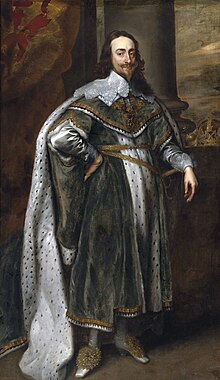
There is a short explanation to this, in fact, as Bishop Creighton of London in 1895 observed: "Had Charles been willing to abandon the Church and give up episcopacy, he might have saved his throne and his life. But on this point he stood firm; for this he died and, by dying, saved it for the future."
If we, as Anglicans, can identify ourselves as being part of one, holy, Catholic and apostolic church today is due to the martyrdom of King Charles, yes indeed, a Martyr and a King.
Under his reign, England oversaw a phase of restoration for both great cathedrals and small churches, with the commission of works of art (something unheard of since the kingdom of Queen Elizabeth I), he both founded charities and promoted the improvement in the liturgy of the English Church, and he tried to restore the episcopacy in Scotland, through the adoption of a Scottish prayer book, with the approval of Archbishop William Laud.
His reign was a brief Golden Age for Anglicanism but also for spiritual and devotional writings of the so-called Caroline Divines which we still appreciate today. His was not a mere passion for aesthetics, but a real sacrifice made for his belief in the Apostolic Church and for the continual presence of Christ at the table of the churches of his kingdom.
He maintained his strong belief until his death, his final words were: "I am the martyr of the people. I have a good cause and a gracious God on my side."
Unfortunately, many still continue to be stuck with the old concept of King Charles I willing to become an absolute monarch - feeding the common speculations on a monarch who was in fact a fair ruler that died for his country. Unfortunately, I believe this story is much more complicated and we must see each action and event in the light of their times.
It is indeed true as many answers state that England had a long parliamentary tradition, but no monarch before Charles had ever witnessed such a time of political and religious unrest and leaving religion and the King’s and Parliament’s actual intentions and beliefs out, the actual cause of the King’s murder, is extremely ludicrous. Before 1534, England had long been Roman Catholic, after the Reformation there was still unrest between Anglicans and Roman Catholics, but the Church of England managed to incorporate the Reformation together with the Church’s Catholic heritage quite wholly. Under Charles I, the Church had become more defined in a High Church faction and a Low Church faction, more Catholic-minded and more Protestant-minded, however it was also a time of extremism and operating as monarch under that context never happened before.
At the time, the Puritans - the most extremist and bigot faction of the Church of England - were growing steadily and the King did foresee that having such people in power could have led to catastrophic consequences on individual freedom, as it was later shown during the Civil War and Oliver Cromwell’s tyrannical rule of the Commonwealth of England. Therefore, King Charles I, a high churchman himself, believing in a balance between the Church’s Catholic and Reformed tradition, appointed William Laud as Archbishop of Canterbury, who reinforced within the Church of England a more balanced policy which truly reflected the via media ethos of Anglicanism. Scripture was equally important to ritual; altars and liturgy were embellished, churches were re-decorated, and theology was made more comprehensive through the Caroline Divines, a group of high church theologians, but especially and most importantly both the King and the Bishops, preached in favour of the importance of the historical episcopacy as opposed to the Puritan’s policy, which was Calvinist and which intended to impose a theocracy on England, as it later occurred, and also on the divine right of kings, which the British Crown still supports in a diluted version. Clearly, this was good not enough for the Puritans, in fact Archbishop Laud was later executed too.
This religious unrest caused both sides, the King and members of Parliament, to arm. Parliament was conspiring against the King, as we know Charles was the first King to march into Parliament to arrest several members himself. This never happened before in the history of England, but it was probably also the only time in English history in which Parliament was completely “un-democratic”, it was simply a mock of a Parliament. The Civil War started, after two years King Charles was captured and he underwent a mock trial, he was deemed to have been willing to put his interests before the nation’s (whereas in fact he believed he was doing the opposite and incidentally it also was), he was sentenced for various crimes which Parliament also committed and finally he was also sentenced to death - he was asked to plead but didn’t, because he truly believed he was doing the best for the country. England became a military, theocratic dictatorship.
On 30 January 1649, the King was beheaded by the Banqueting House in London, his last words were: For the people. And truly I desire their Liberty and Freedom as much as any Body whomsoever. But I must tell you, That their Liberty and Freedom, consists in having of Government; those Laws, by which their Life and their goods may be most their own. It is not for having share in government (Sir) that is nothing pertaining to them. A subject and a sovereign are clean different things, and therefore until they do that, I mean, that you do put the people in that liberty as I say, certainly they will never enjoy themselves. Sirs, It was for this that now I Am come here. If I would have given way to an Arbitrary way, for to have all Laws changed according to the power of the Sword, I needed not to have come here; and therefore, I tell you, (and I pray God it be not laid to your charge) That I Am the Martyr of the People. I go from a corruptible to an incorruptible Crown, where no disturbance can be, no disturbance in the World.
Following his death, England entered a time of religious turmoil called the Commonwealth of England, a 10 years brutal theocracy and tyrannical military dictatorship at the hands of Oliver Cromwell, weary of their mistakes the people of England restored the monarchy in 1660, the King being Charles I’s son: Charles II.
Charles I was the only saint to be canonised by the Church of England, right during the 1660 Restoration, he is seen as the protector of the Church who fought against theocracy and tyranny, a Society of Saint Charles King and Martyr was founded in 1894 to remember him and each January there is a memorial service at the Banqueting House in London to remember the least understood monarch of all time.
I truly believe that as Anglicans we must be thankful for his sacrifice - therefore I truly hope that today your prayers will be devoted to this our great Saint and Martyr.

King of kings and Lord of lords,
whose faithful servant Charles
prayed for his persecutors
and died in the living hope of thine eternal kingdom:
grant us, by thy grace, so to follow his example
that we may love and bless our enemies,
through the intercession of thy Son, our Lord Jesus Christ,
who liveth and reigneth with thee,
in the unity of the Holy Spirit,
one God, now and for ever. Amen.
Feast of the Three Holy Hierarchs: Humility Wisdom & Compassion
C.S. Lewis on the Existence of Fairies
Lewis deals with the longaevi in The Discarded Image, his discussion of the mediaeval mindset as evidenced in literature.
From The Imaginative Conservative
By Fr Dwight Longenecker
C.S. Lewis would most certainly have remembered the interest in fairies from the 1920s, and his fascination with other realms, and with fantasy, myth, legends and folklore would guarantee a continued interest in the possible existence of fairies.

“If you believe in Fairies… clap your hands.” Or so you are encouraged to do when Peter Pan’s friend Tinkerbell dies. J.M Barries’ classic play was written in 1904— which may have primed the pump for an unusual craze: belief in fairies. Fairy mania reached a zenith in 1917 when Frances Griffiths and Elsie Wright, two cousins from Cottingley in Yorkshire, produced photographs of themselves with fairies in their backyard. Sir Arthur Conan Doyle, who nurtured a keen interest in the paranormal, championed the authenticity of the photographs, and by the early 1920s people across England seemed to be clapping their hands for the fairies.
Belief in all sorts of little people was nothing new. There is an interesting passage in the diaries of the Rev. Francis Kilvert, a late Victorian country parson, in which he records a visit to an elderly farm worker in the depths of the Herefordshire countryside. He writes quite openly about the conversation in which the old woman recounted how, as a little girl, she had regularly seen the fairies dancing.
Kilvert was writing in the 1890s about events that would have transpired in the first few decades of the nineteenth century. Kilvert records the conversation without guile—giving the impression that such stories were not uncommon among the rural working classes of the time. Indeed, belief in “the little people” is almost universal across human cultures and times. In Ireland they are the leprechauns, In European folklore they may be called Brownies, Gnomes, Goblins or Pixies. Most primitive cultures have tales of miniature humanoids, and like other indigenous cultures, Native American Tribes have their own names for the little people.
The photographs of the Cottingley fairies were eventually de-bunked by magician and paranormal skeptic James Randi in 1978, and the girls (by then old ladies) admitted to their mischief about ten years later. Despite admitting to having faked the photos, however, Elsie and Frances insisted that they had indeed seen fairies and that the fifth and final photograph was real.
C.S. Lewis would most certainly have remembered the interest in fairies from the 1920s, and his fascination with other realms, and with fantasy, myth, legends and folklore would guarantee a continued interest in the possible existence of fairies. I have been unable to trace any clues that Lewis knew of Kilvert and his diaries, but he certainly knew of that earlier kindred spirit: Herefordshire parson Thomas Traherne, Lewis hiked with Tolkien across the hills of Herefordshire where Kilvert ministered, so he may also have stumbled across similar folktales from the region.
 Lewis treats the subject of fairies in the sixth chapter of his final book The Discarded Image. The book is a detailed description of the cosmology of the medieval period and, as such, is also an extraordinary display of Lewis’ vast erudition. After explaining the medieval understanding of the heavens and planetary systems, Lewis turns to what he calls the Longaevi. He avoids the term “fairies” because it is “tarnished by pantomime and bad children’s books with worse illustrations.” (Probably referring to Barrie’s popular play and Princess Mary’s Gift Book—the book from which Elsie and Frances clipped the pictures they used in their fake photos.)
He took the term Longaevi from Martianus Capella (a fifth-century Neoplatonic philosopher), “who mentions ‘dancing companies of Longaevi who haunt woods, glades and groves, and lakes and springs, and brooks; whose names are Pans, Fauns… satyrs, silvans, nymphs.’”
But what are these creatures and in what sense are they “real”? Lewis suggests that the medieval mind understood them to be inhabitants of a kind of middle realm between the physical and the spiritual regions. After perusing the literature on the subject, Lewis outlines four theories about their nature.
First, they are a “third rational species distinct from angels and men.” He quotes a seventeenth-century writer: “Their nature is middle between Heaven and Hell…. They reign in a third kingdom, having no other judgement or doom to expect forever.” Within this category, Lewis discerns from the writers of antiquity four subsets: a) Nymphs, who are spirits of the waters—human in stature and able to speak; b) Sylphi, spirits of the air who are larger than humans and unable to speak: c) Gnomi, of earth, short and taciturn; and d) Salamandrae or Vulcani creatures of the fire. The Nymphs Lewis identifies with Fairies. The Gnomes are closer to dwarves.
Another medieval writer opines that the Longaevi are demoted angels—a band of spirits who did not totally join with Satan’s rebellion, but who were antagonistic to the Almighty’s reign. They were assigned to a middle realm: a kind of half-existence between angels and men to be relegated to the inferno on doomsday. Some dwell in a middle range of the heavens, some in an in-between earthly realm.
A third theory is that the Longaevi are the dead: ghostly spirits. On death it was supposed that those who did not go to heaven or hell may end up in “fair Elfland”—a middle-earth that is populated with the recent dead or some souls who are thought to be dead but who, in fact, were “taken by the fairies.”
The final opinion is that the Longaevi are demons, and this is the prevailing view from the seventeenth century, as the medieval mindset gave way to the onslaught of both the Protestant Reformation and the subsequent rationalism of the Enlightenment.
Curiously, Lewis’ chapter on the medieval theories about the Longaevi connects with the modern theories on the paranormal by British writer Patrick Harpur. In his book Daemonic Reality, Harpur explores not only the legends of fairies and little people, but also the range of paranormal experiences: encounters with aliens, cryptids, ghosts, and monsters.
Harpur also proposes the existence of a middle realm between earth and heaven. He suggests that the beings that populate this realm are indeed “real” but not real in a scientifically verifiable way. Instead they manifest to the human senses and may even leave traces in the physical realm: a scorch mark from a UFO; a footprint of Bigfoot; a little jacket from a leprechaun. But such beings will never be captured, analyzed, or put in a zoo or museum. According to Harpur, this is because they are creations of the human mind—manifestations of the collective unconscious.
Be that as it may, Lewis concludes his outline of the medieval theories about fairies: “Such were the efforts to find a socket into which the Fairies would fit. No agreement was achieved. As long as the Fairies remained at all they remained elusive.”
In other words, “If you believe in fairies, clap your hands.”
The featured image is “Fairies Looking Through A Gothic Arch” (c. 1864), and is in the public domain, courtesy of Wikimedia Commons. The photograph of the Cottingley Fairies was taken in 1917, and first published in 1920 in The Strand Magazine, and is in the public domain, courtesy of Wikimedia Commons.