This was one of the most popular pilgrimages of the Middle Ages, rivalling Rome and Jerusalem.
From Aleteia
By Daniel Esparza

The feast of St. James is July 25. If you are thinking about walking to Compostela, you should know what most people get wrong before they start.
Most people, when they hear the word Camino, picture the same thing: a dusty track across northern Spain, a scallop shell on a backpack, a cathedral in the rain, and perhaps, Martin Sheen. They are thinking of the Camino Francés — the French Way — the 500-mile route from Saint-Jean-Pied-de-Port across the Pyrenees Mountains to Santiago de Compostela, which has become the default image of what a pilgrimage looks like. It is a beautiful route. It is also one thread in an enormous web.
The Camino de Santiago is not a path. It is a network of pilgrimage routes that has been spreading across Europe since the early Middle Ages, when pilgrims began walking to the tomb of the Apostle James from wherever they happened to live. That is the key fact most first-time pilgrims miss: In the original logic of the Camino, the route begins at your front door. Medieval pilgrims from Paris, from Rome, from Krakow, from Lisbon, from the shores of the Baltic all set out on foot toward Galicia, each on their own path, all converging on the same cathedral. The routes they wore into the ground became the Camino — plural, not singular.
Today those routes are still there, and still walkable. You can begin in Portugal, in France, in Germany, in Switzerland, in Croatia, in Lithuania, in Poland. You can begin in Romania: the Camino de Romania starts in Iași, passes through the Carpathians into Transylvania, and eventually connects to the broader European network heading west. The Council of Europe declared the Camino the first European Cultural Itinerary in 1987 precisely because of this continental reach — it is one of the few living structures that genuinely crosses the whole of Europe, east to west, along routes that have been walked for a thousand years.
The routes you may not know
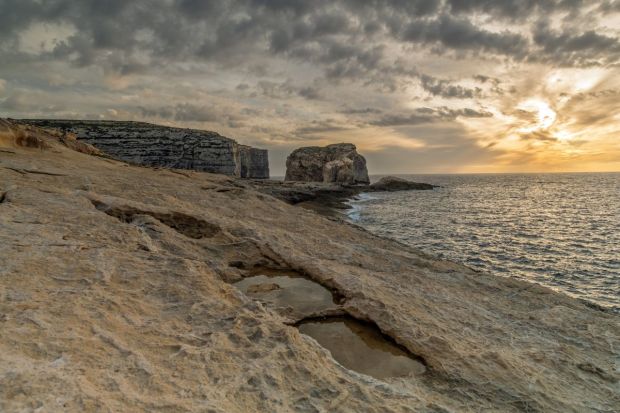
Within Spain and Portugal alone, there are at least 12 recognized routes. The Camino Portugués starts in Lisbon or Porto and follows the Atlantic coast north through Portugal into Galicia — greener, milder, and considerably less crowded than the Francés. The Camino del Norte hugs the Cantabrian coast from the Basque Country westward, with the sea always in view. The Via de la Plata runs the length of Spain from Seville in the south, a route of Roman origins through Extremadura and Castile. The Camino Primitivo — the Original Way — is the oldest recorded route, walked by King Alfonso II of Asturias around 850 AD when he went to venerate the newly discovered tomb of James. The Camino Inglés is the short maritime route traditionally used by pilgrims arriving by sea from Britain and Ireland. There is even a Camino de Gran Canaria in the Canary Islands, three to four days long, for those who want a first experience of pilgrimage walking without committing to weeks on the road. And then there is the Camino Maltés — one of the longest and most unexpected routes in the entire network. Officially launched in 2023, it begins at St. Paul's Grotto in Rabat, Malta — the cave where the Apostle Paul is said to have sheltered after the shipwreck recorded in Acts of the Apostles — and travels 21 miles through the island to Fort St. Angelo in Birgu, where pilgrims board a ferry to Sicily. From there the route continues through Sardinia and on to Barcelona, eventually joining the Camino Francés for the final stretch to Santiago. The full journey covers approximately 3,600 kilometers across four territories and three countries, over land and sea. The connection is not merely geographical: a 17th-century document records Grand Master Alof de Wignacourt himself issuing a safe-passage credential to a hermit from St. Paul's Grotto, authorizing him to walk to Santiago de Compostela. The Camino Maltés, in other words, did not invent a route. It recovered one.
Each route has its own landscape, its own saints, its own shrines, its own character. They are not interchangeable substitutes for the Francés. They are distinct pilgrimages that happen to share a destination.
A word about August
The feast of St. James falls on July 25 — which makes summer the natural season to think about the Camino. But a gentle warning is in order, particularly for the most popular routes. July and August are the hottest and most crowded months, and on the inland sections of the Camino Francés the heat can be genuinely dangerous, with temperatures on the Meseta — the vast central plateau between Burgos and León — regularly exceeding 35°C (95°F) and spiking past 40°C (104°F) in heat waves. Albergues fill by midday, accommodation must be booked weeks in advance, and the contemplative dimension of pilgrimage can be hard to find on the most trafficked sections. If August is your only available window, the coastal routes are your friends: the Camino del Norte and the Portuguese Coastal Way benefit from Atlantic breezes that keep temperatures 8 to 12 degrees cooler than the interior. Early starts — on the road by six — are non-negotiable.
The best months, by most accounts, are May, early June, and September: milder weather, long days, manageable crowds, and the landscape at its most alive. If you are reading this in July and planning for next year, put May in your calendar.
Why go at all?
The feast of St. James is a good moment to ask the question that the Camino has been posing to pilgrims for 12 centuries: Why walk? The answers tend to surprise the people who give them. Many start for fitness or curiosity and arrive at something they were not expecting — a conversation with a stranger that changes their thinking, a morning in a Romanesque church that lands differently than any church has before, a silence on a hillside that turns out to be the thing they most needed. The Camino does not promise this. It only provides the conditions: slowness, repetition, physical effort, and the company of other people walking in the same direction.
The medieval pilgrims who created these routes began at their own front doors because the whole journey was the pilgrimage, not just the stretch inside Spain. That logic is still available to anyone willing to slow down enough to find it.
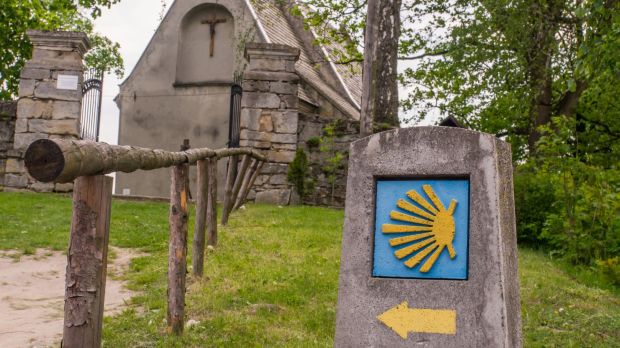
The scallop shell points west. The routes begin almost anywhere.

No comments:
Post a Comment
Comments are subject to deletion if they are not germane. I have no problem with a bit of colourful language, but blasphemy or depraved profanity will not be allowed. Attacks on the Catholic Faith will not be tolerated. Comments will be deleted that are republican (Yanks! Note the lower case 'r'!), attacks on the legitimacy of Pope Leo XIV as the Vicar of Christ, the legitimacy of the House of Windsor or of the claims of the Elder Line of the House of France, or attacks on the legitimacy of any of the currently ruling Houses of Europe.