Paying for Mass Intentions is often misunderstood. The Church is very strict. For instance, if a Priest cannot offer the Mass for some reason, he must pass the intention (and the payment) to another Priest to offer the Mass.
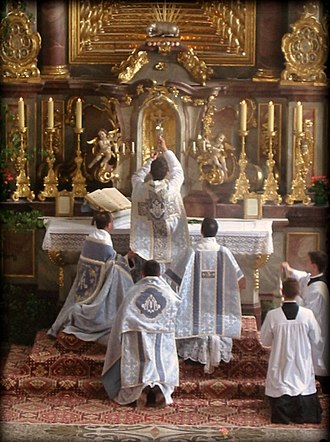
From Aleteia
By Philip Kosloski
Similar to how we are able to intercede for others by our personal prayers, the Church is able to intercede for us through the celebration of the Mass.One part of Catholic culture that is sometimes hard to understand and very often misunderstood is the custom of offering Mass intentions.
When a priest celebrates Mass each day, he offers each celebration of the Eucharist for a particular person, or intention. By doing so he applies special graces from God upon that person or intention.
Similar to how we are able to intercede for others by our personal prayers, the Church is able to intercede for us through the celebration of the Mass. However, since the Eucharist is the "source and summit of the Christian life" the Mass possess a power that our personal prayers do not.
History of Mass intentions
The practice of offering Mass for particular intentions is an ancient one, dating back to the early Church.
Fr. William Saunders explains, "Inscriptions discovered on tombs in Roman catacombs of the second century [give] evidence [for] this practice: for example, the epitaph on the tomb of Abercius (d. 180), Bishop of Hieropolis in Phrygia, begs for prayers for the repose of his soul. Tertullian (c. 200) attested to observing the anniversary of a spouse with prayers and sacrifices, i.e. the Mass."
This tradition is also seen in St. Augustine's Confessions (c. 397), where Monica asks Augustine, "One thing only I ask you, that you remember me at the altar of the Lord."
Canon Law confirms this practice and states, "In accord with the approved practice of the Church, any priest celebrating or concelebrating is permitted to receive an offering to apply the Mass for a specific intention" (Can. 945 §1).
Furthermore, it continues by saying, "The Christian faithful who give an offering to apply the Mass for their intention contribute to the good of the Church and by that offering share its concern to support its ministers and works" (945 §2).
What this refers to is a longstanding practice in the Church of offering a specified amount of money to the Church for a particular intention offered by the priest. Upon hearing this practice many people might be tempted to think it is "simony," the selling of sacred things for money.
However, the Baltimore Catechism explains, "It is not simony, or the buying of a sacred thing, to offer the priest money for saying Mass for our intention, because the priest does not take the money for the Mass itself, but for the purpose of supplying the things necessary for Mass and for his own support."
While it is true that this custom has been abused in the past, the Church lays out specific rules regarding the money paid for Mass intentions. Each council of bishops determines the amount acceptable for the region, but the priest will offer a Mass for an intention even if someone doesn't have the money for it. In many places the cost of a Mass intention is as low as $10.
The important part is to remember that you are not paying for the graces from God (which are of infinite value and can not be paid for), but for the material things that are involved with celebrating that particular Mass. With that in mind it makes much more sense and is not something that should cause scandal.
Pope Paul VI said, "The Mass is the most perfect form of prayer!" It has immense power and countless miracles and conversions have occurred throughout the centuries by offering Masses for a specific intention or person. Mass intentions are a great treasure of the Church and have a spiritual weight that is incalculable.

No comments:
Post a Comment
Comments are subject to deletion if they are not germane. I have no problem with a bit of colourful language, but blasphemy or depraved profanity will not be allowed. Attacks on the Catholic Faith will not be tolerated. Comments will be deleted that are republican (Yanks! Note the lower case 'r'!), attacks on the legitimacy of Pope Leo XIV as the Vicar of Christ, the legitimacy of the House of Windsor or of the claims of the Elder Line of the House of France, or attacks on the legitimacy of any of the currently ruling Houses of Europe.