01 September 2026

St Giles, Abbot & Twelve Brothers, Martyrs

From Dom Prosper Guéranger's Liturgical Year:
“A simple and upright man, and fearing God, and avoiding evil:” (Job 1:8) such is the description of the just man in the lessons of the night Office for the time, and it is the portrait of the holy monk whom the Church offers us today for our admiration, our imitation, and our devotion. Fleeing from men in order to find God, he quitted his native land, where his rank, and still more his virtues, prevented him from being unknown. He wandered from the coasts of Greece to the borders of the Rhone, and stopped at length in the forests of Septimania, where he seemed to have found his desired solitude. There for three years he dwelt in a cave hidden among the brambles, spending his time in giving thanks to God and praying for the salvation of the people. (Acts S. Ægidii) He lived on herbs and water, until our Lord sent him a hind to nourish him with her milk. But his little friend was soon to betray him. One day, hard pressed by the hounds, she fled in terror to the saint, followed by the royal huntsmen. Safe with her protector her fears were calmed; but an arrow, aimed at her, pierced Saint Giles’s hand, which was never afterwards healed; for he refused to have it dressed, in order that he might bear the pain of it for the rest of his life. But a greater trial awaited him: his retreat having been thus discovered, a monastery soon rose upon the spot, and he was forced to become its abbot; moreover he worked so many miracles that crowds came to see him. Farewell to the silence and oblivion of his beloved forest!
After the death of the servant of God, the place became more and more frequented. From north and east and south pilgrims poured in, to offer up their prayers and fulfill their vows at the tomb of one, who soon became known as one of the most helpful saints in heaven (St. Giles is the only confessor in the group of fourteen saints known as helpers, whose names are given in ancient missals in the following order: George, Blase, Erasmus, Pantaleon, Vitus, Christopher, Giles, Achatus or Acathius, Denis, Cyriacus, Eustace, Catharine, Margaret, and Barbara. He was even reckoned among the five privileged saints, vis. Denis, George, Christopher, Blase, and Giles, honored in a more special manner in certain places). Among the crowds came Pontiffs (Urban II, who consecrated the altar of the basilica where the holy body rested, Gelasius II, Callistus II, Innocent II; Clement IV was born at St. Giles’s; Julius II had held the abbey in commendam) and kings (Boleslas III of Poland, and St. Louis of France). But the most numerous classes of visitors to the holy relics were soldiers and little children, the former equipped for the crusades, the latter borne in their mothers’ arms; all confiding in the humble, gentle monk who, at the risk of his life, calmed the terror of the poor little hind; all imploring his assistance against the fear which even the bravest may feel in the hour of battle, or the fright that disturbs the little one in his cradle. St. Giles’s ranked as one of the three great pilgrimages of the west; the other two being Rome and Compostello.
Over the relics of the saint was raised a colossal church, which has been described as “the most perfect type of the Byzantine style when at the height of its splendor.” (Mérimée, Notess d’un voyage dans le midi de la France.) Around it a town of thirty thousand households has sprung up, where formerly there was but a desert. The most illustrious of the powerful Counts of Toulouse gave the preference over his other titles to the one he held from this noble city; he would be known to posterity as Raymund of St. Giles. A hundred years later, Raymund VI did penance at the threshold of the celebrated basilica, for his connivance with heresy; our saint, who had just given hospitality to Peter of Castelnau for his last resting place, opened his gates for the reconciliation of the martyr’s presumed murderer.
We should never end, were we to enumerate the churches, parishes, abbeys, and altars consecrated to St. Giles, in all parts of Christendom, which are so many sources of grace, and new centers for pilgrimages. Spain, Italy, Belgium, Germany, Hungary, Bavaria, Poland, rival France in this respect. England is second to no country in the world; she has one hundred and forty-six sanctuaries dedicated to the pious monk, and even the established church continues to honor him.
Let us hasten to give the short legend that remains to the holy abbot since the sixteenth century, when his feast ceased to be celebrated with nine lessons. Most of his precious relics are preserved in the rich treasury of the church of Saint-Sernin at Toulouse; Saint-Gilles-du-Gard, which had been obliged to give them up in order to save them from the sacrilegious hands of the armed heretics, had, in 1865, the consolation of discovering his original tomb.
Giles was an Athenian, of royal race, who from his childhood applied him so earnestly to the study of divine things and to works of charity, that he seemed to care for nothing else. On his parents’ death he distributed his whole fortune among the poor; even stripping himself of his own garment in order to clothe a poor sick man, who was cured as soon as he put it on. Many other miracles soon made his name so famous, that for few of renown he fled to St. Caesarius at Arles. After two years Giles departed thence and retired into a desert, where he lived a life of wonderful holiness: his only food being the roots of herbs and the milk of a hind who came to him at fixed times. One day the hind being pursued by the royal huntsmen took refuge in his cave. Upon his discovery of the holy man, the king of France begged Giles to allow a monastery to be built on the site of the cave. At the king’s desire he was obliged, against his will, to undertake the government of this monastery; and after having, for several years, discharged that office with much piety and prudence, he passed away to heaven.
“Go to my servant … and offer for yourselves a holocaust: and my servant … shall pray for you: his face I will accept, that folly be not imputed to you.” (Job 42:8) This word is unceasingly fulfilled, O blessed Giles, in the innumerable sanctuaries where thou art honored. Make use of thy prerogatives for our benefit; hear our prayers, for the glory of Him who has crowned thy humility. In return for the beautiful peace thou didst ever preserve in thy soul, thou now hast power over the countless troubles which disturb our miserable existence, from the cradle even to the tomb. Thou aidest mothers to drive away from their babes the nightly phantoms raised by the enemy of the innocents; thou preservest the little ones from the terrible maladies to which childhood is liable. Thou watchest over the youth, to secure his good morals; and givest him the fear of God, which will make him a courageous and upright man. Thou makest him brave and calm in the midst of dangers, whether in thunderstorms or on the field of battle. Above all, thou preservest thy client from the most cowardly of all fears, that of human respect; and from the saddest kind of shame, that which would withhold him from acknowledging his sins in the sacred tribunal of Penance. The cares and disappointments of middle life do not disturb the peace of him who trusts in thee; old age has no anxious future for him; he falls into his last sleep, in the bosom of God, as in infancy he fell asleep in his mother’s arms. Deign to accept us among thy devout clients, and disappoint us not in our expectations.
=======

Beneventum offers to our homage twelve brothers martyrs, natives of Africa, who suffered in diverse places, but whose bodies she glories in possession. Let us unite in the prayer which the Church offers to God, in honor of this admirable group of heroes.
COLLECT
May the fraternal crown of thy martyrs rejoice us, O Lord, and may it procure for our faith increase of virtue, and console us with multiplied intercession. Through our Lord, etc.
We must not omit to mention briefly that with the Greeks this day is the first of the Calendar; they celebrate it as a feast, called of the Indiction, or of the new year.
St Giles & the Twelve Holy Brothers | Anti-Social for Christ
A sermon for today. Please remember to say 3 Hail Marys for the Priest.
Twelve Bothers, Martyrs

FELIX, Donatus, Arontius, Honoratus, Fortunatus, Sabinianus, Septimius, Januarius, Felix, Vitalis, Satyrus, and Repositus, were natives of Adrumetum in Africa, and after suffering grievous torments for the faith in that city, were sent into Italy, where they finished their glorious martyrdom at Benevento, in the persecution of Valerian in 258, or according to others in that of Dioclesian. See Baronius Annot. in Martyr, Rom. and Georgi Annot. in Adonis Martyrol.
St Giles, Abbot

From Fr Alban Butler's Lives of the Saints:
The Life of St. Giles was compiled by one who collected whatever memorials he could amass together without discernment, and who confounded the saint with the abbot of Arles of the same name. See Mabillon, Annal. Ben. t. 3, p. 433, et. Sæc. 3, Bened. in Proleg. And especially the learned dissertation and remarks of Stilting the Bollandist, Sept t. 1, p. 284. Also the Maurist monks, Hist. Littér. de la France, t. 10, p. 60.
ABOUT THE END OF THE SEVENTH CENTURY
THIS saint, whose name has been held in great veneration for several ages in France and England, is said to have been an Athenian by birth, and of noble extraction. His extraordinary piety and learning drew the admiration of the world upon him in such a manner, that it was impossible for him to enjoy in his own country that obscurity and retirement which was the chief object of his desires on earth; and he dreaded the sunshine of temporal prosperity and the applause of men, as fraught with dangerous poison, which easily insinuates itself into the heart. Therefore, leaving his own country, he sailed to France, and chose a hermitage first in the open deserts near the mouth of the Rhone, afterward nigh the river Gard, and lastly, in a forest in the diocess of Nismes. He passed many years in this close solitude, using no other subsistence than wild herbs or roots, and water, conversing only with God, and living rather like an angel than a man; so perfectly was he disengaged from earthly cares, and with so great purity of affections, with such constancy and ardor was his soul employed in the exercises of heavenly contemplation. His historian relates, that he was for some time nourished with the milk of a hind in the forest, and that a certain prince discovered him in hunting in those woods, by pursuing the chase of that hind to his hermitage, where the beast had sought for shelter at his feet. The reputation of the sanctity of this holy hermit was much increased by many miracles which he wrought, and which rendered his name famous throughout all France. Some, by mistake, have confounded this saint with one Giles, whom St. Cæsarius made abbot of a monastery near the walls of Arles, and whom he sent to Rome with his secretary Messianus in 514, to pope Symma chus, to obtain of him a confirmation of the privileges of the metropolitical church of Arles. But the Bollandists prove very well, in a long and learned dissertation, that the great St. Giles lived only in the end of the seventh, and beginning of the eighth century, not in the sixth; and that the French were at that time masters of the country about Nismes. Messianus and Stephen, in the second book of the life of St. Cæsarius, inform us, that the French took Arles in 541, the year before the death of St. Cæsarius; after which the Goths yielded up to them that whole province. St. Giles was highly esteemed by the French king; but could not be prevailed upon to forsake his solitude. He, however, admitted several disciples, and settled excellent discipline in the monastery of which he was the founder, and which, in succeeding ages, became a flourishing abbey of the Benedictin Order, though it has been long since converted into a collegiate church of canons. A considerable town was built about it, called St. Giles’s, which was famous in the wars of the Albigenses. This saint is commemorated in the Martyrologies of Bede, Ado, and others; and is the patron of many churches in France, Germany, Poland, &c.
Entire constant solitude, is a state which few are able to bear with unabated fervor in the uninterrupted exercises of arduous penance and contemplation. A man in solitude, whom sloth often warps, or whose conversation is not always with God and his holy angels, is his own most dangerous tempter and worst company. Aristotle having defined man a social creature,* or one born for society, added, that he who lives alone must either be a god or a beast. But that philosopher was unacquainted with the happiness of religious contemplation. The ancient Christian proverb is more exact, that he who lives always alone is either an angel or a devil. This state therefore is not without snares and dangers; nor does a hermitage necessarily make a saint. But when a person, by an extraordinary call, embraces it with fervor, and strenuously applies himself to all the exercises of holy retirement and penance, such a one being disengaged in his affections from all earthly ties, exchanges the society of a vain and sinful world for that of God and holy spirits, and the contagious commerce of foolish toys for the uninterrupted glorious employment of the angels, and has certainly attained the highest degree of happiness under heaven; this state is its novitiate, and in some degree an anticipation of its eternal sweet and noble employ. He who accompanies these most fervent exercises of contemplation and divine love with zealous and undaunted endeavors to conduct others to the same glorious term with himself, shall be truly great in the kingdom of heaven.1
Collect of the Holy Twelve Brothers, Martyrs ~ Indulgenced on the Saints' Feast
According to the Apostolic Penitentiary, a partial indulgence is granted to those who, on the feast of any Saint, recite in his honour the oration of the Missal or any other approved by legitimate Authority.
.webp)
V. O Lord, hear my prayer.
R. And let my cry come unto thee.
Let us pray.
Lord, let the crown of the Brethren, Thy Martyrs rejoice us, and their example give nerve to our faith, and their prayers in many ways strengthen us.
Let us pray.
Lord, let the crown of the Brethren, Thy Martyrs rejoice us, and their example give nerve to our faith, and their prayers in many ways strengthen us.
Through Jesus Christ, Thy Son our Lord, Who liveth and reigneth with Thee, in the unity of the Holy Ghost, God, world without end.
R. Amen.
Collect of St Giles the Hermit, Abbot & Confessor ~ Indulgenced on the Saint's Feast
According to the Apostolic Penitentiary, a partial indulgence is granted to those who, on the feast of any Saint, recite in his honour the oration of the Missal or any other approved by legitimate Authority.

V. O Lord, hear my prayer.
R. And let my cry come unto thee.
Let us pray.
Let us pray.
May the pleading of blessed Giles, the Abbot, make us acceptable unto Thee, O Lord, we pray; that what we may not have through any merits of ours, we may gain by means of his patronage.
Through Jesus Christ, Thy Son our Lord, Who liveth and reigneth with Thee, in the unity of the Holy Ghost, God, world without end.
R. Amen.
31 August 2026
Happy New Year AM 7535!!! Срећна Нова Година AM 7535!!!
 Happy New Year's Day, A.M. 7535!!!
No, I haven't gone mad. In the Byzantine Calendar, used liturgically in the Catholic Churches of the Byzantine Rite and the Eastern Orthodox (except for the Old Calendarists, for whom it's on the fourteenth), today is the anniversary of the Creation 7535 years ago.
Whilst the West uses A.D., anno Domini, In the Year of Our Lord, the East uses A.M., anno mundi, In the Year of the World.
The Byzantine Catholic Troparion and Kontakion for the New Year:
Troparion — Tone 2
O Creator of the universe, / Thou didst appoint times by Thy power; / bless the crown of this year with Thy goodness, O Lord. / Preserve in safety Thy rulers and cities: / and through the intercessions of the Theotokos, save us!
Kontakion — Tone 4
O Creator and Master of time and the ages, / Triune and Merciful God of all: / grant blessings for the course of this year, / and in Thy boundless mercy save those who worship Thee and cry out in fear: / “O Savior, grant blessings to all mankind!”

Let the festivities begin!
Jesuit Priest Says Pope Benedict Was Wrong About Islam
Would Fr Körner like to explain to the myriads of Christians martyred by the Muslims exactly how Pope Benedict was wrong?
_2%20(2).jpg)
From LifeSiteNews
By Gaetano Masciullo
Father Felix Körner called Pope Benedict XVI’s characterization of Islam as irrational ‘a factual error.’
A Jesuit theologian has accused Pope Benedict XVI of a “factual error” in his 2006 Regensburg address, claiming the pope mischaracterized Islam as irrational and misjudged how deeply his words would provoke Muslims worldwide.
In an interview published August 27 with the German Catholic News Agency, Katholisch.de reported, Father Felix Körner, S.J. – a priest and Islamic studies scholar – argued that Benedict characterized Islam as irrational and violent during his 2006 address at the University of Regensburg, and that this “was a factual error. But that error then brought about something good,”
According to the Jesuit, the former pope underestimated the worldwide impact his words would have and the extent to which they could be perceived by Muslims as provocative.
Körner rejected the idea that Islamic theology can generally be described as irrational, arguing instead that it is “extremely rational.” However, Katholisch.de recalled that Benedict’s address prompted international outrage and, in some places, violent Muslim demonstrations.
At the same time, Körner argued that the violence following the speech led to a “more intensive dialogue” between Christians and Muslims, according to the German outlet. Islamic scholars initially responded to Benedict with a letter. When that letter received no answer, a broader initiative known as “A Common Word” followed in 2007, declaring common ground between Islam and Christianity and addressed to numerous Christian leaders. According to Körner, that initiative contributed to the creation of the Catholic-Islamic Forum.
Catholic and Muslim theologians, Körner claims, have established that both traditions refer to the same God as the creator and “consummator” of the world.
Important differences, however, remain. Körner identified the status of Muhammad as one of the continuing points of dispute between Catholicism and Islam. He specifically warned that it is “unwise” for Catholics to recognize Muhammad as a prophet. According to the Jesuit theologian, acknowledging Muhammad as a prophet would also require accepting his proclamation as the word of God. Such a position, he said, would mean that Jesus Christ could no longer be understood as “the decisive turning point in history.”
In his 2006 address, properly titled “Faith, Reason and the University: Memories and Reflections,” Benedict argued that Christian faith is inseparable from logos – reason, intelligibility, and the divine Word – and warned that both Christianity and modern culture suffer when reason is confined to what can be empirically measured. He defended the historic synthesis between biblical faith and philosophical reasoning, rejecting modern attempts to “de-Hellenize” Christianity.
The controversy centered around Benedict quoting a 14th century dialogue between Byzantine Emperor Manuel II Palaeologus and a Persian scholar, including the emperor’s remark that Muhammad brought “things only evil and inhuman,” such as the command to spread faith by the sword.
Benedict later insisted he cited the passage to illustrate that violence contradicts the nature of God, adding that the emperor’s comments did not reflect his own view of Islam or the Koran. Nevertheless, many Muslims perceived the quotation as an endorsement of an anti-Islamic judgment, sparking protests worldwide.
Among the most controversial outcomes of Catholic-Islamic dialogue stands the 2019 Document on Human Fraternity, signed by Pope Francis – himself a Jesuit – and the Grand Imam of al-Azhar in Abu Dhabi. The declaration calls for universal brotherhood, mutual respect among religions, and defines all religions as “willed by God.”
“Consecration Day”
Thank God this is just fiction, at least for now! Of course, there are already "philosophers" arguing that "developed personality" equals personhood.
From The Imaginative Conservative
By William Merriman
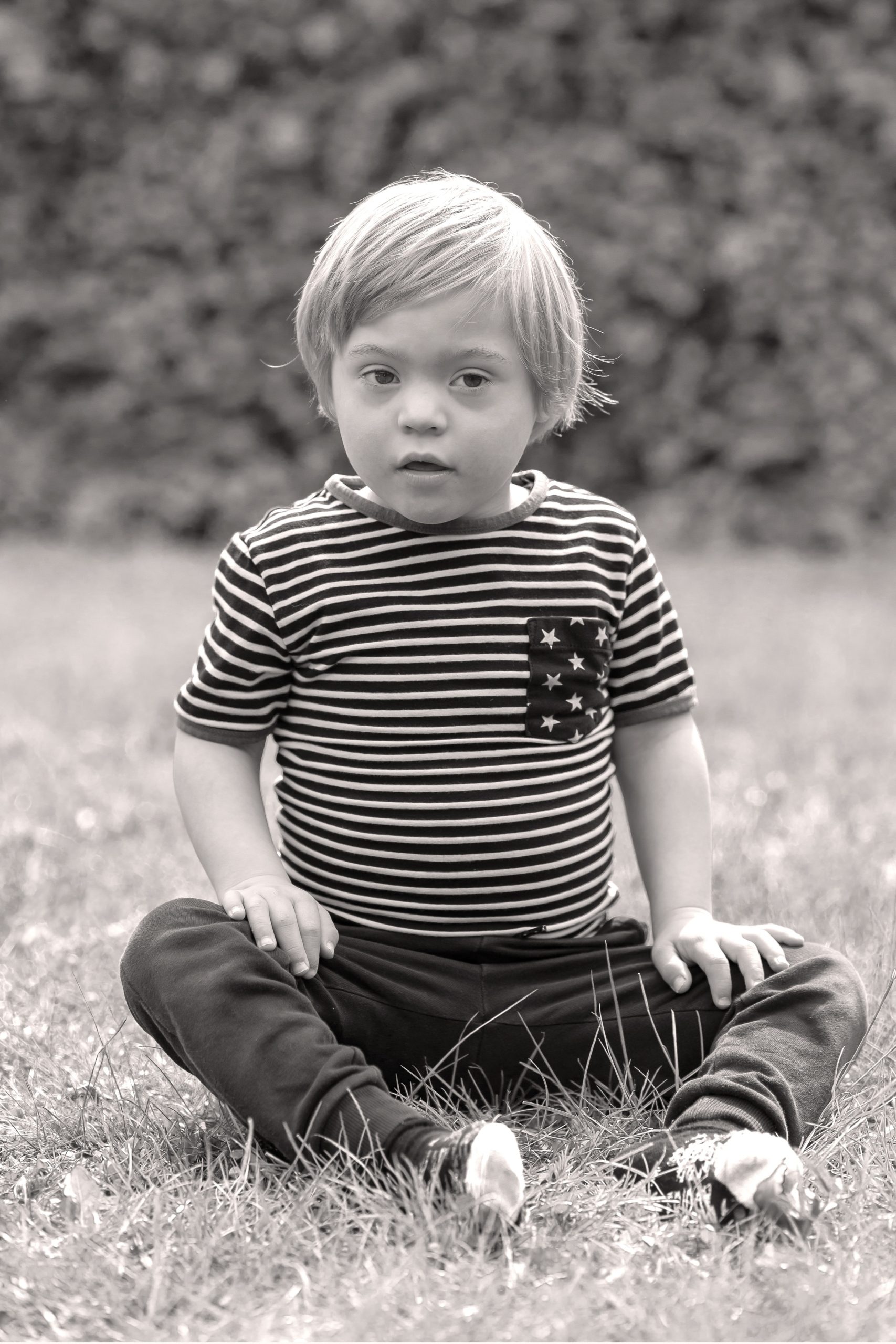 The door slammed shut. The doors could close themselves with a button, but she slammed it shut anyway. She walked around to the driver’s side of the door. The boy sat in the backseat with his seatbelt so tight that he had to squirm his belly to loosen it up as he slobbered on a strawberry jelly-filled donut that she had given him. Today was his birthday, and he was eating his only present. She opened the door and sat in the car, which started the moment she fastened her own seatbelt.
“Where are you traveling today, Bel?” asked the automated voice with a British accent.
Without hesitation and without blinking her glacier blue eyes, she responded, “Mt. Moriah Women’s Healthcare Clinic”
“Excellent. Expected travel time is ten minutes. Would you like me to play your personalized playlist?”
Her brows furrowed in deep thought and did not react to the question. Her eyes and ears were preoccupied. She didn’t respond. The car backed out of the driveway and began its journey uphill from her home in the city to the suburbs where the clinic was located. She did not have to keep her eyes on the road or her hands on the wheel, but she maintained her unchanging concentration anyway. She had business to attend to.
The boy was eight years old today. He sat in his chair licking his donut as if it were ice cream. Really, It seemed like the donut was licking him. Not a bite had been taken, and the sticky glaze smeared all over his plump cheeks. His eyes were small and beady and glowed with the same glacier blue as his mother’s, only paler and not quite as deep, yet somehow more cheerful. They hid behind thick glasses with a thick black frame. His chin likewise was hid behind a generous roll of fat that gave his head the shape of an oval, but, regardless, he was cute. Many of Bel’s former friends used to say so. He was the cutest Down Syndrome child they had ever seen, and they were telling the truth, not because of the boy and his looks but because they had never seen another Down Syndrome child before. The boy was one of the last of his kind. He wore a striped shirt with a collar (only one or two of the buttons were fastened, not with their proper partner, and the collar was limp from chewing and saliva), khaki cargo shorts that hid a few crayons and race cars, and Velcro sneakers. He couldn’t tie his shoes, but he enjoyed the crackling sound of the Velcro very much and could amuse himself for sometime with the shoes. Today was not only his birthday. It was his consecration day. “Momma, where we going today?” He asked as he remembered something very important. “And today is my birthday, Momma!” He declared triumphantly, waving the donut in his hand.
“We have an appointment. Today is your consecration day,” she responded stoically without inflection or emphasis—without a beat.
“And I am Bel, and you are boy,” her voice lilted then hammered boy this time. “Bel and boy.”
“Ok, Momma. Bel and boy,” he echoed with the same cadence and stress on boy.
She took her eyes off the road and turned around, “Bel. My name is Bel. That is what you call me.”
“I’m sorry, Momma.”
Her eyes were ice. An immovable, unavoidable glacier that the boy’s eyes hit, sinking them, only the water didn’t rush in. They poured out.
“I’m su, su, su, sorry Ma…Bella…Bel,” he wheezed between gasps where he drew a breath. “Buh, buh, buh, Bel, el, el, and buh, buh, buh, boy.” He gushed as his face turned red and his throat gurgled.
Her machine gun turret eyes swiveled to the left, and her frame followed. She fixed her gaze ahead and pursed her red lips shut. She had blond hair and had always been the most beautiful person that she knew, that was until she became pregnant. Her swollen belly gorged.
Her unblemished face was marked with acne. The pills took the nausea away but not the hatred. She hated the boy the first time she felt him move. Like a damned idiot, she passed on genetic testing, and the doctors missed the obvious signs. Her heart had just began to turn towards the boy in childbirth, but when they handed her a boy with droopy eyes, she hated him all over again. She should have just had the abortion done like her mother had suggested, but she did not listen. The boy was born now, and she would have to wait eight years. She wept.
That day had arrived.
“Mt. Moriah Women’s Healthcare Clinic: Destination arrived,” announced the cheery voice of her car.
She didn’t move her eyes.
“We’re here,” she said with an icy, shrill voice.
Recovering from his sobs with a hoarse throat, the boy still found a way to cheer, as the memory that today was his birthday came flooding back to him.
“It’s my birthday, Ma…Bel! And my, co…conc…concer…”
“Your consecration day,” she snapped as she unfastened her seat belt.
“What’s that again?” The boy asked.
“How many times do I have to tell you? It’s when I choose whether you stay with me or leave.”
“Momma, I don’t wanna leave you. I love you.”
“Do not say that word. I told you never to say that word when talking to me. And today, you are leaving me,” she paused. “Some kind women are going to take care of you.”
The boy began to cry again. He shed the kind of hot tears that are only cried once or twice in a lifetime.
“Momma…Bel, you don’t want to choose me?”
Bel said nothing. She got out of the car and walked over to his door. The door opened on its own, and there was the boy drenched in tears, snot, and jelly donut. Bel cursed and wiped his face so hard he began to cry again. When he was clean enough, she unbuckled the boy, but as he was getting out of the car, he slipped and fell. She cursed again, picked him up, and walked him into the clinic.
The place was sterile and glowing with fluorescent, pale light. A woman sat at the front desk with short, curled, red hair and dimples in her cheeks and smiled softly—revealing perfect, white teeth. She asked in a lovely cadence for a name and appointment time.
“Bel ______, March 25th, 2039, 12 PM”
The red-haired woman said, “Oh, it’s your son’s consecration day. Congratulations! I hope you have a great day of celebration planned.” She bent down and selected a paper crown that is given to all the children on their consecration day. When she looked back up from the desk, she saw the boy, and her countenance quickly changed, as did the tone of her voice.
“Oh, I am terribly sorry, Ms. _______. You know, eight years really is too long to wait.
They really should make exceptions when the child is, well, you know…”
Her dark green eyes fell on the boy.
“That’s the truth. I can’t imagine how hard it’s been for you. I am glad we can help you. Please just sign this, and then you can take a seat. The doctor will be right with you.”
“Ooooh,” said the boy. “Can I have that?” His thick finger stretched out to the crown.
“It’s fine,” muttered Bel.
The boy squealed with glee, took the crown, and wandered off, as Bel and the redhaired woman continued to talk. When Bel eventually turned around, the boy was playing with a toy car on the hard, white, tiled floor. Bel sat down and pulled out her phone. Minutes passed, and when she looked up, the boy, wearing his crown, was eating the jelly donut, now falling apart and falling all over him and on the floor. His shirt had a scarlet stain on it, and he had a wide, joyful grin on his face.
She grabbed him by the arm and led him forcefully to the bathroom. His arms were wet and slimy. She lost her grip, and he slipped from her arms and fell to the ground. He let out a cry. She dragged him. She snatched what was left of the donut from his hand and threw it into the trash. He began to sob all over again, and his pudgy, little body squirmed and shook and writhed on the floor.
“But Momma, that’s my birthday d…d…donut…”
“How did you get that in here?” She snapped.
“I…I…I had it in my pocket, Ma…Bel. It’s my birthday, and I wanted to save it.”
She pressed his face hard with a wet paper towel as he continued to cry. He fell again. She jerked him up, and with a fierce grip on his arm, she led him back out to the lobby. When she finally sat back down, she noticed that she had dark, red jelly in between her fingers.
“Ms. _______”
“Finally,” she muttered, exhausted.
Bel stood up, seized the back of the boy’s shirt, and led him through the door.
They walked the hallway to their room, and when they entered it, she began to take off his clothes. He didn’t fight her this time. She removed his jelly-stained shirt. He unvelcroed his shoes one last time, and she took off his cargo shorts and put a hospital gown on him.
“Buh…Buh…Bel,” he stammered. “Can I have my car?”
“No,” she said quickly.
They waited in silence for a few moments, sitting opposite each other. She did not look at him.
“But it’s my birthday…”
At that moment, a distinguished middle-aged woman came in with short black hair and gold-rimmed glassed wearing a doctor’s jacket that read, “J. Priestly. M.D. Women’s Healthcare Specialist.”
“Good day, Ms. _______. Just to confirm. Today is your son’s consecration day, and you will be leaving him with us. Is that correct?
“Yes.”
“Excellent. I am so proud of you, and I wish you the greatest happiness. I hope you can celebrate this evening. Would you like to walk him down with us?”
“No.”
“You may come with me then,” said the doctor, turning to the boy.
Bel did not look at the boy. Her eyes were frozen on the floor. Then she felt something warm, soft, and wet touch her face, and with a shock, her whole body shot back. Her eyes met the boy’s…He had kissed her. Then he reached out his arms and gently hugged her. Bel did not react. Then he turned and took the hand of the doctor and left the room.
Bel stood up, washed the jelly off of her hands, and walked out of the door.
………..
The car pulled into the driveway, and she sat for a moment. From her red-laced lips came a sigh, partly natural but mixed with a hint of force, as if her body were trying to convince her soul that all was well. As she unfastened her seat belt, she turned and saw part of the strawberry jelly donut that had been left crushed and smeared and squished over the tan interior carpet.
She cursed and wept bitterly as the tears left her melting eyes and burned down her florid cheeks.
No matter how hard she cleaned it, the spot would never come out clean.
___________
The featured image is courtesy of Wikimedia Commons.
Bishop Challoner's Meditations ~ September 1st

ON THE EIGHT BEATITUDES, ST. MATT. V.
Consider first, how the Son of God, the eternal wisdom of the father, being come down from heaven to be our father, our light, and our guide, in order to reclaim us from all our errors, to dispel our darkness, to redress all our evils, and to conduct us into the way of truth and everlasting happiness, opened his heavenly school for these purposes by his divine sermon upon the mount; in the beginning of which he has laid down in a few words the principal maxims of true wisdom and all the fundamentals of Christian morality comprised in what we commonly call the eight beatitudes. Christians, we all desire to be happy for ever; and behold here the wisdom of God, which can neither deceive nor be deceived, declares to us in clear and distinct terms what it is that is to make us happy here and to conduct us safe to a happiness that shall never end. O let us embrace, then, these blessed lessons! Who would not study them well since the learning of them is to make us wise indeed, and to bring us infallibly to the very source of all wisdom and happiness - even to an eternal union with God himself? O heavenly master, who would not frequent thy divine school since, in the very first entrance into it, thou thus directest us into a plain and easy way to eternal bliss?
Consider 2ndly, that the ancient philosophers, with all their pretensions to wisdom, were strangely in the dark with regard to man's true happiness, his last end, and his sovereign good, about which they ran into many errors; and not one of them all ever came near the truth. And, as they knew not the end, so were they also strangers to the true means that were to bring us to this end. They never once imagined that to be poor in spirit, to be meek, to morn, to suffer persecution, & c., was the way to happiness, much less did they suspect that such as these alone were actually happy. This was a doctrine never heard of in their schools. This was a lesson that was to be taught by the Son of God. This truth he brought down with him from heaven, and delivered to his disciples in his first divine sermon. O my soul, let us embrace with all our affections these divine truths, taught us by so great a master; let us be practically convinced of them, and conform ourselves to them in the whole conduct of our lives.
Consider 3rdly, how miserable are all the children of Babylon, that is, all poor deluded worldlings, who under the name of Christians, whilst they profess themselves followers and disciples of this divine master, take no notice of these lessons which he came from heaven to teach, but live on in an affected ignorance of them; so as to apprehend all those to be miserable whom he pronounces blessed, and those alone to be happy, who wallow in riches and sensual pleasures, whom he declares to be miserable, and against whom he pronounces his woe. And do such people as these believe the gospel indeed? whilst they pretend to seek for happiness in the very way which (if the gospel be true) must needs betray them into many errors, labours, and sorrows here, and shortly conduct them into endless misery. O let us at least be more wise! Let us open our eyes to this great light, which is come down from heaven, to shine upon them that before sat in darkness and in the shadow of death. Let us believe and adhere to this great teacher, who has the words of eternal life. Let us follow him and we shall not fail, under his conduct, to find the true way to solid happiness and eternal life.
Conclude to be ever thankful to the Son of God for all these great gospel truths which he has brought us down from heaven, in order to set loose our souls from the earth, and so to carry us up to heaven. O! if we desire to fly up to this happy region of pure and immortal joys, it must be with the wings of these virtues that are recommended to us in these eight beatitudes.
1 September, Antonio, Cardinal Bacci: Meditations For Each Day
.jpg)
The Problem of Evil1. In his second letter to the Thessalonians, the Apostle Paul speaks of the Anti-Christ, “the man of sin… the son of perdition, who opposes and is exalted above all that is called God…” “Already,” he says, “the mystery of iniquity is at work.” (Cf. 2 Thess. 2:3-7) From the beginning of the Church’s history until the present time it has always been the same.
There always have been and always will be men who do evil not from human weakness, but from motives of malice so diabolical as to present something of a mystery to us. These can be called Anti-Christ because they seem to be incarnations of the devil, the spirit of iniquity. They delight in spreading error, in corrupting minds, and in persecuting the Church. They are steeped in all kinds of baseness and nothing pleases them better than to succeed in inducing the young and the innocent to follow them in their sinful ways. For this purpose they employ all the advantages which modern technical progress has to offer – the press, the cinema, the radio, and television. In short, they use God’s gifts in their commercialisation of sin in order to draw souls away from Him.
The realisation of this terrifying fact provokes two questions. (1) How can such evil be permitted by God, Who made man for Himself and redeemed him with the Blood of His only-begotten Son? (2) What steps can we take to control this alarming and universal deluge of evil?
2. St. Augustine answers the first question by pointing out that the infinite and good God created us without any assistance from ourselves, but does not will to save us without our cooperation since He has endowed us with the gift of liberty. Moreover, He prefers to draw good from evil rather than to prevent the evil itself. We must answer the second question ourselves, remembering that we have a serious obligation to combat evil in ourselves and in our fellow-men. What have we done up to now and what do we propose to do in the future?
3. According to St. Augustine, great good can come from the evil which God permits. In the first place, God displays His infinite goodness and mercy. Even though He permits us to offend Him out of respect for our human liberty, He is always ready to forgive us, even as He forgave the penitent thief. In the second place, by permitting evil God gives the good an opportunity of practicing virtue, especially the virtue of patience. If there were no persecutors, there would be no martyrs and the Church would be deprived of the glory which makes her most like her founder, Jesus Christ. Finally, each of us has a particular duty to fulfil in resisting the onslaught of evil. As followers and soldiers of Christ, we cannot remain passive. The invasion by the forces of evil demands a counter-attack by the forces of good in defense of the faith and of the Church. As Christians, we are the sons of martyrs. We must not refuse, therefore, to make our lives a continuous martyrdom for the triumph of goodness in ourselves and in others. The faithful exercise of virtue and of the apostolate is often a form of martyrdom.
Eastern Rite ~ Feast of 1 September AM 7535
Today is the Beginning of the Indiction, that is, the New Year, the Commemoration of Our Holy Father Symeon the Stylite and His Mother Martha, and the Synaxis of the Most Holy Mother of God of Miasenes.
The first day of the Church New Year is also called the beginning of the Indiction. The term Indiction comes from a Latin word meaning, “to impose.” It was originally applied to the imposition of taxes in Egypt. The first worldwide Indiction was in 312 when the Emperor St Constantine, Equal of the Apostles (May 21), saw a miraculous vision of the Cross in the sky. Before the introduction of the Julian calendar, Rome began the New Year on September 1.
According to Holy Tradition, Christ entered the synagogue on September 1 to announce His mission to mankind (Luke 4:16-22). Quoting Isaiah 61:1-2, the Savior proclaimed, “The spirit of the Lord is upon Me; because He has anointed Me to preach the gospel to the poor; He has sent Me to proclaim release to captives, and recovering of sight to the blind, to set at liberty those who are oppressed, to proclaim the acceptable year of the Lord...” This scene is depicted in a Vatican manuscript (Vatican, Biblioteca. Cod. Gr. 1613, p.1).
Tradition says that the Hebrews entered the Promised Land in September.
Troparion — Tone 2
O Creator of the universe, / Thou didst appoint times by Thy power; / bless the crown of this year with Thy goodness, O Lord. / Preserve in safety Thy rulers and cities: / and through the intercessions of the Theotokos, save us!
Kontakion — Tone 4
O Creator and Master of time and the ages, / Triune and Merciful God of all: / grant blessings for the course of this year, / and in Thy boundless mercy save those who worship Thee and cry out in fear: / “O Savior, grant blessings to all mankind!”
Saint Simeon the Stylite was born in the Cappadocian village of Sisan to Christian parents, Sisotian and Martha. At thirteen years of age he began to tend his father’s flock of sheep. He devoted himself attentively and with love to this, his first obedience.
Once, after he heard the Beatitudes in church, he was struck by their profundity. Not trusting to his own immature judgment, he turned therefore with his questions to an experienced Elder. The Elder readily explained to the boy the meaning of what he had heard. The seed fell on good soil, and it strengthened his resolve to serve God.
When Simeon was eighteen, he received monastic tonsure and devoted himself to feats of the strictest abstinence and unceasing prayer. His zeal, beyond the strength of the other monastic brethren, so alarmed the igumen that he told Simeon that to either moderate his ascetic deeds or leave the monastery.
Saint Simeon then withdrew from the monastery and lived in an empty well in the nearby mountains, where he was able to carry out his austere struggles unhindered. After some time, angels appeared in a dream to the igumen, who commanded him to bring back Simeon to the monastery.
The monk, however, did not long remain at the monastery. After a short while, he settled into a stony cave, situated not far from the village of Galanissa, and he dwelt there for three years, all the while perfecting himself in monastic feats. Once, he decided to spend the entire forty days of Great Lent without food or drink. With the help of God, the monk endured this strict fast. From that time he abstained from food completely during the entire period of the Great Lent, even from bread and water. For twenty days he prayed while standing, and for twenty days while sitting, so as not to permit the corporeal powers to relax.
A whole crowd of people began to throng to the place of his efforts, wanting to receive healing from sickness and to hear a word of Christian edification. Shunning worldly glory and striving again to find his lost solitude, the monk chose a previously unknown mode of asceticism. He went up a pillar six to eight feet high, and settled upon it in a little cell, devoting himself to intense prayer and fasting.
Reports of Saint Simeon reached the highest church hierarchy and the imperial court. Patriarch Domninos II (441-448) of Antioch visited the monk, celebrated Divine Liturgy on the pillar and communed the ascetic with the Holy Mysteries.
Elders living in the desert heard about Saint Simeon, who had chosen a new and strange form of ascetic striving. Wanting to test the new ascetic and determine whether his extreme ascetic feats were pleasing to God, they sent messengers to him, who in the name of these desert fathers were to bid Saint Simeon to come down from the pillar.
In the case of disobedience, they were to forcibly drag him to the ground. But if he was willing to submit, they were to leave him on his pillar. Saint Simeon displayed complete obedience and deep Christian humility. The monks told him to stay where he was, asking God to be his helper.
Saint Simeon endured many temptations, and he invariably gained victory over them. He relied not on his own weak powers, but on the Lord Himself, Who always came to help him. The monk gradually increased the height of the pillar on which he stood. His final pillar was 80 feet in height. Around him, a double wall was raised, which hindered the unruly crowd of people from coming too close and disturbing his prayerful concentration.
Women, in general, were not permitted beyond the wall. The saint did not make an exception even for his own mother, who after long and unsuccessful searches finally succeeded in finding her lost son. He would not see her, saying, “If we are worthy, we shall see one another in the life to come.” Saint Martha submitted to this, remaining at the foot of the pillar in silence and prayer, where she finally died. Saint Simeon asked that her coffin be brought to him. He reverently bid farewell to his dead mother, and a joyful smile appeared on her face.
Saint Simeon spent 80 years in arduous monastic feats, 47 years of which he stood upon the pillar. Many pagans accepted Baptism, struck by the moral staunchness and bodily strength which the Lord bestowed upon His servant.
The first one to learn of the death of the saint was his close disciple Anthony. Concerned that his teacher had not appeared to the people for three days, he went up on the pillar and found the dead body stooped over at prayer. Patriarch Martyrius of Antioch performed the funeral before a huge throng of clergy and people. They buried him near his pillar. At the place of his ascetic deeds, Anthony established a monastery, upon which rested the special blessing of Saint Simeon.
We pray to Saint Simeon for the return to the Church of those who have forsaken Her, or have been separated from Her.
Troparion — Tone 1
You were a pillar of patient endurance, / having imitated the forefathers, O Venerable One: / Job in suffering, and Joseph in temptations. / You lived like the bodiless ones while yet in the flesh, O Simeon, our Father. / Beseech Christ God that our souls may be saved.
Kontakion — Tone 2
Seeking the things of the Highest, / and having made your pillar a fiery chariot, you were joined to the heights. / Therefore, you have become a companion to the angels, O Venerable One, / and with them you are praying incessantly to Christ God for us all.
Saint Martha lived in Cilicia of Asia Minor during the fourth and fifth centuries and came from a poor family. She and her husband Sisotion were the parents of Saint Simeon the Stylite.
At the age of eighteen, Simeon received the monastic tonsure without his parent's knowledge. Many years later, Martha came to the saint’s pillar in order to see him. Simeon sent word to her not to come, for if they were worthy, they would see each other in the life to come. Martha insisted on seeing him, and he had someone tell her to wait for a while in silence. Saint Martha agreed to this and waited at the foot of the hill where her son’s pillar stood. There she departed to the Lord.
When he heard that his mother had died, Saint Simeon ordered that her body be brought to the foot of his pillar. He prayed over his mother’s body for some time shedding many tears, and witnesses said that a smile appeared on Saint Martha’s face.
Troparion — Tone 8
By a flood of tears, you made the desert fertile, / and your longing for God brought forth fruits in abundance. / By the radiance of miracles you illumined the whole universe! / Our Mother Martha, pray to Christ God to save our souls!
The Miasena Icon of the Most Holy Theotokos was thrown into Lake Zagura in the ninth century in an effort to save it from the iconoclasts. After a long time, the wonderworking icon emerged from the water unharmed and was brought to the Miasena Monastery.
✠✠✠✠✠

The first day of the Church New Year is also called the beginning of the Indiction. The term Indiction comes from a Latin word meaning, “to impose.” It was originally applied to the imposition of taxes in Egypt. The first worldwide Indiction was in 312 when the Emperor St Constantine, Equal of the Apostles (May 21), saw a miraculous vision of the Cross in the sky. Before the introduction of the Julian calendar, Rome began the New Year on September 1.
According to Holy Tradition, Christ entered the synagogue on September 1 to announce His mission to mankind (Luke 4:16-22). Quoting Isaiah 61:1-2, the Savior proclaimed, “The spirit of the Lord is upon Me; because He has anointed Me to preach the gospel to the poor; He has sent Me to proclaim release to captives, and recovering of sight to the blind, to set at liberty those who are oppressed, to proclaim the acceptable year of the Lord...” This scene is depicted in a Vatican manuscript (Vatican, Biblioteca. Cod. Gr. 1613, p.1).
Tradition says that the Hebrews entered the Promised Land in September.
Troparion — Tone 2
O Creator of the universe, / Thou didst appoint times by Thy power; / bless the crown of this year with Thy goodness, O Lord. / Preserve in safety Thy rulers and cities: / and through the intercessions of the Theotokos, save us!
Kontakion — Tone 4
O Creator and Master of time and the ages, / Triune and Merciful God of all: / grant blessings for the course of this year, / and in Thy boundless mercy save those who worship Thee and cry out in fear: / “O Savior, grant blessings to all mankind!”
✠✠✠✠✠

Saint Simeon the Stylite was born in the Cappadocian village of Sisan to Christian parents, Sisotian and Martha. At thirteen years of age he began to tend his father’s flock of sheep. He devoted himself attentively and with love to this, his first obedience.
Once, after he heard the Beatitudes in church, he was struck by their profundity. Not trusting to his own immature judgment, he turned therefore with his questions to an experienced Elder. The Elder readily explained to the boy the meaning of what he had heard. The seed fell on good soil, and it strengthened his resolve to serve God.
When Simeon was eighteen, he received monastic tonsure and devoted himself to feats of the strictest abstinence and unceasing prayer. His zeal, beyond the strength of the other monastic brethren, so alarmed the igumen that he told Simeon that to either moderate his ascetic deeds or leave the monastery.
Saint Simeon then withdrew from the monastery and lived in an empty well in the nearby mountains, where he was able to carry out his austere struggles unhindered. After some time, angels appeared in a dream to the igumen, who commanded him to bring back Simeon to the monastery.
The monk, however, did not long remain at the monastery. After a short while, he settled into a stony cave, situated not far from the village of Galanissa, and he dwelt there for three years, all the while perfecting himself in monastic feats. Once, he decided to spend the entire forty days of Great Lent without food or drink. With the help of God, the monk endured this strict fast. From that time he abstained from food completely during the entire period of the Great Lent, even from bread and water. For twenty days he prayed while standing, and for twenty days while sitting, so as not to permit the corporeal powers to relax.
A whole crowd of people began to throng to the place of his efforts, wanting to receive healing from sickness and to hear a word of Christian edification. Shunning worldly glory and striving again to find his lost solitude, the monk chose a previously unknown mode of asceticism. He went up a pillar six to eight feet high, and settled upon it in a little cell, devoting himself to intense prayer and fasting.
Reports of Saint Simeon reached the highest church hierarchy and the imperial court. Patriarch Domninos II (441-448) of Antioch visited the monk, celebrated Divine Liturgy on the pillar and communed the ascetic with the Holy Mysteries.
Elders living in the desert heard about Saint Simeon, who had chosen a new and strange form of ascetic striving. Wanting to test the new ascetic and determine whether his extreme ascetic feats were pleasing to God, they sent messengers to him, who in the name of these desert fathers were to bid Saint Simeon to come down from the pillar.
In the case of disobedience, they were to forcibly drag him to the ground. But if he was willing to submit, they were to leave him on his pillar. Saint Simeon displayed complete obedience and deep Christian humility. The monks told him to stay where he was, asking God to be his helper.
Saint Simeon endured many temptations, and he invariably gained victory over them. He relied not on his own weak powers, but on the Lord Himself, Who always came to help him. The monk gradually increased the height of the pillar on which he stood. His final pillar was 80 feet in height. Around him, a double wall was raised, which hindered the unruly crowd of people from coming too close and disturbing his prayerful concentration.
Women, in general, were not permitted beyond the wall. The saint did not make an exception even for his own mother, who after long and unsuccessful searches finally succeeded in finding her lost son. He would not see her, saying, “If we are worthy, we shall see one another in the life to come.” Saint Martha submitted to this, remaining at the foot of the pillar in silence and prayer, where she finally died. Saint Simeon asked that her coffin be brought to him. He reverently bid farewell to his dead mother, and a joyful smile appeared on her face.
Saint Simeon spent 80 years in arduous monastic feats, 47 years of which he stood upon the pillar. Many pagans accepted Baptism, struck by the moral staunchness and bodily strength which the Lord bestowed upon His servant.
The first one to learn of the death of the saint was his close disciple Anthony. Concerned that his teacher had not appeared to the people for three days, he went up on the pillar and found the dead body stooped over at prayer. Patriarch Martyrius of Antioch performed the funeral before a huge throng of clergy and people. They buried him near his pillar. At the place of his ascetic deeds, Anthony established a monastery, upon which rested the special blessing of Saint Simeon.
We pray to Saint Simeon for the return to the Church of those who have forsaken Her, or have been separated from Her.
Troparion — Tone 1
You were a pillar of patient endurance, / having imitated the forefathers, O Venerable One: / Job in suffering, and Joseph in temptations. / You lived like the bodiless ones while yet in the flesh, O Simeon, our Father. / Beseech Christ God that our souls may be saved.
Kontakion — Tone 2
Seeking the things of the Highest, / and having made your pillar a fiery chariot, you were joined to the heights. / Therefore, you have become a companion to the angels, O Venerable One, / and with them you are praying incessantly to Christ God for us all.
✠✠✠✠✠

Saint Martha lived in Cilicia of Asia Minor during the fourth and fifth centuries and came from a poor family. She and her husband Sisotion were the parents of Saint Simeon the Stylite.
At the age of eighteen, Simeon received the monastic tonsure without his parent's knowledge. Many years later, Martha came to the saint’s pillar in order to see him. Simeon sent word to her not to come, for if they were worthy, they would see each other in the life to come. Martha insisted on seeing him, and he had someone tell her to wait for a while in silence. Saint Martha agreed to this and waited at the foot of the hill where her son’s pillar stood. There she departed to the Lord.
When he heard that his mother had died, Saint Simeon ordered that her body be brought to the foot of his pillar. He prayed over his mother’s body for some time shedding many tears, and witnesses said that a smile appeared on Saint Martha’s face.
Troparion — Tone 8
By a flood of tears, you made the desert fertile, / and your longing for God brought forth fruits in abundance. / By the radiance of miracles you illumined the whole universe! / Our Mother Martha, pray to Christ God to save our souls!
✠✠✠✠✠

Subscribe to:
Posts (Atom)