The Camino de Santiago is the ancient pilgrim's route from all over northern Europe to the Shrine of St James in Santiago de Compostela.
From Aleteia
By Daniel Esparza
In Spain, animals have long been woven into sacred life — whether the doves that circle shrine towers or the geese of Barcelona keeping watch over a martyr’s cloister.Finding live poultry inside a church in Spain might sound surprising, but it’s not unheard of. In Barcelona’s Gothic cathedral, 13 white geese are kept in the cloister to honor Saint Eulalia, the city’s patron, martyred at 13 years old. The birds are a living reminder of her legend. Farther north, in La Rioja, another church keeps a rooster and a hen within its walls — not as decoration, but as witnesses to a medieval miracle.
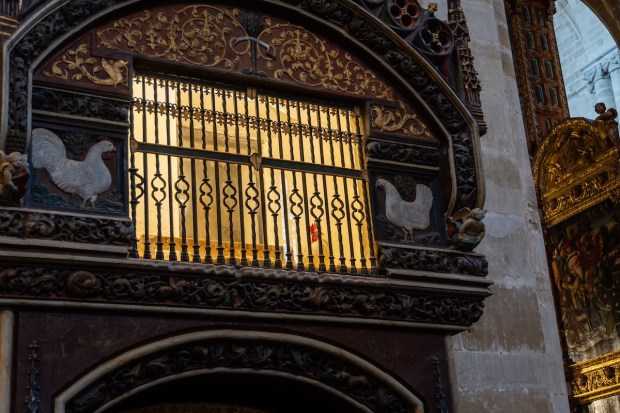
In the town of Santo Domingo de la Calzada, a Gothic henhouse stands inside the cathedral, housing a pair of white birds that are changed regularly. The corral is a small but striking sight: carved stone, pointed arches, and the unmistakable sound of clucking under the vaulted ceiling.
The practice goes back centuries and recalls one of Spain’s most famous Camino de Santiago legends — when a roasted chicken came back to life.
According to the story, a young German pilgrim traveling with his parents was falsely accused of theft and sentenced to hang. His desperate parents prayed to Saint Dominic of the Causeway (that is, Santo Domingo de La Calzada), the local hermit who had built roads and a bridge to help pilgrims cross these lands.
When they returned to see their son, they found him miraculously alive — the rope had loosened. Rushing to tell the judge, they were mocked. “Your son is as alive as the rooster and hen I’m about to eat,” he scoffed. At that moment, legend goes, the birds on his plate came back to life and began to crow and flap their wings.
Since then, the people of Santo Domingo claim the saying: “Where the hen crowed after being roasted.” The legend took such hold that the cathedral began keeping live birds in memory of the event. What began as folklore has become heritage, formally recognized as part of Spain’s cultural patrimony.
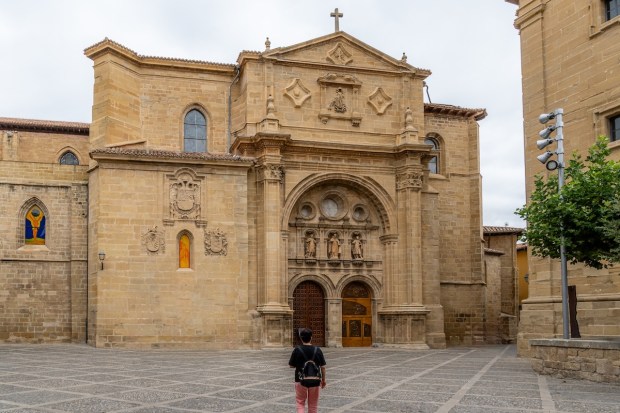
The cathedral itself is a fortresslike structure — late Romanesque in origin, fortified during conflicts between Castile and Navarre, and enriched through centuries of devotion, as read in National Geographic. Yet it’s the henhouse that draws pilgrims’ smiles and attention. The birds are blessed every year on the feast of Saint Dominic, their presence a sign that the divine can work through the ordinary.
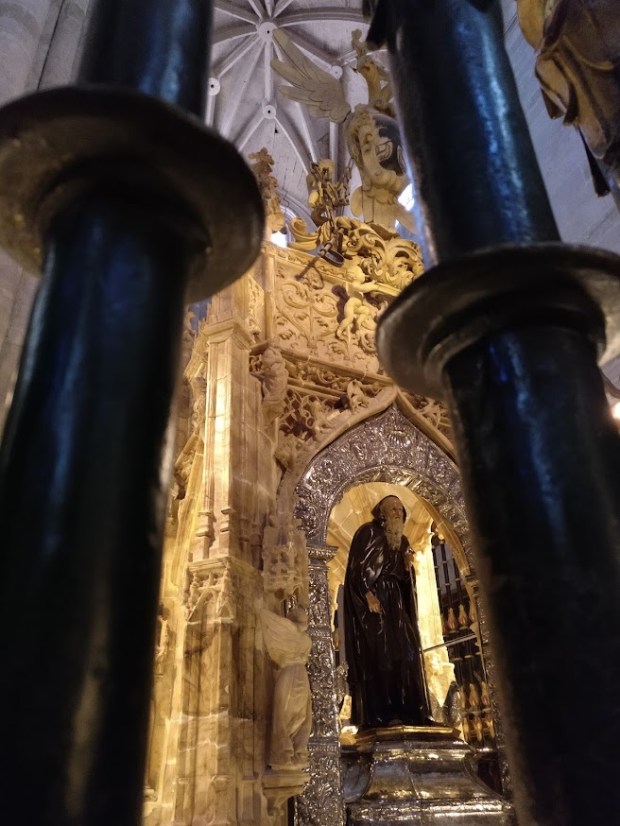
Beneath the main altar lies the saint’s tomb, surrounded by mosaics telling his story. Pilgrims walk around it 12 times in prayer, keeping alive a rhythm that ties faith to movement, miracle, and memory.
In Spain, animals have long been woven into sacred life — whether the doves that circle shrine towers or the geese of Barcelona keeping watch over a martyr’s cloister. In Santo Domingo de la Calzada, the crow of a rooster echoes across the centuries, reminding every traveler on the Camino that grace sometimes announces itself with feathers and a song.

No comments:
Post a Comment
Comments are subject to deletion if they are not germane. I have no problem with a bit of colourful language, but blasphemy or depraved profanity will not be allowed. Attacks on the Catholic Faith will not be tolerated. Comments will be deleted that are republican (Yanks! Note the lower case 'r'!), attacks on the legitimacy of Pope Leo XIV as the Vicar of Christ, the legitimacy of the House of Windsor or of the claims of the Elder Line of the House of France, or attacks on the legitimacy of any of the currently ruling Houses of Europe.