The musings and meandering thoughts of a crotchety old man as he observes life in the world and in a small, rural town in South East Nebraska. I hope to help people get to Heaven by sharing prayers, meditations, the lives of the Saints, and news of Church happenings. My Pledge: Nulla dies sine linea ~ Not a day without a line.
10 April 2024
The History of France's 'Chocolate Sisters': Inside the Monastic Life of a 160-Year-Old Religious Community
These Cistercian Sisters make fine chocolate confections just as their Trappist brethren make some of the finest beers in the world. Two of my favourite things! Though not together!!!
At this time, the future Dom Marie-Bernard wanted to become a monk, but Trappists and Carthusians were too austere for him. He then settled with a small group of men at the Abbey of Sénanque, and began living as a "monk farmer."
Thus, he brought together Cistercians of the common observance, which led to the creation of the Congregation of the Immaculate Conception!
Within a year, the number of vocations burst! As a result, a group of young girls wanted to begin their own religious community based on this same way of life.
The brothers then accepted their request during Christmas of 1864. Quite a gift!
So they settled in an old but well-maintained Benedictine abbey at Notre-Dame de Salagon - north of Aix-en-Provence, France. Their monastic life began in 1865.
At Salagon, vocations poured in, and the monastery never stopped welcoming new sisters. Fortunately, they could count on the unity of the Cistercians! The brothers of Sénanque restored the ruins of an old convent at Reillanne, near Aix-en-Provence, where some of the sisters could settle.
However, the joy of the reunion soon shifted into a few unfortunate events. In fact, the anti-clerical laws of 1901 threatened the integrity of religious groups in France.
However, the sisters had an alternative plan. A small group settled in the monastery of Our Lady of the Angels in Italy and prepared for the possible arrival of the rest of the community. Thankfully, the Cistercian sisters were never expelled from Notre-Dame des Prés.
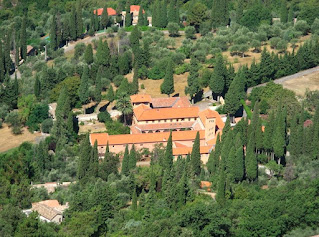
Finally, in 1930, the sisters arrived in Castagniers Abbey, a large 16th-century property with an olive grove and a vineyard, about 12 miles from Nice.
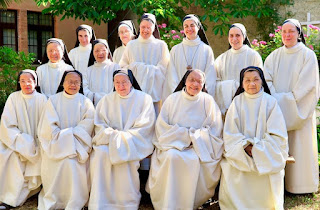
Ninety years later, in 2022, the sisters of Castagniers are still there. What is the Castagniers Abbey doing today?
Like their Cistercian brothers of strict observance (known as Trappists), the sisters follow the rule of Saint Benedict: "Pray and work."
They wake up early to attend the first of their seven daily services at five o'clock in the morning, and for the rest of the day, they work with their hands.
In 1950, they started a monastic handicraft business by opening a chocolate factory. It has been their livelihood ever since.
Yes, for over 70 years, their only specialty has been chocolate! The nuns perpetuate their know-how to finance various jobs and meet the community's needs.
The best thing to do is to go directly to the Castagniers Abbey. You can take the opportunity to visit the sisters– they will be delighted to welcome you!
Comments are subject to deletion if they are not germane. I have no problem with a bit of colourful language, but blasphemy or depraved profanity will not be allowed. Attacks on the Catholic Faith will not be tolerated. Comments will be deleted that are republican (Yanks! Note the lower case 'r'!), attacks on the legitimacy of Pope Leo XIV as the Vicar of Christ, the legitimacy of the House of Windsor or of the claims of the Elder Line of the House of France, or attacks on the legitimacy of any of the currently ruling Houses of Europe.


No comments:
Post a Comment
Comments are subject to deletion if they are not germane. I have no problem with a bit of colourful language, but blasphemy or depraved profanity will not be allowed. Attacks on the Catholic Faith will not be tolerated. Comments will be deleted that are republican (Yanks! Note the lower case 'r'!), attacks on the legitimacy of Pope Leo XIV as the Vicar of Christ, the legitimacy of the House of Windsor or of the claims of the Elder Line of the House of France, or attacks on the legitimacy of any of the currently ruling Houses of Europe.