From Fr Z's Blog
In another post, I commented on some good points made by Joseph Shaw in a piece at HPR.
 I want to return to Shaw’s piece for some final points. Picking up toward the end…
[…]It certainly would not have been the way I would have chosen to do it — I have previously argued for the restoration of a longer Eucharistic fast — but the enforced infrequency of Holy Communion will do much to restore the fame eucharistica, “eucharistic hunger,” the lack of which Pope John II so lamented. It is to be hoped that priests will encourage the Faithful who are able to receive less frequently to make the most of it when it is possible, by careful preparation, ideally including fasting, an act of perfect contrition (or, if possible, sacramental Confession), and prayer, and to follow it with a serious thanksgiving.[…]
Good stuff here.
First, I have had an informal poll about increasing the length of the Eucharist fast on the sidebar of this blog for a while now. Frankly, the present fast of one hour before Communion is a joke. The reduction of the Eucharistic fast from three hours to one before Communion, is merely one of many signals given – perhaps unwittingly, at first – by the post-Conciliar Church that the Eucharist just isn’t that important.
There were quite a few signs which bolstered a stronger Catholic identity. For example, women using chapel veils. Like them or hate them, veils are signals. Families were recognizable as Catholic when they headed to the church on Sunday – in their Sunday best – even because a little girl had a little hanky or piece of tissue bobby-pinned to her hair. A full church with half or more of the heads covered in veils signaled not nothing, if you get me.
The fact that Catholics did not, by law, eat meat on Fridays was an obvious signal to a wider society.
These are just a couple of examples.
Moving to another point, think about how for the past few decades most of our churches are before and after Mass. Is there silence? Is the atmosphere one of recollection and preparation before and awe and thanksgiving after? I’d wager that most parish churches are busy and noisy and distracting before and after Mass. After Mass… right. How many people are left after Communion?
I once popped into a parish church on a Sunday while visiting my mother in her town. I can’t say for sure, but of the congregation, perhaps half a dozen were under 30. At Communion about half the congregation headed for the doors. After the final blessing and truly horrid song – maybe the reason many left? – the place erupted in chatter.
We’ve removed so many of the signals that what we do in church is important that you can’t blame people who treat the place like a McDonald’s.
I point my finger at priests. Including myself. Je m’accuse.
These days when libs want to obliterate something, they blame “clericalism”. It’s a handy label, rather like how the Left shouts “Racism!” if you challenge their math… or anything else. The modern, post-Conciliar priest is to be not the mediator between the people and God’s altar, not the one who renews the Sacrifice, blesses and absolves. No, he is to be a nice guy who affirms you and gives you the white thing to make you feel good about being with other people before you sing a song. Before Mass, the priest is supposed to joke around with the myriad servers and “Eucharistic Ministers”. After Mass – er “liturgy” – the priest is supposed to be at the front door saying “Have a nice day!” rather than in the sacristy or sanctuary.
A “sacristy priest”, oh dear, worst of the worst of clericalism.
But sacristies are important. They are signals.
Priestly practices have knock on effects.
Just as his ars celebrandi – his manner and attitude and style at Mass – have a effect on the participation and comprehension of people in the pews, so too does the priest’s habits of preparation before Mass and his thanksgiving after.
 Sometime ago I wrote about how a feature in old Roman sacristies hit me.
Sacristies usually have or once had a niche with a kneeler and a framed plaque with the preparation prayers priests would say before and their acts of thanksgiving after Mass. These prayers are also in the traditional Breviarium Romanum.
Not only that. There are or were sinks in sacristies with a sign or sometimes an inscription in the marble or painted on the wall with the prayer that the priest would say as he washed his hands before putting on his vestments.
Fathers… did you know that there is a prayer for washing your hands before putting on your vestments? And of course there were and are prayers for the donning of each vestment. Did you get that in seminary?
There was etiquette for how priests were to acknowledge each other as they went to and returned from the altar.
The aptum. The pulchrum. Decorum.
Ritual, which brings discipline and which over time provides interior formation, surrounded the ritual of the Mass itself.
I wonder what would happen – think about this with me now – what would happen, what kind of knock on effect there would be on the wider Church, were priests to begin to do these things again. If bishops were to do these things.
I can hear it now.
“But Father! But… but… Fffff…. ‘ordained minister’!”, the libs writhe and howl. “This is … is… pure CLERICALISM! And it’s probably RACIST! You… you… and your Latin and hats and books. Your … your… prayers with ‘thee’ and all that begging and unworthiness. We’ve grown up! We’ve evolved and don’t have to grovel anymore. No, we STAND! We take because we are … are…. an EASTER PEOPLE! But you don’t get any of that because YOU HATE VATICAN II!”
Let’s not lie about Vatican II.
Shaw, at the beginning of the HPR piece I mentioned at the top, had an outstanding line:
“What exactly is gained by not adding exorcised salt to the holy water?”
Perfect.
The Council said that in the liturgical reform, nothing was to be changed unless it was for the true good of the people. The Council Fathers mandated that nothing was to be done unless it was in continuity with what we had before.
That’s not what we got.
What exactly is gained by not adding exorcised salt to the holy water?
Absolutely nothing.
What was lost?
A whole world. An identity.
The results of which we see in our churches today.
The results of which we see reflected in Pew Research studies.
The results of which we see in the contempt shown for the people who desire traditional worship…. who desire salt in their Holy Water, as it were.
It was not for nothing that John Paul II in 1988 wrote in Ecclesia Dei adflicta 6:
“[B]y virtue of my Apostolic Authority I decree… respect must everywhere be shown for the feelings of all those who are attached to the Latin liturgical tradition, by a wide and generous application of the directives already issued some time ago by the Apostolic See for the use of the Roman Missal according to the typical edition of 1962.”
Sweet Jesus, have mercy. To what point have we come if John Paul thought he had to command bishops to respect people’s feelings and to be generous to them in entirely legitimate matters? And lately we’ve seen a Pope who ridicules them! Bishops write in tones of disdain for people who “demand” Communion on the tongue and who have to be “accommodated”.
To what point have we finally arrived? And whither? QUO?
People who are attached to the Latin liturgical tradition – people who want salt in their Holy Water – are the most systematically marginalized demographic in the Church.
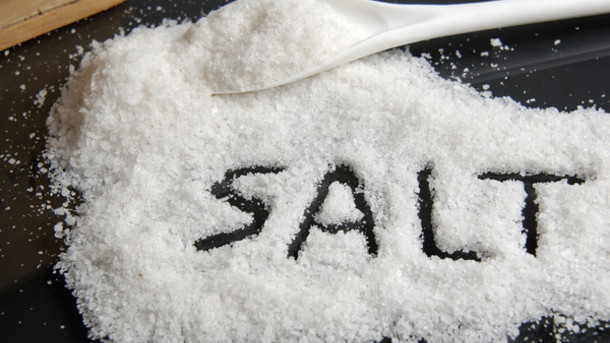
I want back all the SALT.
The Latin liturgical tradition John Paul wrote about means salt in the Holy Water. Salt in the Holy Water is a metaphor for a whole identity.
Think about this. The Church is the greatest expert in humanity that there has ever been. Her practices were wise on profound levels that shaped us.
I mused, above, about a knock on effect through the priestly rituals surrounding Mass, his prayers before and after.
In fact, Holy Mother Church made sure that the people saw the priest ritually preparing to say Mass and to pray after Mass: the Prayers at the Foot of the Altar beforehand and the reading of the Last Gospel afterward. These were remnants retained in the Missal from the priest’s preparation and thanksgiving that developed over the centuries.
The Church decided that you – for centuries – should see him do it. That’s how important it is.
As Fr. Jackson put it in his splendid book there is “Nothing Superfluous” in the traditional rites.
And what did the usurpers of the Conciliar liturgical reform do? They cut out the priest’s preparation before and his prayer after Mass, relegating anything that he might choose to do entirely to his private practice.
They also stopped adding salt to the Holy Water.
As I said, above, I am pointing a finger at myself.
I am often lax in making a traditional preparation before Mass and thanksgiving after. I get distracted, impatient to get on with oh-so-important things I know I have to do.
Preparing for Mass and being recollected after can be hard in a parish setting where there has not yet been established a minimum of discipline in a sacristy. People want to talk to the priest. The priest wants to talk to them. There are things to discuss, etc. All important, I’m sure. In general, priests like talking to people.
But the knock on effect of that, of not preparing and not pausing after, is corrosive for priestly identity, not fortifying. And if the priest’s identity is corroded, it follows as the night the day that his flock will feel the effects to one degree or another.
I wonder if people really, if it came right down to it, wouldn’t rather know that Father is praying and preparing before Mass, giving thanks afterward, rather than seeing him act like a or host with an hors d’oeuvre tray at a dinner party. In his sacred Mass vestments. They might be a little disoriented at first, not seeing him slapping people on the back as they go out. Over time, however…. I wonder.
This is something that lay people need to chime in about. Priest or dinner party host. Mediator who renews the Sacrifice or nice guy.
I know that there are multiple angles to this and a great depends on context but I can’t shake the feeling that what can be lost is far greater in long-term significance than what can be gained.
I have some work to do. I’m going to put the salt back into my preparation before and my time after Mass. I owe it to myself, to our forebears, and to you.

No comments:
Post a Comment
Comments are subject to deletion if they are not germane. I have no problem with a bit of colourful language, but blasphemy or depraved profanity will not be allowed. Attacks on the Catholic Faith will not be tolerated. Comments will be deleted that are republican (Yanks! Note the lower case 'r'!), attacks on the legitimacy of Pope Leo XIV as the Vicar of Christ, the legitimacy of the House of Windsor or of the claims of the Elder Line of the House of France, or attacks on the legitimacy of any of the currently ruling Houses of Europe.