From The Imaginative Conservative
By Robert Lazu Kmita, PhD
The animating principle of medieval culture, insofar as it is distinct from Antiquity or Modernity, is the conviction that the ultimate and highest reality is found in the unseen realm—which means that the most fundamental and fruitful way to embrace the medieval spirit is to practice the Faith more like an ordinary Christian of the Middle Ages.
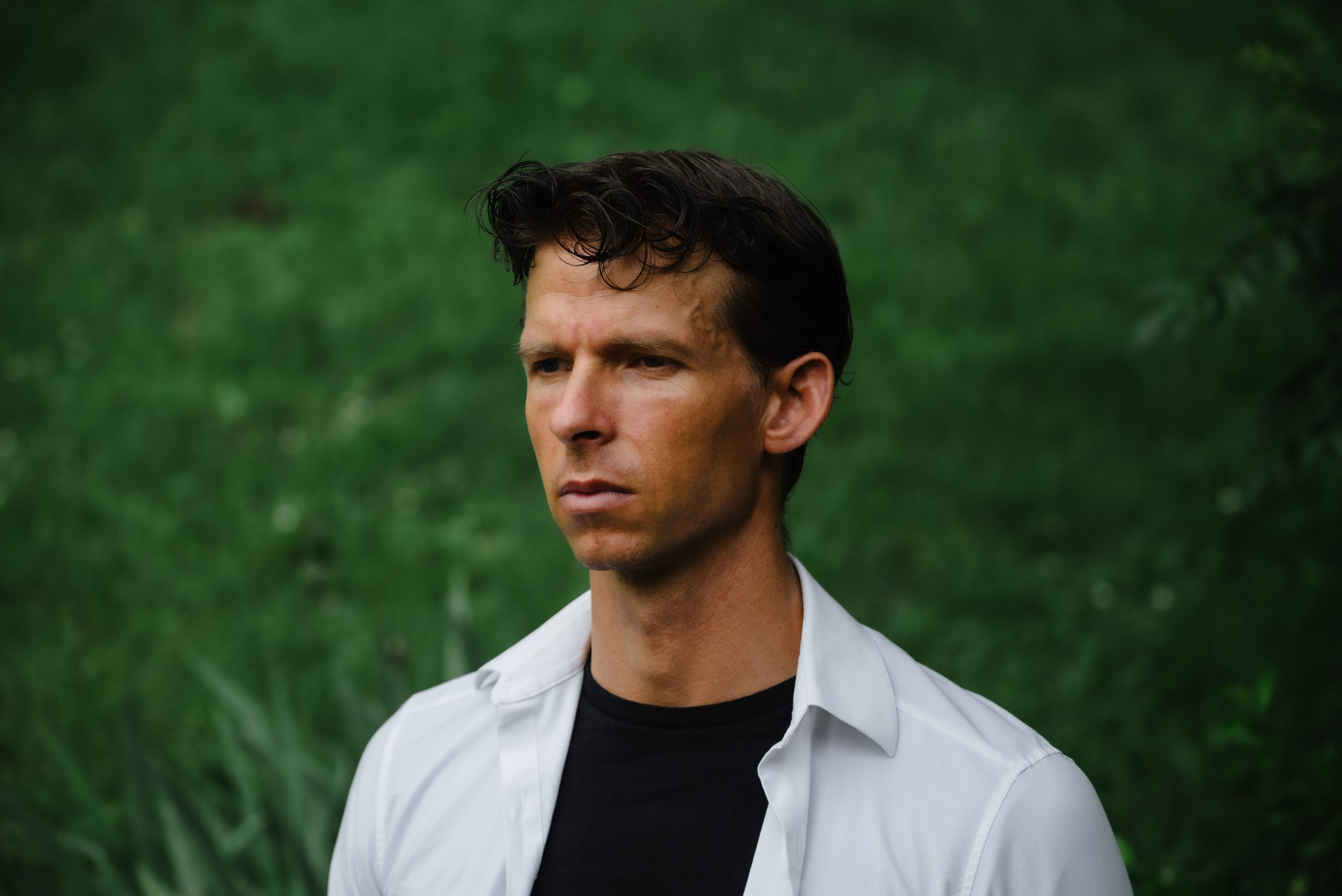
Robert Keim
Robert Keim earned a PhD in Renaissance poetry and drama after undergraduate and graduate study in literature, linguistics, mathematics, physics, Spanish, history, and pedagogy. He has practiced small-scale agriculture and explored traditional lifestyles in four US states and one European country, and he is now a teacher, a poet, a ballet dancer, an author of books and numerous essays, and a secular brother of the Oratory of St. Philip Neri in London. You can read more of his work at viamediaevalis.substack.com and poeticknowledge.substack.com.
Robert Lazu Kmita: Probably I’m not the only reader who “discovered” you while reading your first Substack newsletter, which was titled Via Mediaevalis. What is the meaning of this name? And why would the culture of the Middle Ages be of interest to today’s readers, Catholic or not? Wasn’t that era, as some say, a “dark age” in the history of the Western world?
Robert Keim: The Latin phrase via mediaevalis means “medieval way.” The newsletter was about life in western Europe during the Middle Ages, but not as a mere topic of historical discussion, nor as an exercise in superficial fascination (as we see in certain pop-culture appropriations) or sterile nostalgia. The fundamental purpose of the newsletter was to present medieval culture as a “way,” or path, toward a more coherent, beautiful, meaningful existence for communities of the twenty-first century. To be sure, many people would doubt that we have much if anything to learn from medieval societies. Stereotypes about the medieval period as a barbarous “dark age” persist, though not among serious scholars, who in general have moved toward a remarkably balanced and open-minded approach to studying the medieval world. However, even among ordinary readers, Christian or otherwise, I think there is a growing awareness that certain aspects of medieval life make more sense than how we do things nowadays. Local economies, non-industrial food production, handcrafts and skilled labor instead of factories, holistic medicine, communal celebrations animated by shared religious beliefs, proximity to nature and the rhythms of the cosmos, public recognition of our needs as creatures composed of body and spirit—these things appeal to us, as the shortcomings of modern life become increasingly difficult to ignore. The fact is that the medieval West, though of course far from perfect, was a civilization of extraordinary vitality and cultural richness—we should learn as much as we can from that civilization, and use the knowledge to improve our lives.
Robert Lazu Kmita: Could you present here some key points specific to medieval culture that can be understood and assumed by both Catholic believers and all those interested in the values of that world?
Robert Keim: The one that figures most prominently in my mind is balance. Medieval societies demonstrated a remarkable tendency to seek and find balance in all the major domains of life. Modern people may struggle to even imagine what this would look like, as modernity—which begins, in my analysis, with or shortly before the Protestant Reformation—is an era of fanaticism. It is ironic that fanatical religiosity is one of the stereotypes applied to the Middle Ages, because religious experience was in fact integrated naturally and moderately into medieval life. It was the extreme overreactions, maniacal polemics, and theological excesses of the Reformation that gave a fanatical coloration to European religion, and then as people lost interest in traditional Christianity, modernity produced one fanatical movement—exploitative colonialism, the Enlightenment, Romanticism, industrial capitalism, communism, nihilism, artistic postmodernism—after another. This is a profoundly unhealthy way for our civilization to exist. We need to rediscover the principles and modes of balanced living, and there is no better place to find them than in medieval culture.
I will mention one more: connection to the land. There is still a great deal of interest, especially among Catholics, in “rural living” or “homesteading” or some variant thereof. I consider the homesteading movement, generally speaking, to have failed, and I speak as one who once was deeply committed to and actively involved in that movement. It failed because the model was faulty, and the model was faulty because it was essentially modern rather than medieval. The Christian communities of the Middle Ages stayed close to the soil and the meadows and the woods without forgetting our fundamentally social nature, and without imposing agricultural ideals on those who don’t belong behind a plow and really shouldn’t be swinging a scythe. Medieval culture, in short, shows us how to be a flourishing agrarian society rather than an awkwardly and unsustainably agricultural society.
Robert Lazu Kmita: You have touched on a topic of the utmost importance: the harmonious integration of the virtue of religion into the everyday life of a culture, of a civilization. That is why I cannot avoid a question that has troubled many historians and analysts of culture, as well as theologians and ordinary Catholic believers. What do you think were—and probably still are—the main driving forces behind this historical “mutation” that has led to such an unbalanced modern world?
Robert Keim: This is, of course, a complex and difficult question. All I can do is offer my conjectures, though these conjectures are the fruit of much study and reflection. I believe that there are two principal, and interrelated, factors. The first is what I would call the Hamlet Syndrome. Hamlet is the archetypal modern self: radically introspective and individualistic, psychologically isolated, obsessively doubtful and self-referential. And what sort of life does Hamlet have? He is never content, never at peace, increasingly unstable, burdened—instead of delighted or inspired—by the uncertainties of the human condition. The gradual transition in Western culture from a fundamentally communal existence to radical selfhood coincides with the transition from medieval life to modern life—and therefore it coincides also with the transition from a paradigm of balance to a paradigm of fanaticism. This correlation, in my view, is not surprising. We can compare it to planks of wood floating in the sea. A lone plank rises and falls quite violently with the waves, simply because of its size and geometry. It is at the mercy of external forces, and in fact mirrors the movements and disturbances of those external forces. But if many such planks are interconnected according to the ordering principles of shipbuilding, the situation changes dramatically. The same material floating on the same sea is, by virtue of its essentially communal nature and well-ordered interdependence, far more stable, tranquil, and resilient. Now I’m not trying to depict modern psychology as wholly ruinous; I enjoy my radical selfhood, though I recognize its perils and am not immune to its exaggerated emotional vicissitudes. But a civilization full of radically individualistic, self-referential people is bound to be a tempestuous place, and one manifestation of this is modernity’s tendency toward fanatical religiosity and ideology.
The second factor may sound rather simplistic, but simple answers are often the best. It is very hard for human beings to believe in heaven—I mean really believe, to the point where temporal happiness, material wealth, and even earthly life are eagerly and boldly subordinated to the good things that await us in the world to come. Such belief is even more difficult for those accustomed to radical modern selfhood, because our thoughts are ever turning inward, and the psyche of fallen man is a labyrinth in which few will find anything resembling the celestial paradise. The yearning for heaven is still there; the sense that death is wrong, is an outrage to human nature and a corruption of our true destiny, is always there. Thus, fanaticism grew as the fervent faith of the Middle Ages decayed into the tepidity and skepticism of modernity. Replacements for heaven had to be found, and those replacements are not likely to be balanced and well-ordered when they are expected to do the impossible—that is, to change mortality into immortality by adding more mortality.
Robert Lazu Kmita: I notice that all the points you mentioned are, more or less, “practical.” But what do you think about intellectual or spiritual values, such as the strong medieval belief that the otherworld (Hell, Purgatory, Heaven) is real—much more real than our world? Isn’t this the fundamental conviction that inspired great creators, from Dante and Chaucer to Shakespeare, Cervantes, and Saint Thomas More? How did it permeate, inspire, and influence all aspects of medieval life?
 Robert Keim: I’m glad you brought up this notion of the real. Yes, the animating principle of medieval culture, insofar as it is distinct from Antiquity or Modernity, is the conviction that the ultimate and highest reality is found in the unseen realm. This is not to imply that material reality was scorned or neglected. Medieval people, generally speaking, loved the world—the trees and meadows and birds, the rhythms of the agricultural year, the signs and stars in the heavens, the sacred vessels and lavish vestments of the liturgy, feasting, hunting, singing, traveling. But the world was not an end in itself. It was not even an entity unto itself, in the sense that earthly realities were understood as images, symbols, prefigurations of heavenly realities. In modern modes of thought, symbols are discrete, and often expendable, phenomena. For Christians of the Middle Ages, symbolism was woven into the very fabric of human life, where it gave structure and significance not only to artistic creations but to the entirety of physical Creation: the elements and qualities of material reality existed so that they would bear witness to elements and qualities of immaterial reality, and even to Reality itself—which, to borrow a phrase from St. Thomas, we call God.
Robert Lazu Kmita: In any case, for the medievals, the world, the cosmos integrated both dimensions: the visible and the invisible, the sensible and the intelligible. However, we have discussed these issues without bringing to the table, so to speak, something extremely important: their written culture. Perhaps this is a good moment to direct our conversation in that direction. So, what are, in your opinion, the most significant medieval literary works that can offer any reader a deep and powerful encounter with that culture? I do not expect you to mention all of them, but rather those texts that can truly provide a profound immersion into the medieval way of thinking.
Robert Keim: One can learn a great deal about medieval culture, and enjoy a profound encounter with medieval thought, by reading just three works: Beowulf, the Song of Roland, and the Divine Comedy. These are all long poems, and they take us from northern Europe (Beowulf, written in Old English), to central Europe (Song of Roland, written in Old French), to southern Europe (Divine Comedy, written in the language of Tuscany). They take us also from the Early Middle Ages (Beowulf),through the High Middle Ages(Song of Roland), to the Late Middle Ages (Divine Comedy). Something particularly valuable about these three texts is how they work together to convey broad stages of medieval Christianity, helping us to understand how it matured from a more primal religion influenced by residual paganism, to a sociopolitical institution interwoven with chivalric feudalism, to Dante’s highly intellectualized synthesis of faith, reason, and art. They are, furthermore, remarkably diverse in style and content while nonetheless being fundamentally united in their worldview. In this sense they are something of an allegory for medieval culture itself.
Robert Lazu: Do you consider that such works are still valuable not only aesthetically but also as creations that have something to tell (post)modern people? Aren’t they only “relics” of the past, unable to talk to us—the living humans in the world of AI, space exploration, and androids? As a professor, what kind of links can you establish between them and the usual experiences of your students?
Robert Keim: A customary response to questions like this would invoke the universality of literature, and I certainly do not deny that literary masterpieces from any era or culture can explore themes that transcend all boundaries. However, we must be careful to not overstate the universality of literature: literary artifacts are produced by human beings who live in a particular time and place, and whose minds have been formed by specific beliefs, value systems, and aesthetic experiences. And we must be realistic: many people living today would pick up the Song of Roland and lose interest quickly, because it feels foreign and antiquated rather than universal.
You asked if these works are relics of the past, unable to speak to the inhabitants of postmodernity. The answer is yes and no. Yes, they are relics of the past, but they are able to speak to us. In fact, they speak to us because they are relics of the past. We might say that these texts and others like them share one fundamental message for twenty-first-century readers: postmodern life is not the only way to live. By reading such works, we encounter authors and characters who understood themselves, one another, and the world in ways that differ profoundly from our own. The principal link that I would convey to students, then, is that so many links have indeed been broken, despite the fact that people of the Middle Ages were human beings just as we are. Why do our lifestyles, our ideologies and eschatologies, our families and social structures and political systems need to be so different from theirs? The inescapable answer is that they do not need to be so different. What we have now is a collective choice that modern society has made, and it’s high time that we all think critically and prayerfully and uncompromisingly about the choices that have led us from Beowulf, the Song of Roland, and the Divine Comedy to A Portrait of the Artist as a Young Man, Madame Bovary, and No Exit.
Robert Lazu Kmita: This statement of yours seems to me more the expression of a hope and less a real possibility. Honestly, I cannot find any possible link between the postmodern world and the medieval world. Maybe I am more inclined to skepticism than you. But I cannot help it. In this spirit, the ending question of our dialogue will be a truly apocalyptic one (the medievals were highly interested in the Apocalypse, weren’t they?). You talked about the collective choice that modern society has made. A choice—as Father Roger-Thomas Calmel, a brilliant Dominican scholar, said—is not to eliminate the Gospel from the lives of the people but to make it impossible. What can a Catholic in such a world do in order to live a life that makes possible his communion with medieval Catholics? Is this achievable? If so, how? Thank you very much for this interview!
Robert Keim: A twenty-first-century Catholic can live a life that is literally more medieval. I have done this. Agrarian labors, small houses, bold avoidance of technology wherever possible, walking instead of driving, traditional cuisine, etc.—these things really can change a person’s mentality in profound and medieval ways. But experience shows that few will choose this path, which in any case must usually be temporary. So we need something else. We need something more accessible and more permanent. And here it is: the animating principle of medieval civilization was Christianity, which means that the most fundamental and fruitful way to embrace the medieval spirit is to practice the Faith more like an ordinary Christian of the Middle Ages.
How exactly does one do this? It would take a book rather than a paragraph to properly answer that question. But I will sketch a rough outline, taking inspiration from Dante (translated by Allen Mandelbaum), in two cantos from Paradiso:
Canto 9
For this the Gospel and the great Church Fathers
are set aside and only the Decretals
are studied—as their margins clearly show.On these the pope and cardinals are intent.
Their thoughts are never bent on Nazareth,
where Gabriel’s open wings were reverent.Canto 29
Each one strives for display, elaborates
his own inventions; preachers speak at length
of these—meanwhile the Gospels do not speak.
In the Late Middle Ages, Dante already perceived deformations that increasingly characterized modern Catholicism, and which today are in grievous need of remediation, including among Catholics who consider themselves conservative or traditional. The Faith is rich and multifaceted, but some things are more ancillary, and some are more central. We need to simplify. We need to direct more of our interest and attention to that which is central. Let us read the Gospel, aloud in our homes, so that the children may hear it. Let us sing the Psalms, making them the center of our prayer life, and attend the traditional Mass and Office, making them the center of our liturgical life. Let us speak more of Christ—His life, His death, His precepts, His parables—and less of the pope, or the bishops, or the latest “visionaries” with their false prophecies of direness and doom. And let us venerate the Most Holy Virgin, not with sentimental devotions or kitschy images but with awe and praise and passionate love for the Mother of God, the Queen of the Church, the New Eve whose beauty surpasses all the great and glorious things of earth.
The medievals, as you rightly said, were highly interested in the Apocalypse. So let us conclude in apocalyptic fashion. Time and time again, I see Catholic spirituality that has far too much Martha, and not enough Mary: “Martha, Martha, thou art anxious and troubled about many things,” says the Master, “but one thing is needful. Mary hath chosen the best part.” So let us pray for that one thing in the words of Revelation, chapter 22, verse 20: Come, Lord Jesus.
__________
The featured image is “Therewith he brought us out of Town,” from The Canterbury Tales of Geoffrey Chaucer (1914), by illustrator Walter Appleton Clark, and is in the public domain, courtesy of Wikimedia Commons.
No comments:
Post a Comment
Comments are subject to deletion if they are not germane. I have no problem with a bit of colourful language, but blasphemy or depraved profanity will not be allowed. Attacks on the Catholic Faith will not be tolerated. Comments will be deleted that are republican (Yanks! Note the lower case 'r'!), attacks on the legitimacy of Pope Leo XIV as the Vicar of Christ, the legitimacy of the House of Windsor or of the claims of the Elder Line of the House of France, or attacks on the legitimacy of any of the currently ruling Houses of Europe.