
From Aleteia
By Cerith Gardiner
The Frenchman behind the World Cup drew inspiration from Pope Leo XIII and Catholic social teaching.As the FIFA World Cup once again captures the attention of billions of people around the globe, it is worth remembering that the tournament owes much of its existence to a man inspired by a pope named Leo.
Long before Pope Leo XIV was greeting pilgrims in St. Peter's Square, another Leo was helping shape the modern world. Pope Leo XIII's 1891 encyclical Rerum Novarum transformed Catholic social teaching by focusing on the dignity of workers, care for the poor, and the responsibility of society to foster human flourishing.
Among those influenced by those ideas was a young Frenchman named Jules Rimet.
Today, Rimet's name survives mainly on old trophies and football trivia quizzes. Yet without him, there might never have been a FIFA World Cup.
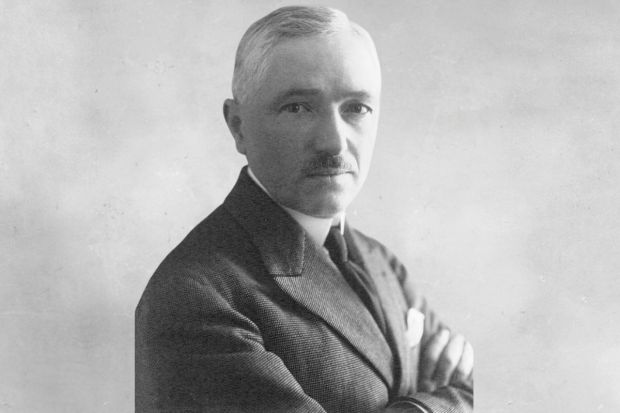

Born in 1873 and raised in a Catholic family, Rimet moved to Paris as a young man and became involved in charitable work among the city's poorest residents. He believed deeply that sport could serve a purpose beyond entertainment. At a time when many clubs catered to particular social classes, he founded Red Star Football Club in 1897 and opened its doors to players from every background.
It was a remarkably simple idea, but a powerful one: A football field could bring together people who might otherwise never meet.
Looking back, it is difficult not to smile at the thought. The World Cup is now famous for its superstars, television deals, dramatic goals, and occasional outbreaks of national hysteria. Yet one of the men most responsible for creating it was motivated by a belief in human dignity and social inclusion.
Then came the First World War.
Like millions of others, Rimet witnessed a continent tear itself apart. He served as an officer and received the Croix de Guerre for his service. The experience strengthened his conviction that nations needed ways to encounter one another outside the battlefield. Football, he believed, could help.
That dream eventually led him to FIFA, where he became president in 1921. For the next 33 years he worked tirelessly to transform football from a collection of regional competitions into a genuinely global game. The result arrived in 1930, when Uruguay hosted the first FIFA World Cup.
At that time only 13 nations took part. There were no global television audiences, no wall charts pinned to refrigerators, and certainly no endless debates on social media about referees. Yet the idea proved irresistible. A competition that brought countries together through sport rather than conflict resonated far beyond the football field.
Nearly a century later, billions of people are now watching the tournament. Families are gathering around televisions. Strangers are celebrating together in public squares. Children dream of representing their countries, and entire nations find themselves united by the fortunes of 11 players chasing a ball.
It is easy to focus on the spectacle, the goals, the trophies, and the celebrations. Yet behind the tournament sits a rather beautiful idea.
Jules Rimet believed that sport could build bridges between people. Pope Leo XIII believed that every human person possessed inherent dignity. Neither man could have imagined the scale the World Cup would eventually reach, but both understood something important about human beings: We are made for connection.
As Catholics now follow the sports-loving Pope Leo XIV and football fans follow the World Cup, it is hard not to smile at the unexpected connection between two popes named Leo. When explaining his choice of name, Leo XIV pointed to the legacy of Pope Leo XIII and his concern for human dignity, work, and the common good. More than a century earlier, those same ideas helped inspire a young French Catholic named Jules Rimet, whose dream would eventually become the FIFA World Cup being cheered by billions today!
Neither man could have imagined quite what would follow. Yet somewhere between a papal encyclical, a football pitch, and billions of viewers around the world, their stories crossed paths in the most unexpected way.
No comments:
Post a Comment
Comments are subject to deletion if they are not germane. I have no problem with a bit of colourful language, but blasphemy or depraved profanity will not be allowed. Attacks on the Catholic Faith will not be tolerated. Comments will be deleted that are republican (Yanks! Note the lower case 'r'!), attacks on the legitimacy of Pope Leo XIV as the Vicar of Christ, the legitimacy of the House of Windsor or of the claims of the Elder Line of the House of France, or attacks on the legitimacy of any of the currently ruling Houses of Europe.