A very brave man and a devout Catholic, Gino Bartali, a famous racer, used his fame to assist the Italian Resistance to the Nazis.

From Aleteia
By Daniel Esparza
“Some medals hang on the soul, not the jacket,” he once reportedly said. The biking champ is recognized as Righteous Among the Nations.In the annals of cycling, few names carry the weight of Gino Bartali. A two-time Tour de France winner and three-time Giro d’Italia champion, Bartali was more than a legendary athlete — he was a man who turned his sport into a mission of mercy.
Born in 1914 in the Tuscan town of Ponte a Ema, Bartali rose to fame in the 1930s as a climbing specialist with an iron will. But behind the handlebars, he bore another identity: He was a devout Catholic and member of the Third Order of Discalced Carmelites.
His deep spiritual life, shaped by daily prayer and a strong moral compass, quietly guided his choices — even when the stakes were life and death.
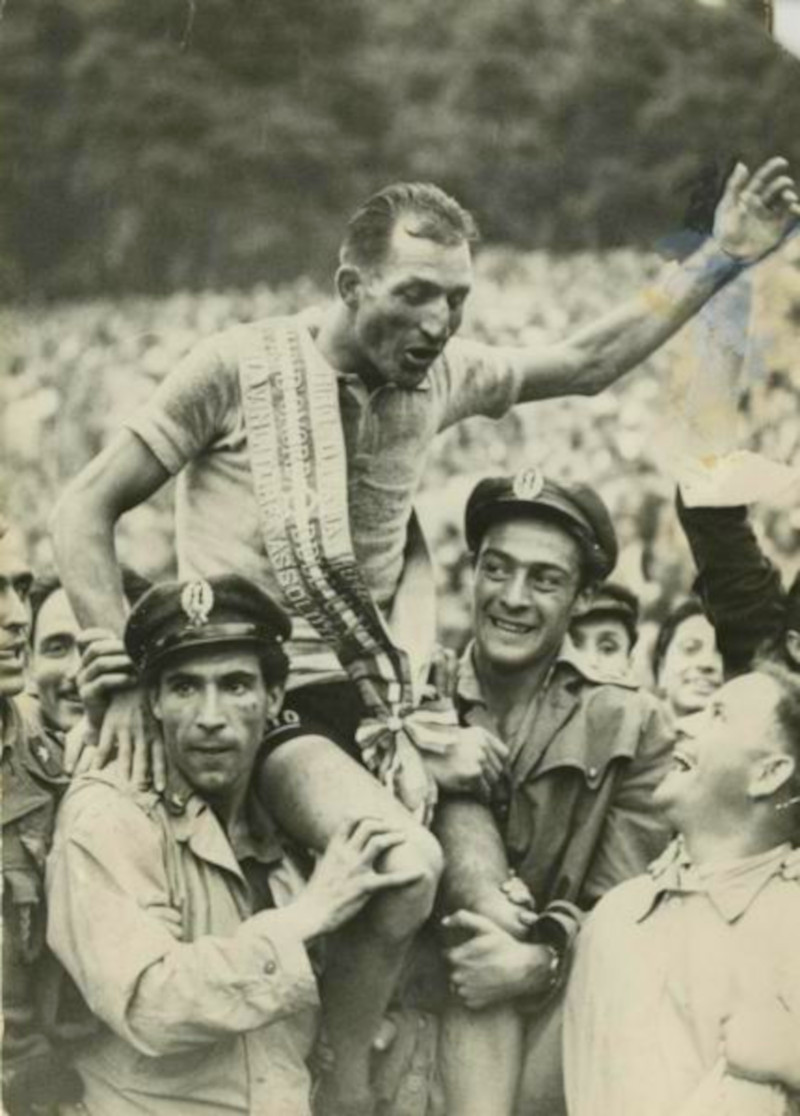
During World War II, while Italy was under the Fascist regime, Bartali used his fame to serve the Resistance. Posing as a cyclist in training, he carried forged identity documents hidden inside the frame and saddle of his bicycle. He rode hundreds of kilometers between Florence and Assisi, helping Jewish families escape deportation to death. His public image shielded him from suspicion, making him an ideal courier in a vast underground network supported by priests, friars, and laypeople.
Bartali never spoke of his wartime activities — not even to his family. “Some medals hang on the soul, not the jacket,” he once reportedly said.
It wasn’t until years after his death in 2000 that his role in rescuing an estimated 800 Jews came to light, earning him recognition as Righteous Among the Nations by Yad Vashem in 2013.
And yet, his cycling career alone would have secured him a place in history. After an early string of victories, including the 1936 and 1937 Giros, Bartali won the 1938 Tour de France. He returned a decade later to win it again in 1948 — an extraordinary comeback at the age of 34.
That second victory had national consequences. Just days after a failed assassination attempt on Communist leader Palmiro Togliatti, Italy teetered on the edge of civil war. Bartali’s unexpected triumph united a fractured country. Even politicians momentarily set aside their rivalries.
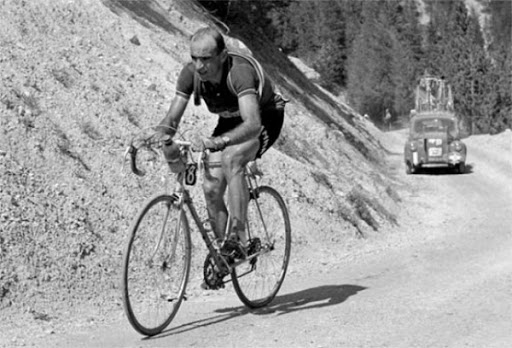
Though often seen as the counterpoint to his younger rival, Fausto Coppi, Bartali’s humility and fierce loyalty to his values set him apart. He was famously devout, setting up makeshift shrines in his hotel rooms and avoiding foul language from teammates.
He is said to have taught Pope John XXIII to ride a bike and maintained friendships across Italy’s political spectrum, even among communists who admired his integrity.
After retiring from racing in the 1950s, Bartali lived quietly in Florence with his wife Adriana and their children. He died in 2000, aged 85. At his funeral, there were no grand gestures — just the habit of a Carmelite tertiary and a name etched in stone.
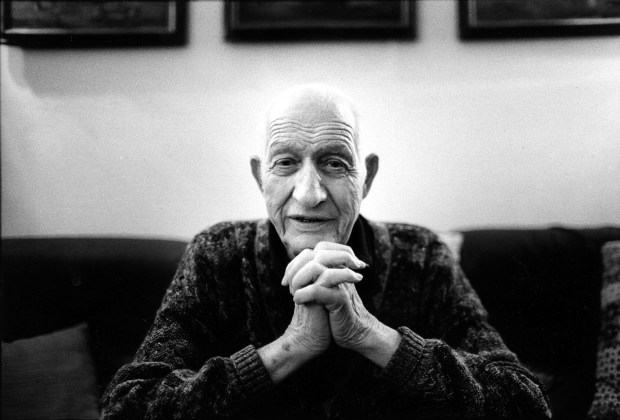
Gino Bartali is remembered not just for how he raced, but for why. In a world fractured by hate, he pedaled through the shadows with courage, charity, and a conviction that true greatness is found not in glory, but in goodness.
No comments:
Post a Comment
Comments are subject to deletion if they are not germane. I have no problem with a bit of colourful language, but blasphemy or depraved profanity will not be allowed. Attacks on the Catholic Faith will not be tolerated. Comments will be deleted that are republican (Yanks! Note the lower case 'r'!), attacks on the legitimacy of Pope Leo XIV as the Vicar of Christ, the legitimacy of the House of Windsor or of the claims of the Elder Line of the House of France, or attacks on the legitimacy of any of the currently ruling Houses of Europe.